What a Coal Conveyor Idler Does on the Line
A coal conveyor idler is the rotating roller assembly that supports the conveyor belt and controls its shape along the carrying and return runs. In a coal handling system—whether at a mine, a coal preparation plant, or a power plant coal yard—the idler carries the weight of the belt and the coal, keeps the belt tracking, and reduces friction so the drive can move the load efficiently. Because coal is often abrasive, dusty, and sometimes wet, the idler must be built for continuous duty rather than occasional use.
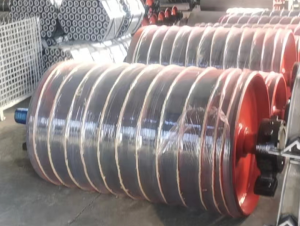
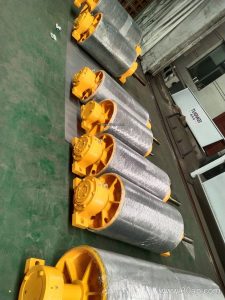
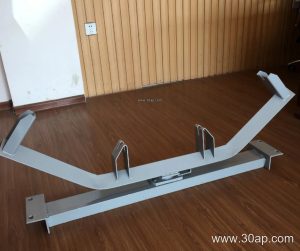
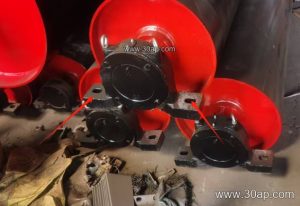
The idler works together with the conveyor belt, the conveyor pulley at the head and tail, and the conveyor bracket that fixes each station to the frame. A well-matched set of idlers protects the belt cover from edge damage and premature wear.
How a Coal Conveyor Idler Is Built
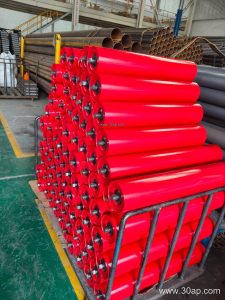
Most idlers share a simple structure: a steel tube shell, a shaft, bearings at each end, and a sealing arrangement. The shell is usually a steel pipe, though nylon, ceramic, or rubber-covered surfaces appear where extra grip or impact protection is needed. Bearing housings are pressed into the tube ends, and the shaft passes through to be clamped into the bracket. Sealing is the detail that matters most in coal service, since fine coal dust and wash-down water are the main causes of bearing failure.
Typical bearing sizes found in coal conveyor idlers include 6204, 6205, 6305, 6306, 6308, and 6310. These are common references, not a fixed rule; the bearing is chosen with the roller diameter and load, so the same bearing can serve more than one shell size.
Common Idler Forms in Coal Handling
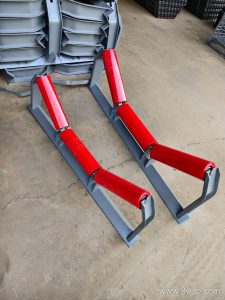
Carrying idlers are usually arranged as a troughing set of two or three rolls, which gives the belt a trough shape and keeps coal centered. Return idlers support the empty belt underneath, and a V-return or flat return design is common. Impact idlers with rubber rings are placed under the loading point where coal drops onto the belt, while training idlers help correct misalignment on long runs. Spiral or comb-type idlers can be used where sticky material tends to build up on the roll surface.
- Troughing idler set: two-roll or three-roll arrangement for the carrying side
- Return idler: flat or V-shaped support for the empty belt
- Impact idler with rubber rings: cushioning at transfer points
- Training idler: friction or tapered design for belt alignment
Because coal lines often run alongside abrasive or dusty loads, a heavy-duty mining conveyor belt or flame retardant conveyor belt is frequently paired with these idlers to keep the whole circuit reliable.
Roll Diameter, Belt Width, and Trough Angle
Idler size is not chosen by belt width alone. The roll diameter, roll length, trough angle, and frame form are decided together with the belt tension, load, and speed. Common roll diameters range from about Ø63 mm up to Ø219 mm, and common belt widths run from B400 to B2400. Trough angles of 20, 30, 35, and 45 degrees are typical, and a small forward tilt of about 1.5 to 2 degrees is sometimes used on training idlers.
The table below shows common examples of roll length in three-roll troughing sets. Side rolls and center rolls may differ, so these figures are reference points rather than fixed matches.
| Belt width | Common roll length (three-roll troughing) | Typical trough angle |
|---|---|---|
| B500 | about 200 mm | 20–35 degrees |
| B650 | about 250 mm | 20–35 degrees |
| B800 | about 315 mm | 30–35 degrees |
| B1000 | about 380 mm | 30–35 degrees |
| B1200 | about 465 mm | 30–45 degrees |
| B1400 | about 530 mm | 35–45 degrees |
| B1600 | about 600 mm | 35–45 degrees |
| B1800 | about 670 mm | 35–45 degrees |
| B2000 | about 750 mm | 35–45 degrees |
For a wide coal line, an EP conveyor belt or steel cord conveyor belt may run over larger diameter rolls to limit belt stress at each station. The idler diameter should follow the belt and load design, not a single number copied from another conveyor.
Where Coal Conveyor Idlers Are Used
These idlers appear wherever coal moves in bulk. In a coal preparation plant, troughing and impact idlers handle washed and sized coal. At a power plant coal yard, return and training idlers keep the long inclined belts aligned. In an underground coal mining conveyor system, flame retardant and anti-static belt grades are common, and the idlers must fit cramped frames with reliable sealing against dust and moisture.
Similar designs also serve a quarry conveyor belt or aggregate conveyor belt line, where rock and stone place higher impact loads on the loading section. The same principle applies: match the idler form and roll surface to the material and the duty.
What Buyers Should Check Before Ordering
Start with the belt width, the trough angle, and the frame or bracket dimensions, then confirm the roll diameter and shaft end that fit the existing supports. Ask about the sealing arrangement and bearing size, since these decide service life in coal dust. Confirm the shell material and whether a rubber ring, ceramic, or nylon surface is needed at the loading point. For replacement orders, check that the idler matches the original bracket spacing so the belt line does not need reworking.
Finally, keep spare troughing and return idlers on hand for the loading and transfer zones, where wear is fastest. A coal conveyor idler that is correctly sized and properly sealed will keep the belt running straight and reduce downtime across the whole handling circuit. More reference on matched belt and roller systems is available at coal conveyor idler and conveyor belt resources.