What a Conveyor Parts Pulley Does on the Line
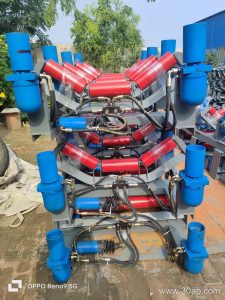
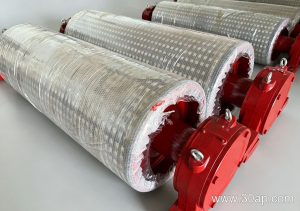
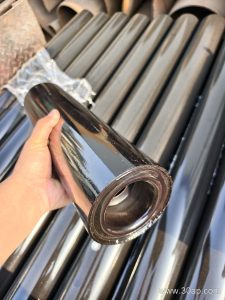
A conveyor parts pulley is the rotating drum that carries, drives, or redirects the belt on a belt conveyor. In a crushing and screening circuit, for example, the head pulley turns the belt while the tail pulley keeps it tracking back after discharge. The drum itself looks simple, but it is a load-bearing assembly with a shell, shaft, hubs, bearings, and often a lagged surface. Choosing the right one affects belt life, starting torque, and how often maintenance crews have to intervene.
The same component is often called a conveyor pulley, and both names refer to the same product. Drive pulleys, tail pulleys, and bend pulleys are not interchangeable: a drive pulley transmits torque through lagging and shaft keys, a tail pulley mainly supports and tensions the return side, and a bend pulley changes belt direction without driving. Mixing these roles up is one of the most common specification mistakes.
How the Drum Is Built
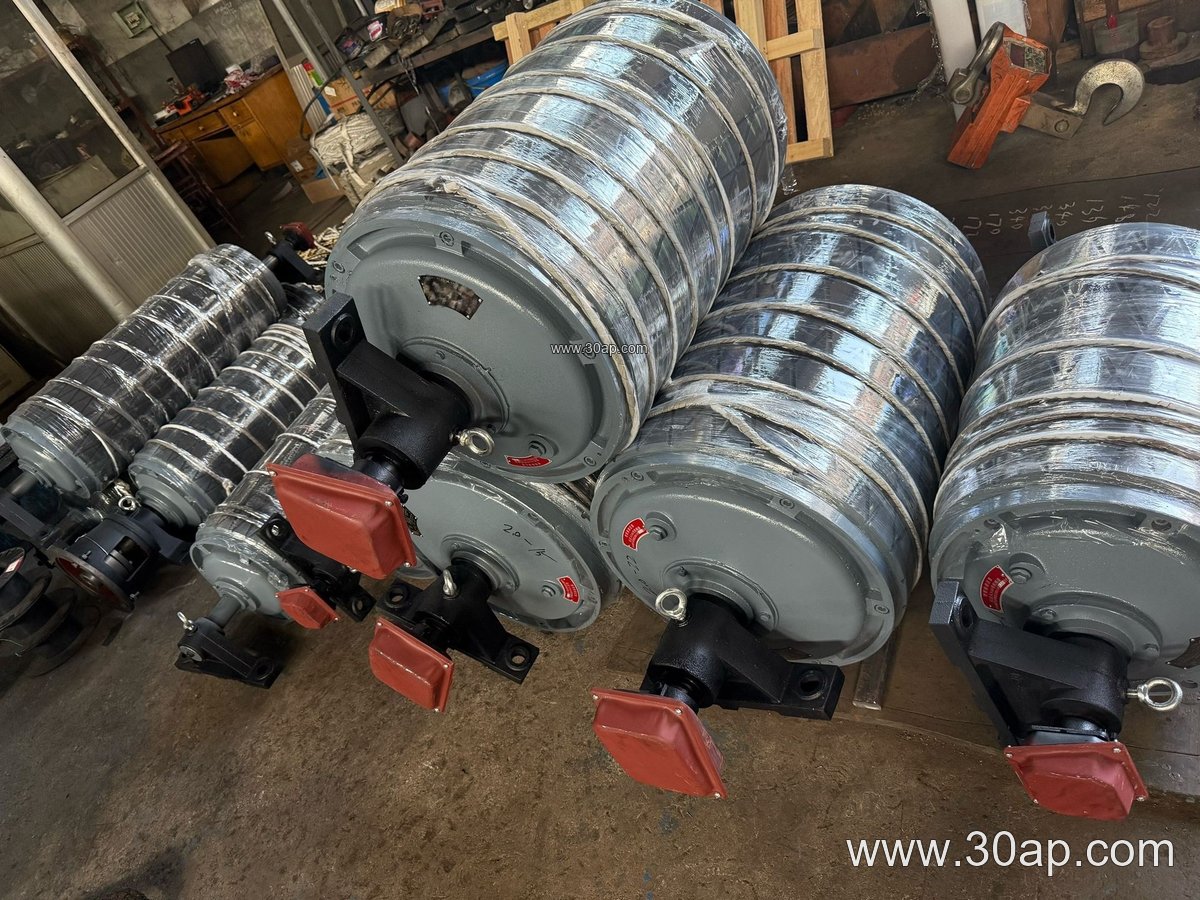
Most pulleys use a rolled steel shell welded to end discs, with a through shaft or stub shafts fixed by keyways or shrink fit. Bearings sit in housings on a conveyor bracket or frame, and the whole unit is aligned to the belt centerline. Surface treatment depends on duty: plain finish for light duties, cold-bonded rubber or hot-vulcanized rubber for grip, diamond or herringbone lagging for wet and dusty conditions, and ceramic lagging where slip and wear are severe.
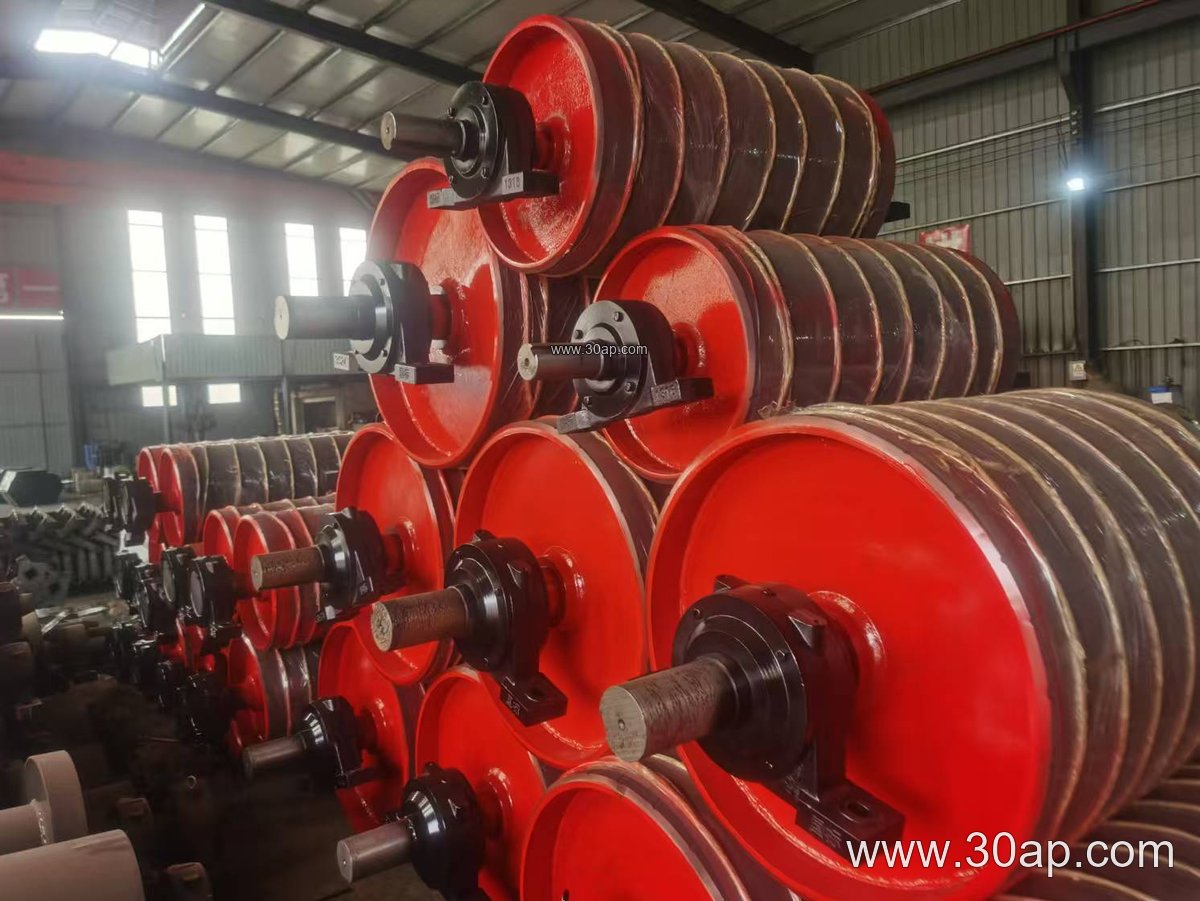
- Shell: rolled steel, machined for concentricity
- Shaft: sized by torque and load, not by belt width alone
- Lagging: plain, rubber, diamond, herringbone, or ceramic
- Bearings and housings: selected for radial load and speed
- Accessories: scraper brackets, wear liners, and shaft seals
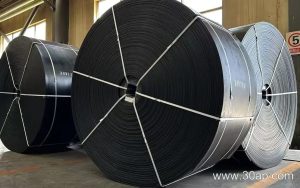
Lagging thickness commonly runs 8, 10, 12, 15, or 20 mm, and the choice should match the belt cover and the material being carried. A coal handling plant on a river port terminal may favor flame retardant and anti-static belt constructions alongside rubber-lagged drive drums, while a limestone quarry often needs abrasion resistant lagging because fines work under the belt.
Matching Pulley Width and Diameter to the Belt
The face width of a conveyor parts pulley usually exceeds the belt width so the belt is fully supported. Common references are B400 with about 500 mm face, B650 with about 750 mm, B1000 with about 1150 mm, and B1400 with about 1600 mm. Diameter is a separate decision driven by belt tension, wrap angle, and belt construction. Typical combinations seen in catalogs include B800 x Ø500 and B1200 x Ø1000, but no rule says a given belt width can only pair with one diameter. Shaft diameter is likewise determined by torque and bearing load; values such as Ø80, Ø100, Ø120, or Ø140 are selected by calculation, never copied from a belt width chart.
| Belt width reference | Typical pulley face width | Example diameter range |
|---|---|---|
| B500 | about 600 mm | Ø250 to Ø400 |
| B800 | about 950 mm | Ø400 to Ø630 |
| B1200 | about 1400 mm | Ø630 to Ø1000 |
| B1600 | about 1800 mm | Ø800 to Ø1250 |
These figures are reference data for planning, not verified universal specifications. Final sizes should always come from the conveyor design, including belt tension and the load carried by the conveyor belt.
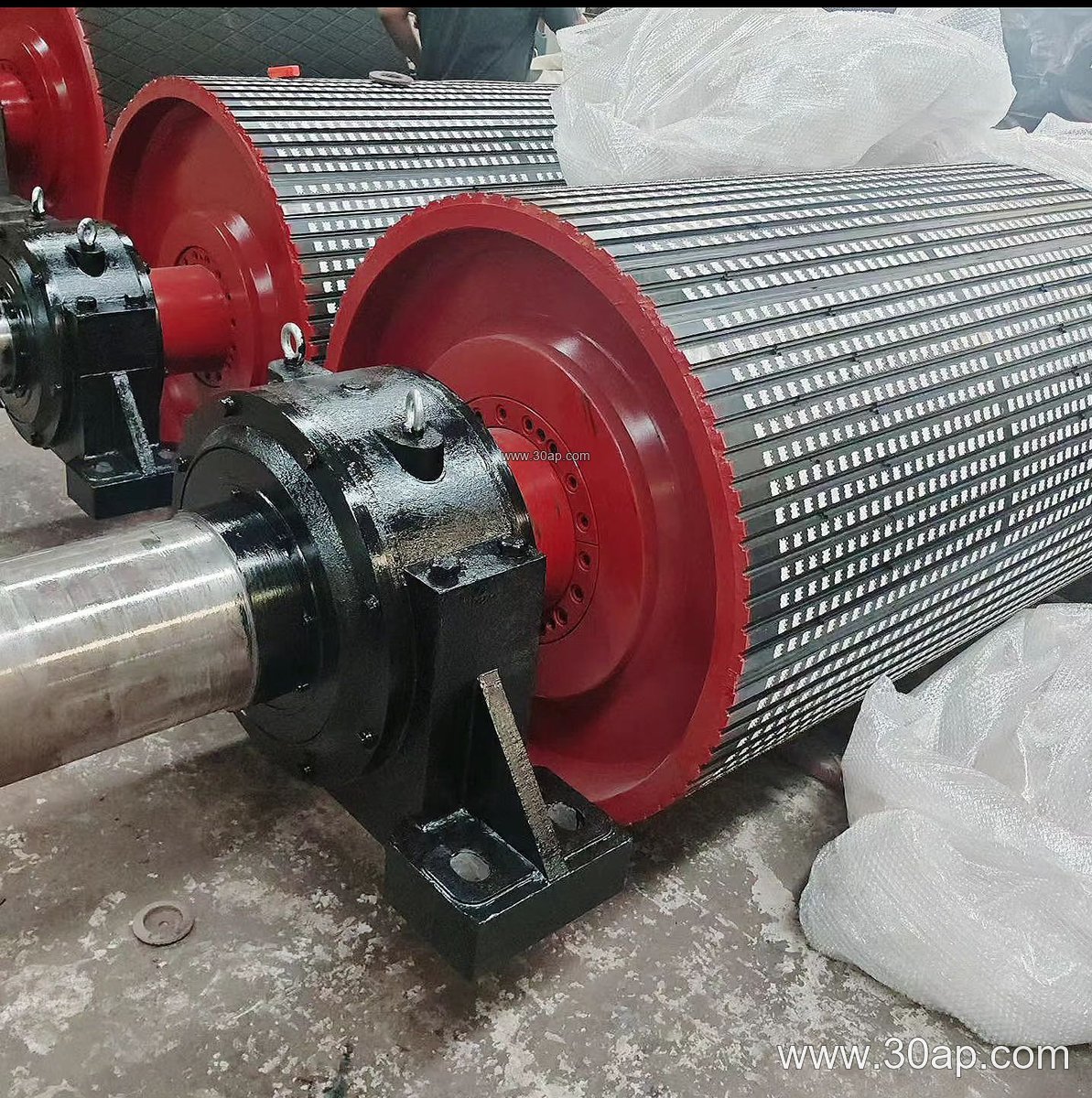
Where These Drums Are Installed
In an iron ore or copper ore concentrator, drive pulleys at the head end run continuously under high tension, so heavy-duty lagging and robust bearings matter. In a cement plant clinker line, heat and dust push buyers toward heat resistant conveyor belt grades and pulleys with protected bearing seals. A power plant coal yard may combine flame retardant conveyor belt with fire resistant lagging. The same drum family also appears in fertilizer granulation, grain silos, and tunnel muck removal, where space is tight and bend pulleys redirect the belt around obstacles.
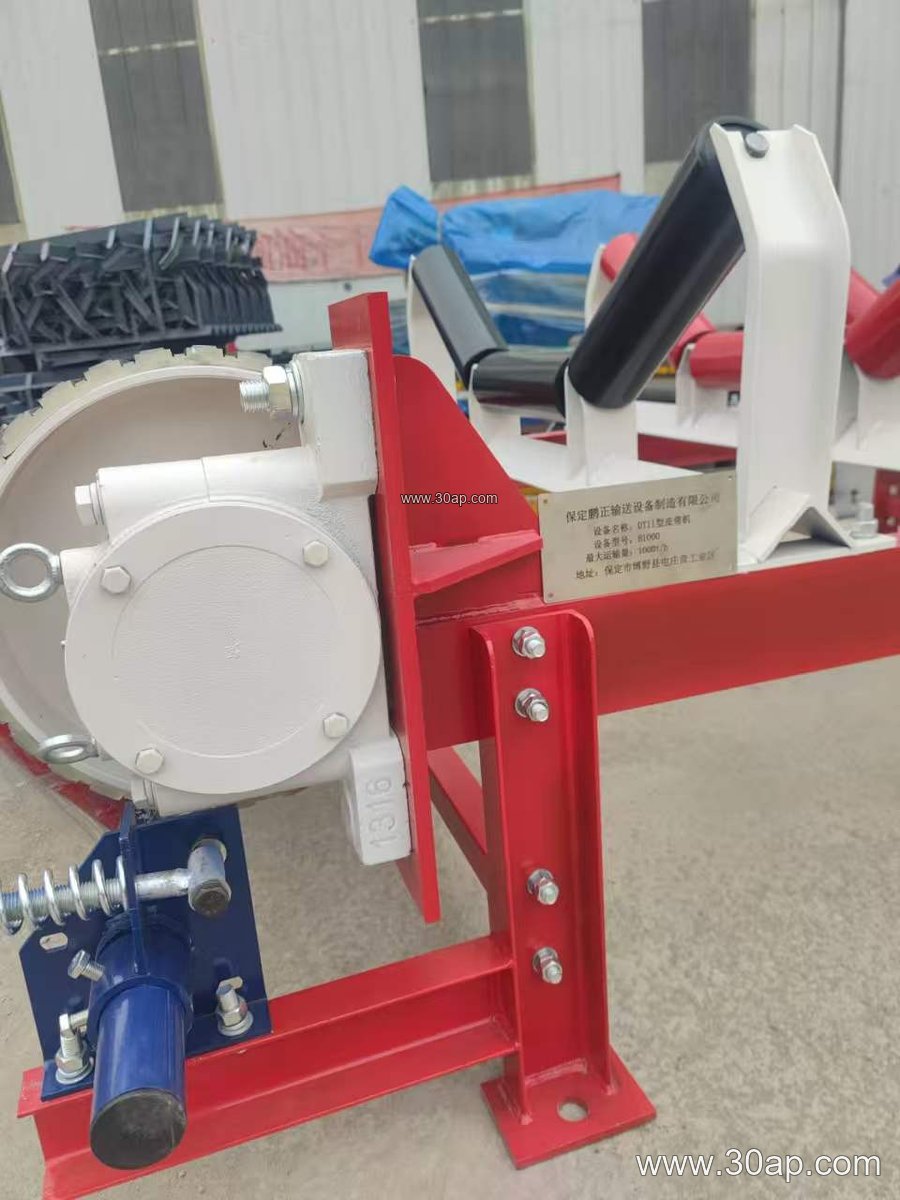
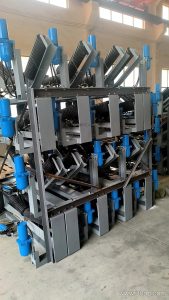
Position matters. A head pulley discharges material and must handle the full working tension. A tail pulley sits in the dirtiest area and benefits from a self-cleaning profile. A take-up or tension pulley moves along the frame to maintain belt slack. An electric drum combines motor and gearbox inside the shell and saves space on short conveyors. Snub and press pulleys increase wrap angle on the drive drum, improving grip without a larger shell.
Buyer Checklist Before Ordering
Start with the duty: tonnage per hour, belt speed, material lump size, and whether the site is a quarry, coal preparation plant, or port stockyard. Confirm the belt construction, because an EP conveyor belt and a steel cord conveyor belt behave differently under tension and need different drum diameters. Check the existing conveyor bracket and bearing centers so the new unit drops in without frame modification. Ask about lagging type and thickness, shaft material, keyway dimensions, and balancing grade. For dusty or wet service, specify seals and consider ceramic lagging. For high-temperature duties, confirm the drum can tolerate the same heat as the belt.
Finally, keep spare tail and bend pulleys in stock where access is difficult. Most unplanned stoppages trace back to a seized bearing or worn lagging, and a correctly sized conveyor parts pulley is far cheaper than lost production.