What a Large-Diameter Pulley Does
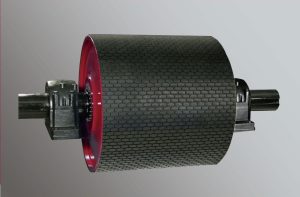
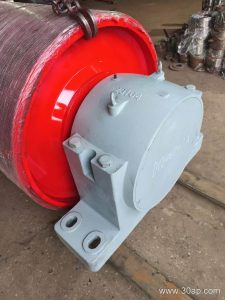
A large-diameter pulley is a conveyor pulley whose shell diameter is sized well above the minimum needed to wrap the belt. In practice, these pulleys are often found at the head, tail, tension, or bend positions of a conveyor, where a bigger drum reduces belt bending stress, improves traction, and helps the belt run cooler. The same product may also be called a large conveyor pulley or heavy-duty conveyor pulley, but it remains a drum-style pulley rather than a roller or bracket. In a quarry, cement plant, or power plant coal yard, the main drive pulley is frequently a large-diameter unit because it carries the highest torque and the tightest belt wrap.
Construction and Surface Options
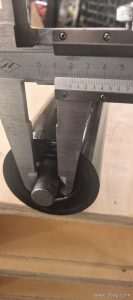
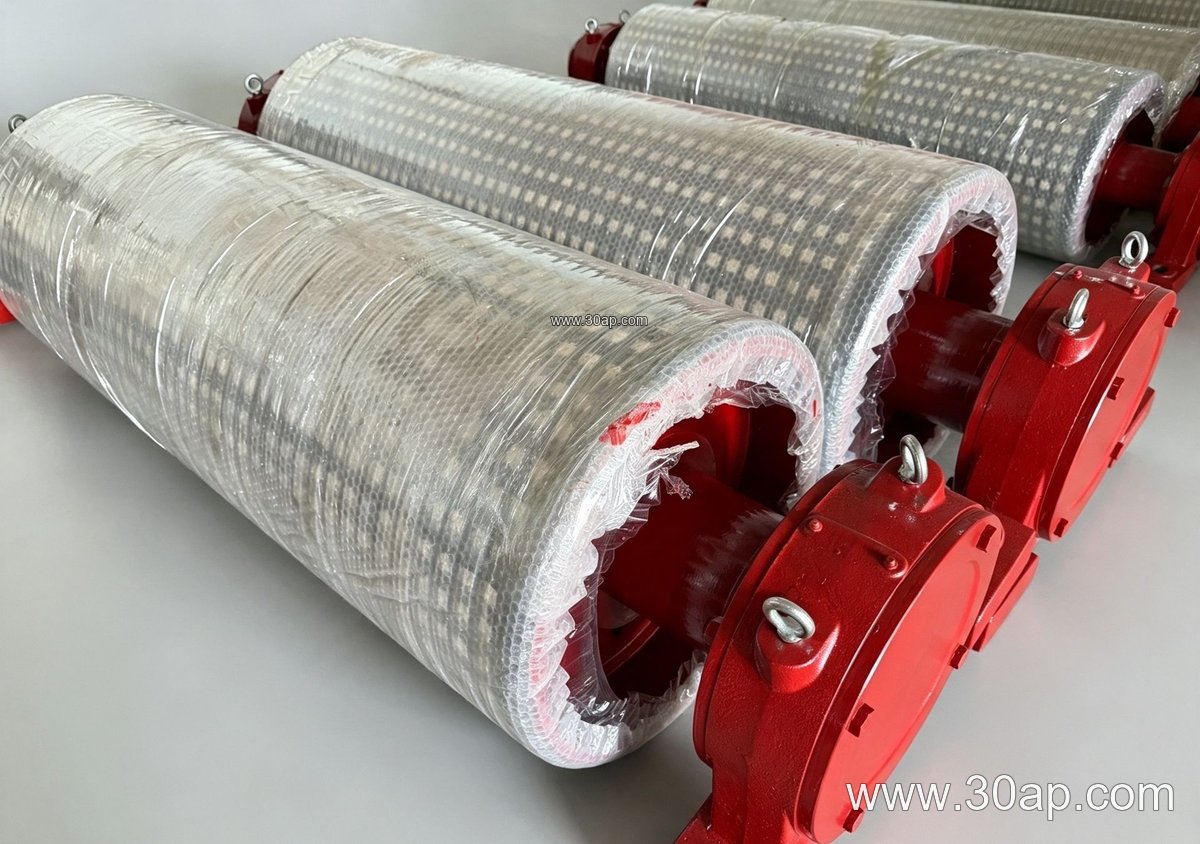
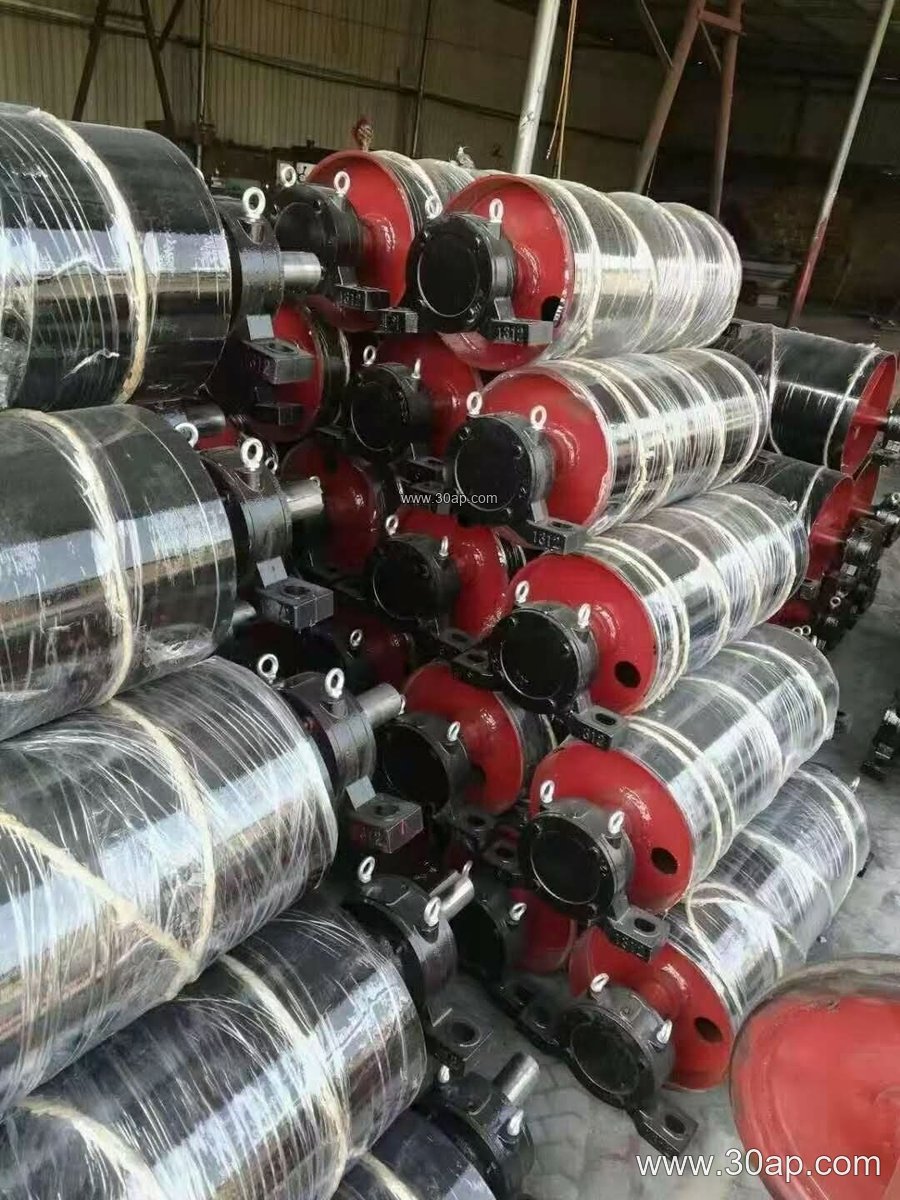
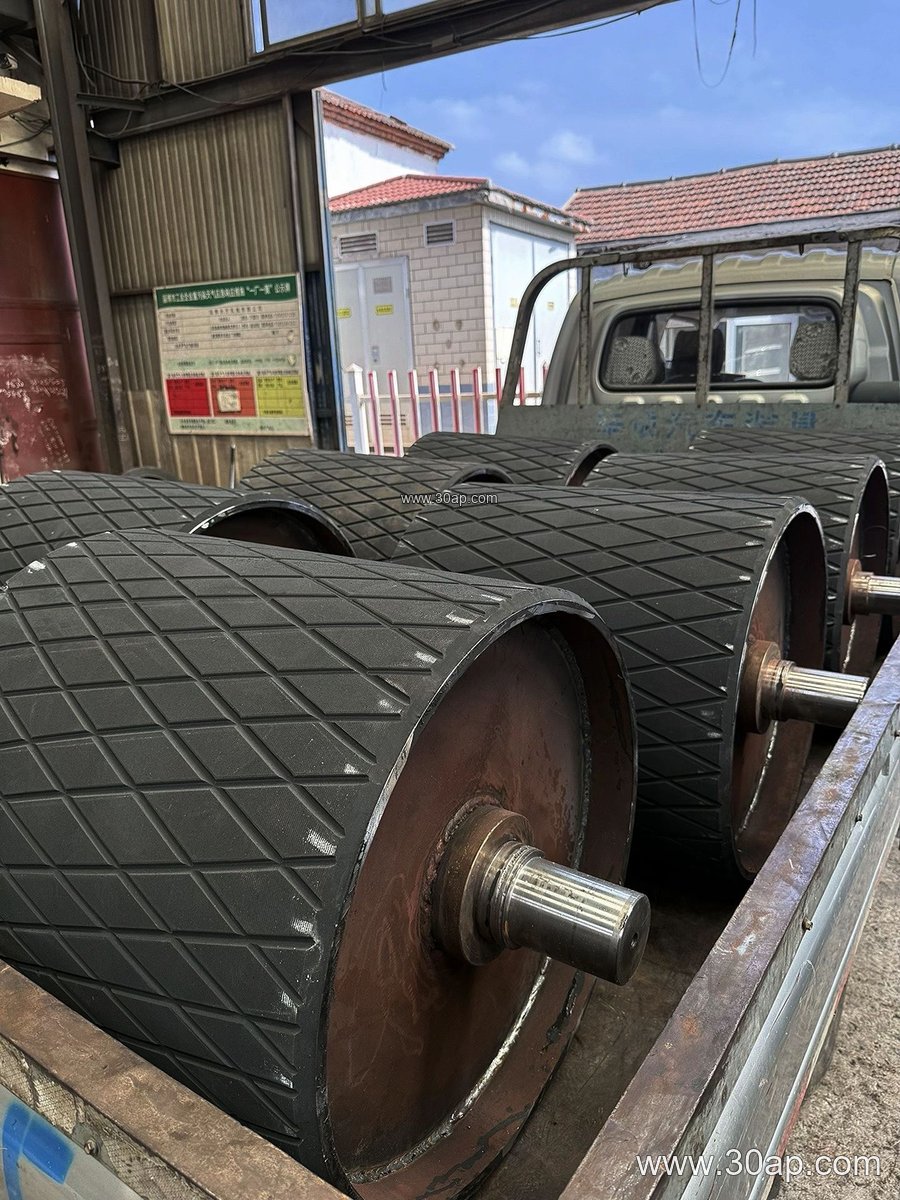
The shell is usually welded steel, machined for roundness, and fitted with shafts, hubs, and bearing housings. Common surface forms include plain, cast rubber, cold-bonded rubber, hot-vulcanized rubber, diamond grooving, herringbone grooving, ceramic lagging, and flat rubber sheet. Lagging thickness is often 8, 10, 12, 15, or 20 mm, chosen according to slip risk and material carryback. The shaft diameter is determined by torque and load, not by belt width alone, so a B1200 pulley may use a different shaft than another B1200 pulley in a different duty.
Typical Sizes and Combinations
Large-diameter pulleys are commonly selected with diameters from Ø500 up to Ø1800, and sometimes beyond for very heavy conveyors. The table below shows reference combinations, not fixed rules. A B800 belt can run on Ø500 in one conveyor and on Ø800 in another, depending on belt tension and space.
| Belt width | Face width (approx.) | Common pulley diameter | Typical position |
|---|---|---|---|
| B650 | 750 mm | Ø400, Ø500 | Tail or bend |
| B800 | 950 mm | Ø500, Ø630 | Head or tension |
| B1000 | 1150 mm | Ø630, Ø800 | Drive or head |
| B1200 | 1400 mm | Ø800, Ø1000 | Main drive |
| B1400 | 1600 mm | Ø1000, Ø1250 | Head drive |
| B1600 | 1800 mm | Ø1250, Ø1400 | Heavy drive |
| B1800 | 2000 mm | Ø1400, Ø1600 | Heavy drive |
Shaft sizes commonly range from Ø80 to Ø200 for these units, again subject to design. A B1400 × Ø800 assembly and a B1200 × Ø1000 assembly are both plausible; neither width locks the diameter.
Where It Fits in the Plant
In a limestone quarry or aggregate line, a large-diameter pulley at the crusher discharge keeps the belt tracking stable under high impact. In a coal washing plant or underground coal mining conveyor, flame retardant and anti-static belt grades are common, and the drive pulley must handle wet, sticky fines without slipping. A cement plant clinker conveyor often uses heat resistant belt and a generously sized head pulley to limit belt surface temperature. Port bulk terminals and iron ore terminals may use steel cord belt on wide faces, where a large-diameter pulley helps distribute tension across the carcass.
Buyer Checklist
- Confirm the pulley position: drive, tail, bend, tension, or snub. These are not interchangeable, and a bend pulley is not a substitute for a drive pulley.
- Check belt width and face width. The face is usually wider than the belt, for example B1000 with about 1150 mm face.
- Select lagging to match slip and wear: plain for light duty, diamond or herringbone rubber for wet conditions, ceramic for high abrasion.
- Review shaft diameter and bearing size against actual torque, not belt width alone.
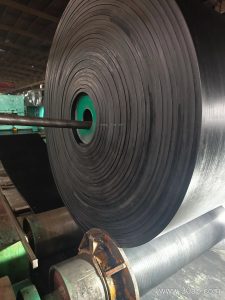
- Confirm belt compatibility, including EP conveyor belt, steel cord conveyor belt, and flame retardant grades where required.
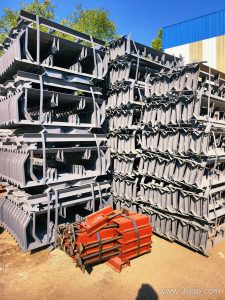
Large-diameter pulleys are one part of a system that includes the conveyor belt, idler roller, and conveyor bracket. Matching the drum to the belt and the duty, rather than to a single size rule, is what keeps a conveyor running smoothly.