What a Four-Roll Idler Bracket Does
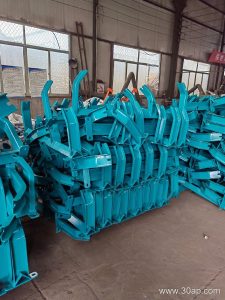
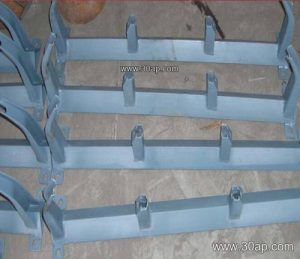
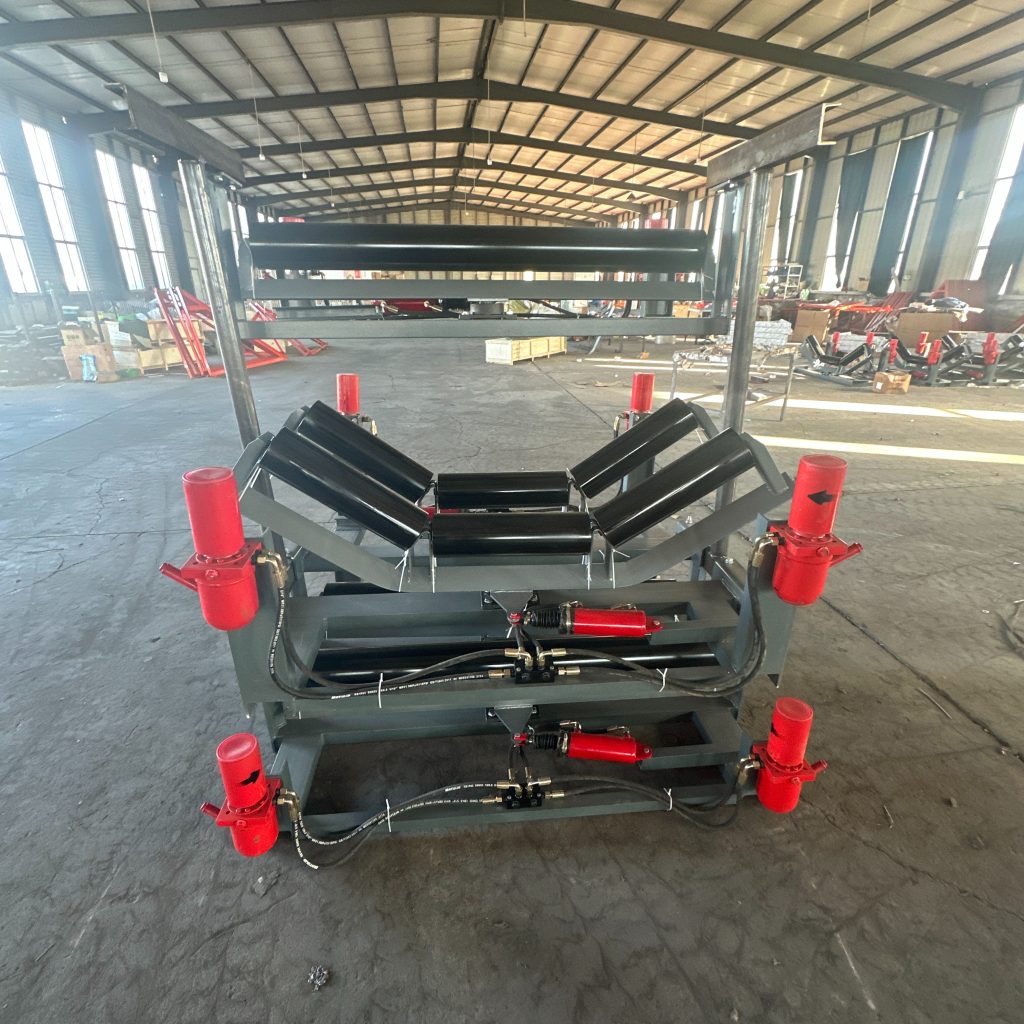
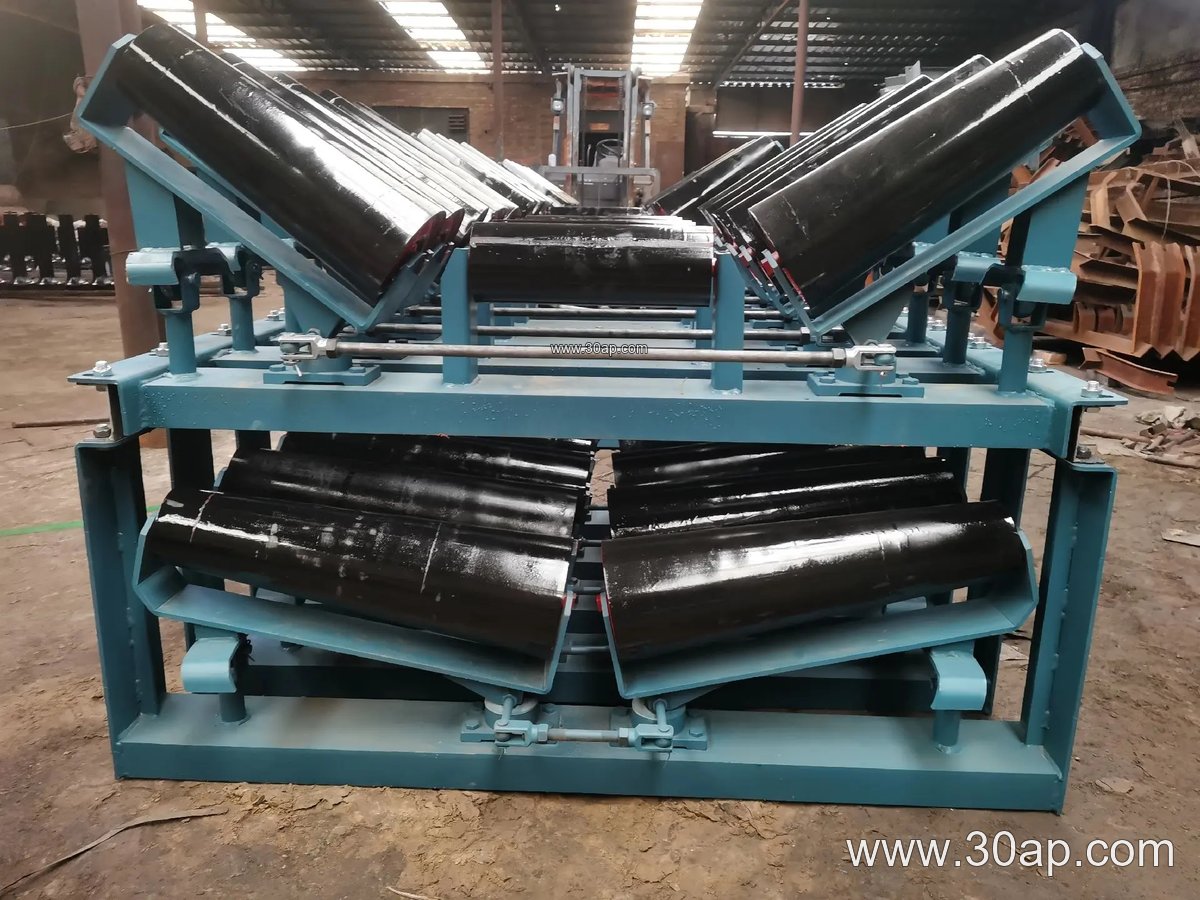
A four-roll idler bracket is a support frame that carries four idler rollers across the carrying side of a conveyor. Instead of the usual three rolls in a trough, the fourth roll sits between the outer rolls and the center, which spreads the belt load over more contact points. Operators in crushing plants, sinter lines, and bulk terminals choose this arrangement when a wide conveyor belt carries dense material and the usual three-roll trough leaves the belt sagging between rollers.
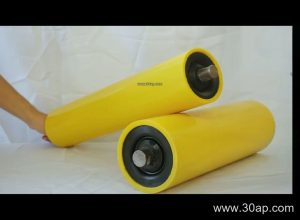
The bracket is often called a four-roll idler support frame or a four-roll troughing bracket. It is a support component, not a roller and not a pulley. Drive pulleys, tail pulleys, and bend pulleys remain separate parts of the conveyor, and a four-roll bracket should never be treated as a substitute for any of them.
How the Bracket Is Built
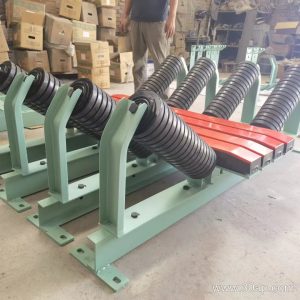
Most frames are fabricated from angle steel, channel steel, or folded steel plate. The cross member is drilled or slotted so the idler roller shafts can be seated at the required trough angle. On adjustable versions, the outer roll positions can be moved to change the trough profile; on fixed versions, the geometry is set at manufacture.
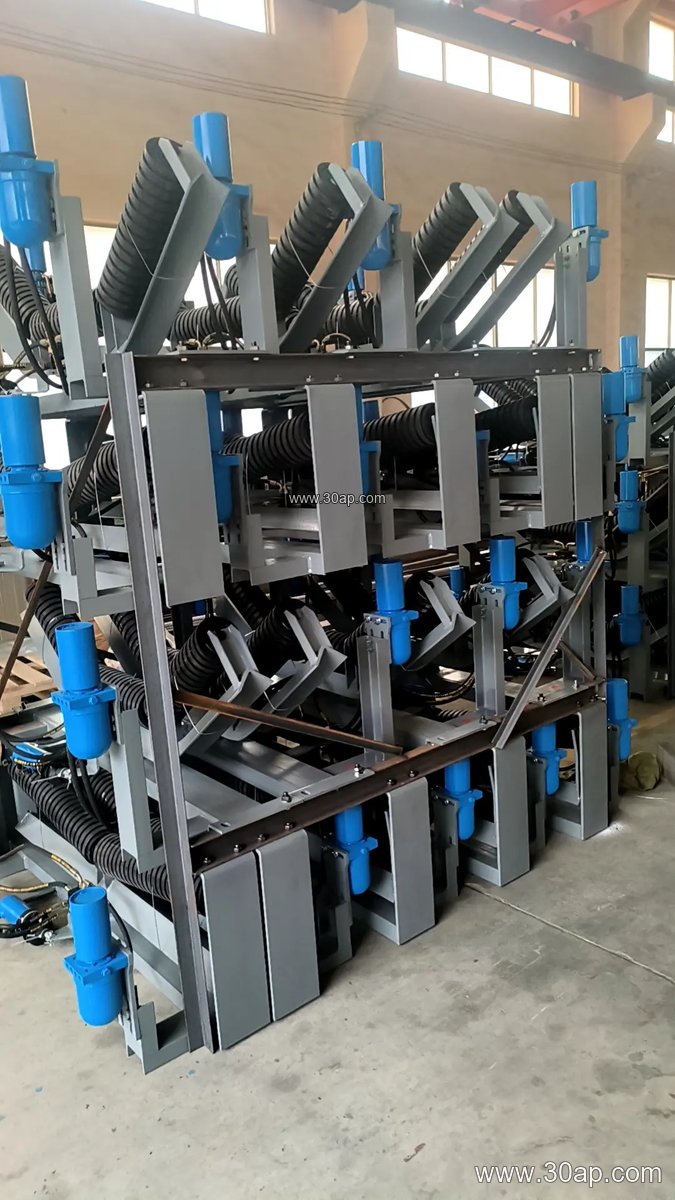
Key dimensions follow the belt width and the design load, not a single universal table. Common belt widths for this frame family are B500, B650, B800, B1000, B1200, B1400, B1600, B1800, B2000, B2200. Trough angles are usually 20, 30, 35, or 45 degrees, and roll diameters commonly fall in the range Ø89, Ø108, Ø133, Ø159, Ø194. Hole spacing and beam length change with belt width and trough angle, so they are confirmed per project.
| Reference Item | Common Range | Notes |
|---|---|---|
| Belt width | B500 to B2200 | Frame length follows belt width |
| Trough angle | 20°, 30°, 35°, 45° | Adjustable types allow changes on site |
| Roll diameter | Ø89, Ø108, Ø133, Ø159, Ø194 | Selected with load and belt speed |
| Material | Angle steel, channel steel, folded plate | Finish depends on environment |
Where Four-Roll Frames Fit
These brackets appear where belt width and material weight make three-roll support marginal. In an iron ore terminal, a wide belt moving damp concentrate benefits from the extra contact roll. In a lime kiln feed line, a four-roll frame can reduce edge stress on a thick, stiff belt. The frame also suits transition zones near a conveyor pulley, where the belt changes from flat to troughed and needs gradual support.
Heavy-duty mining conveyor belts, abrasion resistant conveyor belts, and high strength conveyor belts are typical companions. A steel cord conveyor belt on a long overland run may use four-roll troughing in load zones, while an EP conveyor belt or multi-ply fabric core conveyor belt is more often paired with standard three-roll frames. The choice depends on tension, load, and belt stiffness.
Selection Points for Buyers
- Match the belt, not the catalogue alone. Confirm belt width, trough angle, and roll diameter together. A B1200 belt at 45 degrees with Ø133 rolls is one workable combination, but it is not the only one.
- Decide fixed or adjustable. Adjustable frames help when the trough angle may be tuned later; fixed frames are simpler and stiffer.
- Check the mounting interface. Hole spacing, beam length, and frame height must match the conveyor stringer and the selected idler roller.
- Consider the environment. Dust, moisture, and temperature affect coating and material choice. In a coal preparation plant or power plant coal yard, flame retardant conveyor belt and anti-static conveyor belt properties matter alongside the frame.
- Plan maintenance access. A four-roll frame holds more rollers, so replacement access and spare parts planning deserve attention.
Installation and Care
Align the frame square to the belt centerline and keep all four rolls at the intended angle. A misaligned frame can cause belt tracking problems that look like roller faults. Inspect for loose bolts, bent beams, and worn seats during scheduled stops. In a quarry or aggregate line, wash-down and grit removal help keep the frame seating clean.
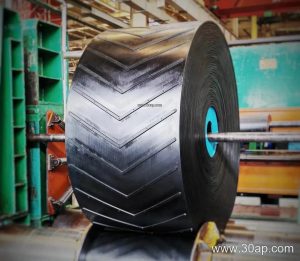
For conveyors handling chevron conveyor belt, skirted conveyor belt, or corrugated sidewall conveyor belt profiles, check clearance between the belt and the frame, since raised profiles need more room. Related components such as the conveyor bracket set and the conveyor pulley should be reviewed as one system during layout.
Buyers should treat the four-roll idler bracket as an engineered support item. Ask for a drawing that shows belt width, trough angle, roll diameter, and mounting dimensions, and confirm these against the actual conveyor before ordering.