What a Belt Conveyor Impact Idler Does
A belt conveyor impact idler is the cushioning roller set placed where material first lands on the belt, usually directly under the loading chute or transfer point. Instead of a rigid steel surface, these idlers carry rubber rings or other resilient rollers that absorb the energy of falling rock, ore, or aggregate. The result is less shock on the conveyor belt, fewer punctures and edge tears, and steadier tracking through the load zone. In a quarry conveyor line or a coal handling system, this small group of rollers often decides how long the belt itself will last.
The impact idler works together with the belt, the conveyor bracket, and the surrounding frame. It does not replace the carrying idlers downstream, nor does it substitute for a conveyor pulley at the head or tail. Each part has its own job, and the impact idler is specifically the shock-absorbing element at the receiving point.
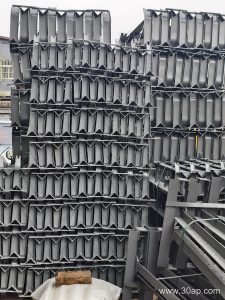
How the Roller Is Built
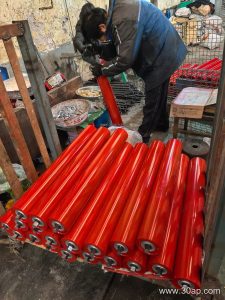
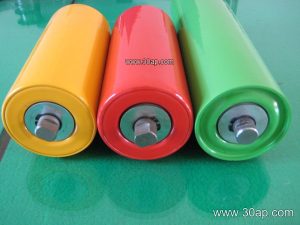
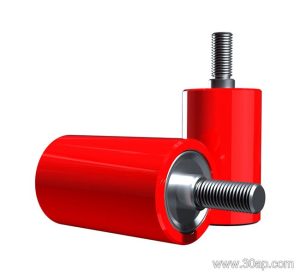
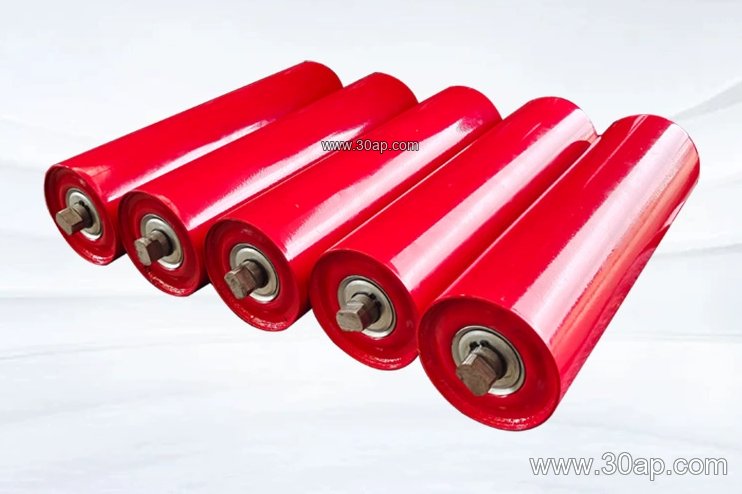
A typical unit uses a steel tube body fitted with thick rubber rings, sometimes molded directly onto the shell. The rings are spaced along the roller so the belt is supported between them while the rubber compresses under impact. Inside, the shaft runs through sealed bearings, commonly 6204, 6205, 6305, 6306, or 6308 depending on the load and roller diameter. Bearing selection is matched to the application rather than fixed to one roller size.
Common roller diameters for this duty include Ø89, Ø108, Ø127, Ø133, Ø159, and Ø178 mm, with larger sizes used where lump size and drop height are significant. Roller length follows belt width and trough geometry. For a three-roll troughing set, typical roller lengths are roughly 200 mm at B500, 250 mm at B650, 315 mm at B800, 380 mm at B1000, 465 mm at B1200, 530 mm at B1400, 600 mm at B1600, 670 mm at B1800, and 750 mm at B2000. These are common reference figures; side rollers and center rollers can differ, and final dimensions are set by design.
Common Reference Dimensions
| Belt width | Typical roller length (three-roll set) | Common trough angle |
|---|---|---|
| B500 | about 200 mm | 20 to 35 degrees |
| B650 | about 250 mm | 20 to 35 degrees |
| B800 | about 315 mm | 30 to 35 degrees |
| B1000 | about 380 mm | 30 to 35 degrees |
| B1200 | about 465 mm | 30 to 35 degrees |
| B1400 | about 530 mm | 30 to 45 degrees |
| B1600 | about 600 mm | 30 to 45 degrees |
Where Impact Idlers Are Used
The most common home for these rollers is a crusher discharge or a truck dump hopper in an aggregate plant, where large lumps hit the belt at speed. They are equally at home in a limestone quarry, an iron ore transfer station, or a cement plant receiving clinker and raw material. Power plant coal handling and port ship-loading lines also use them under chutes where the drop height cannot be reduced further.
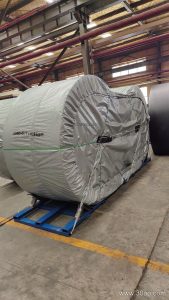
In these positions the belt is often a heavy-duty mining conveyor belt or an abrasion resistant conveyor belt, and the impact idler protects that investment. A steel cord conveyor belt may be used on long overland runs, while EP conveyor belt or NN conveyor belt constructions are common on shorter in-plant conveyors. The impact roller must suit the belt and the material, not the other way around.
Selecting the Right Unit
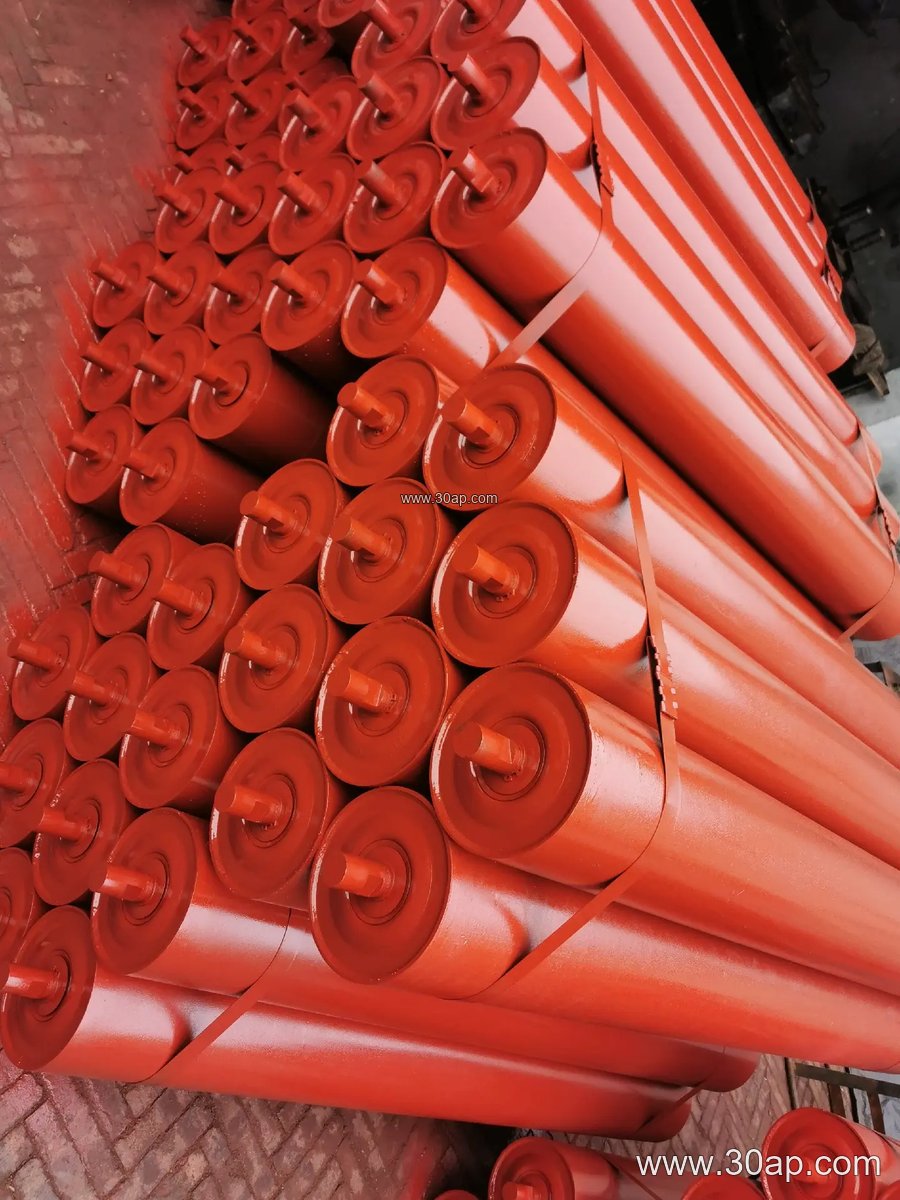
Buyers should start with the drop height, lump size, throughput, and belt width. A high drop with sharp rock calls for thicker rubber rings and a larger roller diameter; a modest transfer may need only a standard cushioning set. Check that the idler frame matches the existing conveyor bracket spacing and that the roller ends fit the mounting slots.
- Confirm belt width and trough angle before ordering.
- Match roller diameter to load and available space.
- Verify bearing size and sealing for dusty or wet conditions.
- Check that the rubber rings are replaceable or suitably thick.
- Keep spare rings or complete rollers for the loading zone.
It also helps to review the whole transfer point. A skirted conveyor belt or corrugated sidewall conveyor belt may reduce spillage, but it does not remove impact energy. Likewise, a properly aligned conveyor pulley at the discharge end keeps the belt centered so the impact idlers wear evenly. For buyers sourcing through a supplier site such as beltconveyorparts.com, it is worth asking for the roller drawing and confirming dimensions against the actual frame.
Maintenance Notes
Inspect the impact idlers during every belt shutdown. Look for worn or missing rubber rings, seized bearings, and material buildup between rollers. A worn impact roller transfers shock back to the belt and can shorten the life of a heat resistant conveyor belt or flame retardant conveyor belt used nearby. Replace worn rings before the steel shell is exposed, and keep the load zone free of spilled material that can jam the rollers.
When the loading conditions change, for example a larger primary crusher or a new chute design, revisit the impact idler specification. The right cushioning roller at the transfer point is a small part of the conveyor, but it protects the belt, the frame, and the whole conveying system.