What a Heavy-Duty Conveyor Bracket Does
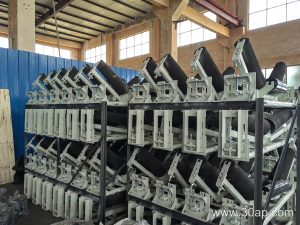
A heavy-duty conveyor bracket is the structural support that holds idler rollers in place along a conveyor belt. In tough environments such as a limestone quarry, a coal preparation plant, or a cement kiln feed line, this bracket must keep the belt aligned and the rollers spinning under constant load. Unlike a standard bracket, the heavy-duty version is built with thicker steel and reinforced joints to resist vibration, impact, and abrasive dust.
Also called a heavy-duty conveyor support frame or heavy-duty idler bracket, this component is not interchangeable with a drive pulley or a tail pulley. Those are pulleys that transmit power or redirect the belt. The bracket simply carries the idlers that support the belt’s carrying and return runs. A bend pulley, for example, changes belt direction, while the bracket keeps the belt path stable between pulleys.
Construction and Materials
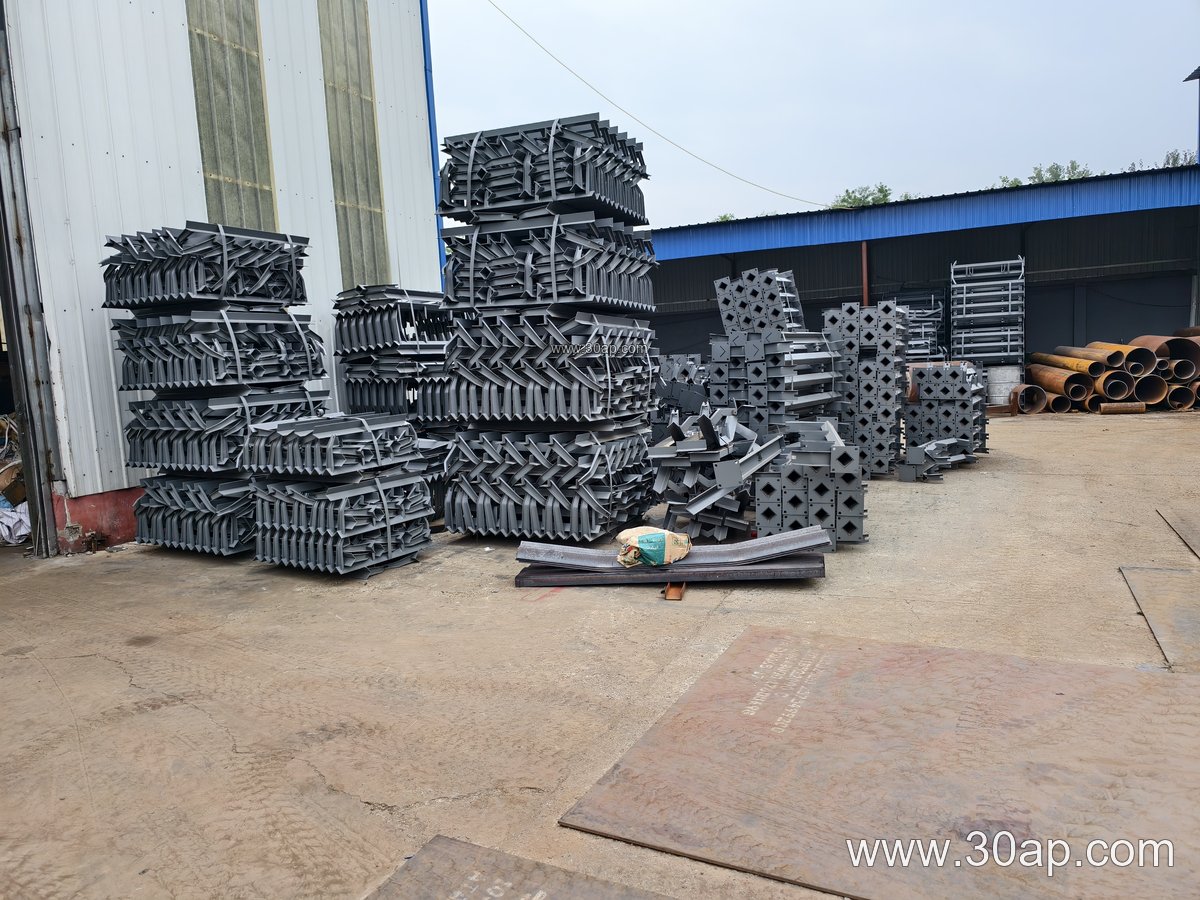
Most heavy-duty conveyor brackets are fabricated from angle steel, channel steel, or folded steel plate. The choice depends on the load and the belt width. For a B1200 belt with 35-degree troughing, a channel steel bracket with reinforced gussets is common. For narrower belts like B650, angle steel may be sufficient, but heavy-duty versions still use thicker sections. Welds are typically continuous and ground smooth to avoid stress points.
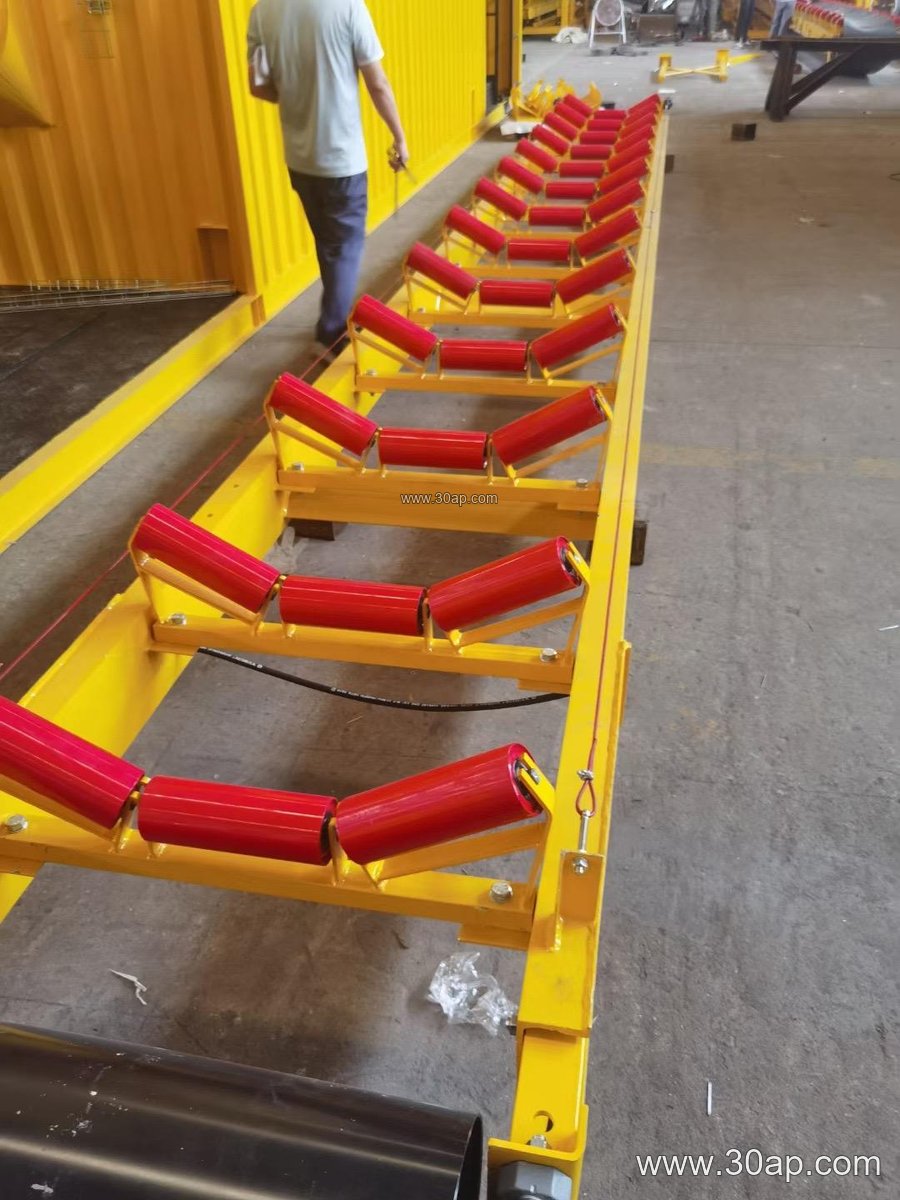
The bracket’s design must match the trough angle and roller diameter. Common trough angles are 20, 30, 35, and 45 degrees. Roller diameters such as Ø89, Ø108, Ø133, Ø159, and Ø194 are used according to belt speed and material weight. A heavy-duty bracket for a B1600 belt at a port terminal might use Ø159 rollers with a 45-degree trough, while a B800 bracket in a sand and gravel line often pairs Ø108 rollers with a 30-degree trough. These are examples, not fixed rules—mounting hole spacing and beam length vary with belt width and trough angle.
Where It Is Used
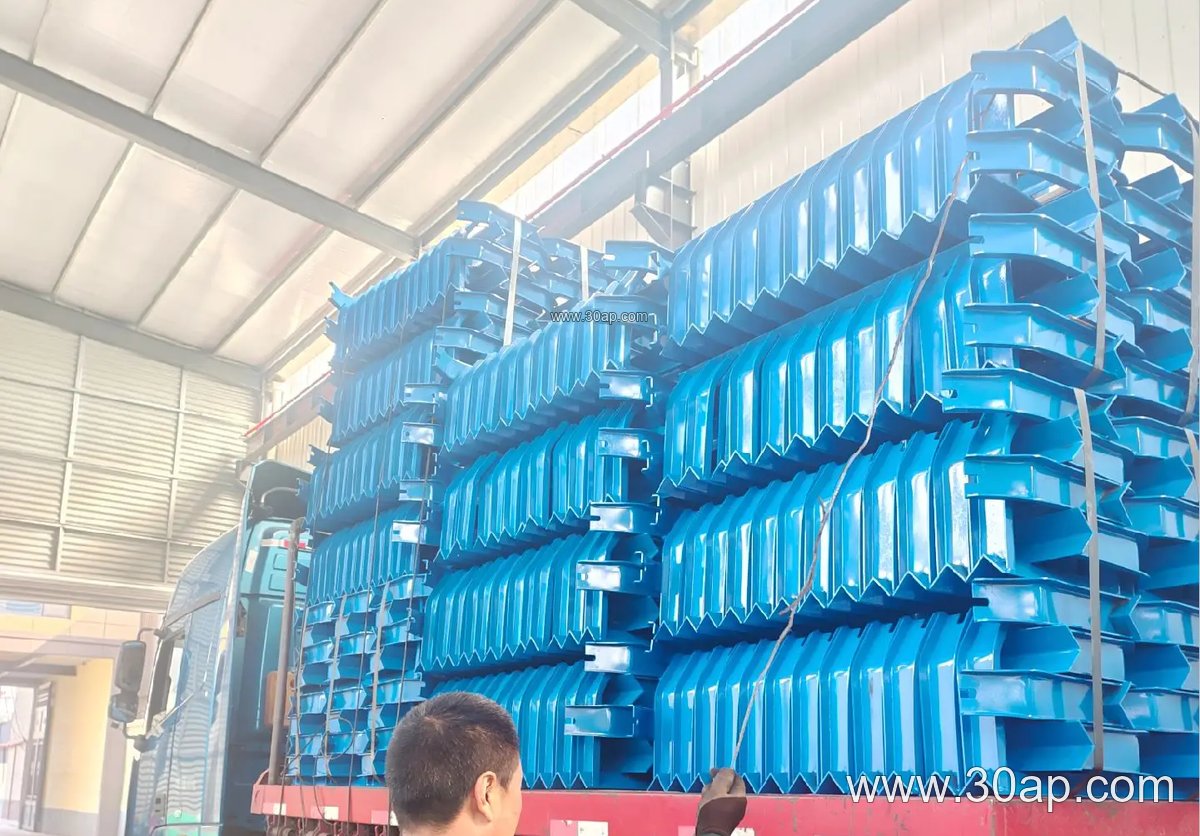
Heavy-duty conveyor brackets appear in any operation where the belt carries dense, abrasive, or high-impact material. In a coal mine, they support the main haulage belt through wet, dusty conditions. In a cement plant, they handle clinker and raw meal with high temperatures and abrasion. Iron ore terminals and steel sinter plants rely on them to keep the belt centered under heavy loads. Even a tunnel boring operation may use heavy-duty brackets on the spoil conveyor to withstand shock loading from rock fragments.
Other industries include fertilizer granulation, grain silos, and crushing and screening plants. In each case, the bracket works with the conveyor belt, idler rollers, and conveyor pulleys to maintain a smooth path. A misaligned or weak bracket can cause belt edge damage, roller seizure, and spillage—problems that are costly in a continuous process.
Types and Selection
Heavy-duty brackets come in several forms. Troughing brackets hold three rollers in a trough shape. Transition brackets ease the belt from flat to troughed. Return brackets support the belt’s return side, often with a V-shaped roller arrangement. Impact brackets use rubber or spring cushions to absorb shock at loading points. Self-aligning brackets help correct belt tracking. Adjustable brackets allow the trough angle to be changed within a range, such as from 20 to 45 degrees, which is useful when belt conditions vary.
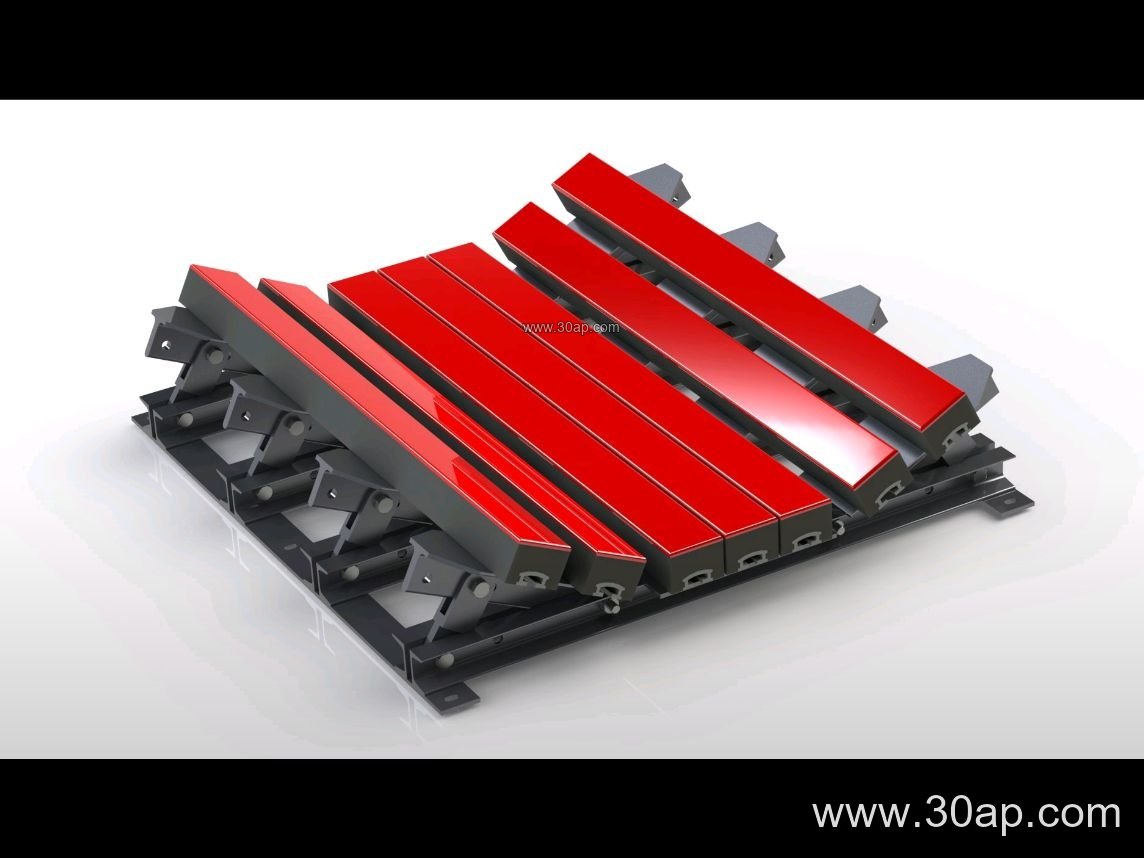
When selecting a heavy-duty conveyor bracket, consider the belt width, the roller diameter, the trough angle, and the applied load. A bracket for a B1000 belt with 35-degree trough and Ø133 rollers will have different dimensions than one for a B1400 belt with 45-degree trough and Ø159 rollers. Do not assume that one belt width matches only one roller diameter—designs vary. Also check the mounting hole pattern and beam length against the conveyor frame. For high-impact zones, a cushion bracket is preferable to a standard troughing bracket. For long overland conveyors, adjustable brackets can simplify alignment during installation.
Buyer’s Checklist
- Confirm the belt width (e.g., B800, B1200, B1800) and the required trough angle.
- Match the roller diameter to the bracket’s cradle—Ø89, Ø108, Ø133, Ø159, or Ø194 are common.
- Check the steel grade and thickness; heavy-duty usually means thicker sections and reinforced corners.
- Verify the mounting dimensions and hole spacing against your conveyor frame drawings.
- Ask about surface treatment—painted, galvanized, or powder-coated—for corrosion resistance in wet or chemical environments.
- Consider the type: fixed troughing, transition, return, impact, self-aligning, or adjustable.
- Plan for maintenance access; brackets that allow quick roller replacement reduce downtime.
A well-chosen heavy-duty conveyor bracket is a small part of the total conveyor cost but a major factor in reliability. In a quarry, a coal plant, or a cement works, it keeps the belt running true and the idlers turning. Review the actual load and environment with your supplier, and treat catalog sizes as a starting point for the design conversation.