What an Assembled Pulley Is and Where It Fits
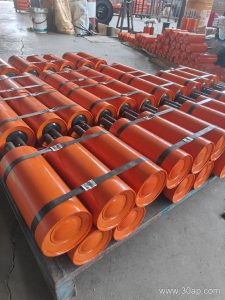
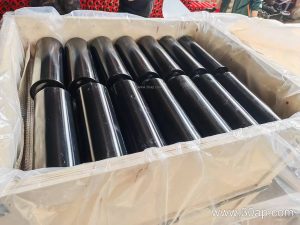
An assembled pulley is a complete conveyor pulley unit supplied with the shell, shaft, hub, bearing housings and locking elements already put together as one assembly. Instead of sourcing a bare shell and then matching a shaft, bearings and end caps separately, the buyer receives a ready-to-install component. In a quarry, cement plant or power station coal yard, this shortens the fitting window during a belt change and reduces the risk of mismatched parts. The same product is also called a conveyor pulley assembly or simply a pulley assembly, and it sits at the head, tail, take-up or bend position of a belt conveyor.
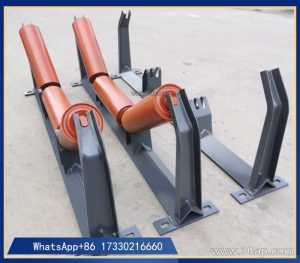
The assembled pulley works together with the Rubber Conveyor Belt, the idler roller set and the conveyor bracket. Its main job is to change the belt direction and to transmit or absorb tension. Drive, tail and bend pulleys are not interchangeable; each position asks for a different duty, and that difference should guide the specification before price is discussed.
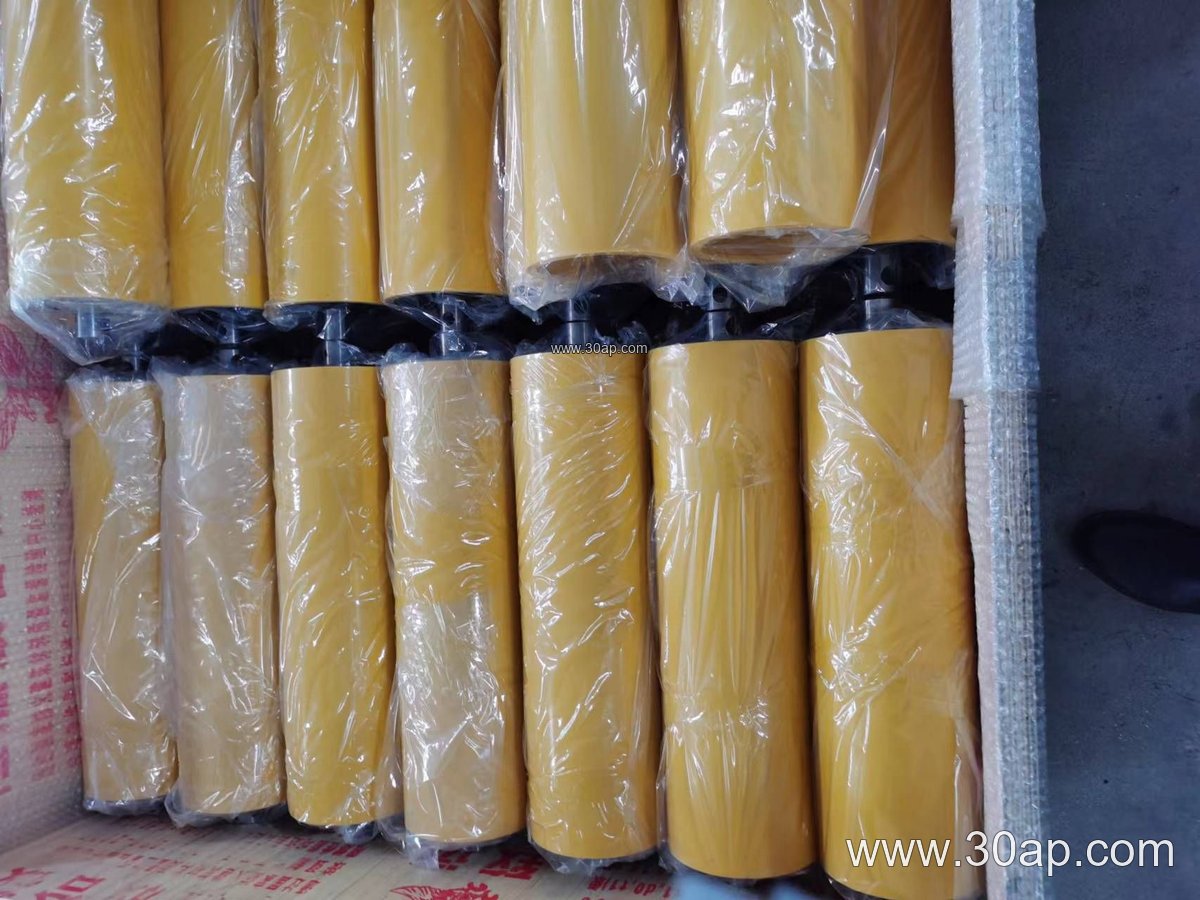
How the Assembly Is Built
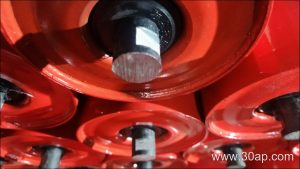
A typical unit starts with a steel shell, often machined on the outside and fitted with end discs welded to the shaft or to a hub. The shaft is sized by torque and load, not by belt width alone, so a B800 conveyor may run a modest shaft while a heavily loaded B1200 drive position could need a much larger one. Common shaft diameters include Ø80, Ø100, Ø120, Ø140 and Ø160 mm, but these are reference values and the final size is determined by design.
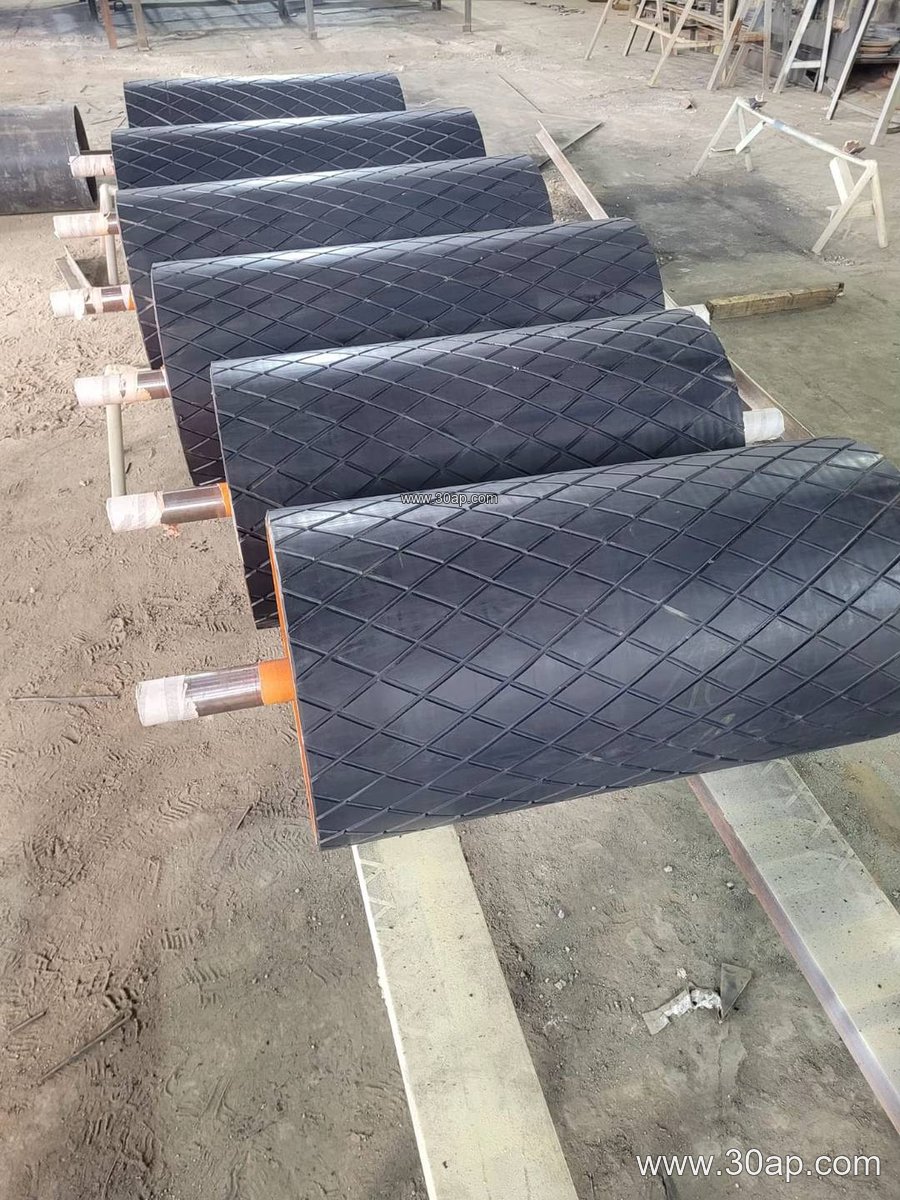
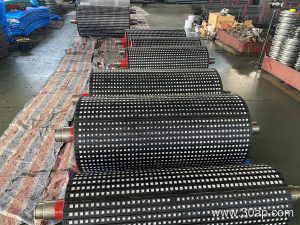
Surface treatment matters as much as the metal underneath. Plain finish suits light duty and reversing belts. Rubber lagging, applied by cold bonding or hot vulcanizing, improves grip and protects the shell. Diamond and herringbone patterns help shed water and fines, while ceramic lagging is chosen where abrasion is severe. Lagging thickness is commonly 8, 10, 12, 15 or 20 mm. Bearings are usually spherical roller types in sealed housings, and the assembly is balanced before dispatch.
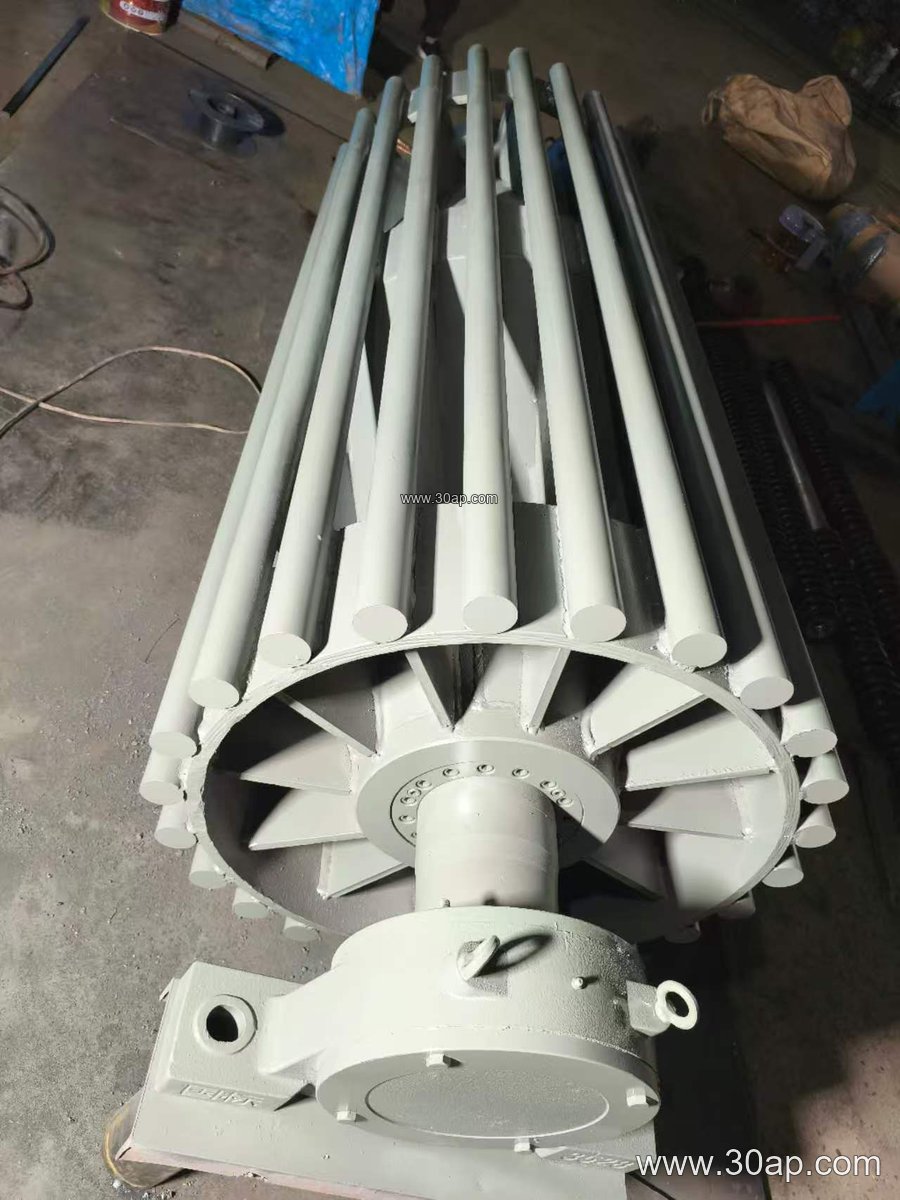
Common Sizes and Reference Combinations
Diameter and face width should be read together. Face width is normally a little wider than the belt, and diameter follows the belt tension, wrap angle and shaft load. The table below gives common reference values; it is not a fixed pairing rule.
| Belt width | Typical face width | Common diameter range | Example combination |
|---|---|---|---|
| B500 | about 600 mm | Ø250 to Ø400 | B500 × Ø315 |
| B650 | about 750 mm | Ø315 to Ø500 | B650 × Ø400 |
| B800 | about 950 mm | Ø400 to Ø630 | B800 × Ø500 |
| B1000 | about 1150 mm | Ø500 to Ø800 | B1000 × Ø630 |
| B1200 | about 1400 mm | Ø630 to Ø1000 | B1200 × Ø1000 |
| B1400 | about 1600 mm | Ø800 to Ø1250 | B1400 × Ø800 |
| B1600 | about 1800 mm | Ø1000 to Ø1400 | B1600 × Ø1250 |
| B1800 | about 2000 mm | Ø1250 to Ø1600 | B1800 × Ø1400 |
A wider belt does not automatically mean a larger diameter, and one belt width can match several pulley diameters depending on the layout. Where the conveyor carries abrasive ore or clinker, a larger diameter and thicker lagging often extend service life, but the shaft and bearings must be checked at the same time.
Matching the Pulley to the Belt and the Job
On a primary crusher discharge in a limestone mine, the head pulley must cope with sharp rock and a fast belt. A lagged assembly with a robust shaft is a sensible starting point. On a coal yard feeding a power plant, a Flame Retardant Conveyor Belt is common, and the pulley surface should avoid excessive slip that can generate heat. In a cement plant clinker line, a Heat Resistant Conveyor Belt may run alongside a pulley fitted with heat-tolerant lagging.
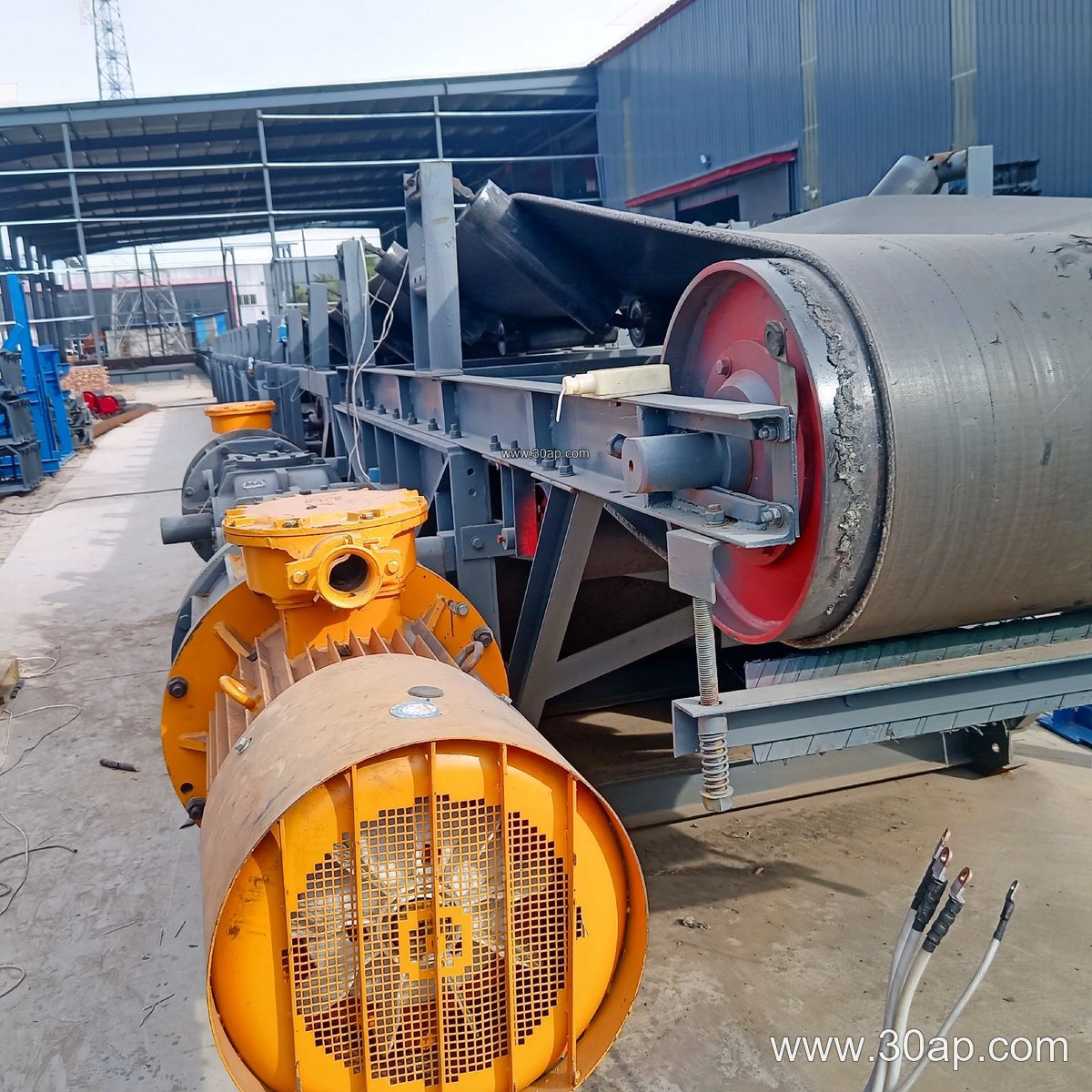
Tail and take-up positions see different loads from the drive. A bend pulley only redirects the belt and usually carries lower torque. Buyers should state the position, the belt type, the belt tension and the ambient conditions, then let the supplier confirm the shaft, bearing and lagging. Mentioning the belt grade, such as an EP Conveyor Belt or a steel cord belt, helps the supplier match the pulley to the real tension.
Buyer Checklist Before Ordering
- Confirm the position: drive, tail, take-up or bend, and the wrap angle.
- Give belt width, belt type and working tension, not only the pulley diameter.
- Specify lagging type and thickness, plus the environment: wet, dusty, oily or hot.
- Check shaft diameter against torque and load, and confirm bearing type and sealing.
- Ask for the balancing report and the assembly drawing, and confirm the mounting bracket interface.
- Plan spare lagging and bearing access for maintenance.
An assembled pulley is a small part of the conveyor but a large part of its reliability. Getting the position, the surface and the shaft right at the order stage is cheaper than a stoppage in the pit or the silo.