What a Side Roller Does on a Conveyor
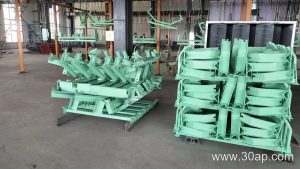
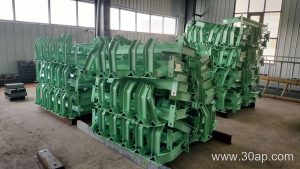
A side roller is the inclined roller at each end of a trough set, and it is the part that lifts the belt edges so bulk material sits in a stable channel. On a three-roller idler group, the two side rollers carry the outer edges of the belt while the center roller supports the middle. The angle they form is the trough angle, usually 20, 30, 35 or 45 degrees. In a quarry, a coal handling plant or a cement kiln feed line, that angle decides how much material the belt can hold without spilling.
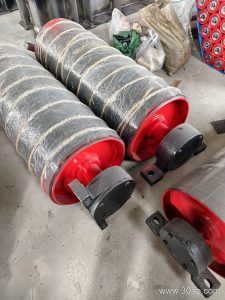
The name is practical rather than formal. Suppliers may list this component as a side roller, wing roller or inclined idler roller, but all of them describe the same position in the trough set. It is not a drive pulley, a tail pulley or a bend pulley, and it should never be ordered as a substitute for one of those.
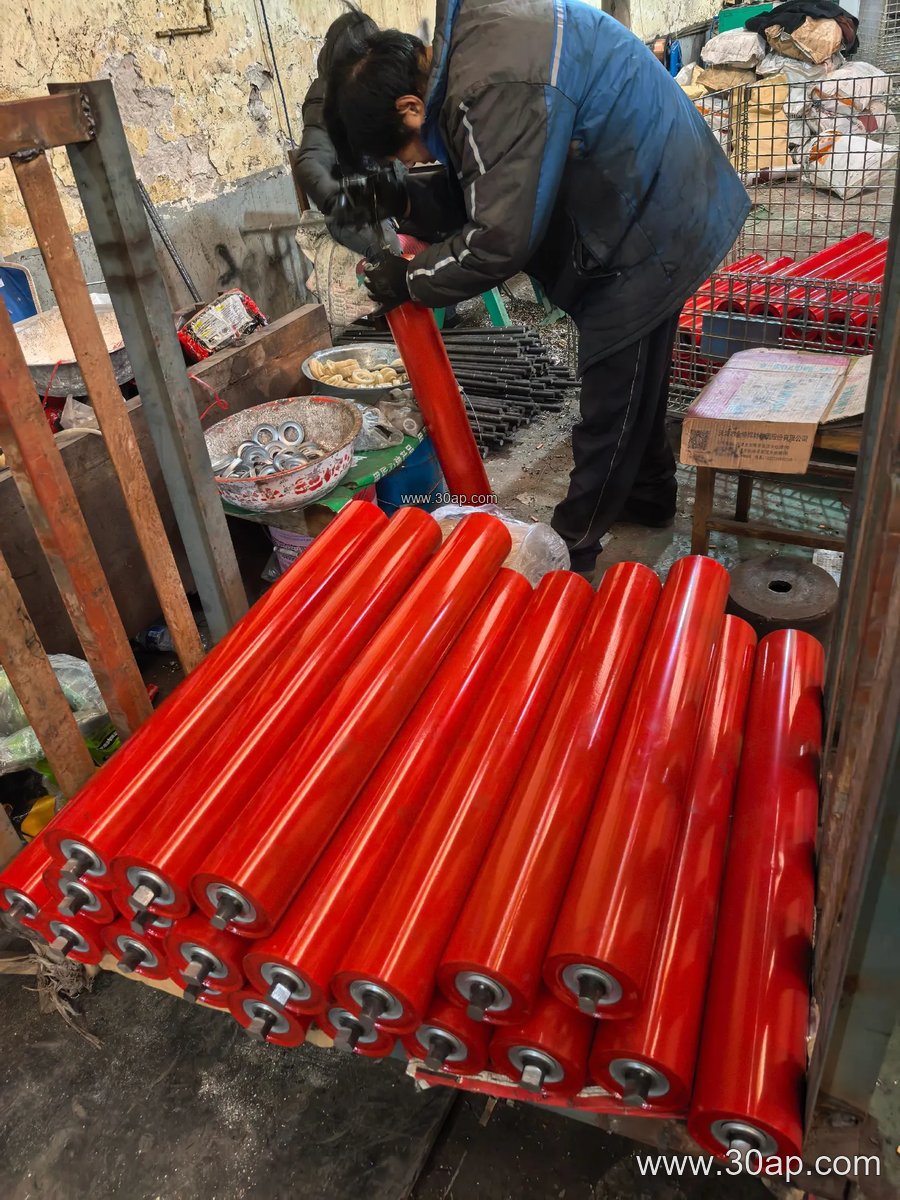
How the Roller Is Built
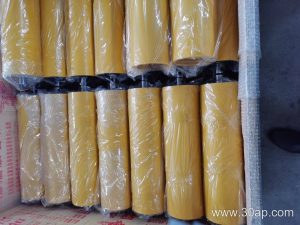
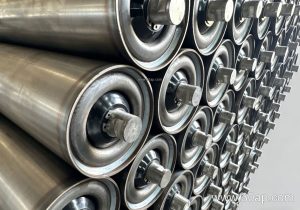
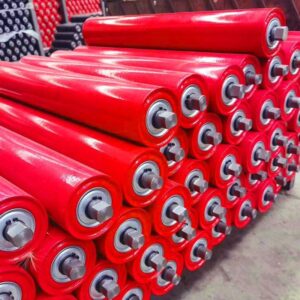
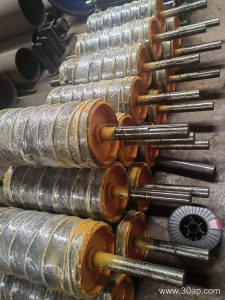
A typical side roller combines a steel tube shell, a shaft, bearing housings and a sealing arrangement. The shell may be plain steel, nylon-coated, ceramic-lined or fitted with rubber rings for impact absorption. Common bearing sizes include 6204, 6205, 6305, 6306, 6308 and 6310, matched to the load and shaft design rather than to belt width alone.
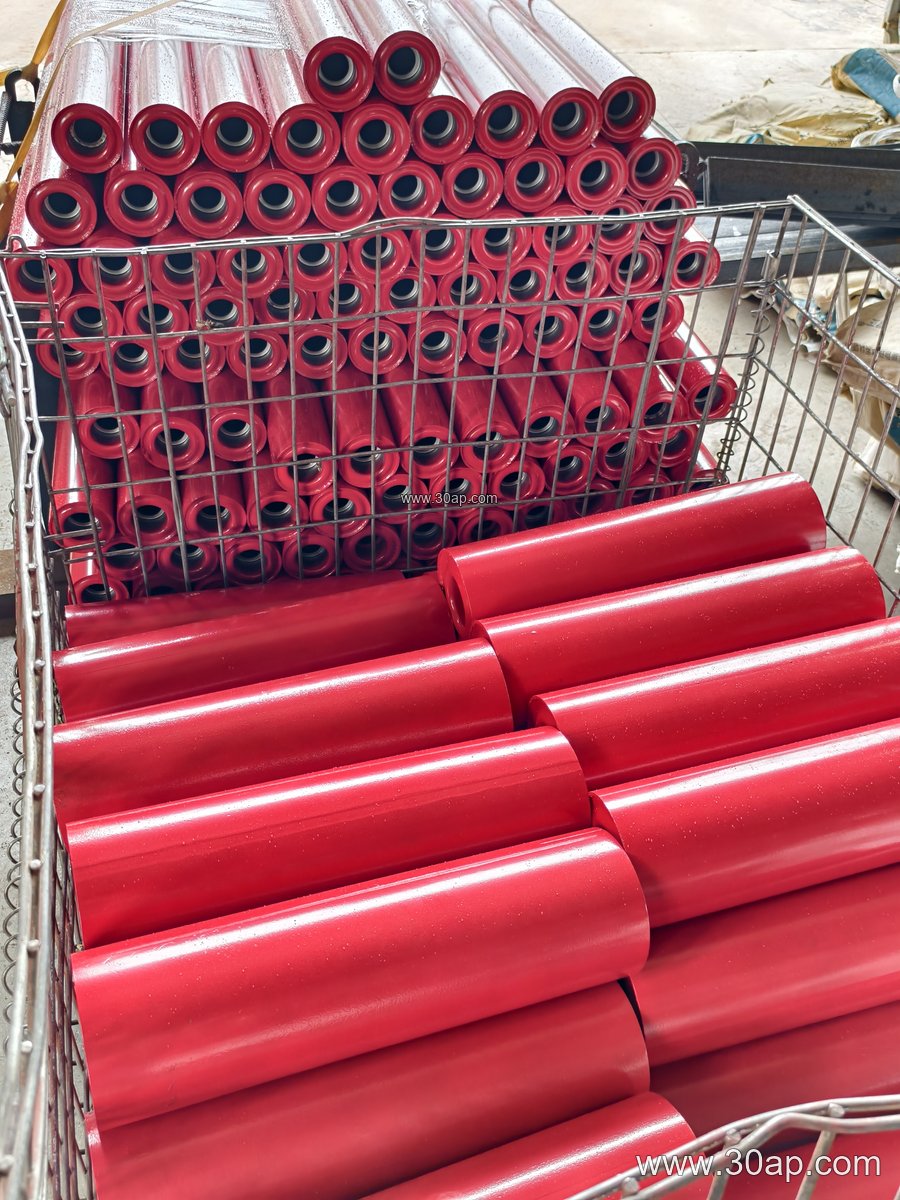
Sealing matters more than many buyers expect. Dust from limestone, iron ore or crushed stone will destroy an unsealed bearing quickly, so labyrinth seals and grease retention features are worth checking. The roller length also changes with belt width, trough angle and frame type; a side roller and the center roller in the same set are often different lengths.
Where Side Rollers Are Used
These rollers appear wherever a belt conveyor carries loose material. In a coal washing plant they sit under a flame retardant conveyor belt on the load-carrying side. In a limestone or copper ore crushing circuit they support an abrasion resistant conveyor belt that is constantly fed by a crusher. In a power plant coal yard, a heavy-duty conveyor belt runs over long trough sets where side rollers must stay aligned.
They are equally common in sand and aggregate lines, fertilizer plants and port ship-loading conveyors. The belt itself may be an EP conveyor belt, an NN conveyor belt, a multi-ply fabric core conveyor belt or a steel cord conveyor belt, but the side roller’s job stays the same: hold the edge, guide the trough and keep the belt tracking.
Common Reference Dimensions
The table below gives typical reference values, not fixed rules. Final dimensions depend on the conveyor design, the frame and the material being handled.
| Belt width | Typical side roller length | Common trough angle | Typical roller diameter |
|---|---|---|---|
| B500 | about 200 mm | 20-35 degrees | Ø63-Ø89 mm |
| B650 | about 250 mm | 20-35 degrees | Ø76-Ø108 mm |
| B800 | about 315 mm | 30-35 degrees | Ø89-Ø127 mm |
| B1000 | about 380 mm | 30-35 degrees | Ø102-Ø133 mm |
| B1200 | about 465 mm | 30-35 degrees | Ø108-Ø159 mm |
| B1400 | about 530 mm | 30-45 degrees | Ø127-Ø178 mm |
| B1600 | about 600 mm | 35-45 degrees | Ø133-Ø194 mm |
| B1800 | about 670 mm | 35-45 degrees | Ø159-Ø219 mm |
Buyer Checklist
- Confirm the trough angle and frame drawing before ordering, because a 30 degree set will not fit a 45 degree frame.
- Match the roller diameter to the existing center roller and bearing housing, not only to the belt width.
- Choose the shell surface for the duty: rubber rings for impact at a crusher discharge, ceramic or nylon where wear is severe.
- Check sealing and bearing grade for dusty operations such as a coal mining conveyor or an ore conveyor.
- Ask for the shaft end type and fixing dimensions so the roller fits the conveyor bracket without modification.
For related components, buyers often compare the side roller with a return idler roller or a conveyor pulley, but each has a different role and cannot be swapped. Matching the side roller to the belt, the frame and the material is the simplest way to keep a trough set running straight.