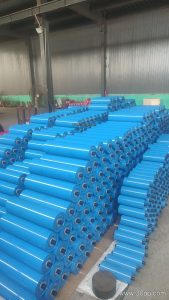
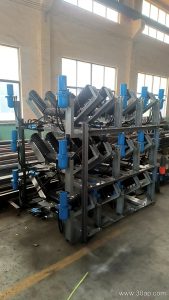
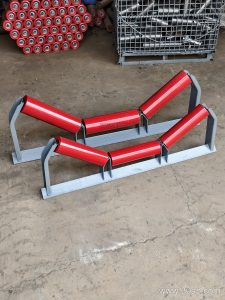
An ore conveyor pulley is the rotating drum that drives, tensions or redirects the belt on a bulk handling conveyor. In hard-rock and mineral processing circuits, the pulley is not a background component: it transmits the torque that moves hundreds of tonnes of material per hour and must survive grit, moisture and shock loading. This article explains how an ore conveyor pulley is built, where it fits in a crushing or screening line, and what to check before ordering.
How an Ore Conveyor Pulley Is Built
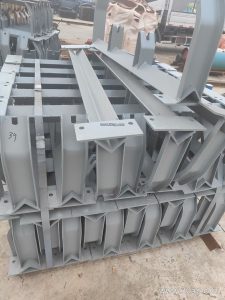
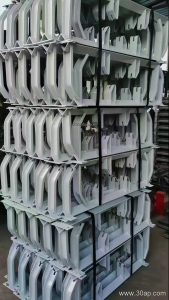
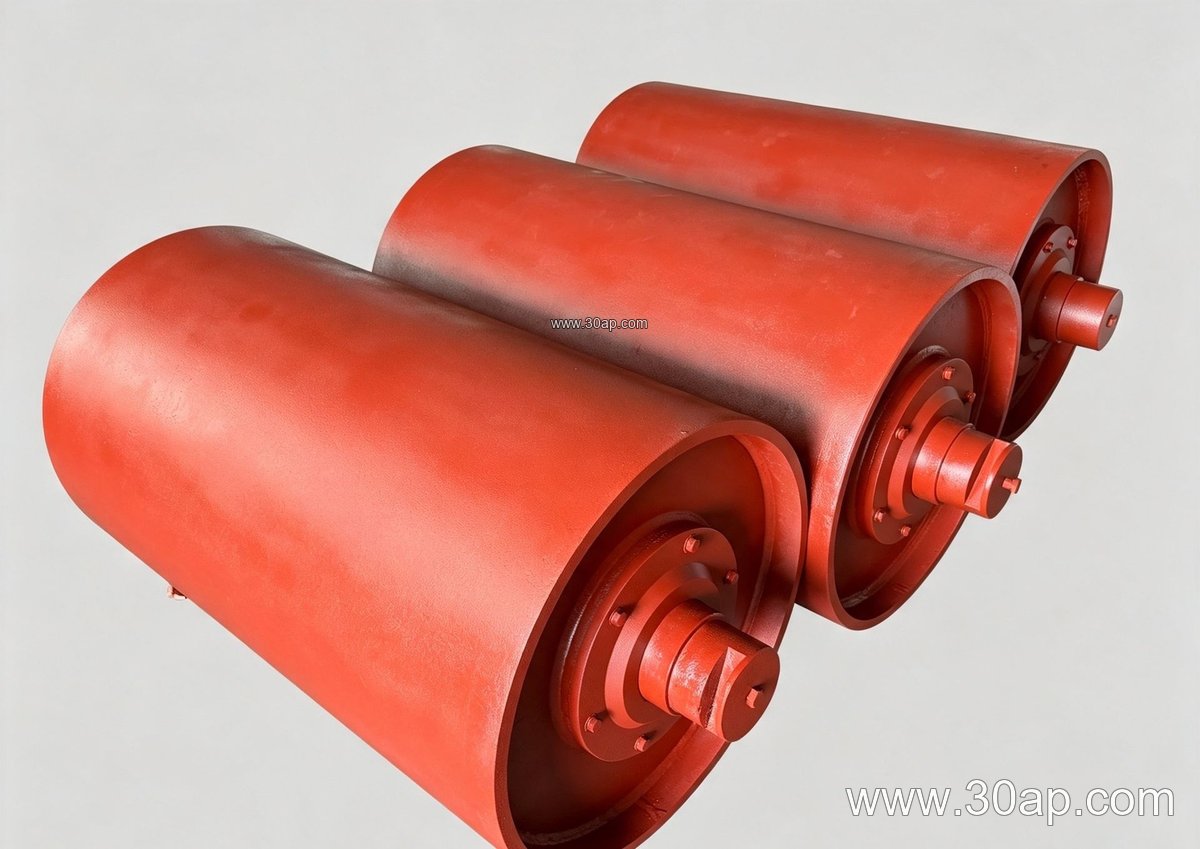
The drum body is usually a rolled steel shell with machined end discs, welded to a shaft or mounted on a hub and bearing assembly. The shaft is supported by self-aligning bearings in pillow blocks or in a conveyor bracket fixed to the conveyor frame. The belt wraps the shell, and friction between the two surfaces is what actually moves the load.
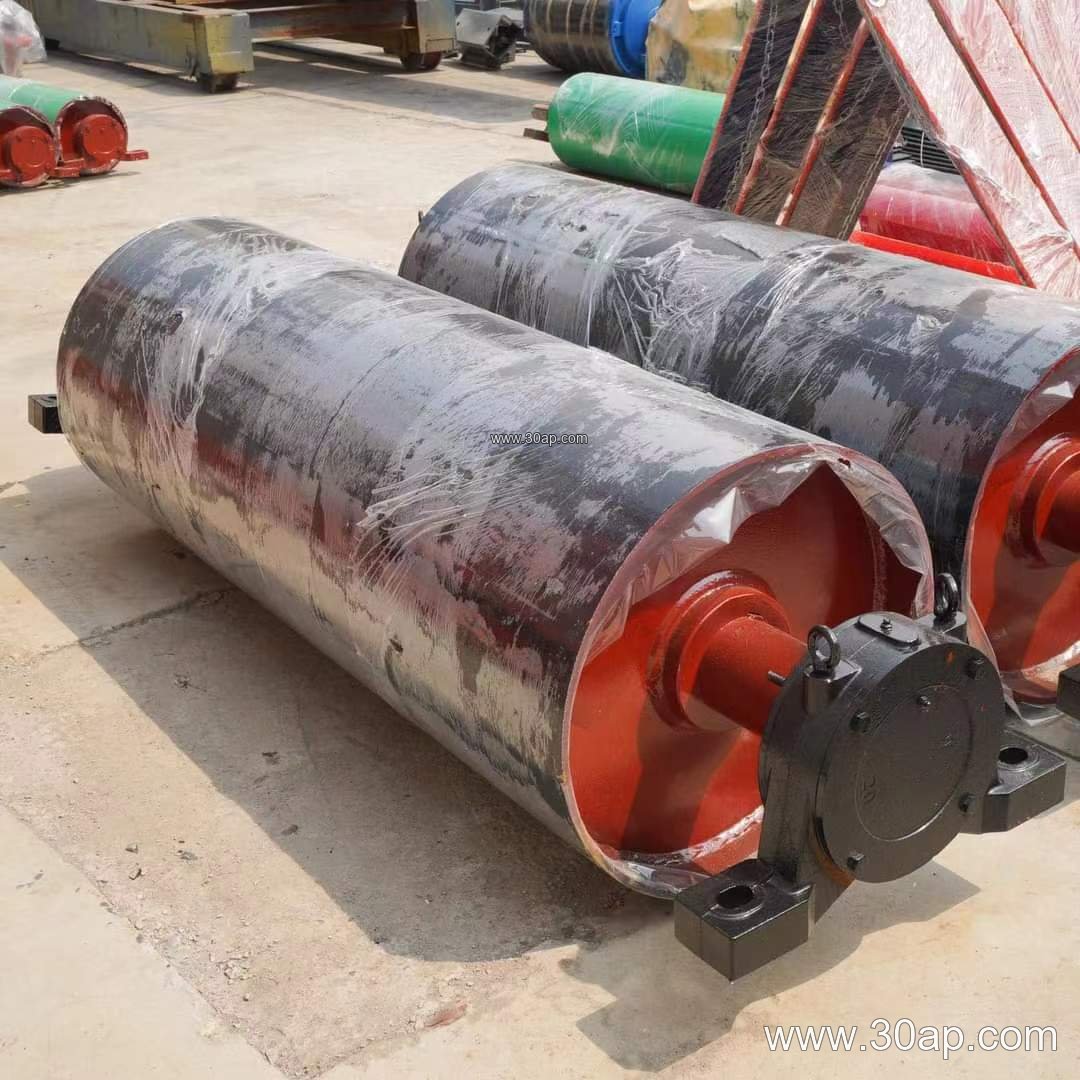
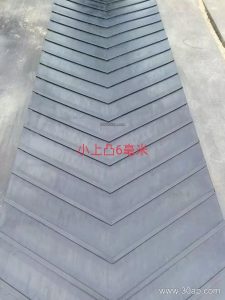
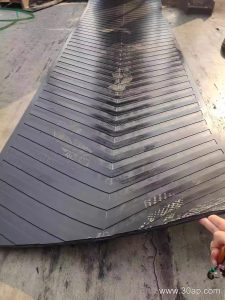
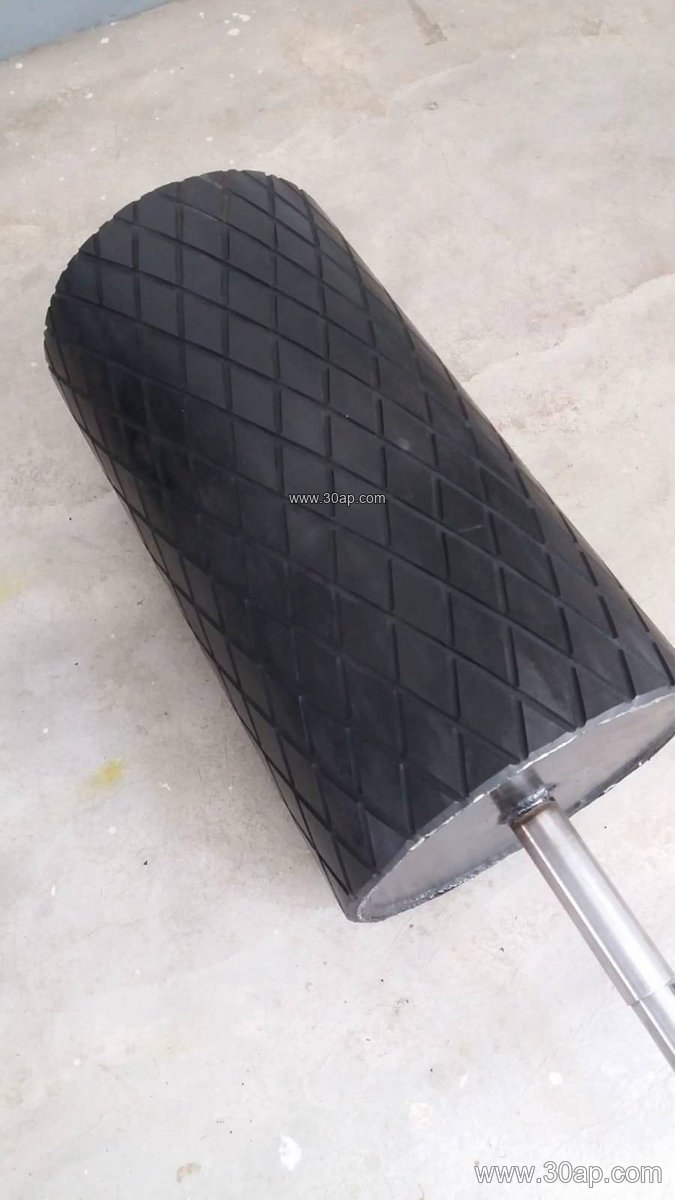
That friction depends on the surface form. A bare drum is acceptable on light, clean duties, but ore lines generally use lagging: hot-vulcanised rubber, cold-bonded rubber, diamond grooving, chevron grooving or ceramic tiles. Lagging thickness commonly runs from 8 mm to 20 mm depending on the duty. The right lagging protects the shell and keeps the drive from slipping when the belt is wet or dusty.
Where It Sits in the Line
Position determines function, and the names are not interchangeable. A drive pulley at the head end pulls the belt and is the most heavily loaded. A tail pulley at the loading end redirects the returning belt. A bend pulley changes belt direction around a transfer point or a take-up, and a take-up pulley works with the tensioning system to keep slack out of the strand.
In a quarry or a copper concentrator, an ore conveyor pulley may be found on a primary crusher discharge conveyor, on a screen feed belt, or on a stockpile conveyor. Similar duties appear in a cement plant handling clinker, a power plant coal yard, and a port shiploading system. The same component also appears downstream in a mining conveyor belt circuit where a steel cord conveyor belt carries high tension over long distances.
Common Sizes and Surface Options
Dimensions follow the conveyor design, not a fixed catalogue rule. Belt width and drum diameter are chosen together with shaft load, belt tension and wrap angle. The table below shows typical reference ranges; final values are set by the conveyor designer.
Reference Data for Ore Conveyor Pulleys
- Belt widths commonly B400, B650, B800, B1000, B1200, B1400, B1600, B1800, B2000
- Drum diameters commonly Ø200, Ø315, Ø400, Ø500, Ø630, Ø800, Ø1000, Ø1250, Ø1400
- Shaft diameters commonly Ø50, Ø80, Ø100, Ø120, Ø160, Ø200, sized by torque and load
- Face width usually wider than the belt, for example about 1400 mm face for a B1200 belt
- Lagging plain, rubber lagged, diamond grooved, chevron grooved or ceramic tiled, 8 to 20 mm thick
A useful way to read this is by example: B800 × Ø500 for a medium-duty screen feed, B1200 × Ø1000 for a main drive, B1400 × Ø800 for a return or bend position. None of these pairings is compulsory, and a wider belt does not force a single shaft size.
What a Buyer Should Confirm
Start with the belt. A heavy-duty mining conveyor belt or an abrasion resistant conveyor belt carries different tension than a fabric core conveyor belt, and that tension sets the shaft and bearing loads. Confirm the belt width, the belt type, the maximum operating tension, the wrap angle and the duty cycle.
Then check the environment. Dust, washdown water and temperature swings affect lagging choice and bearing sealing. In a coal preparation plant, flame retardant and anti-static properties may be required for the belt, and the pulley should be specified to match. In a sinter or clinker line, heat resistant belt grades mean the pulley must tolerate warm return air.
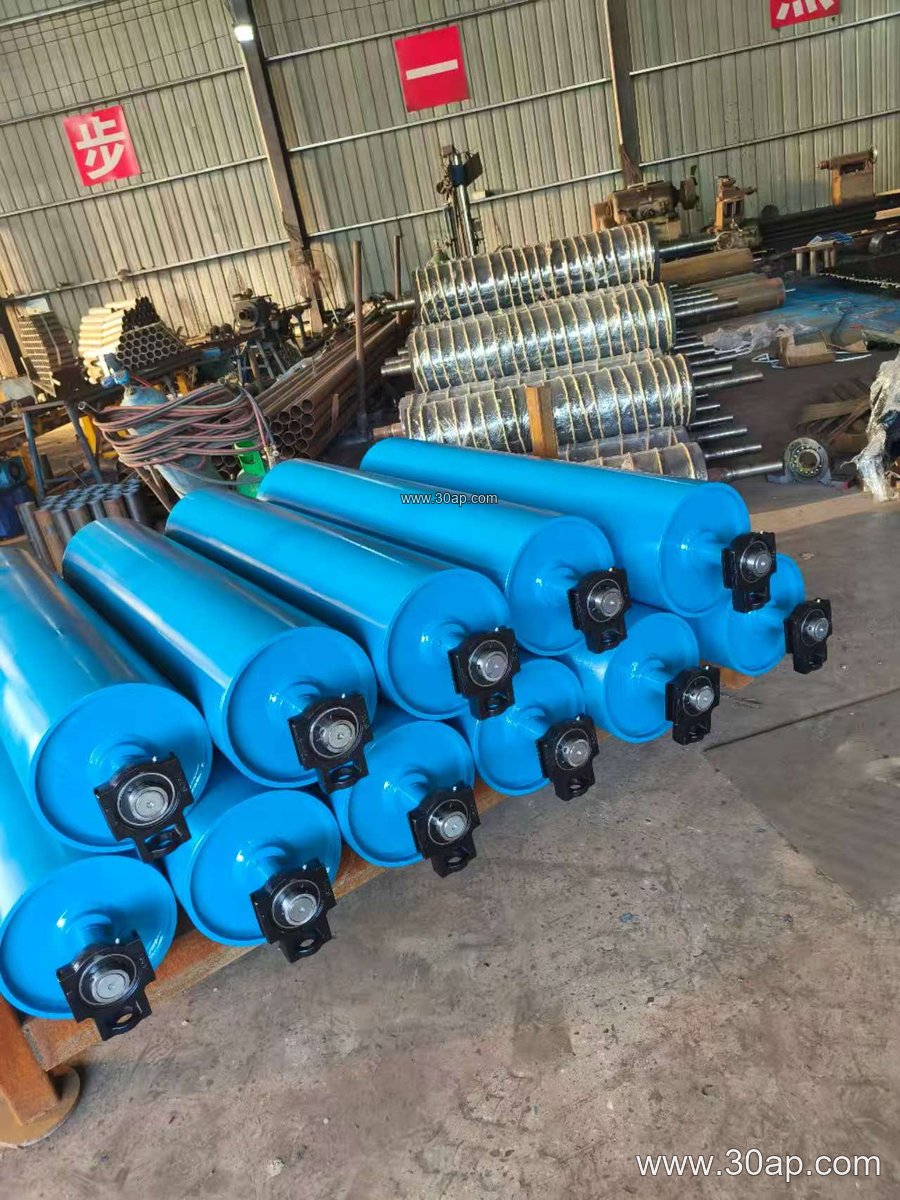
Finally, ask for the drawing package: shell thickness, shaft material, bearing size, lagging pattern, balance class and the keyway detail. A pulley supplied to a matching drawing is far easier to install than one that needs field modification. Spare pulleys should be ordered with the same shaft and bearing dimensions so that a changeout does not require reworking the conveyor bracket.
Maintenance Notes
Inspect lagging wear at each shutdown, especially on the drive position where slip first appears. Check bearing temperature and grease condition, and verify that the belt tracks centrally on the face. A worn lagging surface or a misaligned bend pulley can cause edge damage to an expensive ore conveyor belt, so early correction is cheaper than replacement. Keep a spare set of bearings and a spare lagging sheet on site for critical conveyors in crushing and screening circuits.