What a Three-Roll Idler Bracket Does
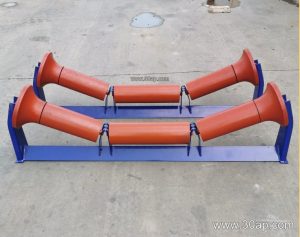
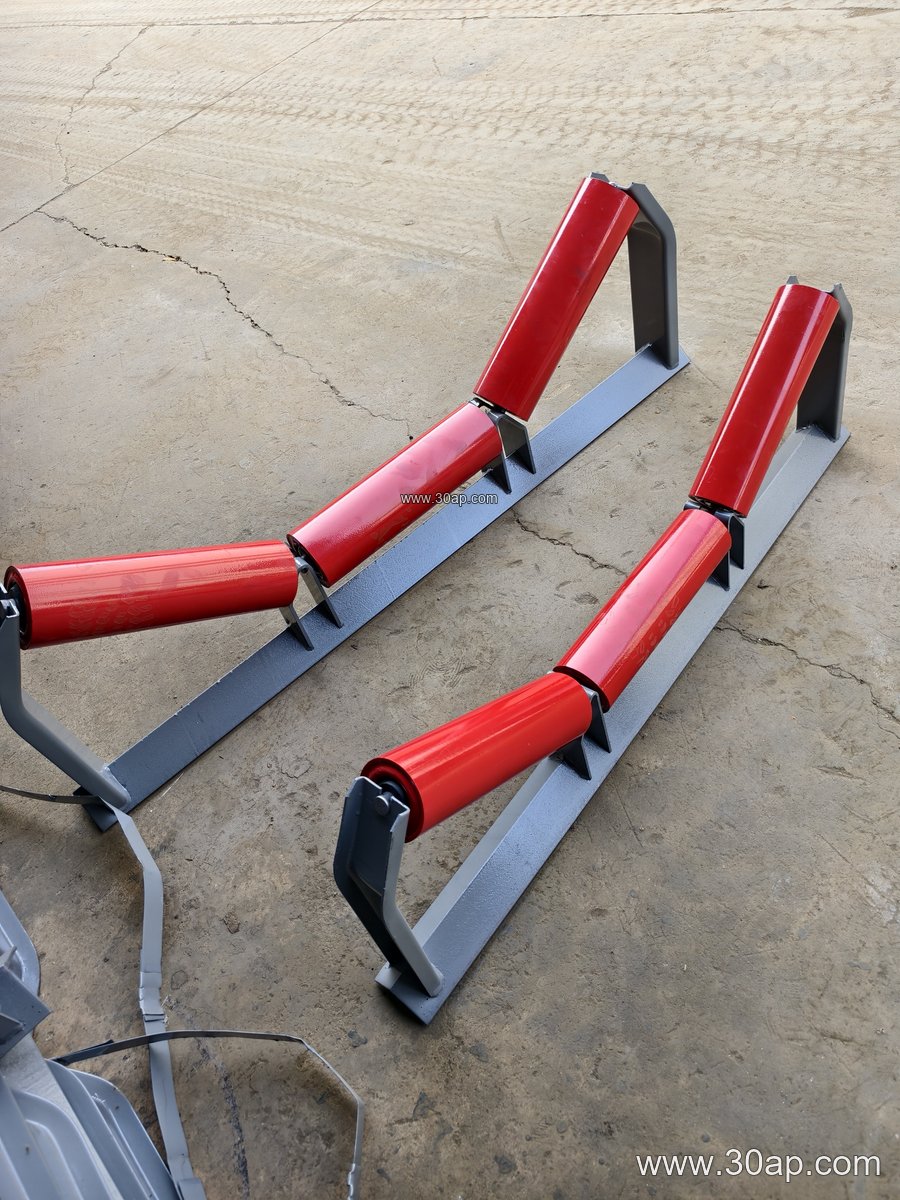
A three-roll idler bracket is the steel support that holds the three carrying idler rollers of a troughed conveyor in the correct position. It keeps the center roller flat and the two side rollers angled upward, so the conveyor belt forms a trough that keeps bulk material centered during transport. In a quarry, a cement plant, or a power plant coal yard, this bracket is one of the most common frame parts on the carrying side of the conveyor.
The same component is also known as a troughing idler bracket or a three-roller idler support frame. It is not a pulley, and it should not be confused with drive pulleys, tail pulleys, or bend pulleys, which serve completely different functions at the ends and curves of the conveyor.
How the Bracket Is Built
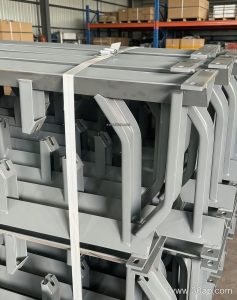
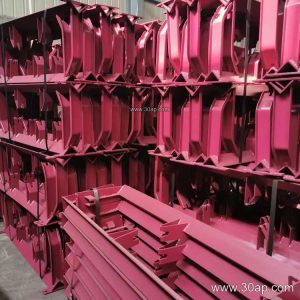
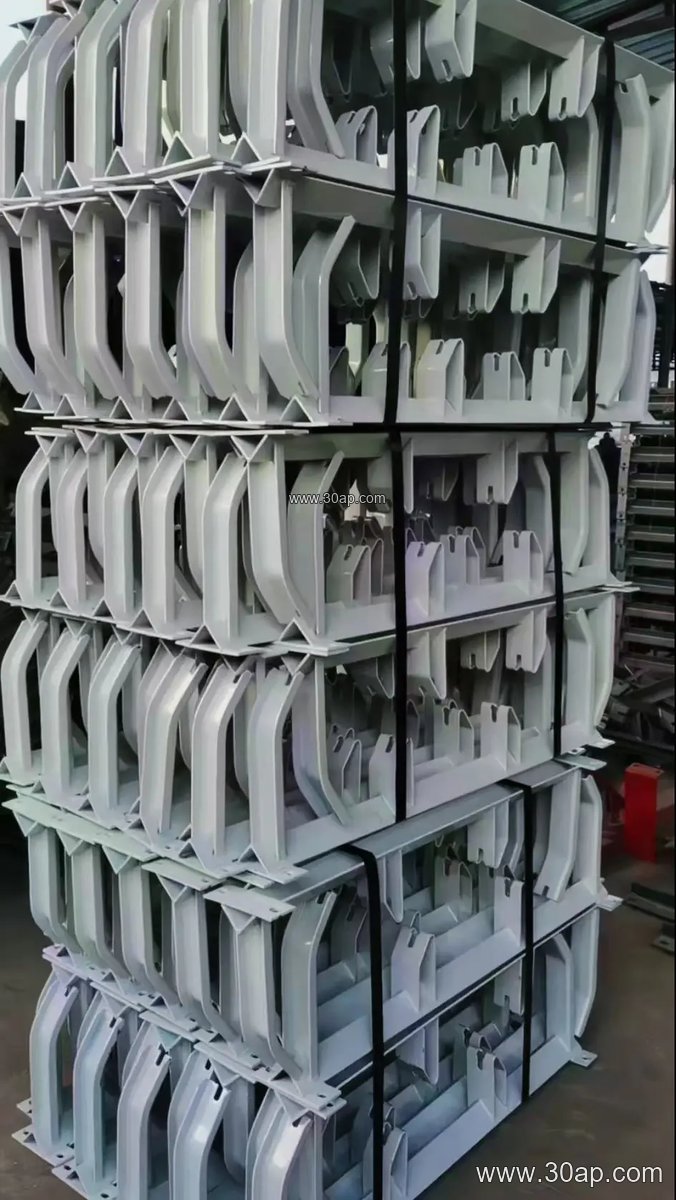
Most brackets are fabricated from angle steel, channel steel, or folded steel plate. The side arms are bent or welded at the required trough angle, and the roller seats are punched or drilled to match the idler shaft ends. A typical assembly includes:
- Two angled side arms that carry the wing rollers
- A flat center section for the middle roller
- Mounting feet or bolt holes for fixing to the conveyor stringer
- Sometimes an adjusting slot for fine tuning of the trough angle
Fabrication quality matters. Bent plate brackets tend to be lighter and more consistent in angle, while welded channel frames suit heavier loads. Buyers should confirm the steel thickness, welding quality, and hole spacing before ordering.
Trough Angle and Roller Diameter Selection
The bracket is usually specified together with the belt width, trough angle, and roller diameter. Common values are shown below for reference only; actual values are determined by conveyor design.
| Parameter | Common Reference Values |
|---|---|
| Belt width | B500, B650, B800, B1000, B1200, B1400, B1600, B1800 |
| Trough angle | 20°, 30°, 35°, 45° |
| Roller diameter | Ø89, Ø108, Ø133, Ø159, Ø194 |
| Material | Angle steel, channel steel, folded plate |
A combination such as B800 with 35° and Ø108 is common in aggregate lines, while B1200 with 45° and Ø133 appears in heavier bulk handling. There is no fixed one-to-one rule between belt width and roller diameter or trough angle. The bracket length and hole pitch change with belt width and angle, so they must be confirmed against the conveyor drawing.
Where It Is Used
These brackets are found wherever a troughed conveyor carries loose material. In a limestone mine or crushing and screening line, they support the belt under abrasive rock. In a coal washing plant or a power plant coal handling system, they work with flame retardant and anti-static belting. Similar frames appear in fertilizer plants, grain silos, and tunnel spoil removal.
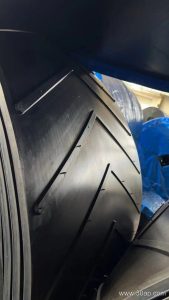
The bracket works together with the conveyor belt and idler rollers. A well-aligned bracket keeps the belt running straight and reduces edge wear, which matters when the belt is an abrasion resistant conveyor belt or a heavy-duty mining conveyor belt carrying sharp ore.
Fixed, Adjustable, and Other Bracket Types
Fixed brackets are welded or bent to one trough angle. Adjustable brackets allow the side arms to be set between common angles, which helps during commissioning or when material flow changes. Impact brackets with rubber cushions are used at loading points, and self-aligning brackets help correct belt wander.
For comparison, a return bracket supports the belt on the return run and usually carries one flat roller or two V-arranged rollers. It is a different part and is not a substitute for the carrying-side three-roll bracket.
What Buyers Should Check
Before ordering, confirm the belt width, trough angle, roller diameter, shaft end type, and mounting hole spacing. Ask for the steel grade and surface treatment, since galvanized or painted frames last longer in wet or dusty conditions. For a new project, match the bracket with the idler roller supplier so the shaft seats fit properly. More conveyor component references are available at chinaconveyorbelt.com and idler-roller.com for engineers comparing belt and bracket options.
Correct selection of the three-roll idler bracket keeps the trough shape stable, protects the belt, and helps the whole conveyor line run smoothly in demanding industries such as mining, cement, and power generation.