What a Power Plant Conveyor Belt Does
A power plant conveyor belt is the continuous moving surface that carries coal, biomass, limestone, gypsum, ash, or other bulk fuel and reagent across the yard, bunker, boiler, and ash handling systems. In a coal-fired station it usually works as part of a Coal Mining Conveyor Belt chain that links the unloading point to the crusher house and then to the boiler bunkers. The belt must handle steady tonnage, sharp lumps, dust, and sometimes heat, so the choice of carcass and cover compound matters more than the color or the brand.
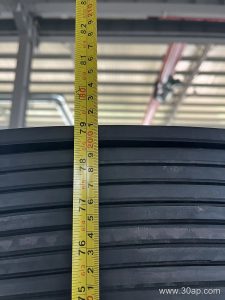
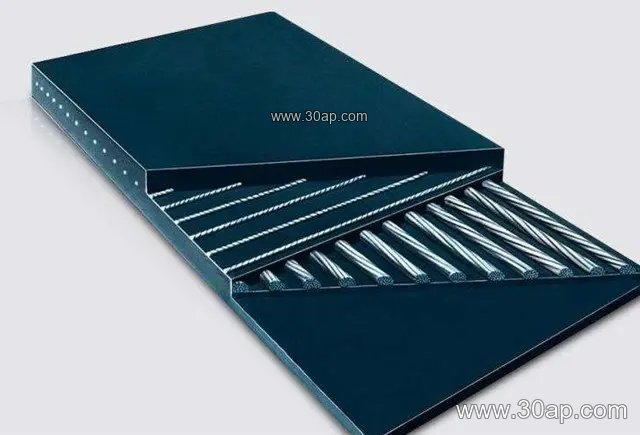
The belt itself is not a single rubber strip. It is a composite: a tension-bearing carcass, top and bottom cover rubber, and often an edge construction. The carcass carries the pull, while the cover protects the carcass from abrasion, impact, moisture, and heat.
Carcass Types Used in Power Stations
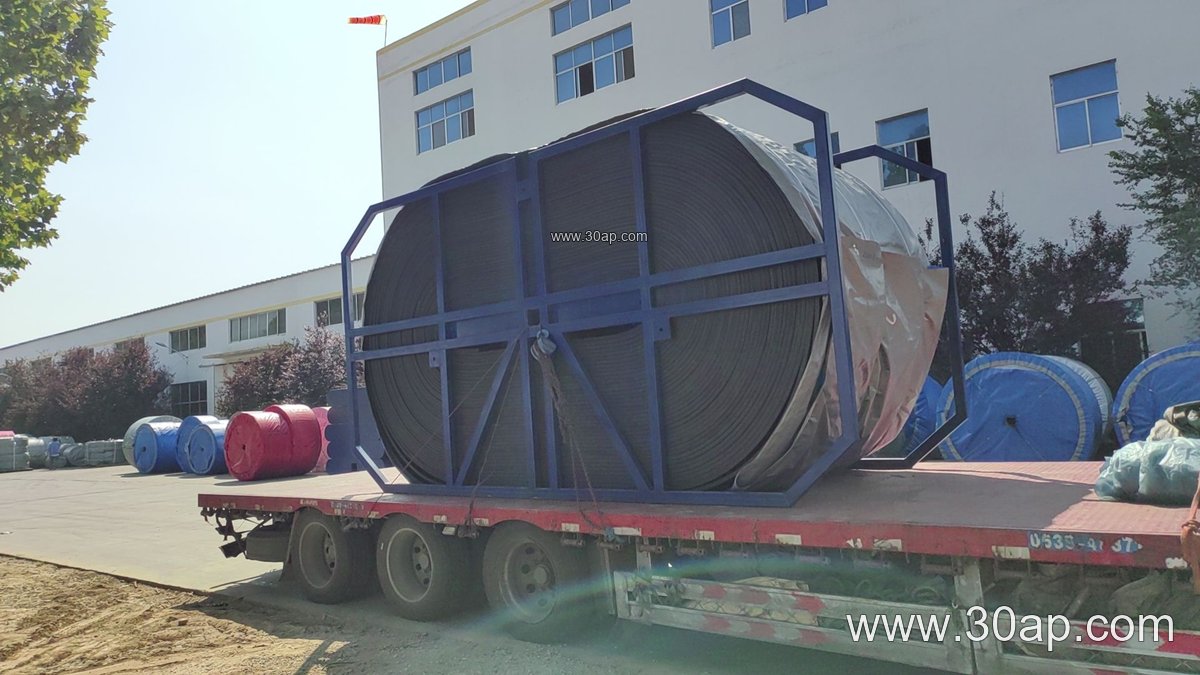
Most power plant belts fall into two families. Fabric core belts use woven EP or NN plies, and steel cord belts use parallel brass-plated wires. Fabric belts are common on shorter and medium conveyors, while steel cord belts suit long overland lines and high tension. The table below gives typical reference values; actual selection follows the conveyor design.
| Type | Common strength grades | Typical use |
|---|---|---|
| EP Conveyor Belt | EP200 to EP1000 | Coal yard, limestone, general bulk material |
| NN Conveyor Belt | NN100 to NN400 | Medium-duty coal and ash lines |
| Steel Cord Conveyor Belt | ST1000 to ST2500 | Long distance, high tonnage main lines |
| PVG Conveyor Belt | PVG800, PVG800S | Underground and flame retardant duties |
An EP Fabric Core Conveyor Belt is a frequent choice because it balances strength, troughability, and cost. A Multi-Ply Fabric Core Conveyor Belt with 2 to 6 plies can be tailored to the load. For very high tension, a Steel Cord Conveyor Belt is preferred, but it needs larger pulleys and careful splice control.
Belt width is a separate decision. Common widths include B650, B800, B1000, B1200, B1400, B1600, and B1800, and some yards use a 1200mm Wide Conveyor Belt or a 1800mm Wide Conveyor Belt on main lines. Width is matched to lump size and required capacity, not to any single pulley diameter.
Cover Rubber and Special Duties
The cover compound is where operating conditions leave their mark. Coal with sharp stone calls for an Abrasion Resistant Conveyor Belt, and a High Abrasion Resistant grade may be used where the cover wears quickly. Hot clinker or ash favors a Heat Resistant Conveyor Belt. Coal dust and enclosed galleries require a Flame Retardant Conveyor Belt, often specified together with Anti-Static Conveyor Belt properties. In cold yards a Cold Resistant Conveyor Belt keeps flexibility, and where oil or chemicals are present an Oil Resistant Conveyor Belt or chemical resistant cover is considered.
- Cover thickness is often written as 4+2, 5+2, 6+2, or 8+3 mm, meaning top plus bottom cover.
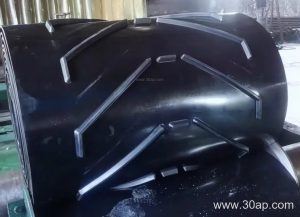
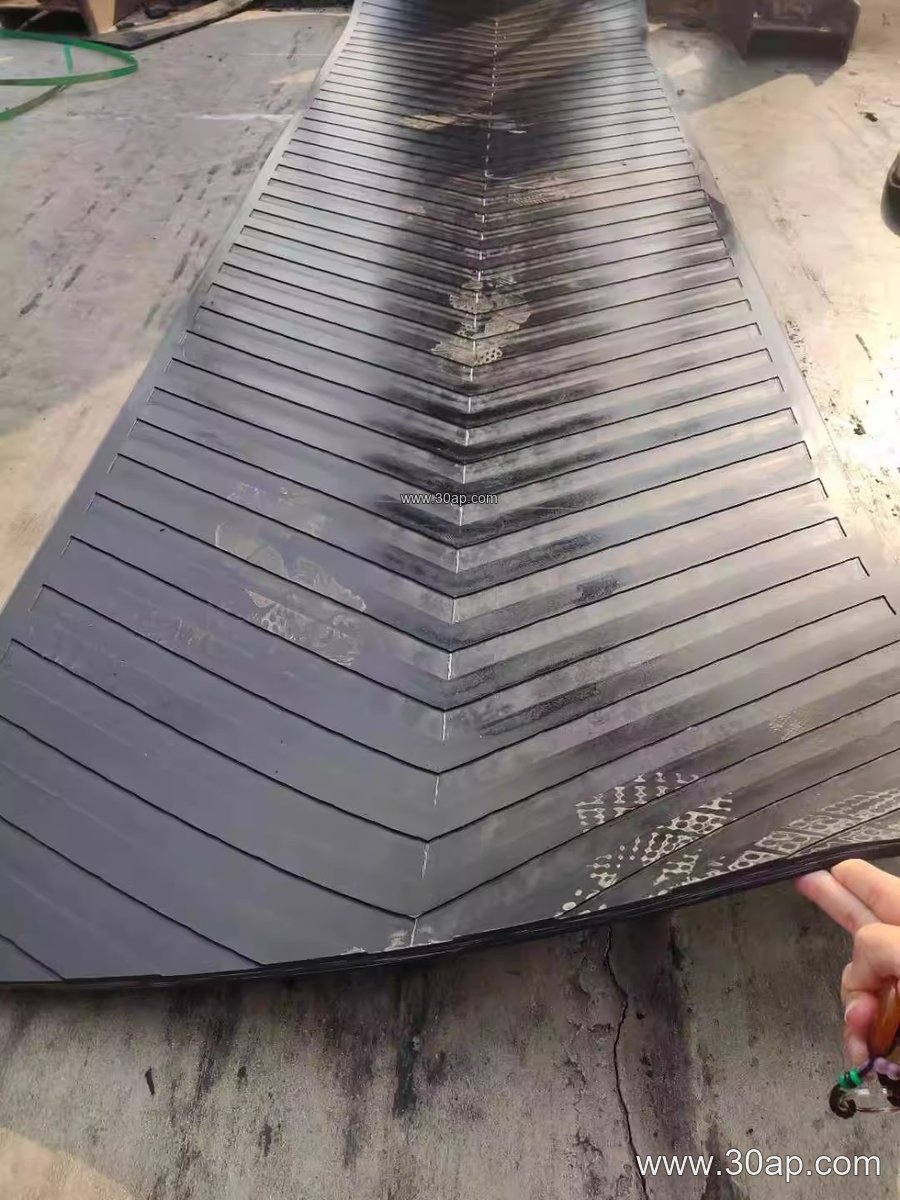
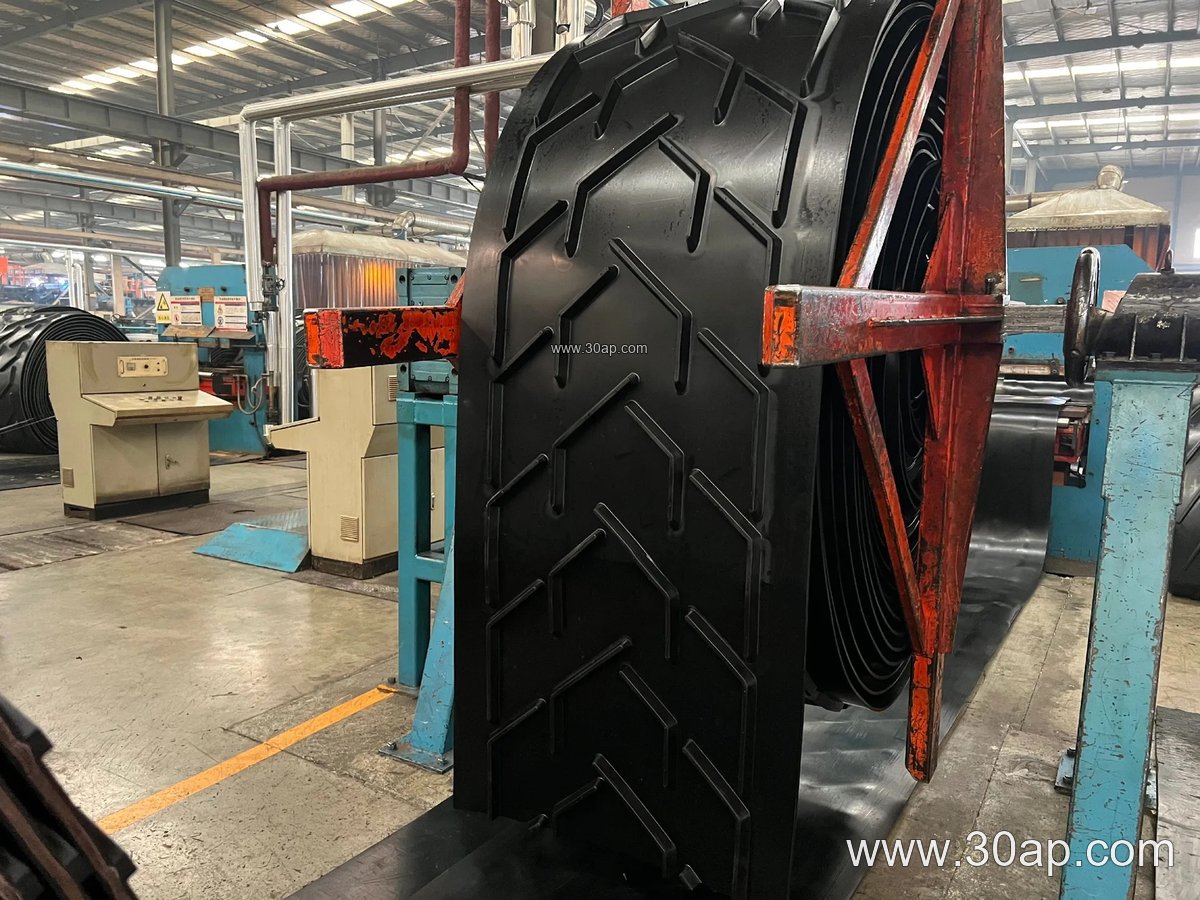
- A Chevron Conveyor Belt or Corrugated Sidewall Conveyor Belt helps on steep inclines and confined spaces.
- A Pipe Conveyor Belt can contain dust on curved routes, though it is a different belt construction, not a replacement for a standard troughed belt.
How the Belt Works with Pulleys, Idlers, and Brackets
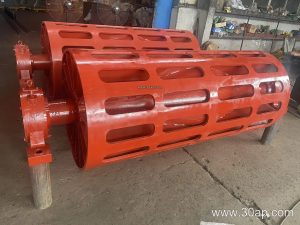
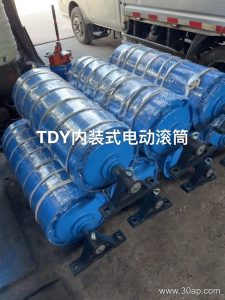
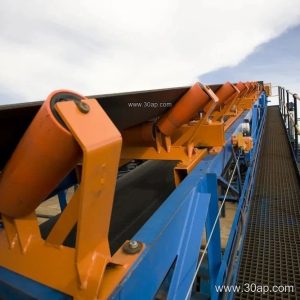
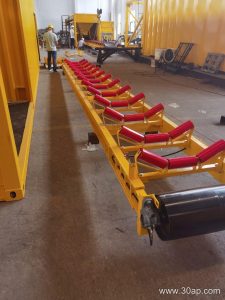
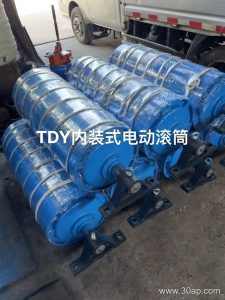
The belt runs over a drive pulley, a tail pulley, and bend pulleys. These three are not interchangeable names: the drive pulley transmits torque, the tail pulley returns the belt, and bend pulleys redirect it. Supporting idler rollers set the trough shape and carry the load, while conveyor brackets hold the idlers and pulleys in alignment. A belt that is too stiff for the pulley diameter can crack, and a pulley that is too small for the carcass increases bending stress, so the belt and the pulley layout should be designed together.
Buyer Checklist
Before ordering a Power Plant Conveyor Belt, confirm the material, lump size, tonnage, incline, and temperature. State the required strength grade, width, number of plies, and cover thickness. Ask about splice type and whether the belt should arrive as an Endless Conveyor Belt. For coal service, request flame retardant and anti-static verification. For ash or hot material, confirm the heat grade. Keep spare belt and idler roller stock, and inspect covers for cuts and edge wear during scheduled shutdowns.
For a reliable quote, send your conveyor layout and the required belt specification to cnmkbelting.com, and match the belt grade to the drive, tail, and bend pulleys rather than to a single dimension.