What a Conveyor Tail Pulley Does
A conveyor tail pulley sits at the rear end of a belt conveyor and turns the belt back toward the carrying run. It is the last pulley the belt wraps before starting its return journey, so it works together with the head or drive pulley to keep the loop moving. Unlike a drive pulley, which transmits torque from the gearbox to the belt, the tail pulley is normally a non-driven rotating component. Unlike a bend pulley, which changes belt direction along the return path, the tail pulley defines the loading end of the conveyor structure.
In a quarry, limestone mine, or sand and gravel line, the tail pulley often sits under the loading hopper. In a coal preparation plant or power plant coal yard, it may be exposed to fine dust and moisture. Either way, its job is simple and critical: guide the belt smoothly, support the belt tension, and keep the belt centered as it enters the carrying side.
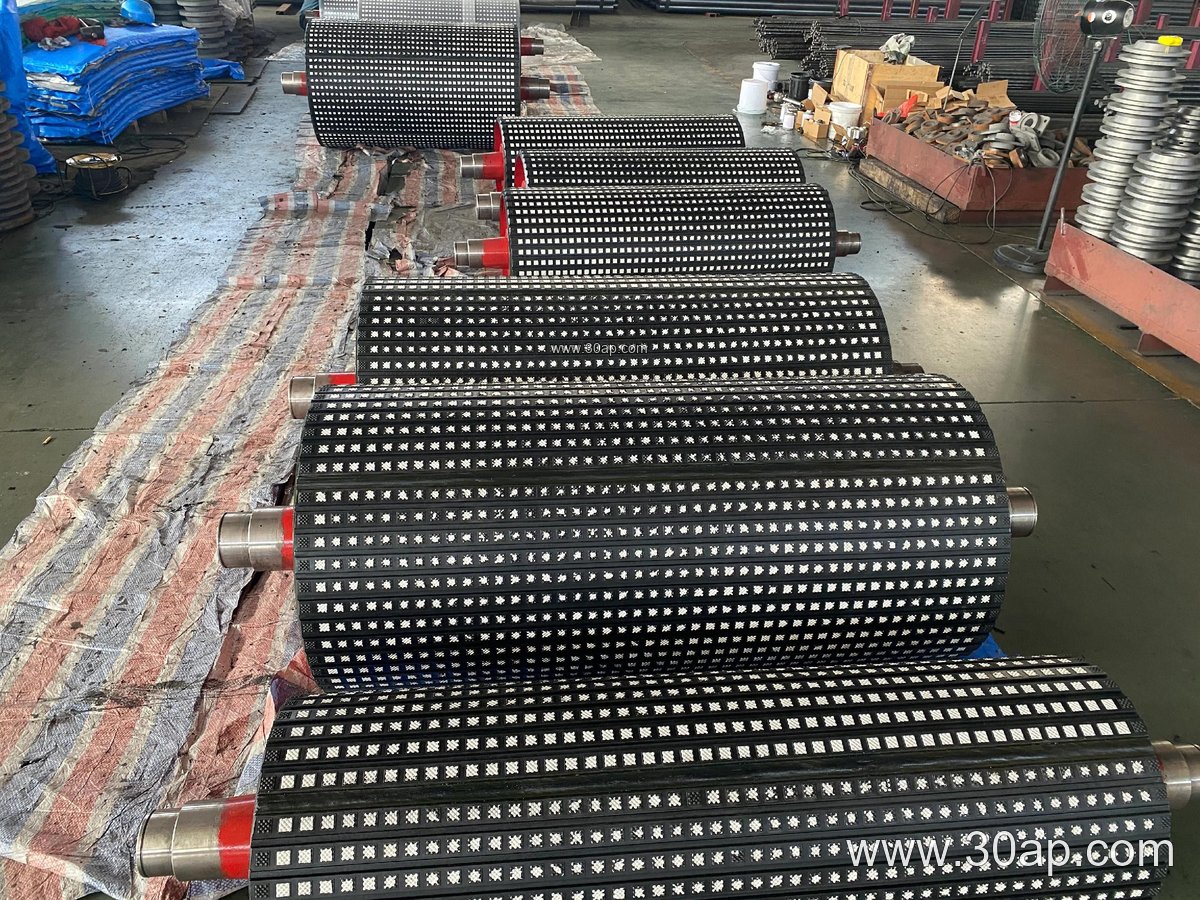
Construction and Main Components
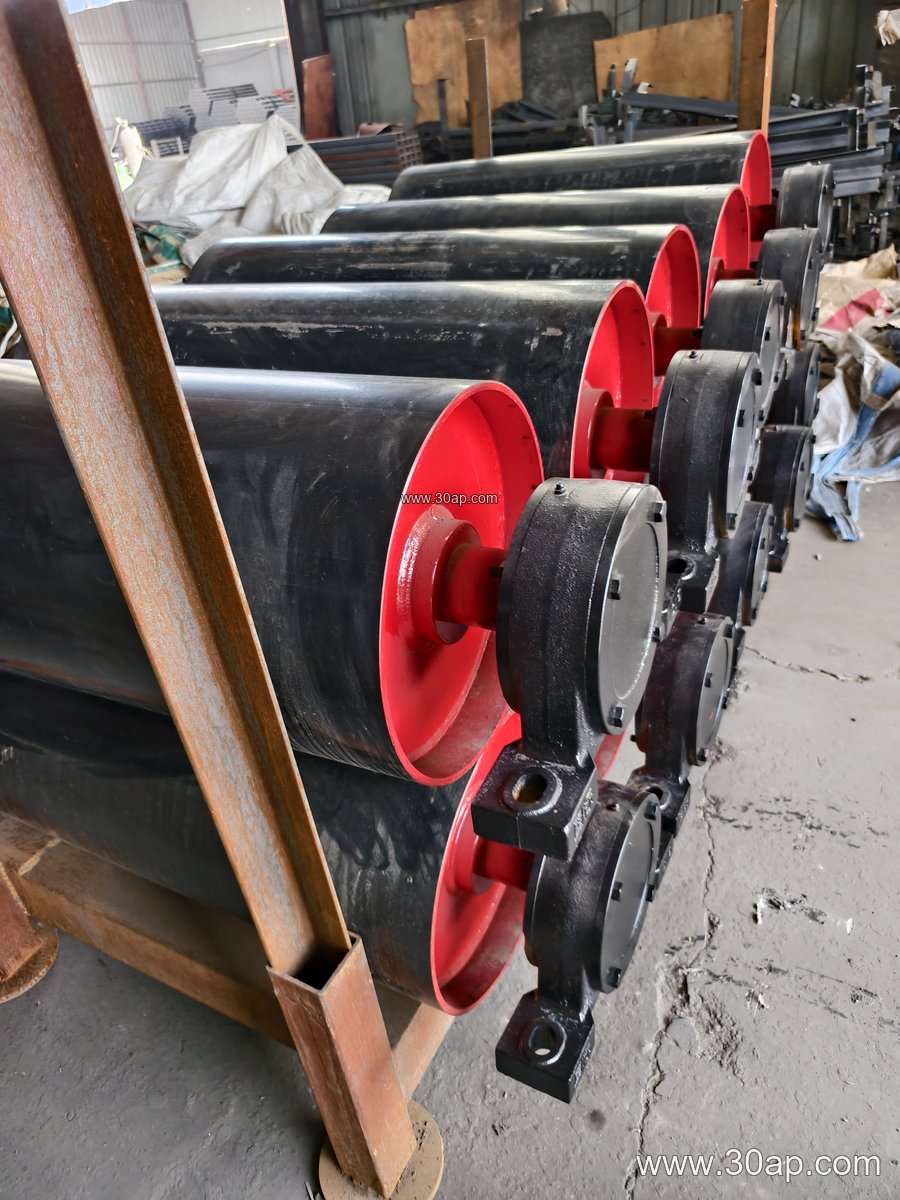
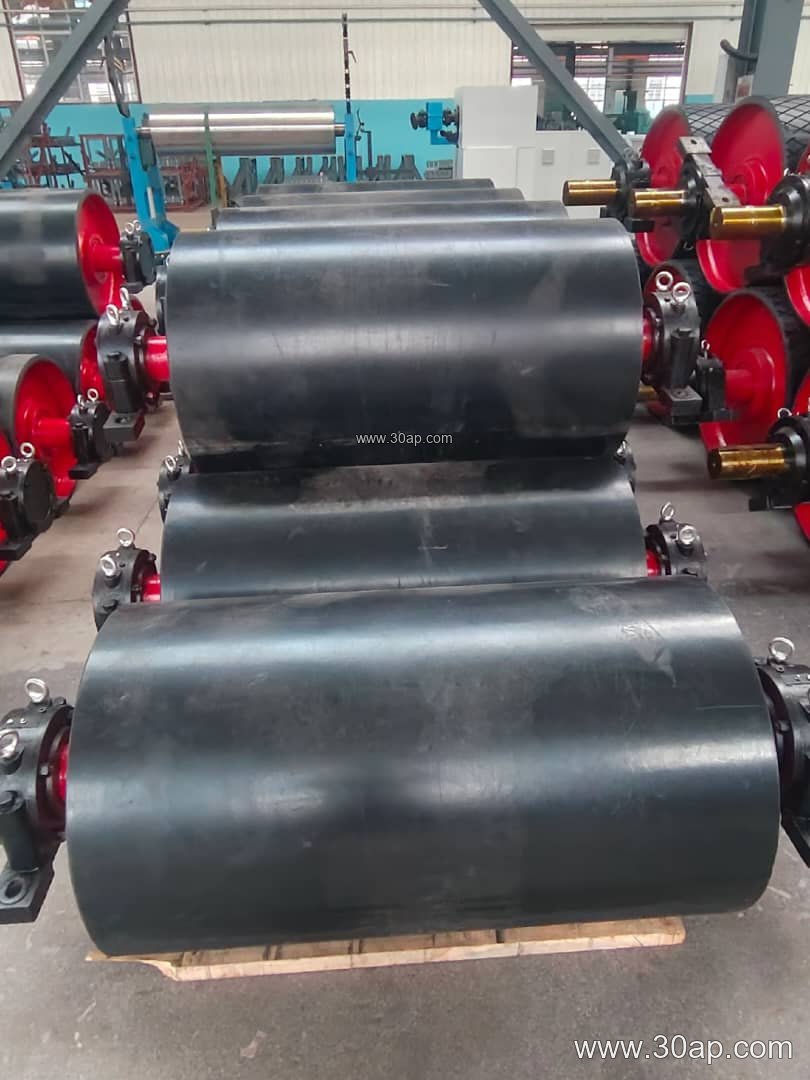
A typical conveyor tail pulley is built around a steel shell, a shaft, bearing housings, and locking assemblies. The shell is usually machined or rolled from steel tube, with end discs welded in place. The shaft runs through the shell on bearing blocks that are mounted to the conveyor bracket or tension frame. Many tail pulleys are mounted on a sliding take-up frame so the operator can adjust belt tension.
- Shell: welded steel drum, often with a slight crown or flat face
- Shaft: sized by torque and radial load, not by belt width alone
- Bearings: housed in pillow blocks or flanged bearing units
- Surface: plain, rubber lagged, or ceramic lagged depending on grip and wear
- Accessories: scraper, guarding, and tension slides
The surface finish matters. A plain tail pulley is common in clean, low-abrasion duty. Rubber lagging, either cold-bonded or hot-vulcanized, improves friction and protects the shell from wear. Diamond or herringbone grooving can help shed water and fines. In dusty aggregate or iron ore service, ceramic lagging may be chosen for longer life, although it is not a universal answer.
Sizing and Common Reference Data
Tail pulley size is selected from belt width, belt tension, shaft load, and the space available at the tail end. Common shell diameters include Ø200, Ø250, Ø315, Ø400, Ø500, Ø630, and Ø800, with larger sizes such as Ø1000 or Ø1250 used on heavy-duty conveyors. The pulley face width is normally wider than the belt. For example, a B800 belt may use a pulley face around 950 mm, and a B1200 belt may use a face around 1400 mm. These are reference relationships, not fixed rules.
| Belt width | Typical pulley face width | Example diameter range |
|---|---|---|
| B500 | about 600 mm | Ø250 to Ø400 |
| B650 | about 750 mm | Ø315 to Ø500 |
| B800 | about 950 mm | Ø400 to Ø630 |
| B1000 | about 1150 mm | Ø500 to Ø800 |
| B1200 | about 1400 mm | Ø630 to Ø1000 |
| B1400 | about 1600 mm | Ø800 to Ø1250 |
Shaft diameter is determined by the actual torque and bending load. Common shaft sizes range from Ø50 to Ø200, but no single belt width dictates one shaft size. A B1200 conveyor with a long, heavily loaded tail end may need a larger shaft than a short B1200 unit. Buyers should provide belt tension data, pulley location, and the take-up arrangement so the supplier can calculate the shaft and bearing load.
Where It Fits in the Conveyor
The tail pulley is usually the belt return point at the loading end. In a stone crushing plant, it may sit below the crusher discharge chute. In a cement plant clinker line, it may be part of a transfer conveyor exposed to heat and dust. In a port bulk terminal, the tail pulley on a ship loading conveyor may be mounted on a tension carriage to absorb belt stretch.
It is often confused with the bend pulley and the drive pulley. A drive pulley is the powered unit at the head end. A bend pulley redirects the belt without changing the belt loop end position. The tail pulley is specifically the end pulley that reverses the belt direction at the tail. A tension pulley may be a separate movable pulley, but on many smaller conveyors the tail pulley itself is mounted on a take-up frame and performs the tensioning function.
Buyer Checklist
- Confirm belt width, belt type, and belt tension at the tail end
- State whether the pulley is fixed or mounted on a take-up slide
- Choose lagging based on abrasion, moisture, and material buildup
- Check shaft size against calculated load, not against belt width alone
- Match bearing housings and conveyor bracket dimensions to the existing frame
- Ask for dynamic balance and runout data on high-speed or large-diameter units
For a conveyor handling abrasive rock or ore, the tail pulley should be matched with a durable abrasion resistant conveyor belt and well-aligned idler roller sets. For coal mining or underground coal mining conveyors, flame retardant conveyor belt and anti-static conveyor belt grades are often specified together with the pulley package. A properly selected tail pulley reduces belt edge damage, improves belt tracking, and keeps the whole conveyor system running smoothly.