What a Conveyor Support Bracket Does
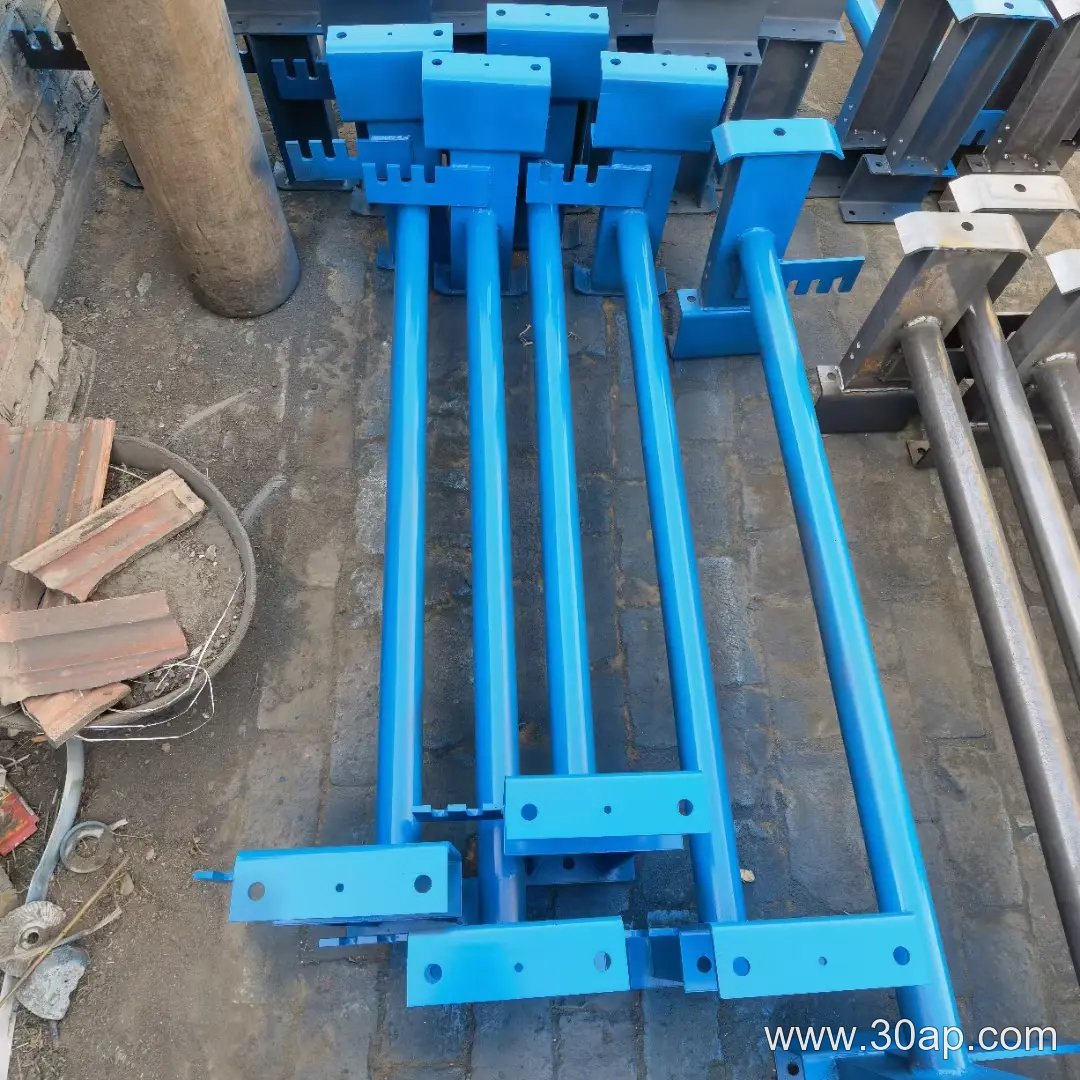
A conveyor support bracket is the structural component that holds idler rollers in position along a belt conveyor. It connects the rollers to the conveyor frame and sets the trough angle, spacing, and alignment that the belt needs to run smoothly. Without a properly designed bracket, idlers can shift, the belt can mistrack, and the whole conveying line loses efficiency.
In many workshops, people use the shorter term conveyor bracket when referring to the same part. Both names describe the same product: a fabricated steel support that carries the idler roller and transfers the load from the belt to the conveyor structure.
How These Brackets Are Built
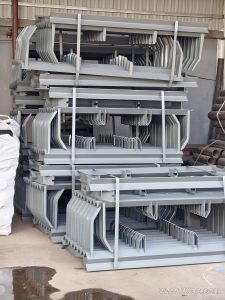
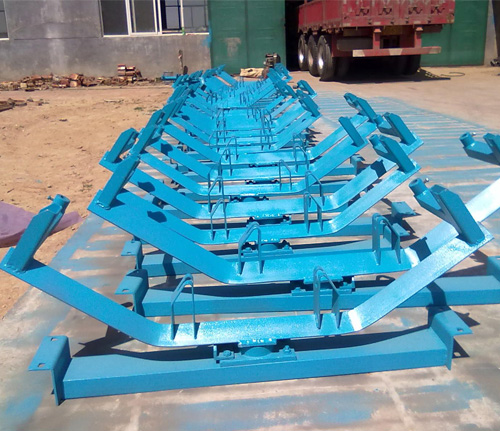
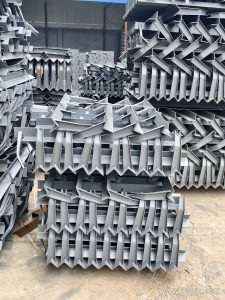
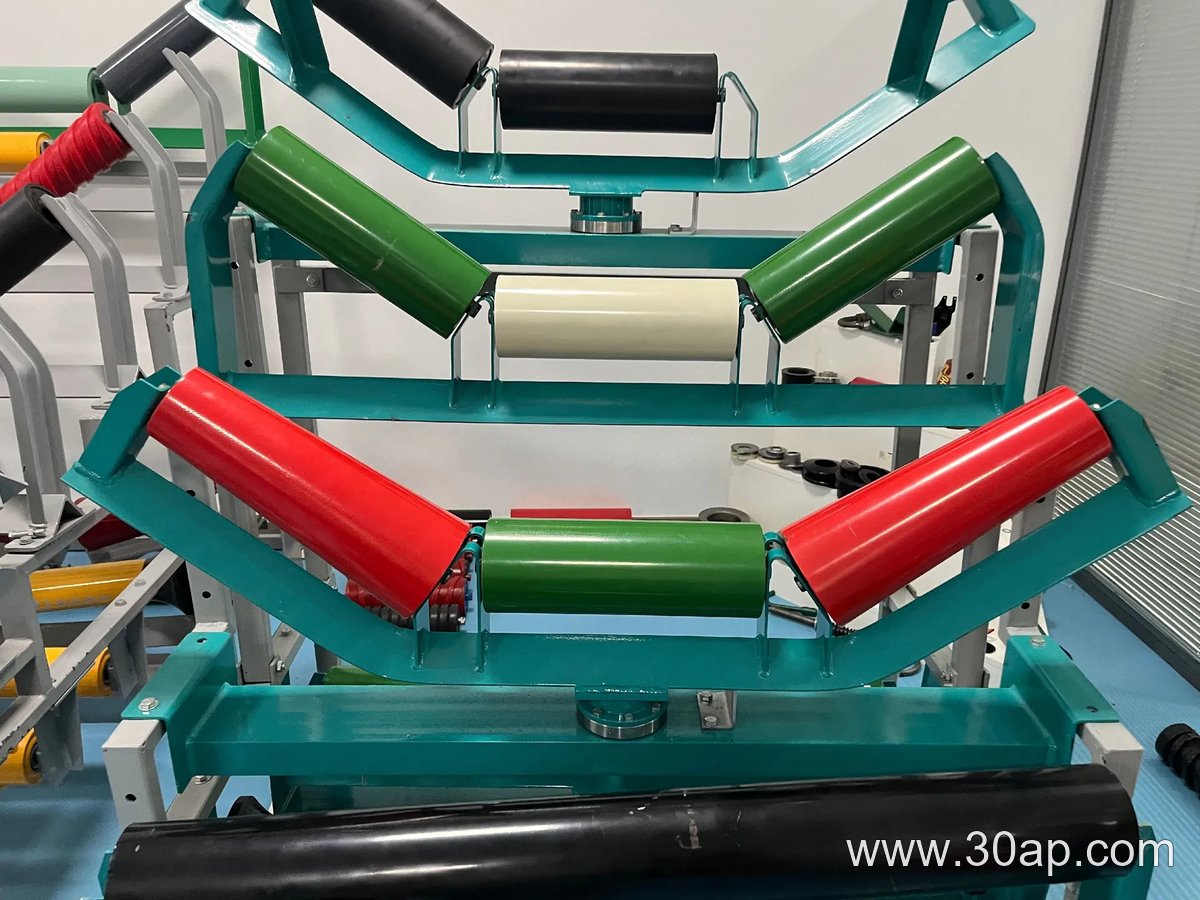
Most brackets are made from angle steel, channel steel, or bent steel plate. The choice depends on the load, the belt width, and the environment. A typical troughing bracket has mounting holes for three idlers and is shaped to create a specific trough angle. Return brackets, by contrast, are usually flatter and support the belt on its empty side.
Fabrication involves cutting, drilling, bending, and welding. The slots and holes must line up with the conveyor frame so that the idlers sit at the correct height. Good brackets keep the roller axis square to the belt path, which reduces edge wear and helps the belt stay centered.
Where Conveyor Support Brackets Are Used
These brackets appear wherever a conveyor belt needs continuous roller support. In a quarry or sand and gravel line, they carry the belt through loading, transport, and discharge zones. In a coal handling plant, they support the belt on the carrying side and the return side.
Other common locations include crushing and screening plants, cement production lines, and bulk material transfer stations. The bracket type changes with the duty. A heavy impact zone may use a buffer bracket, while a long straight run uses standard troughing brackets. Transition brackets are placed near pulleys to help the belt change shape gradually.
Common Types and How They Differ
The main families include troughing brackets, return brackets, impact brackets, self-aligning brackets, and adjustable brackets. A troughing bracket supports the loaded belt and sets the trough angle. A return bracket supports the empty belt and is often a flat or V-shaped design.
Adjustable brackets let maintenance staff change the trough angle within a range. For example, an adjustable bracket may allow settings between 20 and 45 degrees. Fixed brackets are welded or bolted to a single angle. Neither type is automatically better; the choice depends on whether the conveyor operates at one steady condition or needs periodic adjustment.
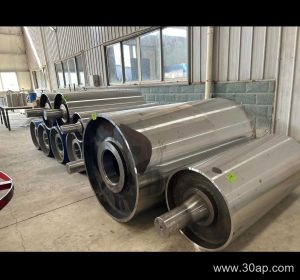
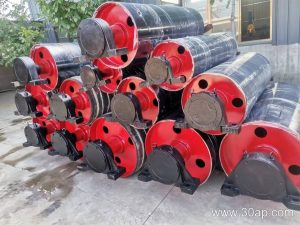
It is worth noting that a conveyor pulley is not a bracket. Drive pulleys, tail pulleys, and bend pulleys serve different functions and are not interchangeable with support brackets. A bracket holds idlers; a pulley drives or redirects the belt.
Matching Brackets to Belt Width and Roller Diameter
Belt width and roller diameter influence bracket dimensions, but they do not dictate a single fixed combination. A B800 belt may run with Ø108 idlers at a 35-degree trough angle, while a B1200 belt might use Ø133 rollers at 45 degrees. Those are common examples, not universal rules.
Installation hole spacing and crossbeam length usually change with belt width and trough angle. A buyer should confirm the frame hole pattern, the required trough angle, and the roller shaft size before ordering. Do not assume that one belt width always matches one pulley diameter or one shaft size. The bracket must fit the actual conveyor design.
What Buyers Should Check Before Ordering
- Belt width and required trough angle, such as B650 with 30 degrees or B1000 with 35 degrees.
- Idler roller diameter and shaft end type, since the bracket must accept the roller without modification.
- Mounting hole spacing and crossbeam length, measured from the existing conveyor frame.
- Material and surface treatment, especially for dusty, wet, or corrosive locations.
- Whether a fixed or adjustable bracket is more suitable for the operating conditions.
Spare parts planning also matters. Keeping a few standard brackets on hand reduces downtime when a roller seizes or a bracket bends. For a conveyor belt that runs continuously, a small stock of the most-used bracket types is often more practical than waiting for a single replacement.
Installation and Maintenance Notes
Correct installation keeps the bracket square to the belt centerline. Bolts should be tightened to the frame without distorting the bracket. After the belt is running, check that idlers rotate freely and that the belt tracks centrally. A loose or misaligned conveyor bracket can cause the belt to drift, which then wears the edges and the rollers.
During routine inspections, look for bent brackets, elongated holes, cracked welds, and corrosion. Replacing a damaged bracket early is usually simpler than correcting the belt misalignment it causes. When a conveyor support bracket is kept in good condition, the idlers last longer and the belt runs with less drag.