What a Cement Conveyor Idler Does on the Line
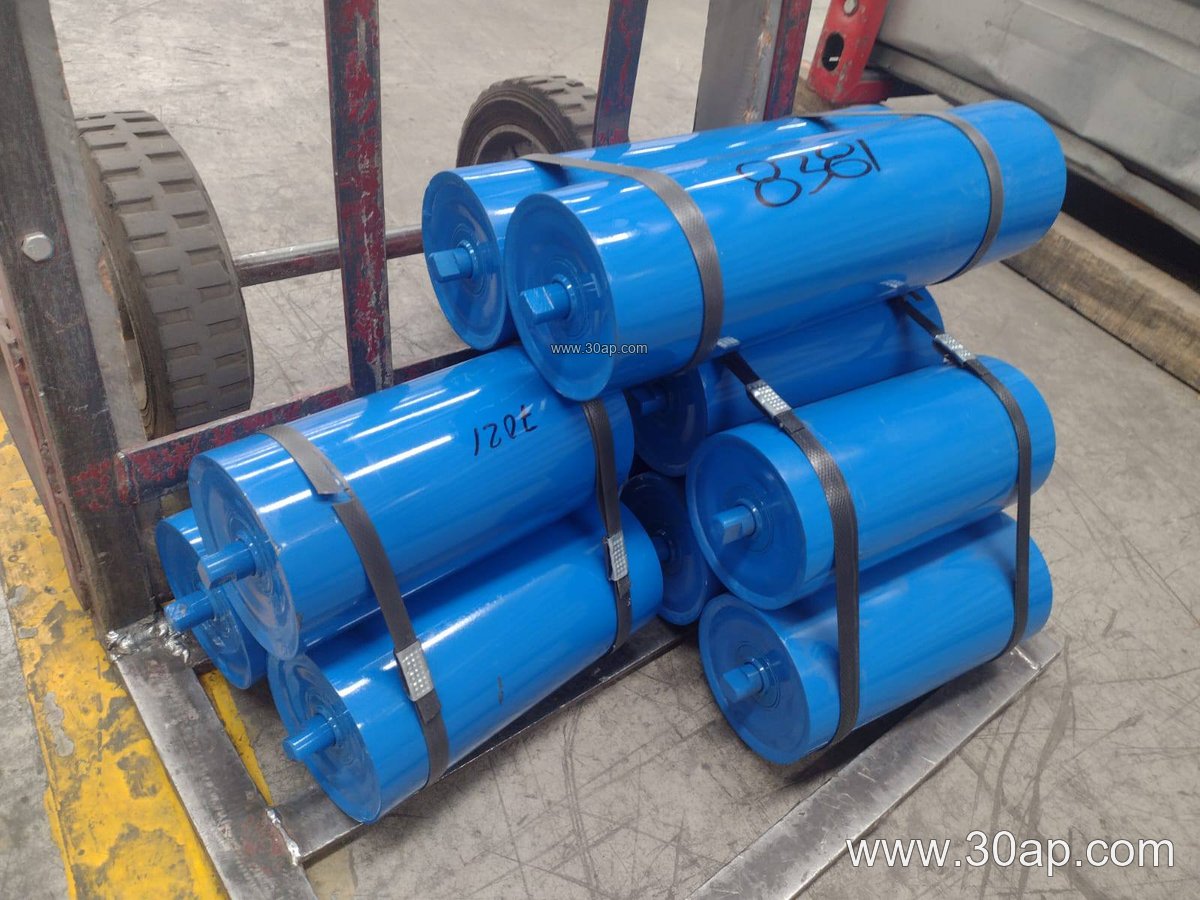
A cement conveyor idler is the rotating support that carries the conveyor belt and the material riding on it. In a cement plant, quarry, or clinker handling circuit, these rollers are mounted in frames at regular intervals along the belt path, holding the belt in a stable trough and keeping friction low. The idler roller does not drive the belt; it simply rolls with it, which is why bearing quality and seal protection matter so much in a dusty environment.
Because cement duty involves abrasive fines, clinker dust, and occasional moisture, the idler must resist contamination while staying free to turn. A seized roller can wear through the belt cover quickly, so the choice of idler type, shell material, and sealing arrangement is a maintenance decision as much as a design one.
How the Idler Is Built
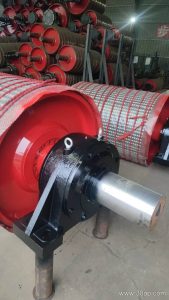
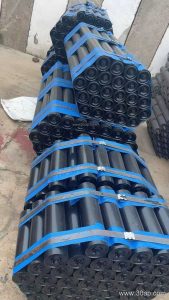
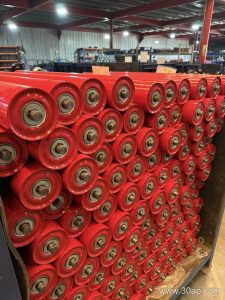
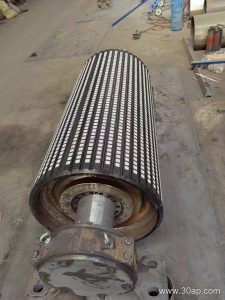
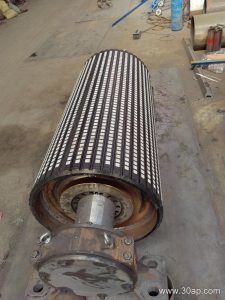
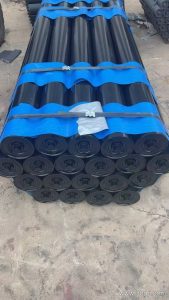
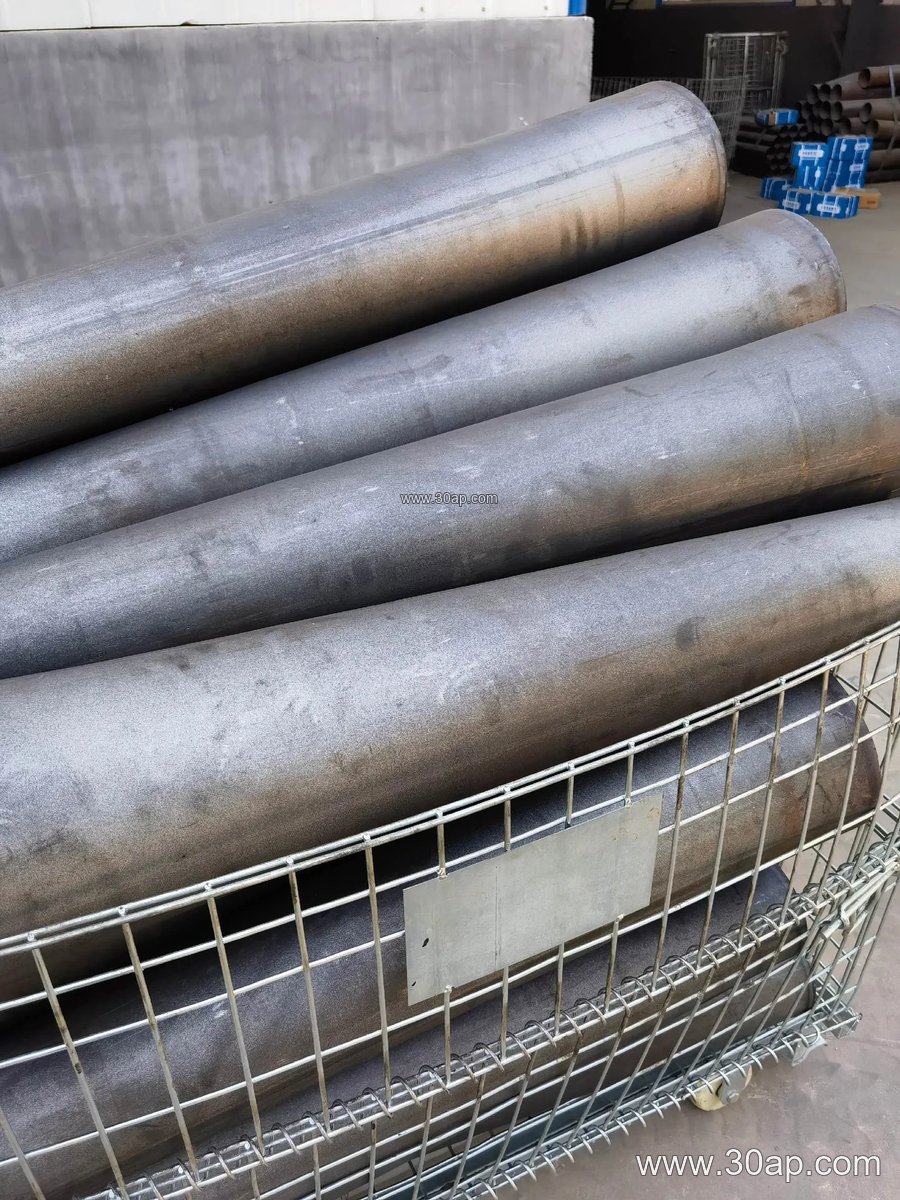
Most idlers share a common structure. A steel tube forms the shell, with bearing housings pressed into each end. A shaft runs through the centre and is clamped into the conveyor bracket or frame. Seals sit between the rotating shell and the stationary shaft to keep dust out and grease in. The shell may be plain steel, nylon-coated, ceramic-coated, or fitted with rubber rings, depending on the duty.
- Shell in steel tube, nylon, ceramic, or rubber-ring form
- Bearing sizes commonly include 6204, 6205, 6305, 6306, 6308, and 6310, matched to the load and shaft design rather than to a single belt width
- Sealing arrangements that suit dusty cement and clinker service
- Shaft ends sized to the bracket or frame used on the conveyor
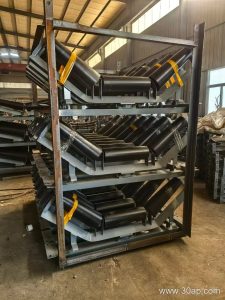
The troughing idler is the most common form on the carrying side, usually arranged as a three-roll set with a trough angle of 20, 30, 35, or 45 degrees. Return idlers support the empty belt underneath, and impact or buffer idlers are placed where material falls onto the belt at transfer points.
Where Cement Conveyor Idlers Are Used
These rollers appear throughout a cement plant, from the limestone crushing area to the clinker cooler and the finished cement transport lines. They also serve in quarry and aggregates operations, coal handling at power plants, and port terminals where bulk material is loaded and unloaded. The conveyor belt may run hundreds of metres, so the number of idlers adds up fast and so does the maintenance workload.
At a transfer chute, buffer or impact idlers with rubber rings help absorb the drop energy. On the return run, V-shaped or flat return idlers keep the belt tracking and reduce material build-up. Alignment problems on long curves are often handled with self-aligning idlers, including friction and conical designs.
Typical Sizes and Configurations
Roller diameter and belt width are selected together, but they are not a fixed one-to-one pairing. A given belt width can work with more than one roller diameter, and shaft size is set by the load and frame design. The table below shows common reference values, not mandatory combinations.
| Item | Common reference values |
|---|---|
| Roller diameter | Ø63, Ø76, Ø89, Ø102, Ø108, Ø127, Ø133, Ø159, Ø178, Ø194, Ø219 |
| Belt width | B400, B500, B650, B800, B1000, B1200, B1400, B1600, B1800, B2000, B2200, B2400 |
| Trough angle | 20°, 30°, 35°, 45° |
| Roller length, three-roll troughing set (examples) | B500 about 200 mm, B650 about 250 mm, B800 about 315 mm, B1000 about 380 mm, B1200 about 465 mm, B1400 about 530 mm, B1600 about 600 mm, B1800 about 670 mm, B2000 about 750 mm |
| Bearing options | 6204, 6205, 6305, 6306, 6308, 6310 |
Side rollers and centre rollers in the same set can differ in length and diameter. Forward tilt of about 1.5 to 2 degrees is sometimes used on troughing idlers to help belt tracking, but this is a design choice, not a rule for every installation.
What Buyers Should Check
Start with the belt width, belt speed, and the weight of material per metre, then confirm the trough angle and idler spacing the conveyor designer intended. Ask how the idler will be sealed, because cement dust is fine and penetrates poor seals. Check the shaft end and bracket compatibility before ordering, since a roller that does not fit the existing frame creates unnecessary downtime.
Consider the environment along each section of the line. Impact zones may call for rubber-ring buffer idlers, while long return runs may suit V-type or flat return rollers. Spiral or self-cleaning rollers can help where sticky material builds up. For a cement conveyor idler, the practical goal is simple: smooth rotation, good dust exclusion, and a shell that lasts under abrasive load.
Keep a small stock of the most-used roller sizes and bracket parts, and inspect idlers during routine belt checks. A roller that stops turning is easier and cheaper to replace before it damages the belt cover. Matching the idler to the conveyor pulley layout and belt specification from the start avoids most of these problems.