What a Three-Roll Idler Bracket Does
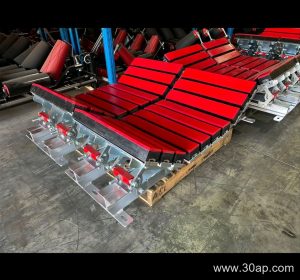
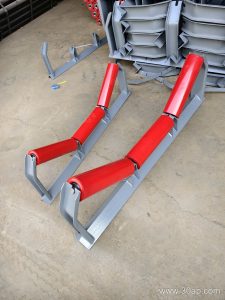
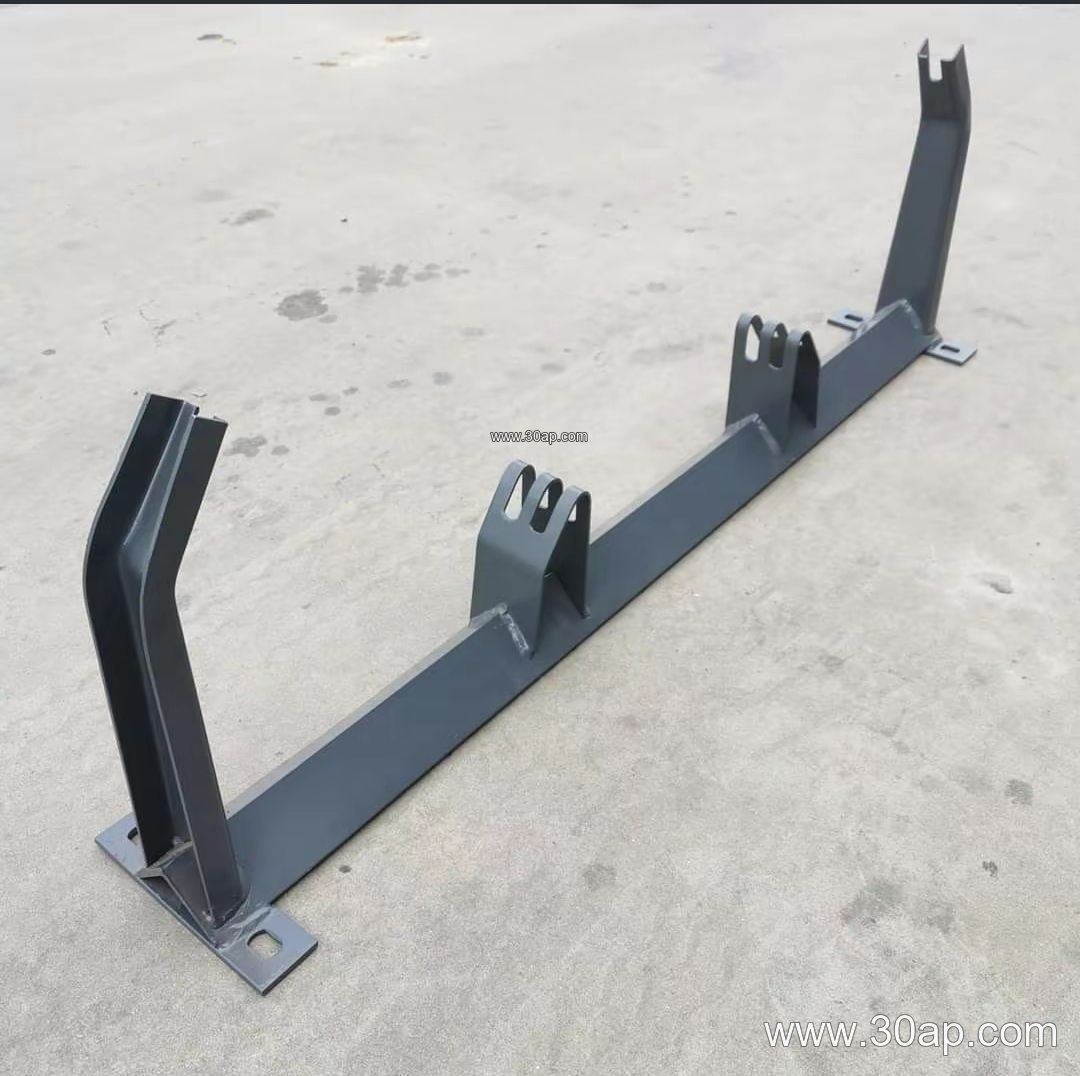
A three-roll idler bracket is the support frame that holds three idler rollers in a trough shape beneath the carrying side of a conveyor belt. The two outer rolls sit at an angle, while the center roll stays roughly horizontal. This arrangement forms the belt into a channel that keeps bulk material centered during transport. In a quarry, a cement plant, or a coal handling line, these brackets are the quiet workhorses that determine how well the belt tracks and how much material spills at transfer points.
The same component is often called a troughing idler bracket or a troughing frame, and those names describe the same product. Do not confuse it with the tail pulley or the drive pulley, which serve entirely different functions in the conveyor drive system.
How the Bracket Is Built
Most three-roll idler brackets are fabricated from angle steel, channel steel, or bent steel plate. The frame includes mounting slots for each idler shaft, and the angle between the outer rolls defines the trough angle. On a fixed bracket, that angle is welded in place. A self-aligning or adjustable version may allow the trough angle to be changed or may pivot slightly to correct belt misalignment.
The bracket also carries the mounting holes that connect to the conveyor stringer. Hole spacing and crossbeam length change with belt width and trough angle, so they are determined by design rather than set as a universal figure.
Where Three-Roll Idler Brackets Are Used
These brackets appear on the carrying side of a conveyor belt wherever bulk material needs a stable trough profile. In a limestone mine, three-roll idler brackets keep crushed rock centered on the belt. At a power plant coal yard, the same bracket type supports the belt through long transfer runs. Sand and gravel lines, crushing and screening plants, and fertilizer handling facilities also rely on troughing brackets to reduce spillage and extend belt life.
When the material is heavy or the belt runs wide, an impact-resistant bracket or a reinforced frame may be paired with the three-roll arrangement. The bracket must match the conveyor belt width and the idler roller diameter selected for the load.
Trough Angle, Belt Width, and Roller Diameter
Trough angle is a key selection point. A 20-degree frame gives a shallow trough, while 35-degree and 45-degree frames create a deeper channel for higher capacity. Adjustable brackets can move between these angles. The table below shows typical reference combinations; these are common examples, not fixed rules, and actual selection follows conveyor design.
| Belt Width | Trough Angle | Idler Diameter | Typical Use |
|---|---|---|---|
| B500 | 20° / 30° | Ø89 | Light aggregate lines |
| B650 | 30° / 35° | Ø89 / Ø108 | Sand and gravel |
| B800 | 30° / 35° | Ø108 | Cement and quarry duty |
| B1000 | 35° / 45° | Ø108 / Ø133 | Coal and ore handling |
| B1200 | 35° / 45° | Ø133 | Power plant coal lines |
| B1400 | 35° / 45° | Ø133 / Ø159 | Heavy bulk transfer |
| B1600 | 35° / 45° | Ø159 | Mining and port duty |
| B1800 | 35° / 45° | Ø159 / Ø194 | High-capacity ore lines |
Belt width does not lock the bracket to a single trough angle or roller diameter. A B1200 frame can be built at 35 degrees with Ø133 rollers, or at 45 degrees with the same roller size, depending on the material and belt speed. Buyers should confirm the mounting hole pattern and crossbeam length against the stringer drawing rather than assuming a standard.
Buying Notes for Troughing Frames
- Confirm the belt width and required trough angle before ordering.
- Match the idler roller diameter to the bracket’s shaft slots.
- Check whether a fixed or adjustable frame suits the belt alignment needs.
- Review the steel gauge and coating for dusty or wet conditions.
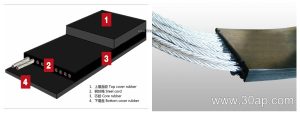
- Coordinate the bracket with the conveyor belt specification, since a heavy EP conveyor belt or steel cord conveyor belt may need a different support spacing.
For a coal mining conveyor or an underground coal mining conveyor, flame retardant conveyor belt and anti-static conveyor belt grades are often specified alongside the bracket and roller set. In a cement plant, an abrasion resistant conveyor belt may run over the same troughing frames that handle clinker and limestone. Matching the three-roll idler bracket to the belt and roller selection keeps the whole conveyor line working as one system.
Maintenance is straightforward. Inspect the bracket for bent flanges, worn mounting slots, and loose fasteners. A frame that has lost its angle will let the belt sag and drift, so replacing a distorted three-roll idler bracket early is cheaper than repairing a damaged belt. For more on conveyor belt and idler roller matching, visit conveyoridlerrollen.com and review the bracket and roller guidance before specifying a new line.