What a Carbon Steel Conveyor Bracket Does
A carbon steel conveyor bracket is the structural support that holds idler rollers in place along a belt conveyor. In a quarry, a coal wash plant, or a cement kiln feed line, these brackets keep the conveyor belt tracking correctly and carry the weight of the material. Unlike a conveyor pulley, which drives or redirects the belt at the ends, the bracket works along the carrying and return runs, positioning each idler roller at the right angle and height. The same product is often called a conveyor support frame or roller mounting bracket. Drive pulleys, tail pulleys, and bend pulleys are separate components and are not interchangeable with this bracket.
How It Is Built
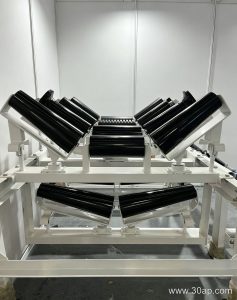
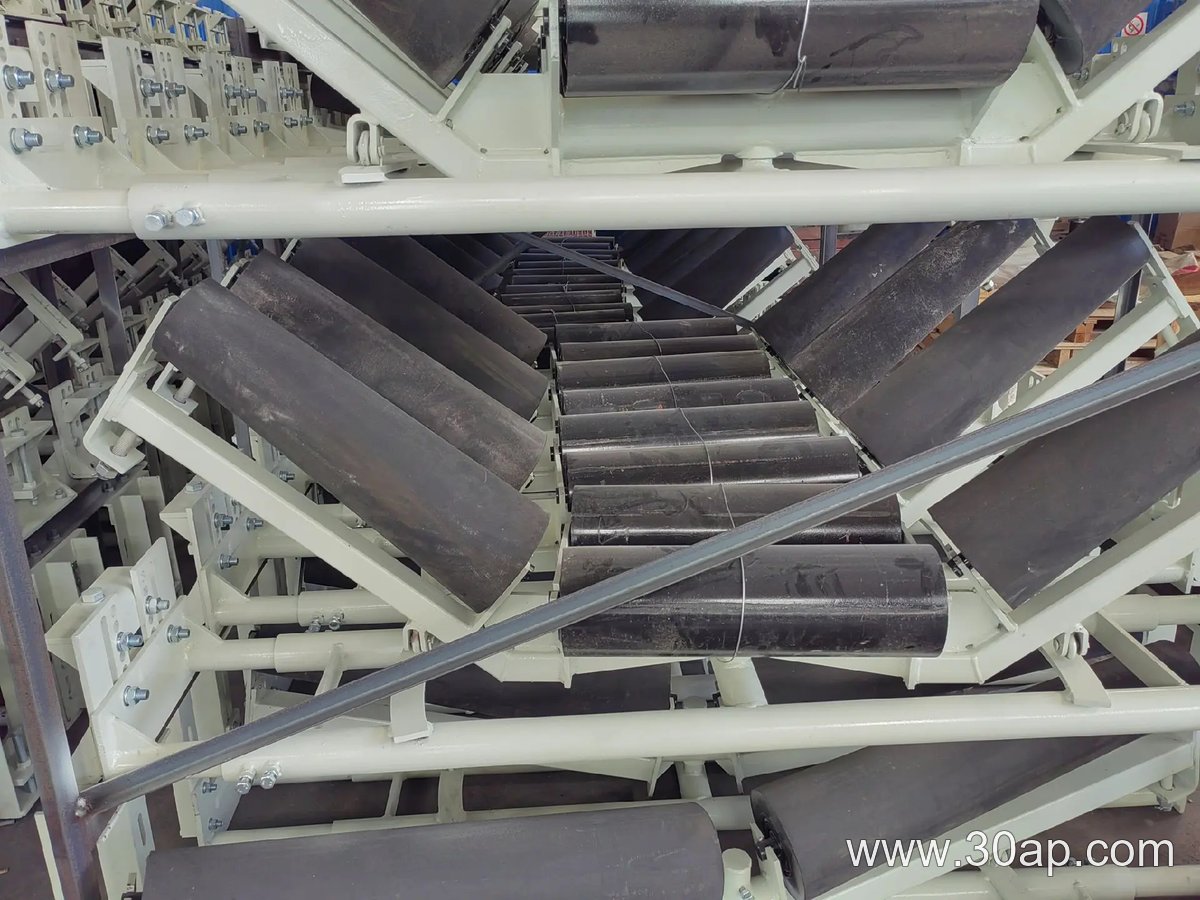
Most carbon steel conveyor brackets are fabricated from angle steel, channel steel, or folded steel plate. The choice depends on the load and the belt width. A typical troughing bracket has a base beam and two or three mounting pads that set the idler rollers at a trough angle. For a 35-degree trough, the side rollers sit at that angle while the center roller runs flat. Adjustable brackets allow the trough angle to be changed between 20 and 45 degrees, which helps when a conveyor handles different materials or needs fine tracking adjustment. Fixed brackets are welded or bolted at a set angle. The steel surface may be painted, galvanized, or left raw depending on the environment.
Common Types and Their Positions
- Troughing bracket — supports the carrying idlers on the loaded side of the belt.
- Transition bracket — eases the belt from the flat pulley area into the trough section.
- Return bracket — holds the return idlers under the belt; a V-return bracket is one common form.
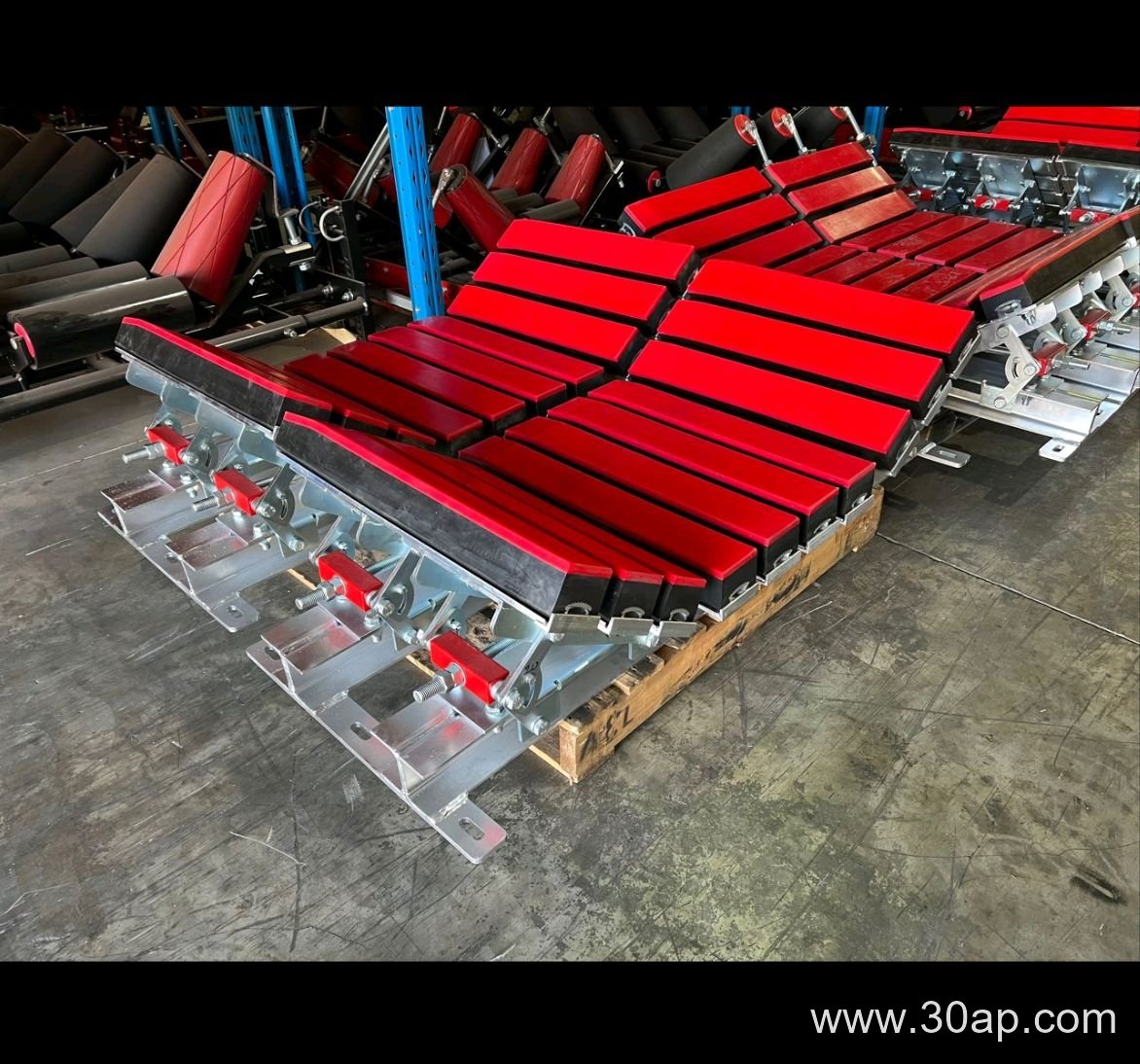
- Impact bracket — used under loading points where material drops onto the belt.
- Self-aligning bracket — helps correct belt misalignment on long conveyors.
Where It Fits in the System
In a sand and gravel line, a carbon steel conveyor bracket is bolted to the conveyor stringer or frame. The idler roller sits in the bracket saddle, and the conveyor belt runs over the roller. A complete carrying section may use a three-roller troughing set with a bracket at each end. On the return side, a single return bracket or a V-shaped bracket keeps the belt supported. The bracket does not move the belt; that job belongs to the drive pulley. But without a stable bracket, the idlers would shift, the belt would wander, and spillage would increase.
Sizes and Selection Factors
Bracket dimensions follow the belt width, trough angle, and roller diameter. A bracket for a B650 belt with 30-degree trough and Ø89 rollers will not fit a B1400 belt with 45-degree trough and Ø159 rollers. The table below shows common reference combinations, not fixed rules.
| Belt Width | Trough Angle | Roller Diameter | Typical Bracket Use |
|---|---|---|---|
| B500 | 20° | Ø89 | Light-duty sand or grain |
| B800 | 35° | Ø108 | Aggregate or coal |
| B1000 | 35° | Ø133 | Crushing and screening |
| B1200 | 45° | Ø133 | High-capacity ore |
| B1400 | 45° | Ø159 | Port or power plant coal |
| B1600 | 35° | Ø194 | Heavy mining duty |
When choosing a carbon steel conveyor bracket, check the mounting hole spacing and beam length against the conveyor frame. These dimensions vary with belt width and trough angle. Also confirm the roller shaft size and the bracket saddle opening. A bracket that fits the shaft but not the frame will not install correctly. For corrosive areas, a galvanized or painted finish may last longer. For high-impact zones, a heavier channel or folded plate bracket is often used. Adjustable brackets cost more but allow angle changes later. Fixed brackets are simpler and suitable when the conveyor design is final.
Maintenance and Buyer Checks
Inspect brackets for bending, loose bolts, or corrosion during routine conveyor maintenance. A bent bracket can tilt the idler roller and cause the conveyor belt to run off-center. Replace damaged brackets before they wear the belt edge. When ordering, specify the belt width, trough angle, roller diameter, and mounting pattern. Ask whether the bracket is fixed or adjustable. Confirm the material grade and surface treatment. A carbon steel conveyor bracket is a small part, but it decides how well the idlers and the belt work together in a quarry, a coal plant, or a cement line.