What a Discharge Pulley Does at the Head of a Conveyor
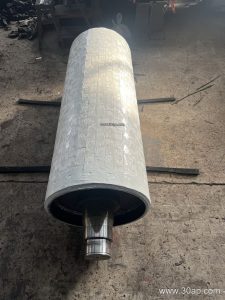
The discharge pulley is the drum at the delivery end of a belt conveyor where the belt turns back after releasing its load. In many plants it is simply called the head pulley, and the two terms describe the same component in the same position. It is not a drive pulley, a tail pulley, or a bend pulley, and those parts cannot be swapped into its place. The discharge pulley works with the conveyor belt to throw material into a chute, stockpile, or transfer point, so its diameter, face width, lagging, and shaft design all influence how cleanly the belt releases cargo.
Construction and Surface Options
A typical unit is built around a steel drum shell with welded end discs and a through shaft, supported by bearing housings that sit on the conveyor bracket or frame. The shell can be supplied plain or covered with rubber lagging to protect the surface and improve grip where needed. Common covering methods include hot vulcanized rubber, cold-bonded rubber, and cast rubber, while patterned surfaces such as diamond lagging or herringbone lagging are chosen when extra traction or material shedding is useful. Ceramic lagging is another option in wet or abrasive service. Lagging thickness is often 8, 10, 12, 15, or 20 mm depending on duty.
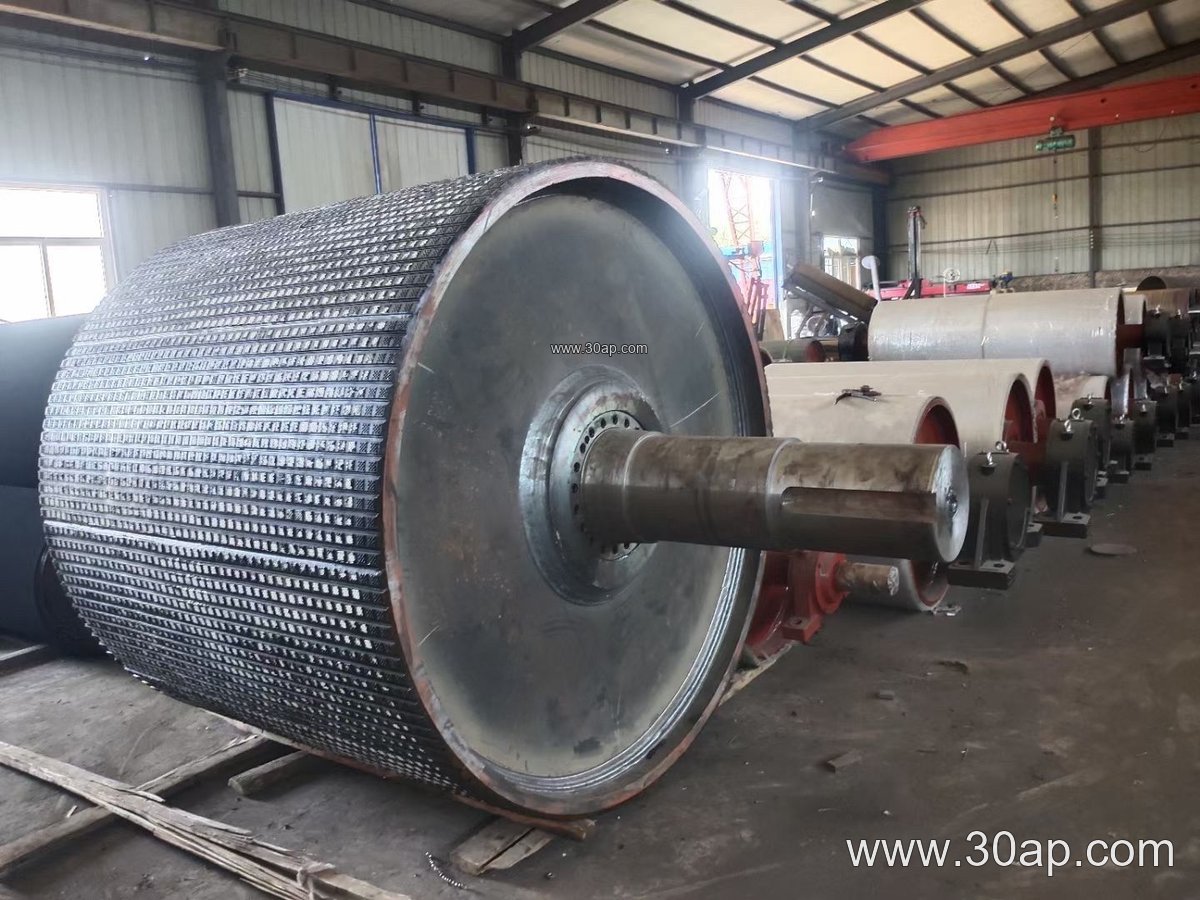
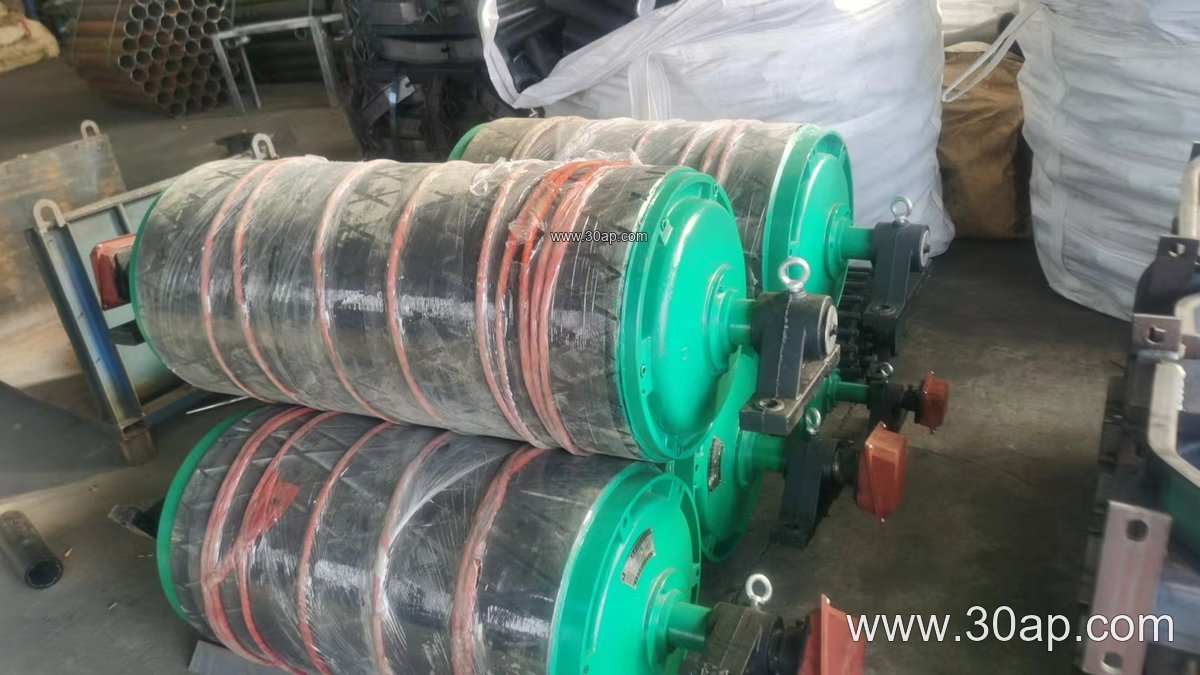
Face width normally exceeds the belt width so the belt is fully supported. For reference, a B800 belt usually runs on a pulley face of roughly 950 mm, and a B1200 belt on about 1400 mm. Diameter is selected from belt tension, wrap angle, and the space available at the head station; common sizes range from Ø200 up to Ø1800, and combinations such as B800 × Ø500 or B1200 × Ø1000 appear in ordinary layouts. Shaft diameter is determined by torque and load, with Ø80 to Ø200 being typical for larger units.
Where It Fits in Bulk Handling
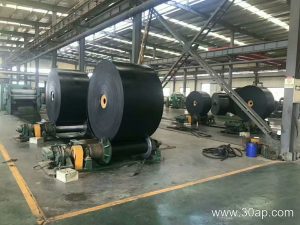
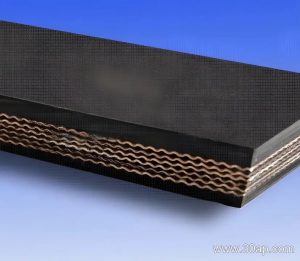
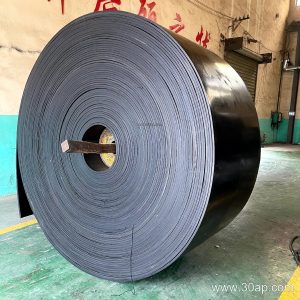
Discharge points appear across quarry and aggregate lines, cement clinker circuits, power plant coal handling, and port bulk terminals. In a sand and gravel plant the head drum may throw crushed stone onto a stockpile, while in a coal preparation plant it feeds a transfer chute. The belt itself may be an abrasion resistant conveyor belt for sharp rock, a heat resistant conveyor belt near clinker, or a flame retardant conveyor belt in underground coal mining conveyors. A steel cord conveyor belt or a heavy-duty mining conveyor belt places higher demands on the pulley shell and shaft, and the discharge pulley must be matched to that tension rather than chosen by belt width alone.
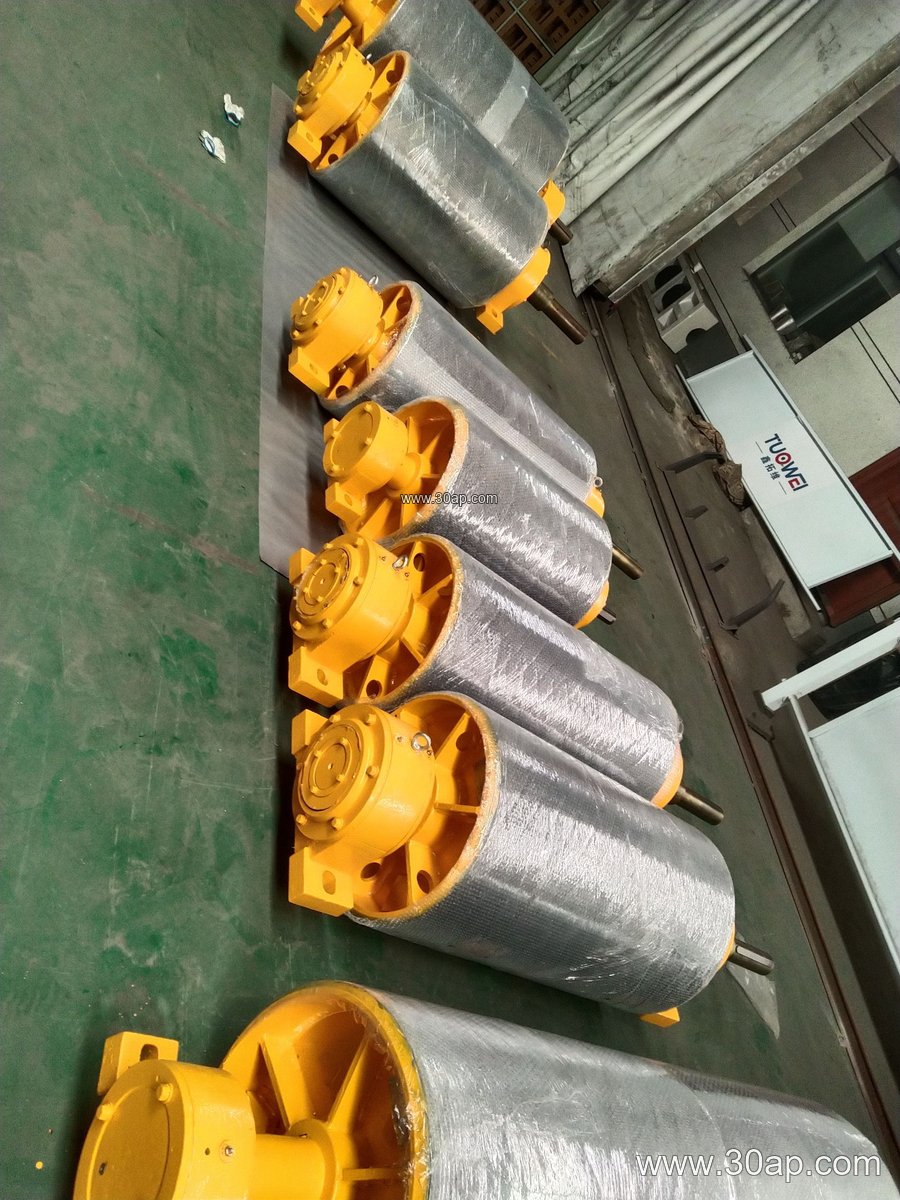
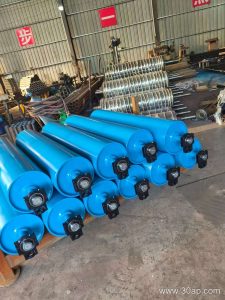
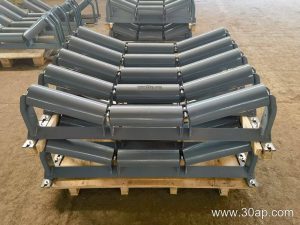
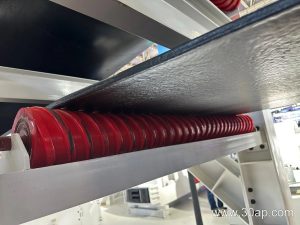
An idler roller on the carrying side and a return roller underneath keep the belt aligned as it approaches the head, and the pulley bearing seats must line up with the conveyor bracket so the shaft runs true. Poor alignment at this point shows up quickly as belt edge wear or spillage.
Selection Notes for Buyers
- Confirm the belt width and the required face width, then check the diameter against belt speed and wrap angle.
- State the material being handled so the lagging type suits the duty; wet, oily, or hot cargo changes the choice.
- Provide the belt tension or drive data so the shaft and bearings can be sized by the manufacturer.
- Decide between plain and lagged surfaces based on slip risk and cleaning requirements.
- Check chute clearance; a larger drum changes the belt path and the trajectory of the discharged material.
For a discharge pulley, the goal is a smooth release of material and a long bearing life. Matching the drum to the conveyor belt, the frame, and the duty is more important than copying a size from another line. Buyers comparing a head drum with a bend pulley should remember that the bend pulley only changes belt direction, while the discharge pulley also handles the release of the load.