What a Herringbone Grooved Lagged Pulley Does
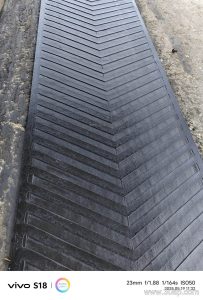
A herringbone grooved lagged pulley is a conveyor pulley whose shell is covered with a rubber lagging cut into a V-shaped chevron pattern. On a belt conveyor, this patterned surface improves friction between the pulley face and the conveyor belt, while the grooves give water, dust and fines somewhere to escape instead of being trapped under the belt. The same product is often called a chevron grooved lagged pulley, and both names describe the same item.
These pulleys are commonly used as drive pulleys at the head of a conveyor, where torque has to be transferred without slip. They also appear at tensioning positions. A herringbone grooved lagged pulley is not a tail pulley, a bend pulley or a wing pulley; those are separate subtypes with different jobs, and the chevron wrap is chosen mainly for grip and drainage rather than for cleaning or belt training.
Construction and Surface Details
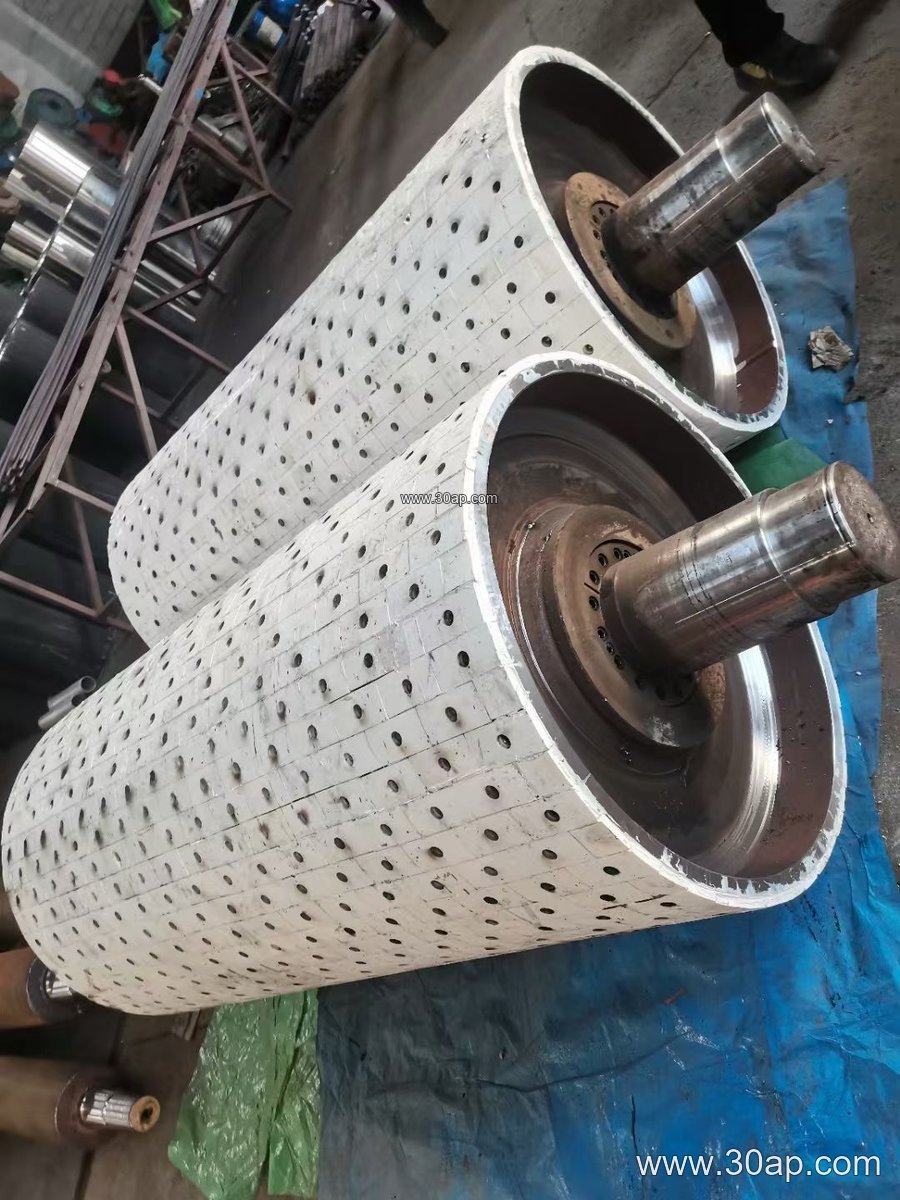
The body is usually a welded steel shell with shaft, hubs and end discs, machined so the lagging sits evenly around the circumference. The rubber layer is bonded by hot vulcanizing or cold adhesive, then cut or molded into the herringbone pattern. Groove depth and pitch are set by the manufacturer according to the duty and belt speed.
Common lagging thicknesses are 8, 10, 12, 15 and 20 mm. Surface options on conveyor pulleys in general include plain, cast rubber, cold-bonded rubber, hot-vulcanized rubber, diamond lagging, ceramic lagging and herringbone lagging; only the last is the subject here. The chevron direction matters: the V usually points in the direction of belt travel so the grooves push water outward as the pulley turns.
Reference Dimensions
The figures below are typical reference ranges, not fixed pairings. Diameter is chosen from torque, belt tension and wrap angle, and shaft size follows load calculations rather than belt width alone.
| Item | Common reference values |
|---|---|
| Belt width | B400, B500, B650, B800, B1000, B1200, B1400, B1600, B1800 |
| Pulley diameter | Ø200, Ø250, Ø315, Ø400, Ø500, Ø630, Ø800, Ø1000, Ø1250 |
| Face width (example) | B800 ≈ 950 mm, B1200 ≈ 1400 mm, B1600 ≈ 1800 mm |
| Lagging thickness | 8, 10, 12, 15, 20 mm |
| Shaft diameter | Ø50 to Ø200 mm, by torque and load |
A combination such as B1200 × Ø1000 or B1400 × Ø800 can appear in a design, but no single belt width is tied to one diameter. Face width is normally a little wider than the belt so the belt stays fully supported.
Where It Fits in a Plant
In a quarry or aggregate line, a herringbone grooved lagged pulley on the head end helps keep a dusty belt from slipping during start-up. In a coal preparation plant or a power plant coal yard, the grooves reduce the risk of a wet film building up between belt and shell. The same logic applies in a cement plant clinker circuit or a port bulk terminal handling damp ore.
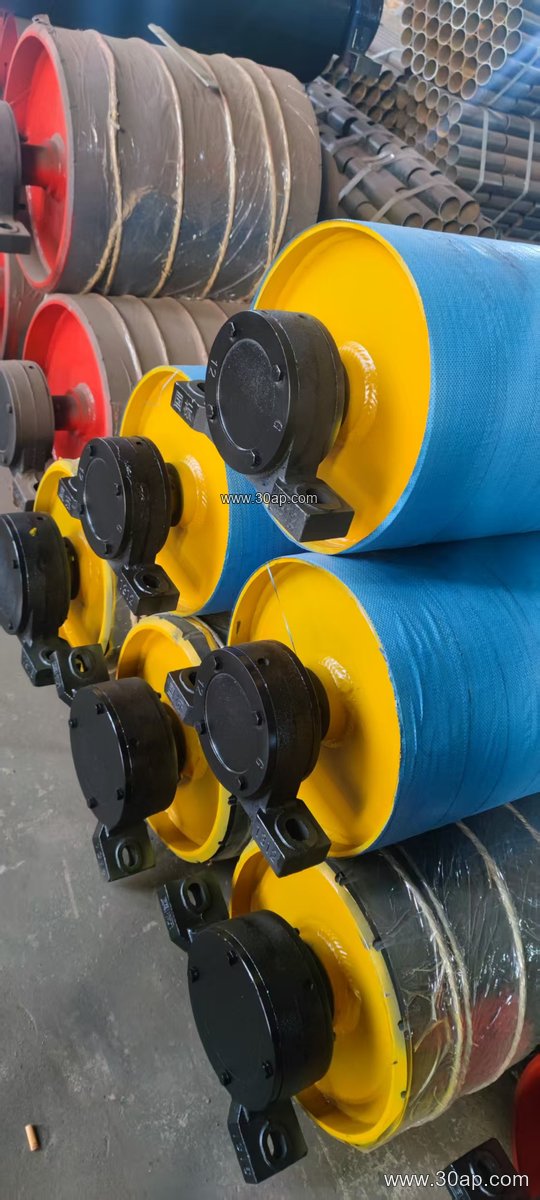
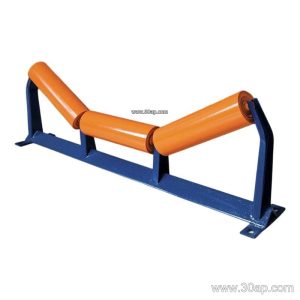
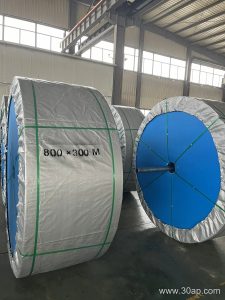
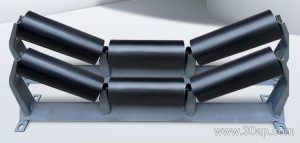
The pulley works together with the idler roller sets along the carry and return sides, the conveyor bracket frames that hold them, and the belt itself. A heavy-duty mining conveyor belt or an abrasion resistant conveyor belt may run over it, but the pulley choice should come from the drive duty, not from the belt grade alone.
Buyer Checklist
- Confirm the pulley position: head drive, tension or another location, since a bend pulley has different requirements.
- Match lagging thickness and groove pattern to the material and moisture level.
- Check that the shaft diameter is calculated from torque and bearing load.
- Ask for the chevron direction relative to rotation before ordering.
- Review bonding method and rubber quality, because a loose lagging edge can peel.
Maintenance Notes
Inspect the herringbone grooves for packed material, cuts or worn edges. Worn grooves lose drainage and grip together. Keep the belt tracking straight so the lagging wears evenly across the face, and check fasteners and lagging adhesion during scheduled stops. A herringbone grooved lagged pulley is a small part of the conveyor, but it is often the part that decides whether a loaded belt starts cleanly or slips.