What the Head Pulley Does
The head pulley is the drum at the discharge end of a belt conveyor, and in most installations it is also the drive pulley. Its rotation pulls the conveyor belt forward, while its position at the head of the line lets material fall freely into the next chute, screen, or stockpile. Because drive, tail, and bend pulleys are not interchangeable, the head pulley should be specified as the driven drum at the delivery point, not as a general spare that can be swapped into any station.
In a quarry, a limestone mine, or a cement plant feeding a crusher, this drum often works under continuous load and abrasive dust. The same component appears in power plant coal handling and port bulk terminals, where steady belt tracking matters as much as raw pulling force.
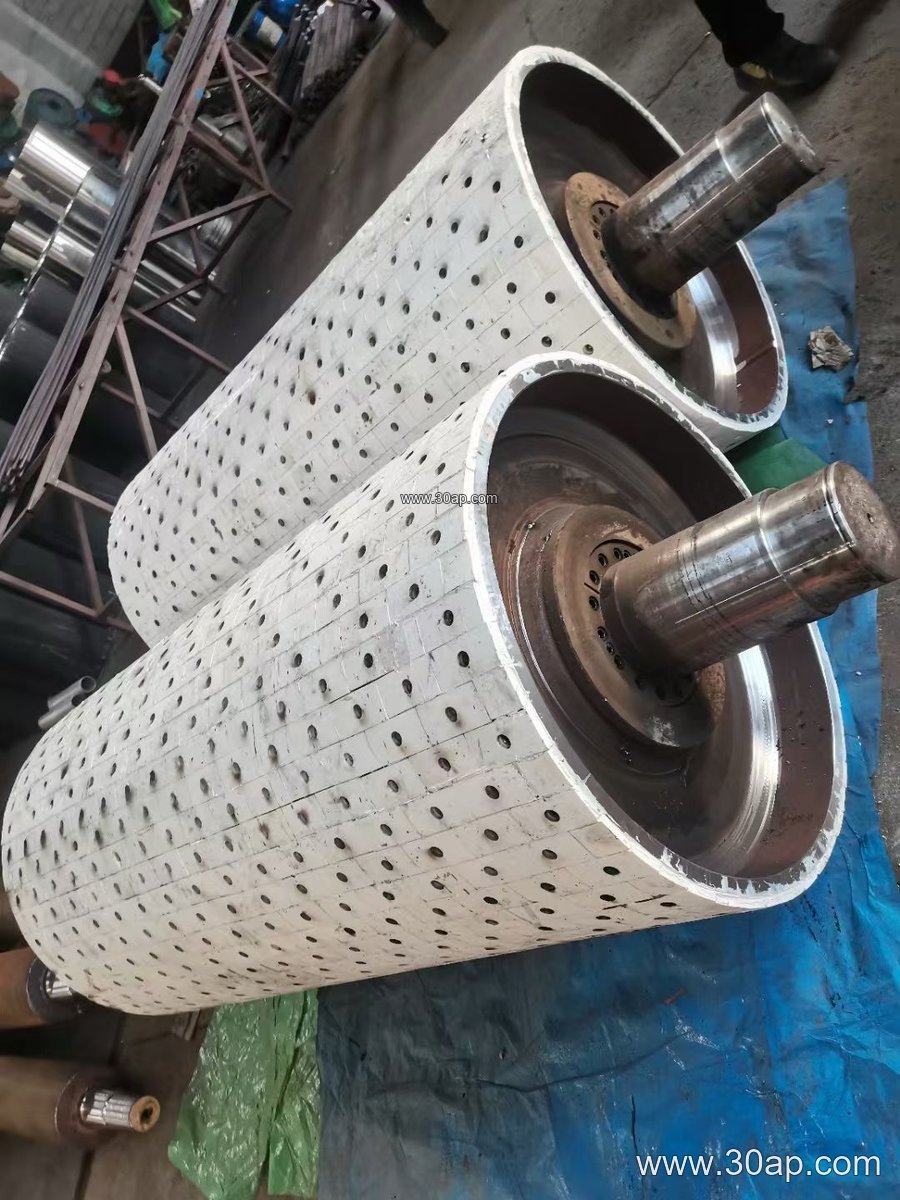
Construction and Surface Options
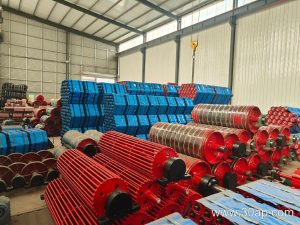
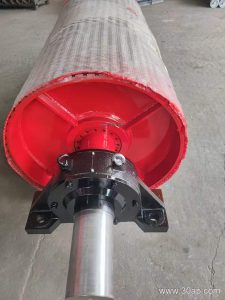
A typical head pulley is built around a steel shell, welded to end discs and a shaft, with bearing housings mounted on a frame or on the conveyor bracket. The shaft diameter is set by torque and load, not by belt width alone. Common shaft sizes include Ø80, Ø100, Ø120, Ø140, and Ø160, but the final value comes from the drive calculation.
Shell diameter and face width are matched to the belt and to the duty. Face width is usually a little wider than the belt, for example about 950 mm for a B800 belt or about 1400 mm for a B1200 belt. This is a reference relationship, not a rule that one belt width can only use one pulley diameter.
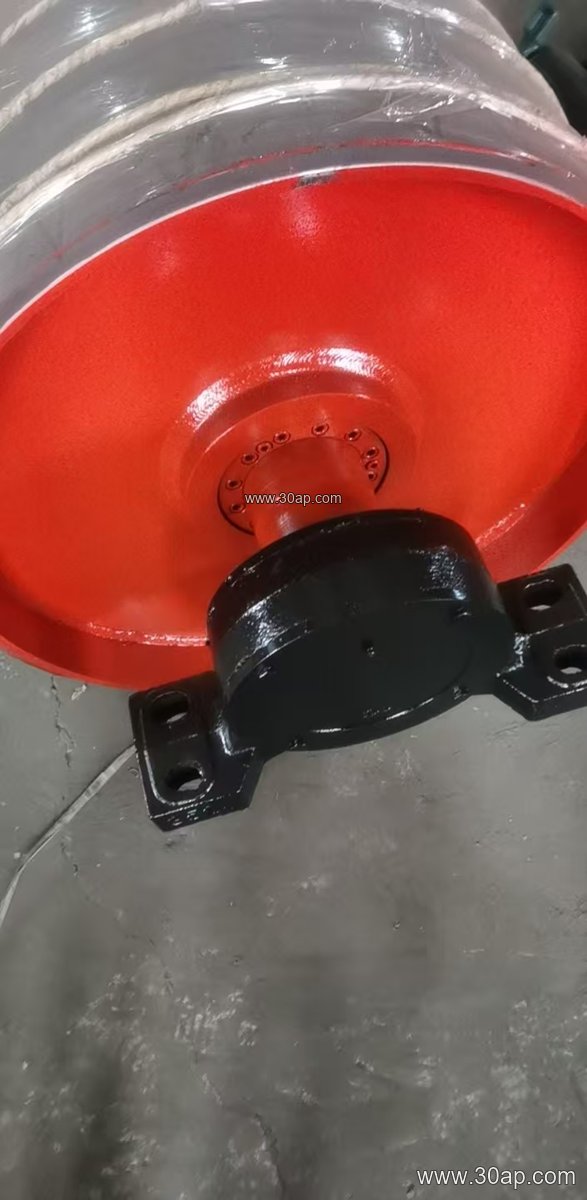
Surface treatment affects grip and wear life:
- Plain surface for light duty or where slip is not a concern
- Diamond grooved rubber lagging for wet or dusty conditions
- Herringbone lagging to help centering on reversing or heavily loaded belts
- Ceramic lagging for high abrasion at the drive point
Lagging thickness is often 8, 10, 12, 15, or 20 mm, selected with the belt and the expected traction demand. A rubber conveyor belt with a smooth cover and a lagged head pulley usually work together better than a bare steel shell in wet service.
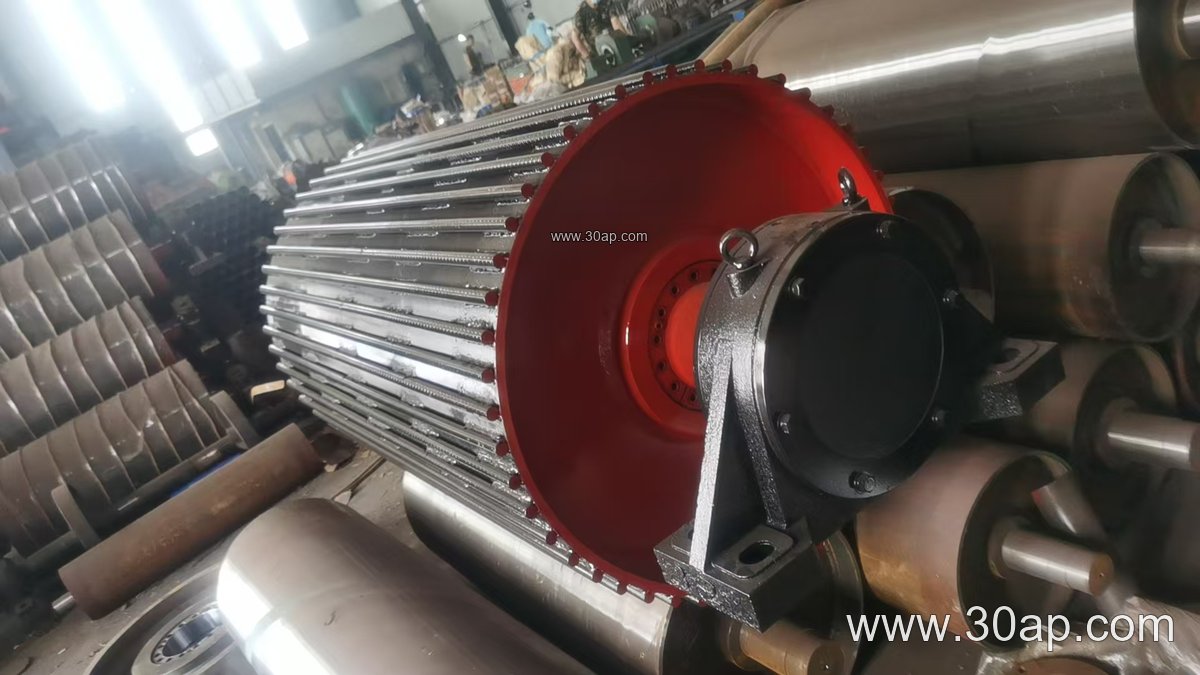
Common Size Combinations
The table below shows reference combinations, not fixed supply limits. Final dimensions follow the conveyor design.
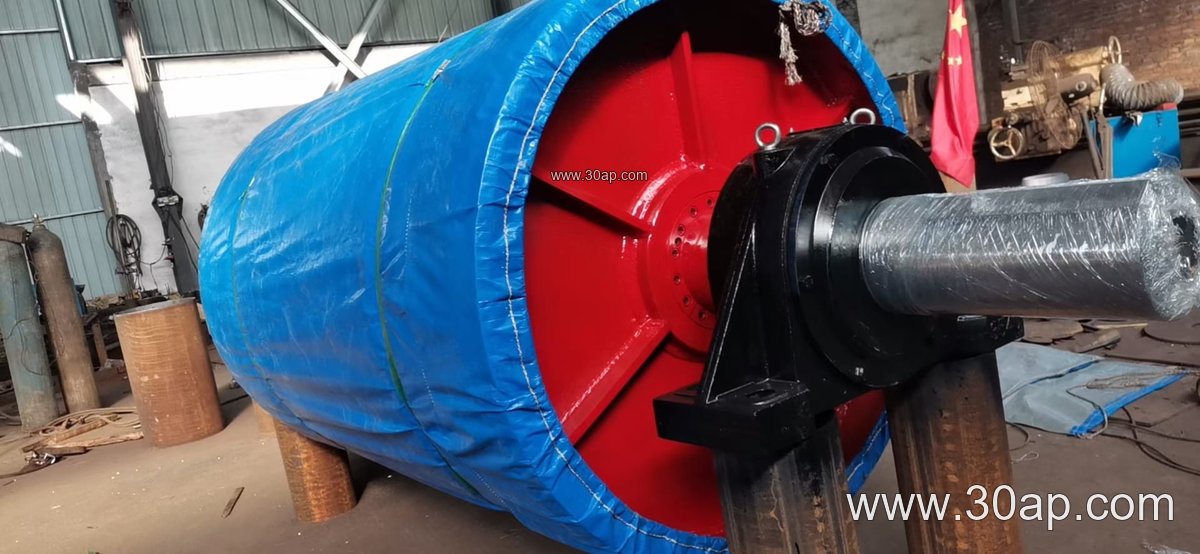
| Belt width | Approx. pulley face width | Example diameter | Typical lagging |
|---|---|---|---|
| B500 | 600 mm | Ø400 | 10 mm diamond |
| B650 | 750 mm | Ø500 | 10 mm plain rubber |
| B800 | 950 mm | Ø500 or Ø630 | 12 mm diamond |
| B1000 | 1150 mm | Ø800 | 15 mm diamond |
| B1200 | 1400 mm | Ø1000 | 15 mm ceramic |
| B1400 | 1600 mm | Ø800 or Ø1000 | 15 mm herringbone |
| B1600 | 1800 mm | Ø1250 | 20 mm ceramic |
Heavier belts need more traction and a stiffer shaft. A steel cord conveyor belt on a long overland line may call for a larger drum and a thicker lagging than a short fabric core conveyor belt on the same width. An EP conveyor belt or NN conveyor belt in a crusher line is often paired with a mid-range drum and moderate lagging. Underground coal mining conveyors may require flame retardant conveyor belt and fire resistant conveyor belt grades, and the head pulley should be specified with the same safety intent.
Selection Points for Buyers
Start with the drive power, belt speed, belt tension, and the material being carried. Then confirm the shell diameter, face width, shaft size, bearing type, and lagging. Ask whether the pulley will be supplied with a shaft, bearings, and locking assembly, or as a bare shell. Check that the mounting matches the conveyor bracket and that the discharge chute leaves clearance for the lagging and for belt travel.
For abrasive ore or iron ore duty, consider ceramic or thick rubber lagging and a robust shell. For hot clinker or sinter, heat resistant conveyor belt grades and a suitable drum surface should be reviewed together. In food or grain service, a clean, smooth surface may be preferred over deep grooves.
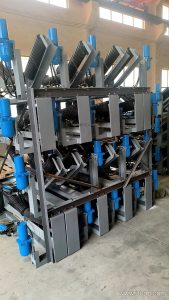
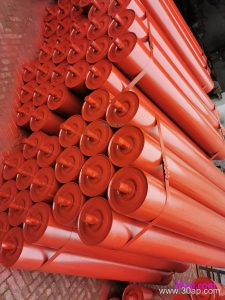
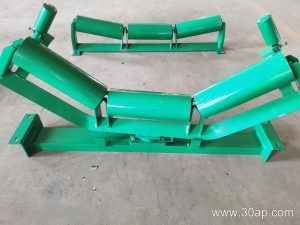
During operation, watch for belt slip, lagging wear, and material build-up on the shell. A slipping drive drum can polish the lagging and damage the belt edge, so tension and lagging condition should be checked at routine inspections. A well-matched head pulley, conveyor idler roller set, and conveyor belt keep the whole line running with less downtime.