What an Iron Ore Conveyor Belt Has to Handle
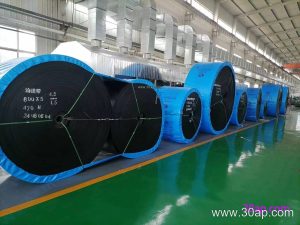
An iron ore conveyor belt is the load-carrying element that links a crusher, a stockpile, a ship loader, or a processing plant. Iron ore is dense, angular, and often delivered in large lumps, so the belt has to resist cutting, gouging, and impact at the transfer point while running straight over long distances. In a mine, a quarry, a port terminal, or a steel plant, the same ore conveyor belt may face wet fines in one section and dry, sharp lumps in another, which is why a single grade rarely suits every run.
The working environment matters as much as the material. Coastal ports bring salt air and humidity, while sintering and pellet plants add heat. Underground or enclosed galleries may require a flame retardant conveyor belt or an anti-static conveyor belt. Each condition pushes the specification in a different direction, so buyers usually define the duty first and then choose the construction.
How the Belt Is Built
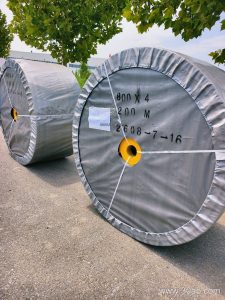
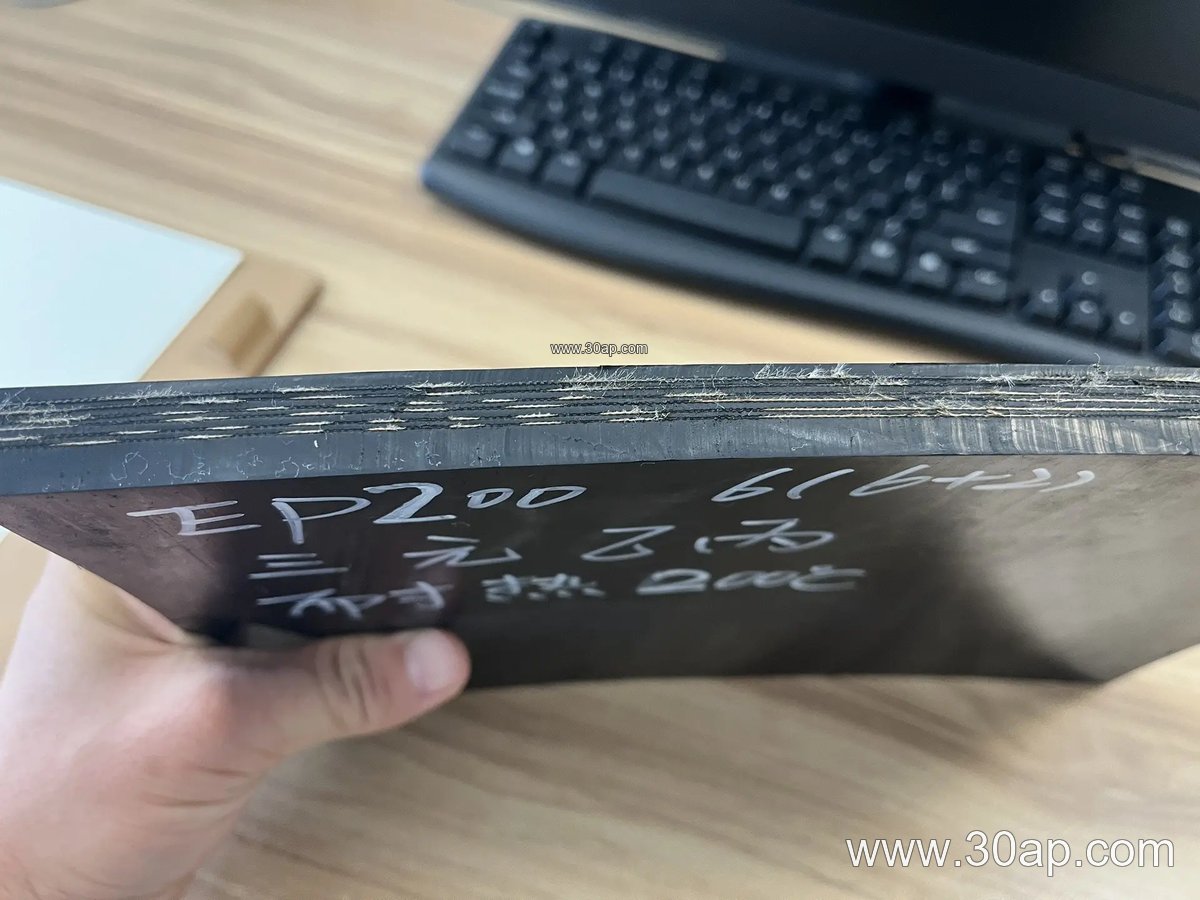
Most iron ore duties are served by a fabric core or steel cord construction. A multi-ply fabric core conveyor belt uses several layers of EP or NN fabric, while a steel cord conveyor belt relies on parallel brass-plated wires for very high tensile strength over long center distances. The cover rubber carries the abrasion load and is usually specified as a high abrasion resistant conveyor belt grade for ore handling.
Typical reference data, to be confirmed by design, include:
| Item | Common reference values |
|---|---|
| Fabric core grades | EP200, EP315, EP400, EP500, EP630, EP800, EP1000, EP1250 |
| Steel cord grades | ST1000, ST1250, ST1600, ST2000 |
| Belt width | B650 to B2000 mm, with B1000 and B1200 mm seen often in ore lines |
| Cover thickness | 4+2 mm, 6+2 mm, 8+3 mm top and bottom combinations |
| Ply count | Usually 2 to 6 layers for fabric cores |
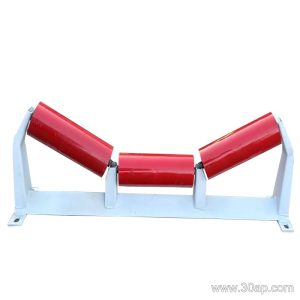
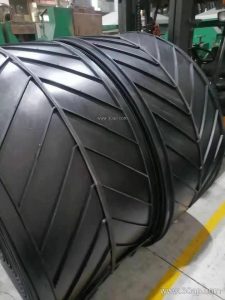
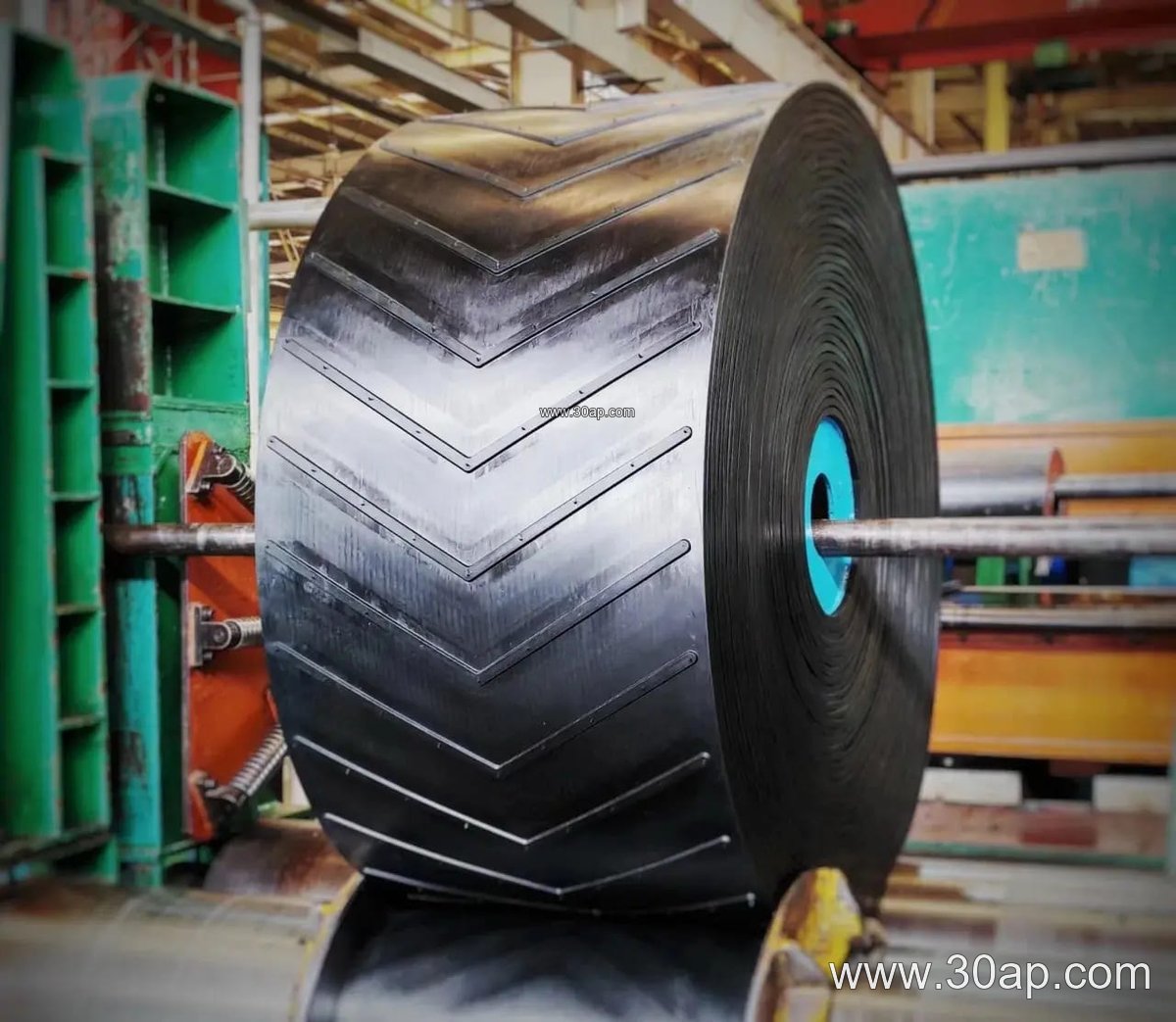
At transfer points, impact resistant conveyor belt covers and impact idler roller stations reduce damage from falling lumps. A skirted conveyor belt or a corrugated sidewall conveyor belt can contain material on steep inclines, while a chevron conveyor belt adds grip on gradients where standard covers would slip. These are options for specific sections, not replacements for the main ore belt.
Where It Runs in the Plant
The same belt type appears across mining and processing flows. A crusher conveyor belt receives run-of-mine ore and must tolerate lumps; a port conveyor belt or ship loading conveyor belt runs long, flat routes at high tension; a cement plant or power plant may use a similar belt for clinker or limestone. In a sand making plant or stone crushing line, an aggregate conveyor belt shares the abrasion problem but at lower lump size.
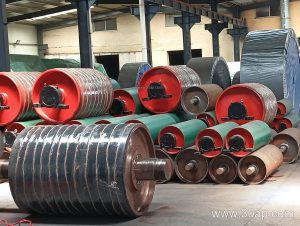
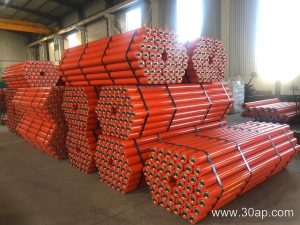
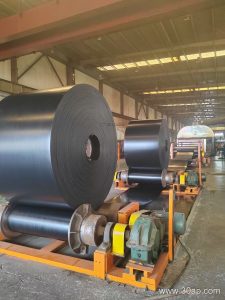
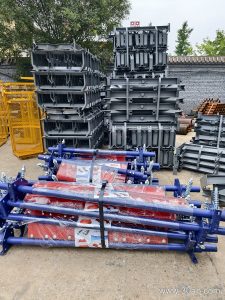
Supporting hardware is selected together with the belt. A conveyor pulley at the drive, tail, and bend positions is sized by tension and shaft load rather than by belt width alone, and each pulley position performs a distinct job. The conveyor bracket and frame hold the idler roller sets in alignment so the belt tracks correctly. Misalignment here quickly becomes edge damage on an expensive iron ore conveyor belt.
Specification and Buying Notes
Buyers should state the material size, bulk density, throughput, incline, and ambient temperature before asking for a quotation. From those inputs the supplier can propose the carcass grade, cover compound, and splice method. An endless conveyor belt made at the factory reduces splice risk on critical runs, while field splicing is common on long overland systems.
- Confirm the tensile grade against the actual starting and running tension, not habit.
- Match the cover grade to abrasion, heat, oil, or flame requirements, and keep the top and bottom cover thickness separate.
- Check pulley and idler compatibility, including lagging and roller diameter, at the design stage.
- Ask how the belt will be spliced and who will inspect the joint after commissioning.
For cold climates, a cold resistant conveyor belt avoids cracking at start-up. For sintering areas, a heat resistant conveyor belt or high temperature conveyor belt grade protects the carcass. Where dust is a concern, an anti-static option helps. None of these should be assumed; each is a deliberate choice tied to the site.
Maintenance That Protects the Investment
Inspect the belt weekly for edge wear, cover gouges, and exposed cords. Keep the conveyor pulley lagging clean and check that the idler roller rotates freely, since a seized roller can cut a belt in hours. Re-tension and re-align after any structure movement. A well-matched abrasion resistant conveyor belt with disciplined inspection usually delivers the lowest cost per ton in ore service, while a poorly specified belt fails early regardless of grade.