What a Ceramic Lagged Pulley Is
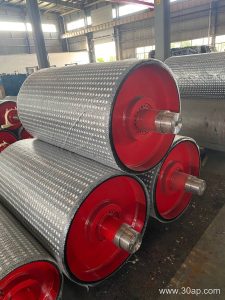
A ceramic lagged pulley is a conveyor pulley whose shell is covered with ceramic tiles embedded in a rubber or polymer backing. This covering, known as ceramic lagging, is bonded to the pulley face to increase friction between the pulley and the conveyor belt while resisting abrasive wear. In bulk handling plants, a ceramic lagged pulley is often specified for drive positions where slip is a risk and for tail or bend positions where fine abrasive material can degrade a plain rubber surface. The pulley itself may be a drive pulley, a tail pulley, or a bend pulley, but the ceramic lagging is the feature that defines the product discussed here.
How the Ceramic Lagging Is Built
The lagging typically consists of small ceramic tiles set in a rubber matrix. The tiles are arranged in a pattern, often with raised dimples or grooves, to improve grip and allow water and fines to escape from the contact area. The backing rubber is bonded to the pulley shell through a vulcanization or cold-bonding process, depending on the manufacturer and the required duty. Common lagging thicknesses are 8 mm, 10 mm, 12 mm, 15 mm, and 20 mm, with the thicker covers used on larger drive pulleys in heavy-duty circuits. The ceramic tile size and spacing vary, but the goal remains the same: provide a hard, wear-resistant surface that maintains friction over a long service life.
Where Ceramic Lagging Makes a Difference
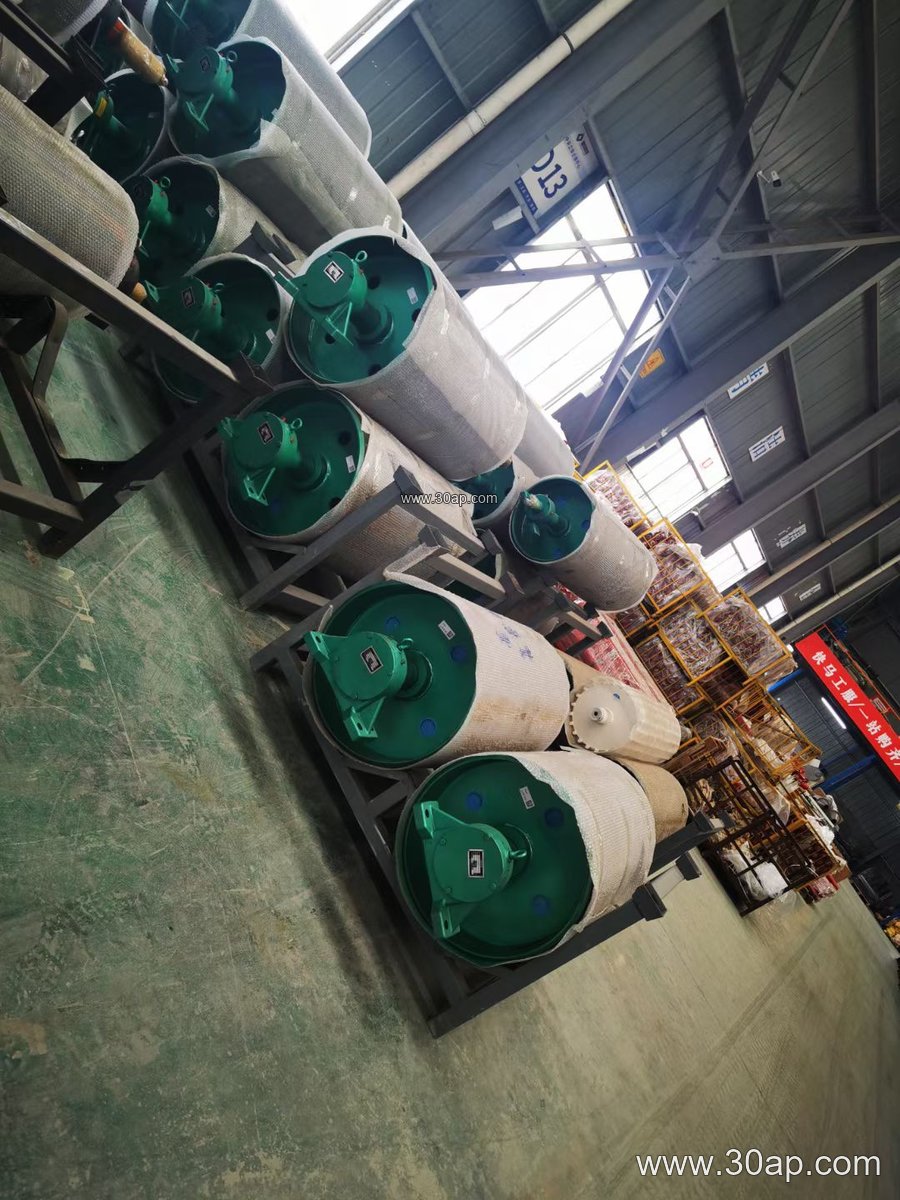
Ceramic lagged pulleys are frequently found in quarry and aggregate operations, cement plants, coal preparation plants, and power station coal handling systems. In a quarry, the drive pulley on a primary conveyor may see sharp rock dust and occasional spillage; a ceramic lagged pulley helps maintain grip without rapid wear. In a cement plant, the same pulley type may be used on clinker or limestone conveyors where heat and abrasion are present. For underground coal mining, flame retardant conveyor belts are common, and the pulley lagging must be compatible with the belt cover and the environment. A ceramic lagged pulley is not a substitute for a tail pulley or a bend pulley by name; it is a surface option that can be applied to those pulley types when the application calls for extra traction or wear resistance.
Matching the Pulley to the Belt and the Duty
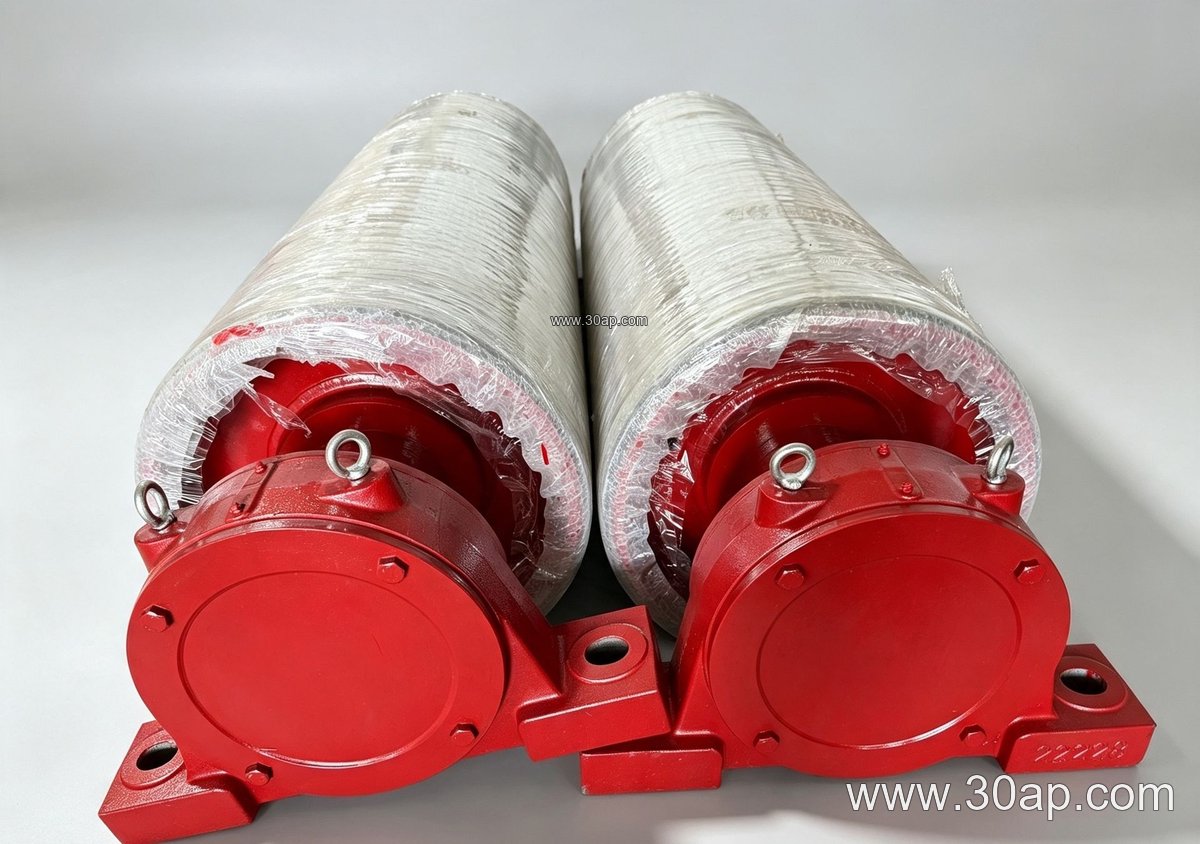
Selecting a ceramic lagged pulley starts with the conveyor belt width and the pulley diameter. The pulley face width is usually slightly wider than the belt, for example a B800 belt may use a pulley face around 950 mm, and a B1200 belt may use a face around 1400 mm. Diameter is chosen according to the belt tension, shaft load, and the space available; common drive pulley diameters include Ø500, Ø630, Ø800, and Ø1000, while larger drives may use Ø1250 or Ø1400. There is no fixed rule that one belt width matches only one pulley diameter. Shaft diameter is determined by torque and load, with common sizes such as Ø80, Ø100, Ø120, Ø140, and Ø160, but the final value must come from the conveyor design.
Typical Reference Combinations
The following combinations are for reference only and should not be treated as universal specifications:
- B800 belt with Ø500 pulley and 10 mm ceramic lagging
- B1000 belt with Ø630 pulley and 12 mm ceramic lagging
- B1200 belt with Ø800 or Ø1000 pulley and 15 mm ceramic lagging
- B1400 belt with Ø1000 or Ø1250 pulley and 15 mm or 20 mm ceramic lagging
These examples show how belt width, pulley diameter, and lagging thickness relate in practice, but each conveyor must be engineered individually.
Buyer Checklist for Ceramic Lagged Pulleys
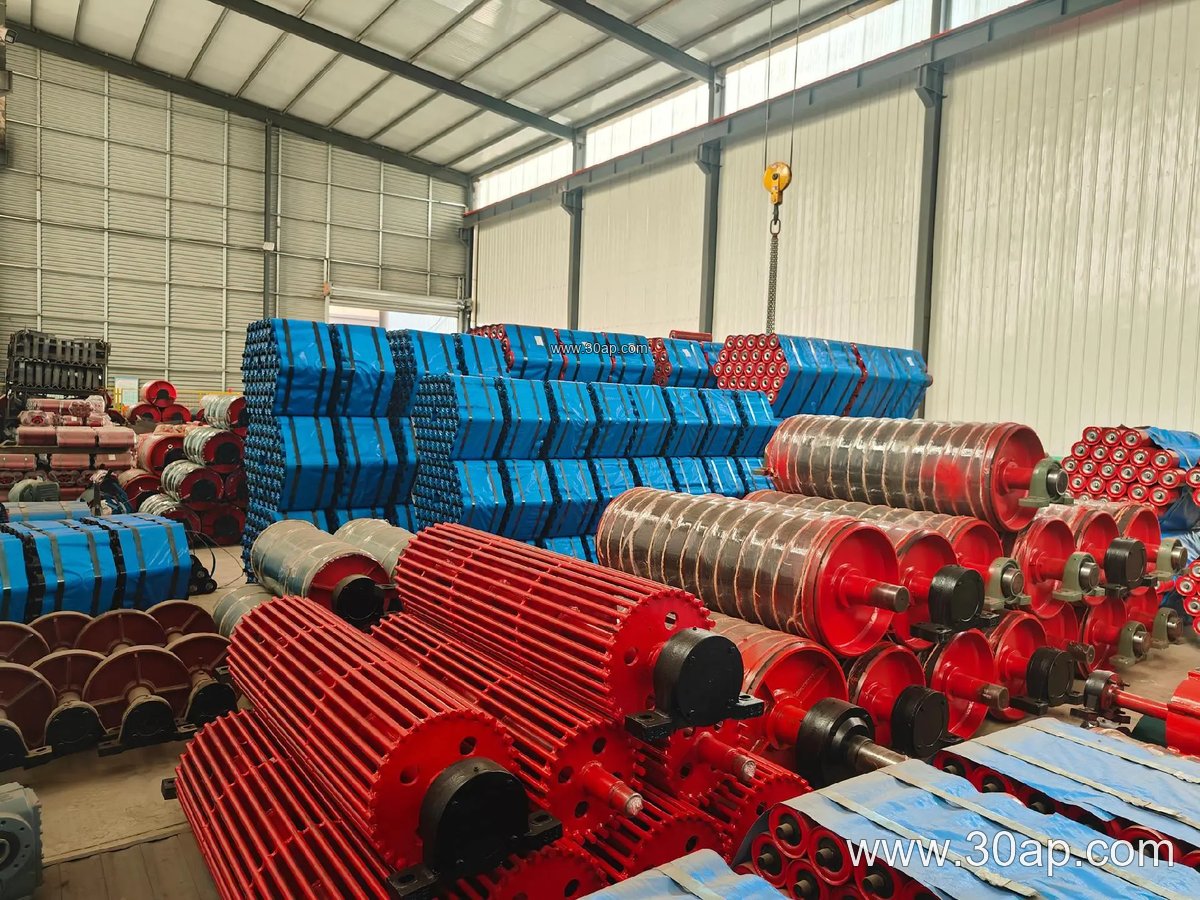
Before ordering, confirm the pulley type, such as drive pulley, tail pulley, or bend pulley, and the belt width. Check the required lagging thickness and ceramic pattern for the material being conveyed. For abrasive bulk materials, a ceramic lagged pulley can outperform plain rubber lagging, but it must be matched to the belt cover grade. If the conveyor uses an abrasion resistant conveyor belt or a heavy-duty mining conveyor belt, the pulley lagging should offer comparable wear resistance. Also consider the environment: in a coal mining conveyor belt system, flame retardant and anti-static properties may be required for the belt, and the pulley lagging should not compromise those safety features. Finally, verify the shaft diameter, bearing size, and pulley face width against the conveyor bracket and structure. A ceramic lagged pulley is a long-term investment, so correct specification from the start avoids downtime and premature replacement.
Maintenance and Inspection
Inspect the ceramic lagging periodically for missing tiles, cracks, or rubber debonding. Small damaged areas can sometimes be repaired, but large sections may require re-lagging. Keep the pulley surface clean and ensure that the conveyor belt tracks correctly to avoid edge loading that can chip the ceramic. In dusty plants, such as a cement plant or a coal handling facility, regular cleaning helps maintain friction and prevents buildup that could cause belt misalignment. When replacing a pulley, record the original dimensions and lagging type to simplify future procurement.