What a 1000mm Diameter Conveyor Pulley Is
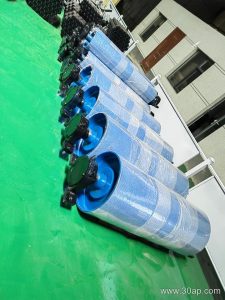
A 1000mm diameter conveyor pulley is a large-diameter drum used to drive, tension, or redirect a conveyor belt in demanding bulk material handling circuits. At this size, the pulley body is typically machined from steel tube or fabricated from rolled plate, with end discs welded in place and a shaft fitted through the center. Because the diameter reaches one meter, these pulleys are often found at the head or tail of high-capacity systems where belt tension and torque are substantial.
In the field, this component may be called a Ø1000 drum, a 1000mm belt pulley, or simply a one-meter pulley. Those names all point to the same product. A drive pulley, a tail pulley, and a bend pulley are not interchangeable; each performs a distinct job, and a 1000mm unit can be built for any of those positions depending on the duty.
Construction Features and Surface Options
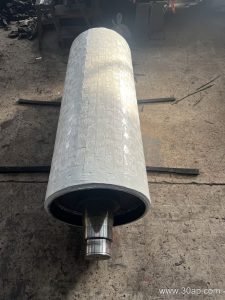
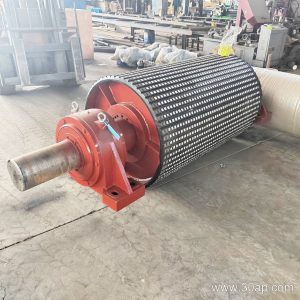
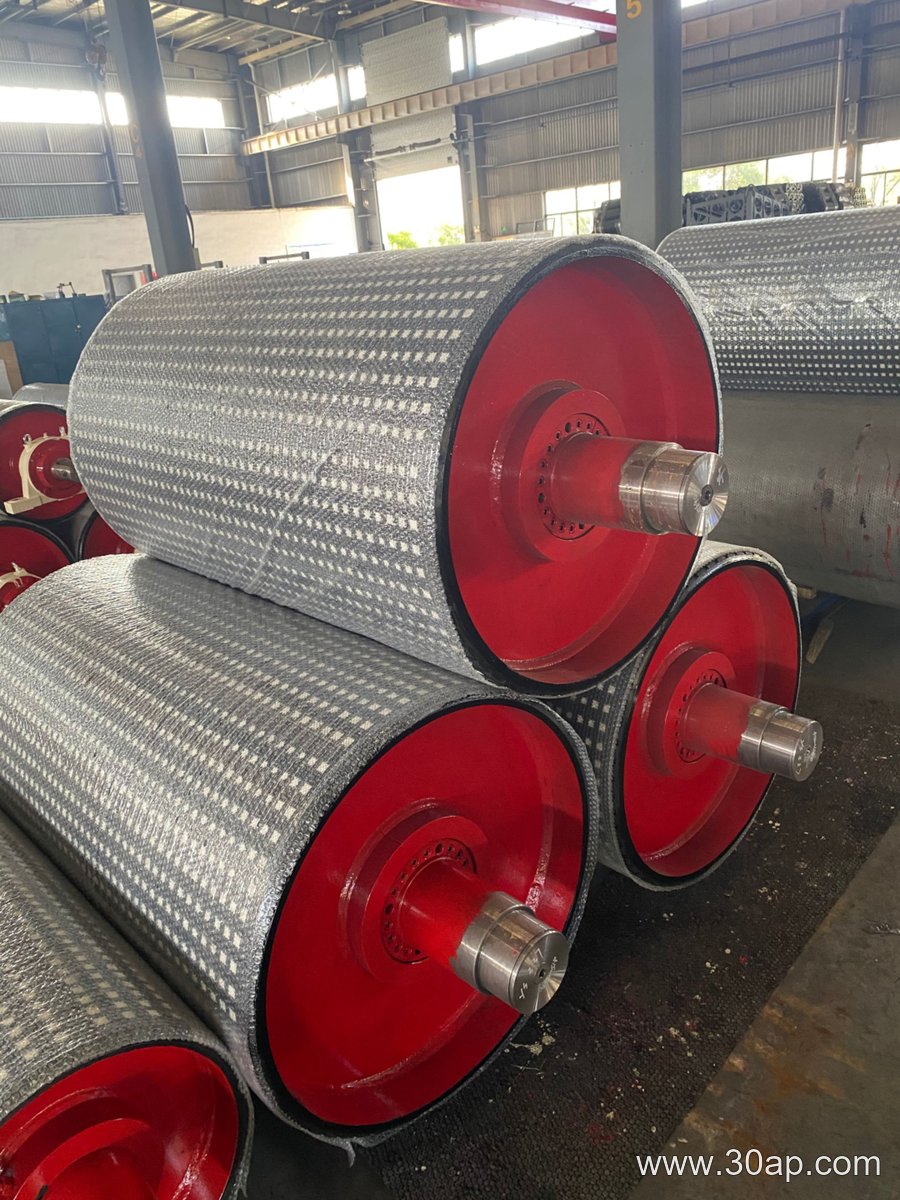
The core structure usually includes a cylindrical shell, two end plates, a hub, and a through shaft or stub shafts. The shell surface may be plain, or it may carry rubber lagging to improve grip and reduce belt slip. Common lagging styles include flat rubber, diamond pattern, herringbone, and ceramic lagging. Lagging thickness often falls in the range of 8 mm to 20 mm, with 10 mm, 12 mm, and 15 mm being frequently requested.
For a 1000mm diameter pulley, the face width is normally wider than the belt it serves. As a rough reference, a B1000 belt might run on a pulley face around 1150 mm, while a B1200 belt could use a face near 1400 mm. These are typical relationships, not fixed rules, and the final face width is set by the conveyor designer.
Where This Size Fits in a Conveyor
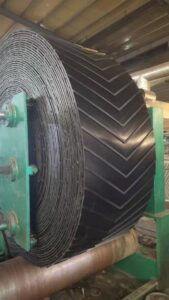
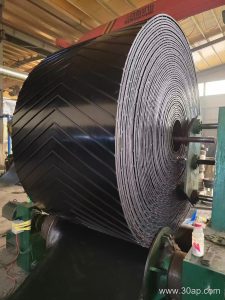
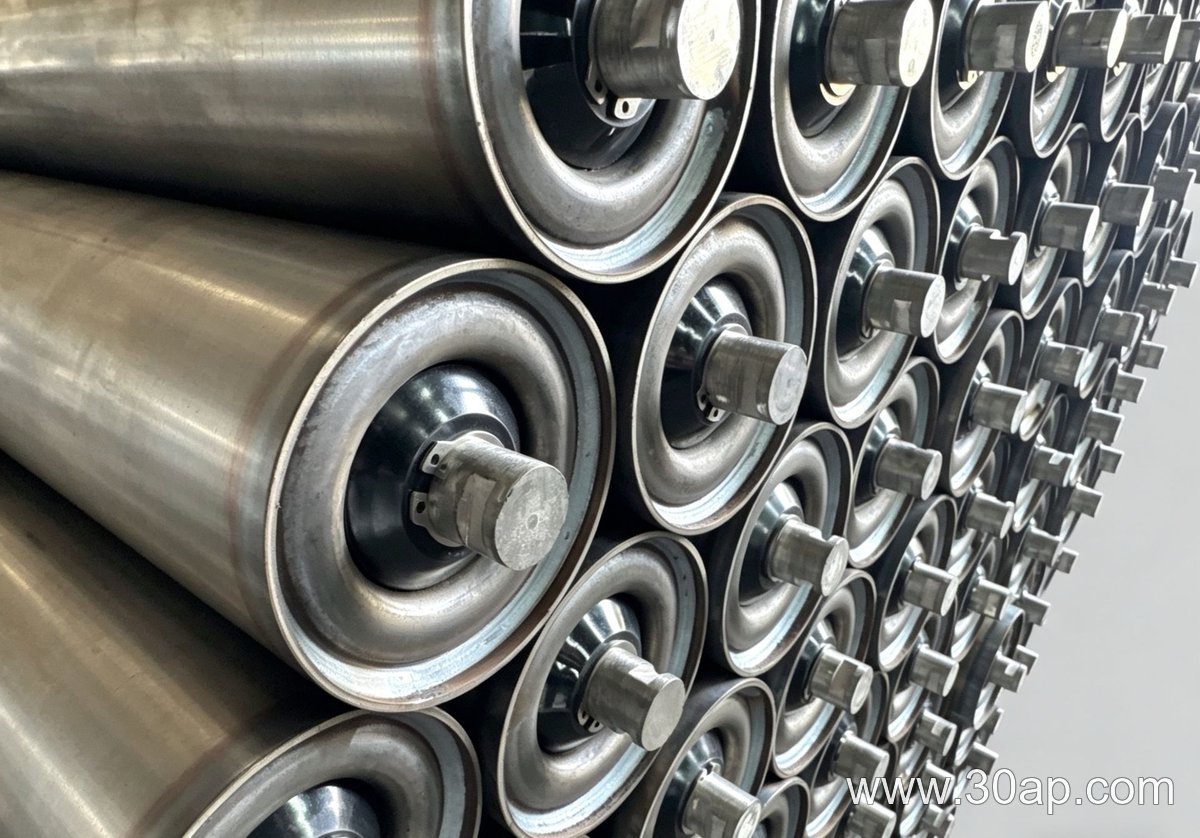
Large-diameter pulleys are common in mining, coal preparation, cement plants, power station coal handling, and aggregate quarries. In a primary crushing circuit at a limestone mine, for example, a 1000mm drive pulley may be paired with a heavy-duty conveyor belt and a series of idler rollers to move run-of-mine material. At a port bulk terminal, the same diameter might appear as a bend pulley that changes belt direction without driving the system.
Because drive, tail, and bend pulleys do different work, the 1000mm size is not tied to one position. A drive pulley needs enough traction to pull the belt; a tail pulley often runs plain or lightly lagged; a bend pulley simply guides the belt. The choice depends on the conveyor profile, the belt tension, and the available space.
Key Dimensions a Buyer Should Confirm
When specifying a 1000mm diameter conveyor pulley, the following parameters should be clarified with the supplier. They are reference categories, not a universal checklist, and actual values come from the engineering drawing.
- Shell diameter: 1000 mm nominal
- Face width: matched to belt width, often 1150 mm for B1000 and 1400 mm for B1200
- Shaft diameter: determined by torque and load, not by belt width alone. Common shaft sizes include Ø120, Ø140, Ø160, Ø180, and Ø200
- Lagging type: plain, flat rubber, diamond, herringbone, or ceramic
- Lagging thickness: 8, 10, 12, 15, or 20 mm
- Bearing type and housing: pillow block or flanged, per design
- Mounting: conveyor bracket dimensions and bolt pattern
Do not assume that one belt width can only match one pulley diameter. A B1200 conveyor might use a 1000mm drive pulley in one plant and an 800mm pulley in another, depending on belt speed, capacity, and starting torque. Likewise, a shaft diameter should never be guessed from belt width alone; it must be calculated from the actual load case.
Selection and Maintenance Notes
Choosing a 1000mm diameter pulley starts with the conveyor duty: tonnage per hour, belt speed, material lump size, and whether the pulley is driving, tensioning, or redirecting. In a coal wash plant, abrasive slurry may call for ceramic lagging and a robust sealing arrangement. In a sand and gravel operation, a plain tail pulley with a modest rubber lagging might be sufficient.
Maintenance focuses on lagging wear, shaft alignment, bearing condition, and belt tracking. A worn lagging surface can reduce grip and cause slippage, especially on a drive pulley. Checking the conveyor bracket bolts and the idler roller alignment nearby also helps prevent edge damage and premature belt wear. When a 1000mm pulley is replaced, the new unit should match the original face width, shaft size, and lagging pattern unless the conveyor is being redesigned.
For any project, the final specification should come from the conveyor designer or the pulley manufacturer, based on the actual load and operating conditions.