What a Vertical Idler Bracket Does
A vertical idler bracket is a support fitting that holds a conveyor idler roller in a near-vertical position, usually along the edges of the belt path or at transition zones. In a typical conveyor line, the belt carries material on top rollers, returns underneath, and needs side guidance where alignment or edge control matters. The vertical idler bracket gives that roller a stable mounting point. It is often called a vertical roller bracket or side-mounted idler bracket, and it works as part of the same support family as the troughing bracket and return bracket, but it is not a replacement for either of them.
Plants handling bulk material, from a quarry conveyor belt line to a power plant coal yard, use these brackets where the belt tends to drift or where the belt edge needs light contact guidance. The bracket itself does not drive or tension the belt. That job belongs to the conveyor pulley, usually the drive pulley at the head and the tail pulley at the tail, each with its own mounting arrangement.
Construction and Mounting Position
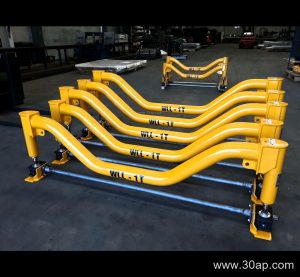
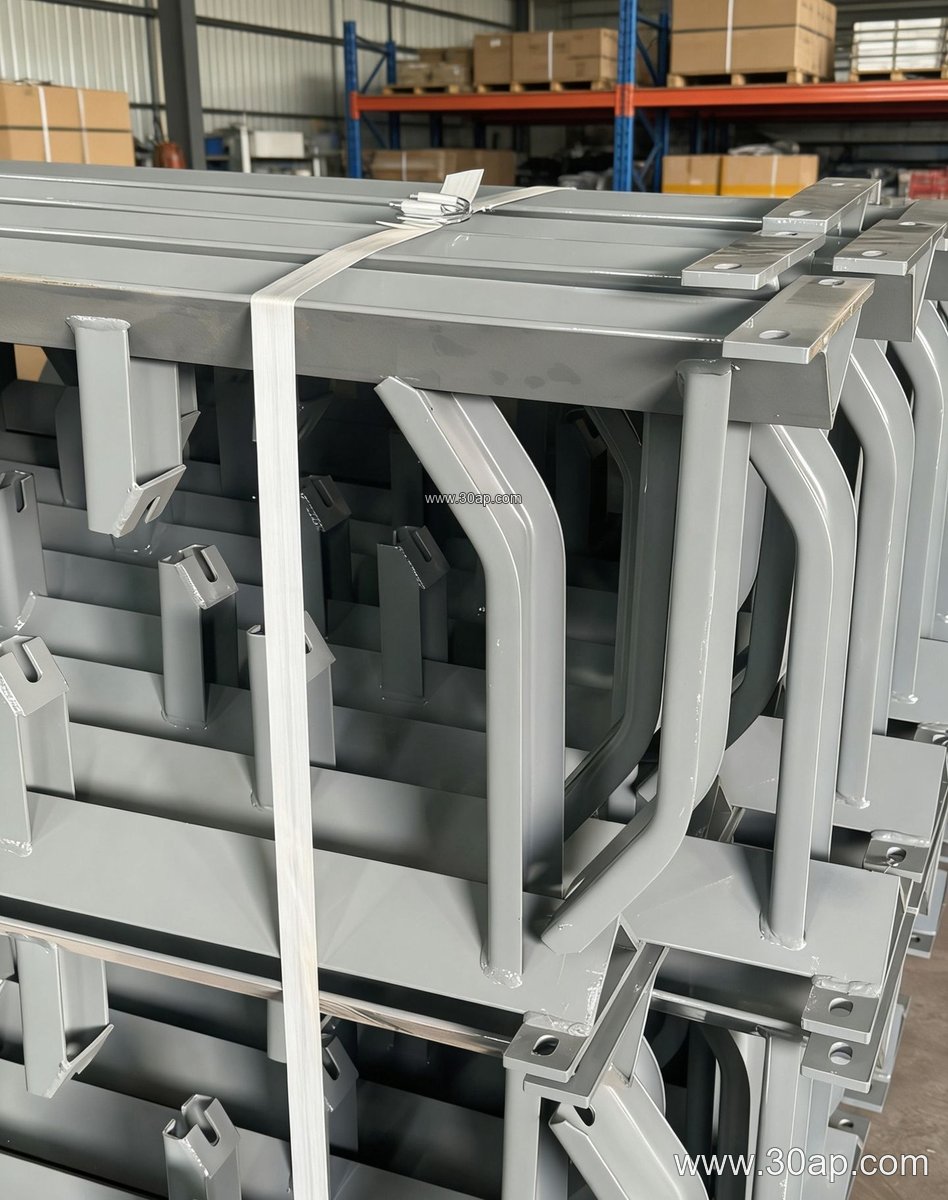
Most vertical idler brackets are fabricated from angle steel, channel steel, or folded steel plate. A short vertical arm carries the idler shaft, and a base plate or clamp section fixes the bracket to the conveyor frame. Because the roller sits upright, the bracket must resist side loads and vibration rather than the downward load carried by a troughing frame.
- Fabricated arm with drilled shaft seat
- Base plate with slotted holes for alignment adjustment
- Welded or bolted connection to the stringer or frame
- Optional rubber or polyurethane edge roller fitted to the bracket
Mounting position matters. On many installations the bracket is placed just ahead of a loading point, near a transition from flat to troughed belt, or on the return side where the belt edge needs restraint. Hole spacing and arm length are determined by belt width, roller diameter, and frame design, so they are usually specified per project rather than taken from a single fixed figure.
Where It Fits in the Conveyor Layout
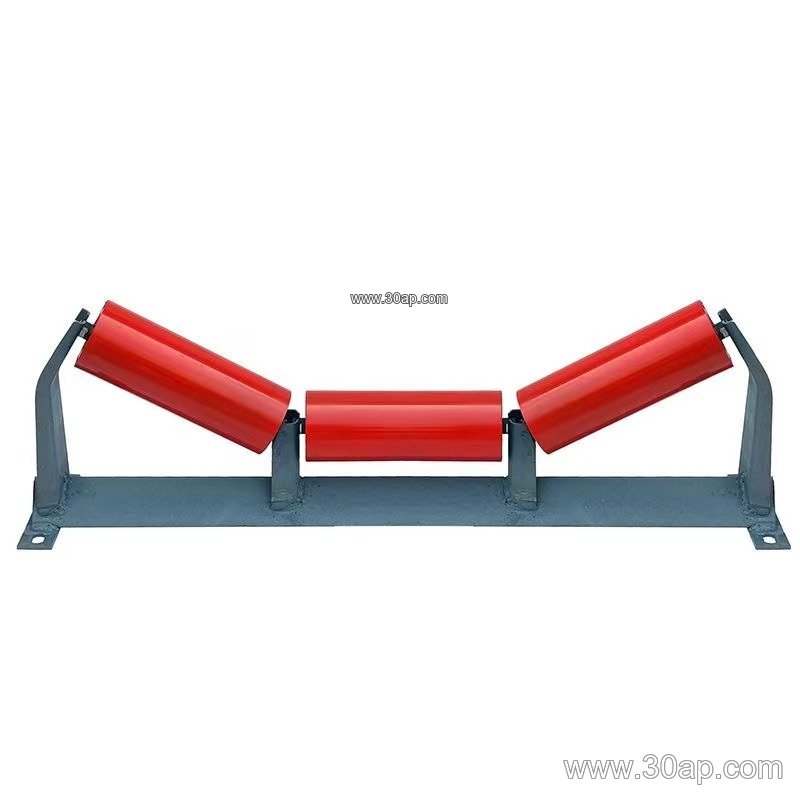
Think of the support system as a set of roles. The troughing bracket carries the loaded belt; the return bracket carries the empty belt; the vertical bracket handles side guidance. On a crushing and screening line, a vertical bracket is often paired with a self-aligning idler to keep the belt centered before it enters the next transfer point. In a cement plant or a limestone quarry, the same fitting helps protect the belt edge on long inclined runs.
The bracket should be matched to the belt construction it guides. A heavy-duty mining conveyor belt with a thick cover behaves differently from a lighter EP conveyor belt, and the side roller pressure should be set accordingly. When the belt is a steel cord conveyor belt, edge contact should be gentle, since cord damage is costly. For abrasive service, such as an iron ore conveyor belt or a copper ore conveyor belt, choose a roller face that resists wear and inspect the bracket for looseness at each shutdown.
Choosing the Right Size and Type
Selection starts with belt width, then roller diameter, then mounting details. Common belt widths include B500, B650, B800, B1000, B1200, B1400, B1600, B1800, and B2000. Roller diameters are commonly Ø89, Ø108, Ø133, Ø159, and Ø194. A B800 belt with a Ø108 side roller and a B1200 line with Ø133 rollers are both normal combinations; there is no rule that one belt width locks in one roller size. The same applies to trough angle: 20, 30, 35, and 45 degrees are all used, and an adjustable bracket can move between angles where the design allows.
| Reference item | Typical range | Note |
|---|---|---|
| Belt width | B500 to B2000 | Match bracket to frame width |
| Side roller diameter | Ø89 to Ø194 | Confirm shaft and bearing seat |
| Trough angle | 20° to 45° | Adjustable types vary by design |
| Material | Angle, channel, folded plate | Coating per site conditions |
Fixed and adjustable versions serve different needs. A fixed vertical bracket is simple and rigid, suitable where the belt path is stable. An adjustable bracket allows small position changes during commissioning or after belt replacement, which is useful in tunnel spoil handling or a port ship loading line where alignment is checked carefully.
Buyer Checklist
- Confirm belt width and roller diameter before ordering.
- Give the frame drawing, including hole centers and arm offset.
- State the environment: dust, moisture, heat, or coastal air.
- Ask whether the bracket is fixed or adjustable.
- Check that the roller seat accepts the planned shaft end.
For belt support work, the vertical idler bracket is a small part with a clear job: hold the side roller steady, protect the belt edge, and keep the line running straight. Pair it with well-matched idler rollers, a properly aligned conveyor pulley, and a belt suited to the material, and the support system will do its part without drama.