What a Side Roller Does on a Conveyor
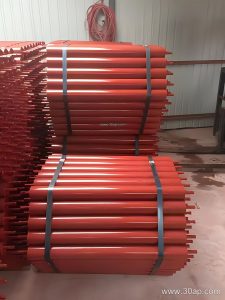
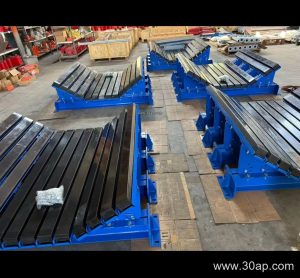
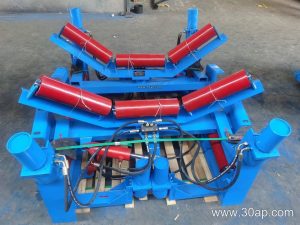
A side roller is one of the two inclined rolls in a three-roll troughing idler set. Together with the centre roll, it supports the loaded run of the conveyor belt and forms the trough that keeps bulk material centred. In a 30 degree or 35 degree set, each side roller carries a share of the load and guides the belt edge, while the centre roll does most of the vertical support. On a 45 degree set the side rollers sit steeper and give the belt a deeper trough, which suits high-capacity lines in a quarry or a sand and gravel plant.
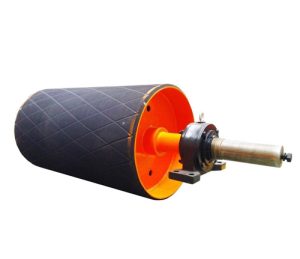
The side roller is not a drive pulley, nor is it a tail or bend pulley. It is a free-turning idler component, and its job is support and alignment, not power transmission. A conveyor pulley at the head end pulls the belt; the side roller only keeps it shaped and rolling.
How the Roller Is Built
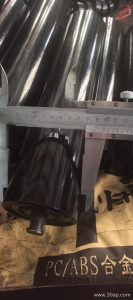
A typical side roller has a steel tube shell, a shaft, two bearing housings, and a sealing arrangement at each end. The shell may be plain steel, nylon-coated, ceramic-covered, or fitted with rubber rings when impact and noise need to be reduced. Bearings are usually deep-groove ball types such as 6204, 6205, 6305, 6306, 6308, or 6310, matched to the shaft and load by the manufacturer rather than to a single tube diameter.
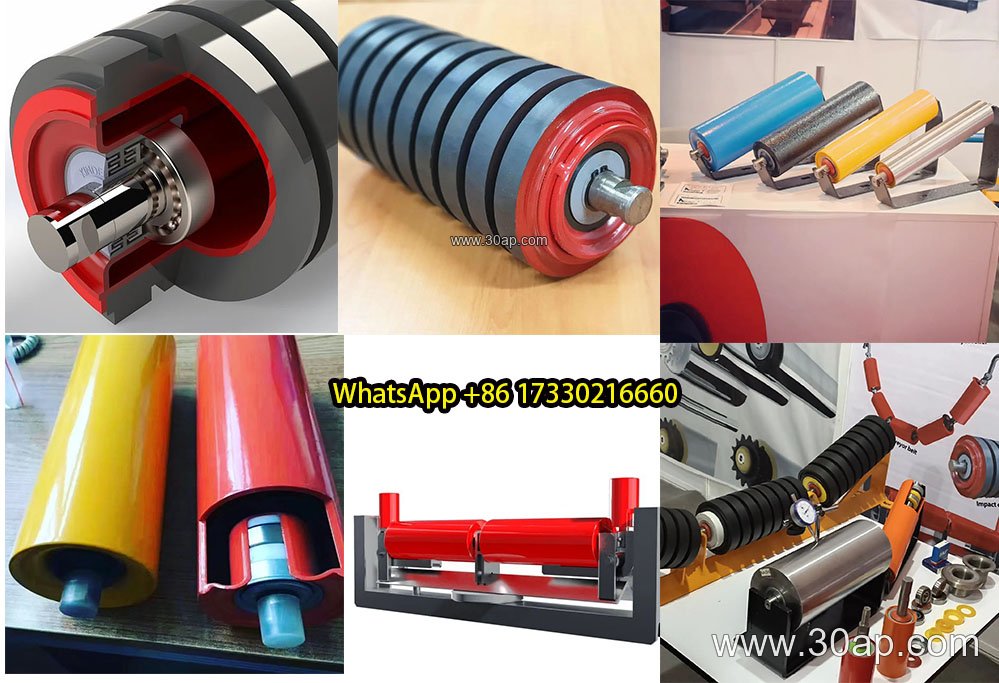
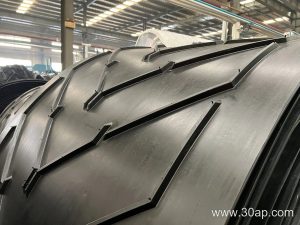
Sealing matters on side rollers because they sit close to the material and to dust. Labyrinth seals and contact seals are common in coal handling and cement plants, where fine dust and moisture shorten bearing life. On a chevron conveyor belt or a corrugated sidewall conveyor belt, the side roller still runs under the flat base of the belt, but the raised profiles pass clear of the roll ends.
Where Side Rollers Are Used
Troughing sets with side rollers appear on many bulk handling lines. In a coal mining conveyor belt system, three-roll sets at 35 degrees are common on the main haul. In a cement plant, side rollers support clinker and raw meal belts, often with abrasion resistant conveyor belt covers. In a power plant coal yard, flame retardant conveyor belt and anti-static conveyor belt grades are typical, and the idlers below must tolerate dust and occasional washdown.
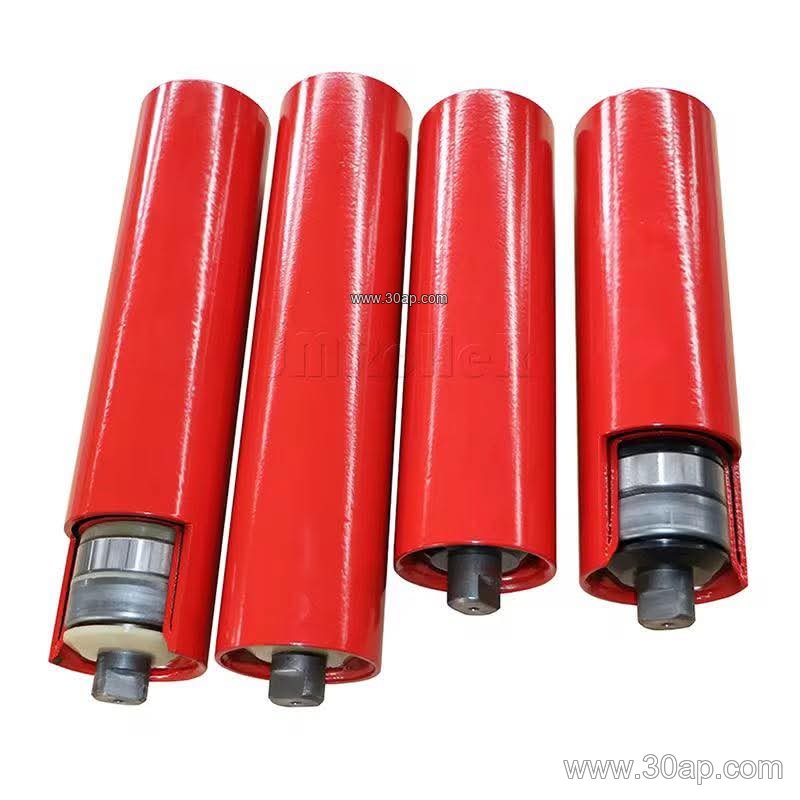
The same component appears in a limestone quarry, an iron ore transfer house, a copper ore stockyard, a fertilizer plant, and a port ship loading line. A pipe conveyor belt uses a different support arrangement, so the side roller in a conventional trough is not interchangeable with the idler rolls of a pipe conveyor.
Common Dimensions and Matching
Side roller length follows belt width, trough angle, and the roll arrangement. The table below lists typical values for three-roll troughing sets; side and centre rolls may differ, and final sizes are set by design.
- B500: side roll about 200 mm
- B650: side roll about 250 mm
- B800: side roll about 315 mm
- B1000: side roll about 380 mm
- B1200: side roll about 465 mm
- B1400: side roll about 530 mm
- B1600: side roll about 600 mm
- B1800: side roll about 670 mm
- B2000: side roll about 750 mm
Common roll diameters include Ø63, Ø76, Ø89, Ø102, Ø108, Ø127, Ø133, Ø159, Ø178, Ø194, and Ø219. A wider belt does not automatically require one fixed shaft size; the shaft and bearing are chosen from the load and the idler frame. A 1200 mm wide conveyor belt may use Ø127 or Ø159 rolls depending on the duty, and a heavy-duty mining conveyor belt line may step up to larger diameters for longer bearing life.
What Buyers Should Check
First, confirm the trough angle and the set configuration, since a 20 degree set and a 45 degree set need different side roller geometry. Second, check the roll diameter and length against the existing conveyor bracket and frame, and confirm the shaft ends fit the mounting slots. Third, match the seal and bearing class to the environment: dusty coal, wet aggregate, or hot clinker each call for a different choice. Fourth, consider the belt surface; a rubber ring side roller can soften impact at a transfer point, while a plain steel roll is easier to clean.
For a new line, it helps to state the belt width, the belt type (for example EP conveyor belt, NN conveyor belt, or steel cord conveyor belt), the material, and the tonnage per hour. Suppliers can then propose a side roller set that fits the frame and the duty. Spare parts should be ordered by roll diameter, roll length, bearing number, and seal type, not by belt width alone.
Inspection is simple: listen for squealing, feel for a hot housing, and look for a belt that rides off-centre or a trough that has lost its shape. Replacing a worn side roller early protects the belt edge and keeps the line running.