What a Conveyor Leg Does
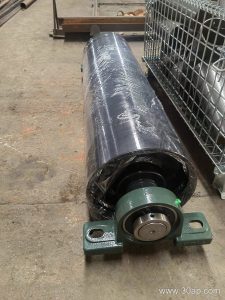
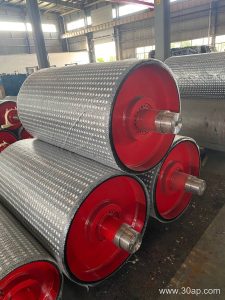
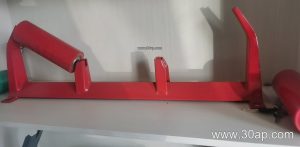
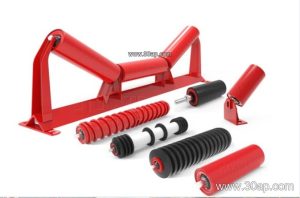
A conveyor leg is the structural support that carries the weight of the conveyor frame, idlers, and material load down to the floor or foundation. In a typical troughing arrangement, the conveyor leg works together with a conveyor bracket to hold the idler roller at the correct height and angle. While the pulley drives the belt and the idler roller supports it, the leg keeps the entire assembly stable and aligned. Without a properly sized and anchored leg, even a well-chosen EP conveyor belt or steel cord conveyor belt cannot track smoothly, especially in demanding settings such as a quarry, cement plant, or power plant coal handling system.
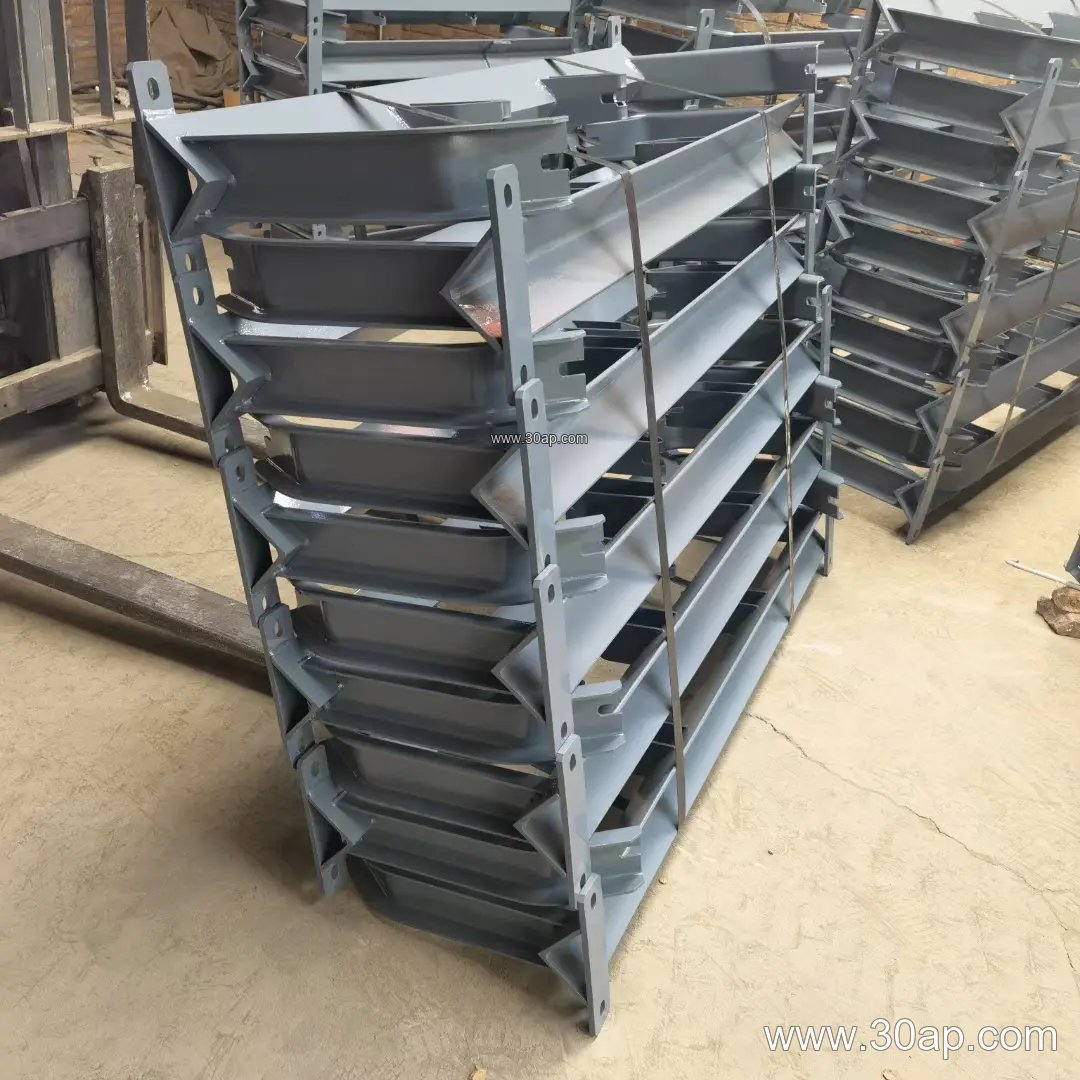
Construction and Mounting Details
Most conveyor legs are fabricated from angle steel, channel steel, or folded steel plate. The leg profile and base plate are designed according to the conveyor width and the load it must carry. Installation height and hole spacing are not fixed numbers; they follow the conveyor design, the trough angle, and the chosen idler diameter. A common approach is to use adjustable legs that allow fine height correction during installation, which helps when the floor is uneven or when the conveyor must transition between sections. Fixed legs are simpler and often used where the foundation is precise. The conveyor leg must be anchored securely, and the connection to the conveyor bracket should allow for minor adjustment without weakening the frame.
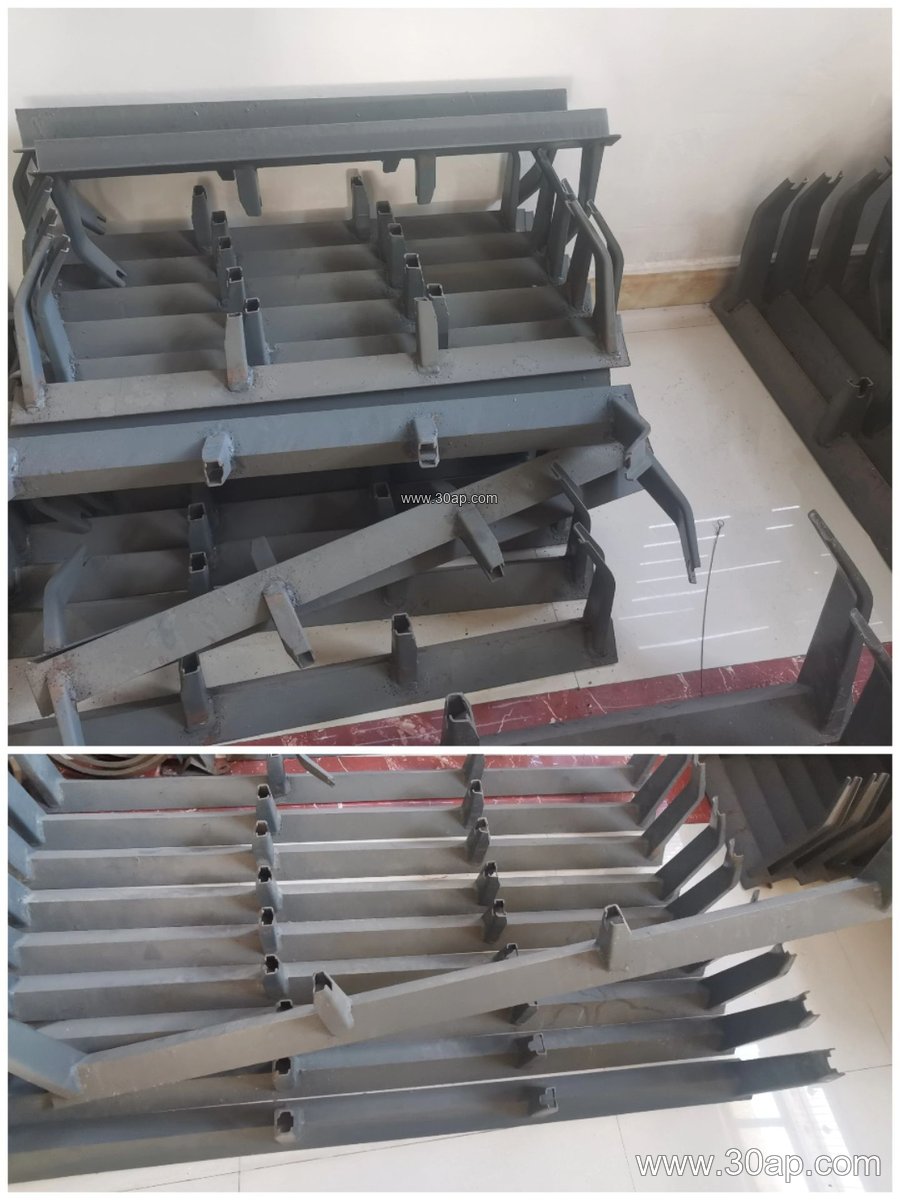
Matching Legs with Belt Width and Idler Size
Buyers often ask how to match a conveyor leg to a specific belt width or idler diameter. There is no single rule that locks one belt width to one leg size. For reference, common belt widths include B500, B650, B800, B1000, B1200, B1400, B1600, B1800, B2000, B2200, and idler diameters such as Ø89, Ø108, Ø133, Ø159, Ø194 are frequently used. A B800 conveyor with a 35-degree trough and Ø108 idlers will need a different leg height and bracket spacing than a B1200 conveyor with a 45-degree trough and Ø133 idlers. The table below shows typical reference combinations, but the final leg dimensions should always be confirmed by the conveyor design.
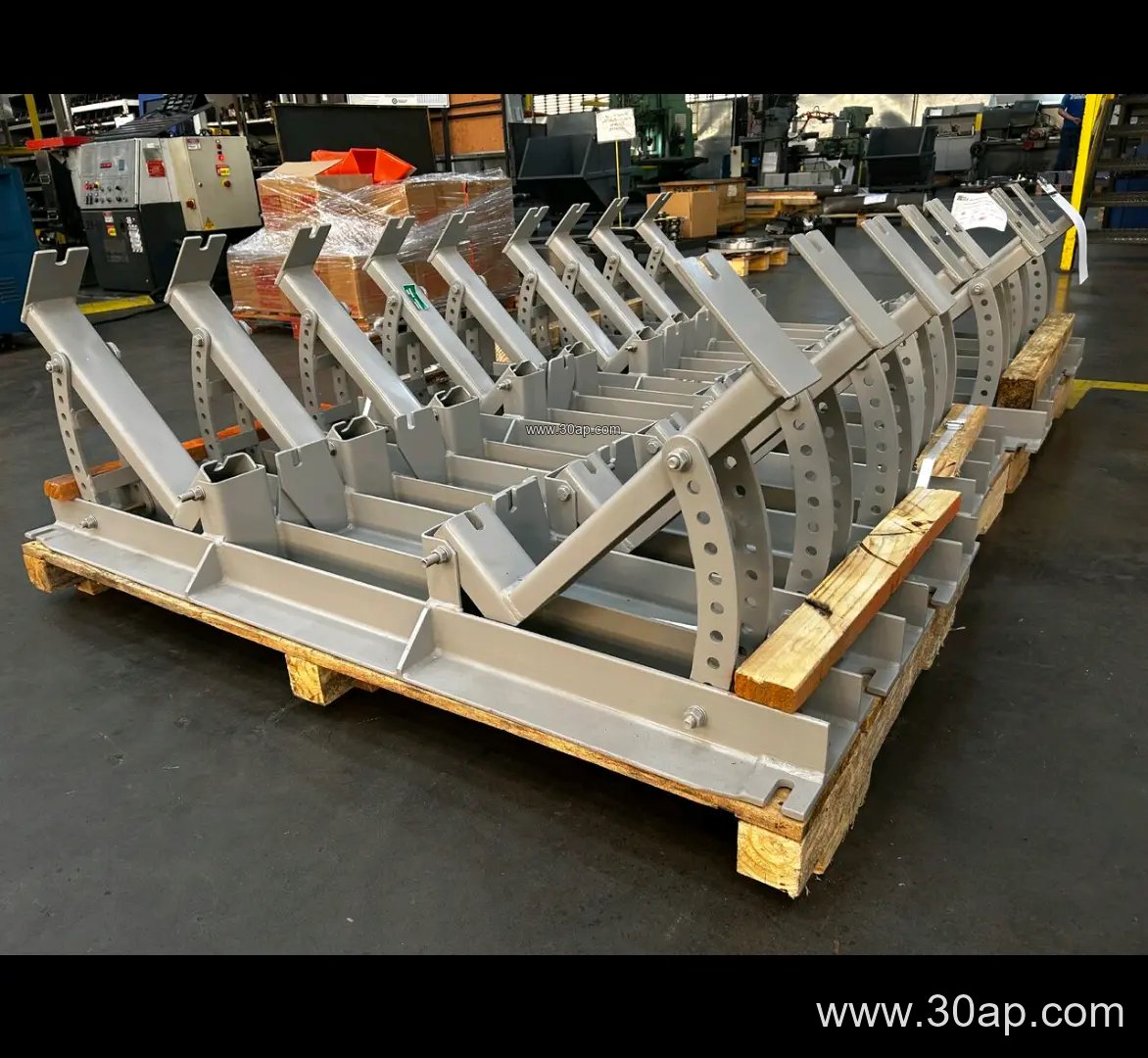
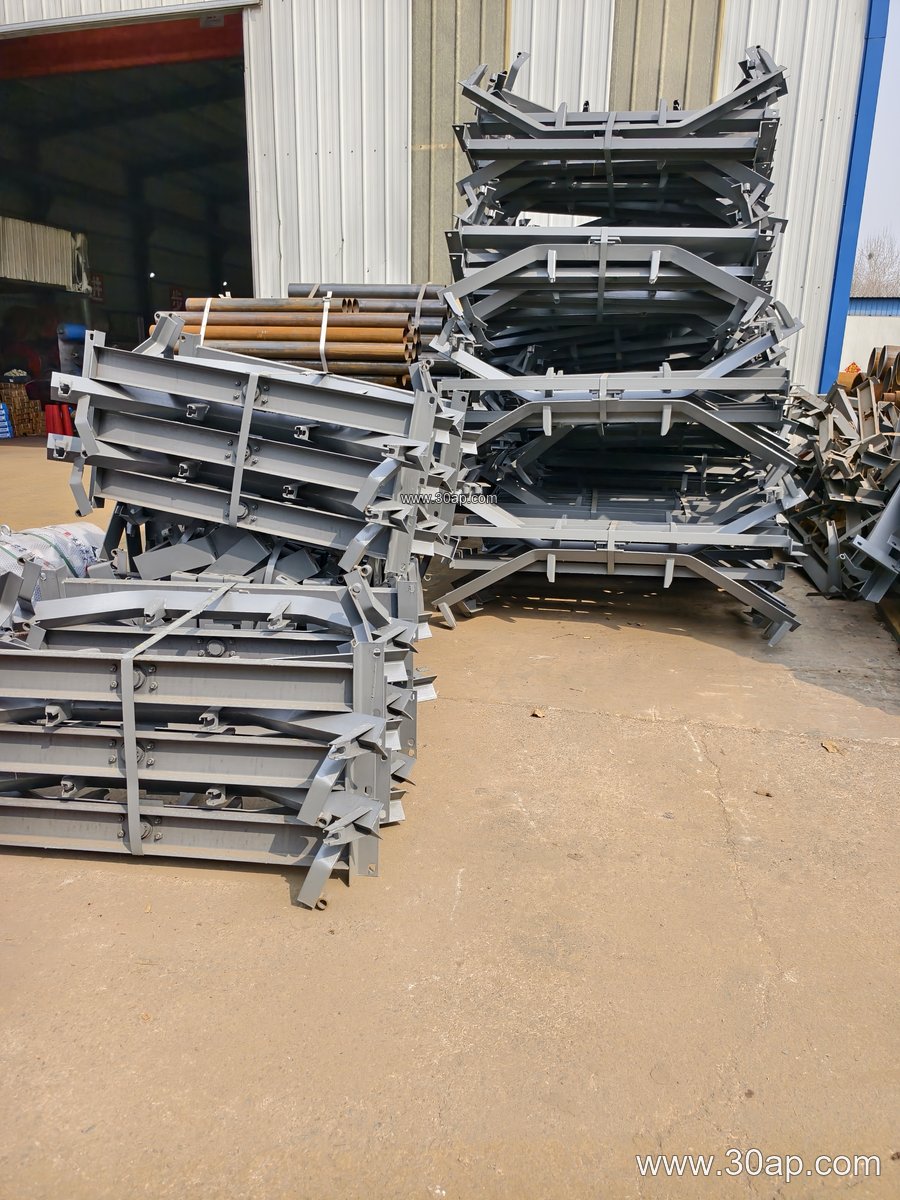
| Belt Width | Trough Angle | Idler Diameter | Typical Leg Note |
|---|---|---|---|
| B650 | 30° | Ø89 | Light-duty frame, adjustable leg often used |
| B800 | 35° | Ø108 | Standard quarry or cement plant section |
| B1000 | 35° | Ø133 | Medium-duty, check bracket hole spacing |
| B1200 | 45° | Ø133 | High capacity, reinforced leg recommended |
| B1400 | 45° | Ø159 | Heavy load, fixed or adjustable leg by design |
| B1600 | 35° | Ø159 | Mining and bulk terminal use |
| B1800 | 45° | Ø194 | Extra-heavy frame, verify foundation |
These combinations are examples only. A B1200 conveyor might use a 35-degree trough in one plant and a 45-degree trough in another, and the leg height will differ accordingly. The key is to confirm the mounting hole distance and crossbeam length with the actual conveyor drawing.
Where Conveyor Legs Are Used
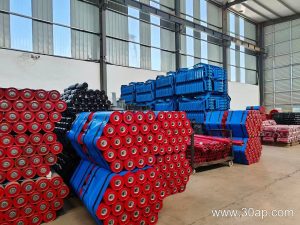
Conveyor legs appear in almost every bulk material handling line. In a limestone quarry or sand and gravel plant, they support the troughing idlers under a heavy-duty mining conveyor belt. In a coal washing plant or underground coal mining conveyor, the legs must be robust and often corrosion protected. Cement plants use them along clinker and raw meal conveyors, while power plants rely on them for coal handling systems. Port terminals and ship loading conveyors also use conveyor legs to keep long overland sections stable. In each case, the leg works with the conveyor pulley, idler roller, and conveyor bracket to maintain belt alignment and reduce spillage.
Buyer Checklist
- Confirm the belt width and trough angle before ordering legs; do not assume one leg fits all widths.
- Check the idler diameter and the required mounting hole spacing.
- Decide between fixed and adjustable legs based on foundation accuracy and future maintenance needs.
- Consider the environment: a quarry or iron ore site may need heavier steel and better surface protection than a food grade or recycling line.
- Verify that the leg design matches the conveyor bracket and frame, and that the anchor points are suitable for the floor or steel structure.
- Ask for a drawing showing leg height, base plate size, and hole positions rather than relying on a generic size list.
For more information on matching conveyor legs with Rubber Conveyor Belt, EP Conveyor Belt, or Flame Retardant Conveyor Belt systems, contact our engineering team at www.example.com/conveyor-leg. We also supply conveyor idler roller, conveyor pulley, and conveyor bracket components to complete your conveyor frame.