What a Conveyor Idler Bracket Does
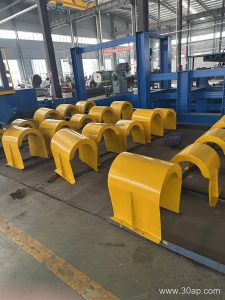
A Conveyor Idler Bracket is the structural support that holds idler rollers at the correct position under or over a conveyor belt. It connects the idler roller assemblies to the conveyor frame and keeps them aligned so the belt tracks properly under load. While the rollers carry the belt and material, the bracket carries the rollers. It is a simple-looking part, but its geometry decides the trough angle, roller spacing, and the overall stability of the belt line.
In a quarry or a limestone mine, a poorly matched bracket can cause the belt to wander, spill material, or wear the roller edges. In a power plant coal handling system, the same part must resist vibration and dust while holding its shape for years. The bracket is therefore not an accessory — it is a load-bearing member of the conveyor structure.
Construction and Materials
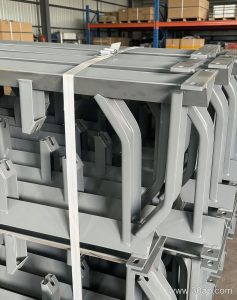
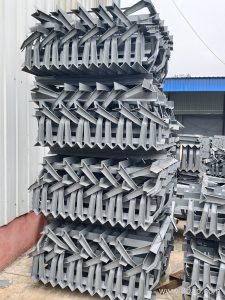
Most brackets are fabricated from angle steel, channel steel, or folded steel plate. The choice depends on belt width, load, and the number of idlers the bracket carries. Welded brackets are common, and bolted versions allow replacement without cutting the frame. A typical assembly includes mounting holes for the idler shaft, crossbeam fixing points, and sometimes an adjustable slot for angle changes.
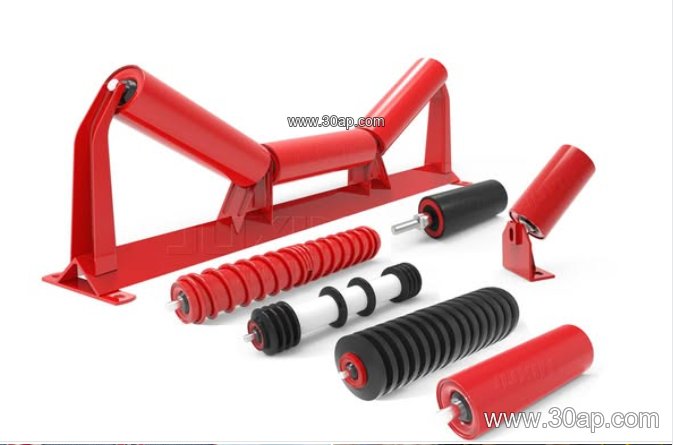
- Angle steel — light duty and short spans
- Channel steel — heavier loads and wider belts
- Folded plate — compact designs and smooth surfaces
Surface treatment is usually painting or galvanizing. In wet or dusty plants, galvanized brackets reduce maintenance. The bracket must be rigid enough that the roller shaft does not flex, but not so heavy that installation becomes difficult.
Common Types and Where They Sit
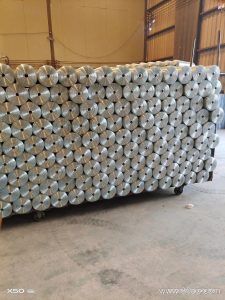
The main family is the troughing idler bracket, which supports three rollers in a trough shape on the carrying side. The upper troughing bracket is the most visible type on a bulk material conveyor belt. On the return side, a flat return bracket or a V-return bracket holds the belt in a stable line. Transition brackets sit near the head and tail to guide the belt from flat to troughed. Impact brackets with cushioning are used under loading points, and self-aligning brackets help correct belt wander.
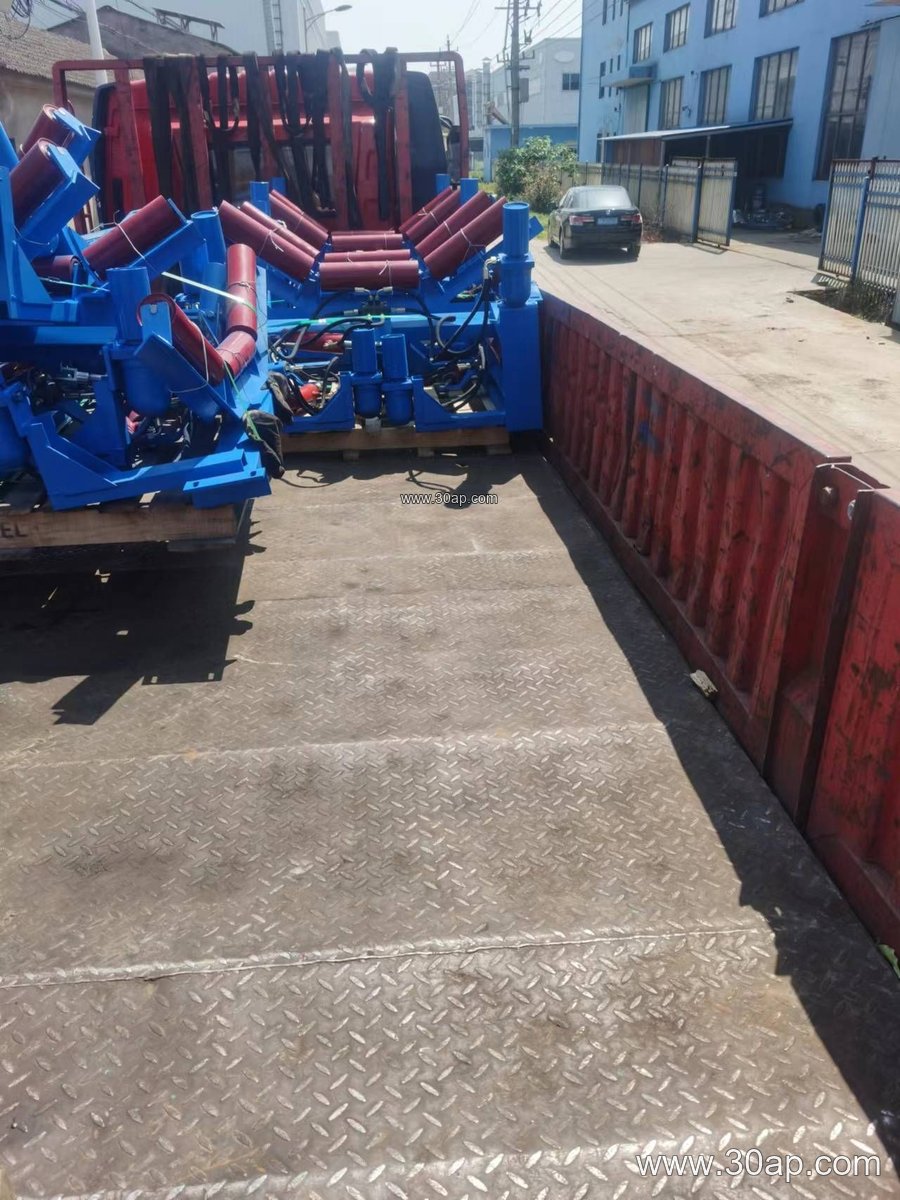
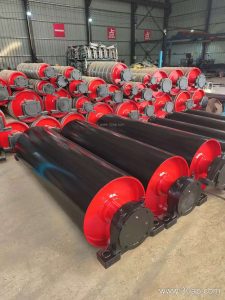
Adjustable brackets allow the trough angle to be changed between common values such as 20, 30, 35, and 45 degrees. Fixed brackets are welded or bolted at one angle. Forward-tilted brackets, often around 1.5 to 2 degrees, are used where belt tracking needs extra help. The subtype should match the job — a bend pulley or drive pulley is a different component and cannot substitute for a bracket.
Matching Bracket to Belt and Roller
Belt width and roller diameter are related, but they are not locked one-to-one. A B800 belt might use Ø89 or Ø108 rollers depending on load and speed, while a B1200 line may run Ø133 or Ø159. The table below shows common reference combinations, not fixed rules.
| Belt Width | Trough Angle | Common Roller Diameter | Typical Bracket Use |
|---|---|---|---|
| B500 | 20° / 30° | Ø89 | Light aggregate lines |
| B650 | 30° / 35° | Ø89 / Ø108 | Sand and gravel conveyors |
| B800 | 30° / 35° | Ø108 / Ø133 | Quarry and cement plants |
| B1000 | 35° / 45° | Ø108 / Ø133 | Coal and ore handling |
| B1200 | 35° / 45° | Ø133 / Ø159 | Heavy bulk transport |
| B1400 | 35° / 45° | Ø133 / Ø159 | Mining and port lines |
| B1600 | 35° / 45° | Ø159 / Ø194 | High-capacity systems |
| B1800–B2000 | 35° / 45° | Ø159 / Ø194 | Large steel and power plants |
Mounting hole spacing and crossbeam length change with belt width and trough angle, so these should be confirmed from the drawing rather than assumed. A bracket designed for a 35-degree trough will not fit a 45-degree roller set without adjustment.
What Buyers Should Check
Before ordering, confirm the belt width, the roller diameter, the trough angle, and the mounting pattern on the existing frame. Ask whether the bracket is fixed or adjustable, and whether it is for the carrying or return side. For dusty locations such as a coal washing plant or a cement silo, check that the bracket design avoids trapped material. For a crusher discharge or transfer point, consider an impact bracket rather than a standard troughing type.
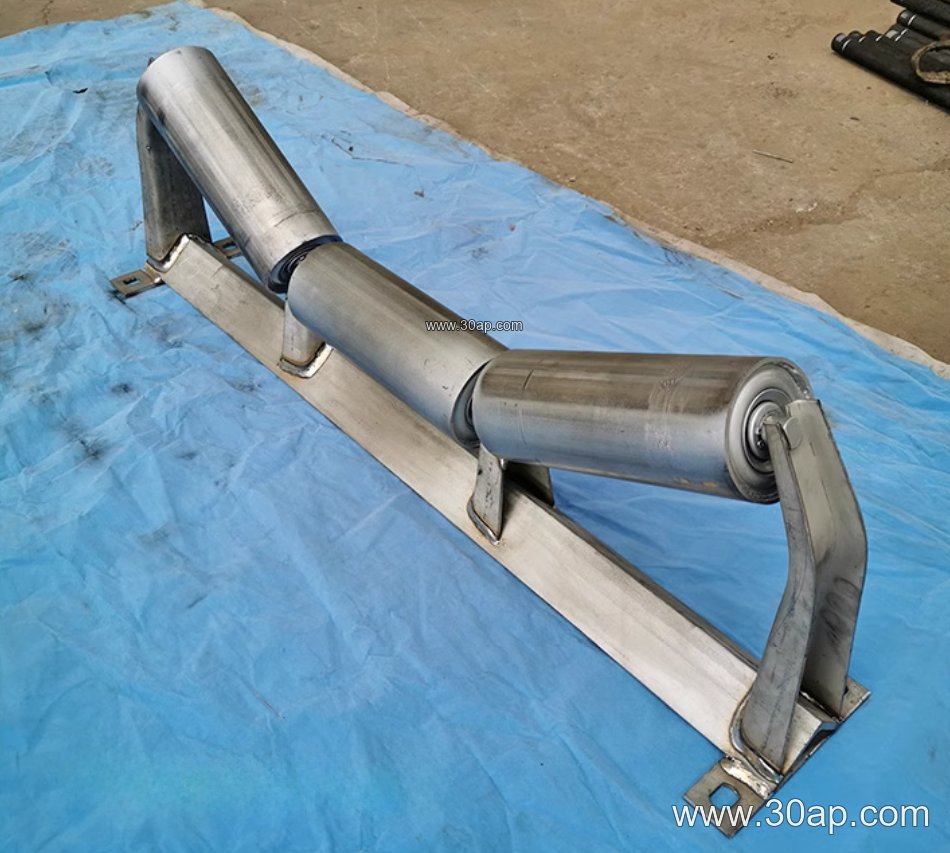
Also confirm compatibility with the conveyor belt in use. A heavy-duty mining conveyor belt or a steel cord conveyor belt may need a stiffer bracket and larger roller diameter than a light fabric core belt. The bracket, roller, and belt should be specified as a set, not chosen separately.
Installation and Maintenance Notes
Align brackets to the centerline before tightening. A bracket that is square but offset will pull the belt sideways. Check bolt torque after the first week of operation, because vibration loosens fittings. Inspect for bent crossbeams, elongated holes, and corrosion at welded joints. Replacing a worn bracket early protects the idler roller and the belt from uneven wear.
For more on matching conveyor components, see conveyor idler bracket and related conveyor pulley information. A correctly chosen bracket keeps the whole belt line running straight.