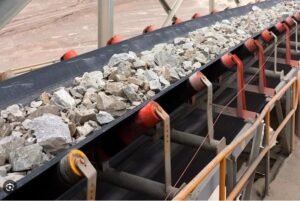
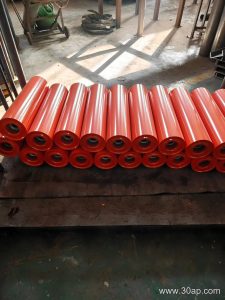
What a Conveyor Belt Lagged Pulley Does
A conveyor belt lagged pulley is a conveyor pulley whose shell carries a rubber or ceramic layer bonded to the surface that touches the belt. That layer, called lagging, raises friction between the pulley and the belt, protects the shell from abrasive material, and can be shaped to shed water and fines. In a quarry or a coal washing plant, the difference between a bare shell and a properly lagged one often decides whether the belt slips under load or pulls steadily.
The lagged pulley is not a separate machine. It is a standard conveyor pulley with a cover added, and it keeps its position in the conveyor layout: a drive pulley drives, a tail pulley returns the belt, and a bend pulley changes direction. Lagging can be applied to any of them, but the duty differs, and so does the surface choice.
Construction of the Lagged Shell
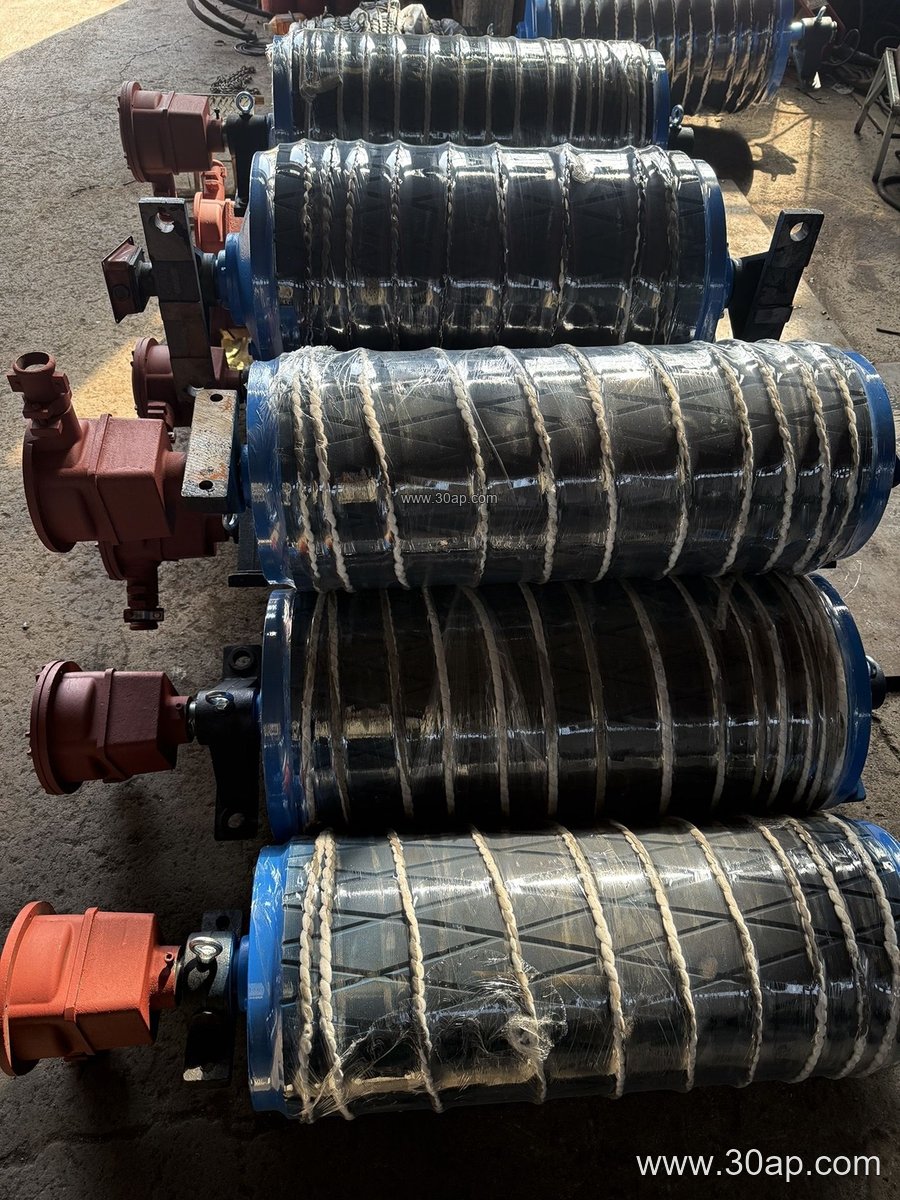
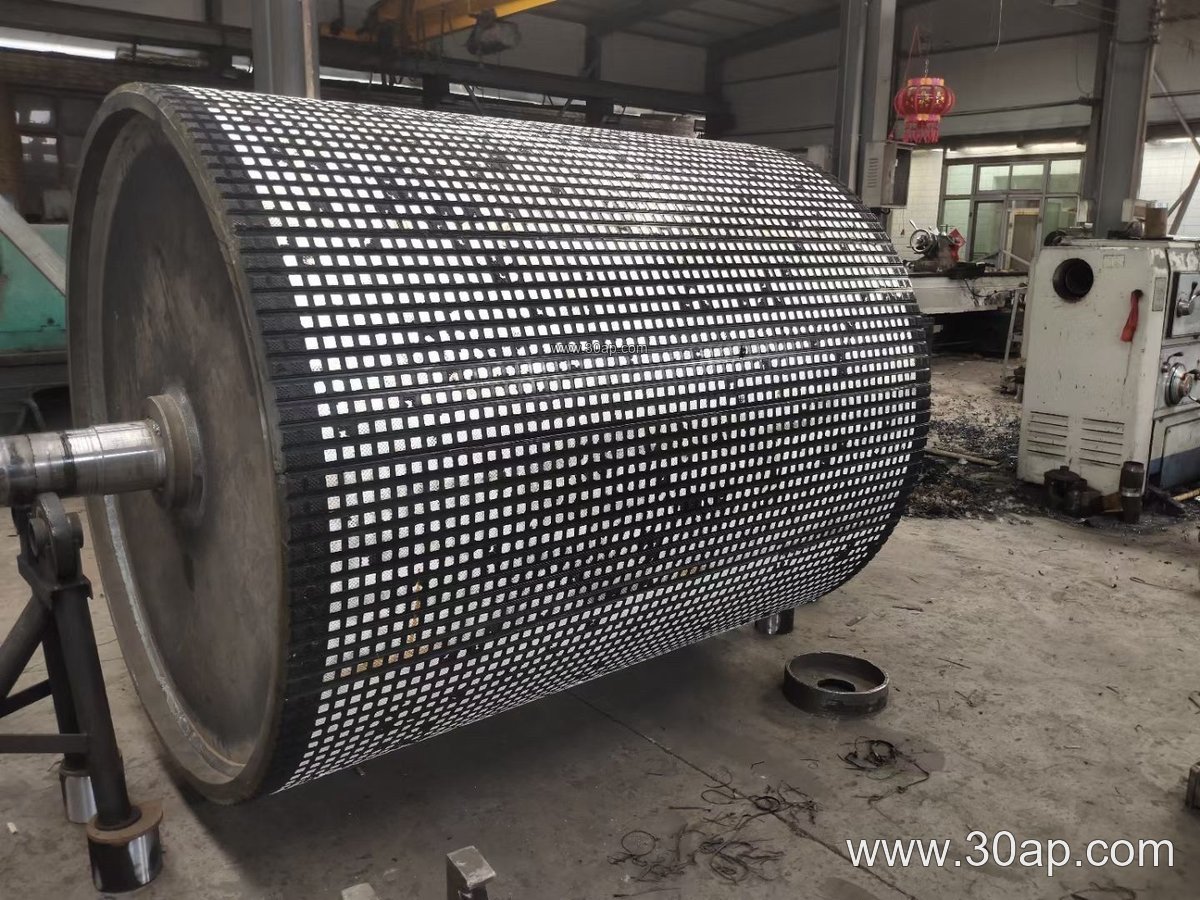
A typical unit starts with a welded steel shell, machined end discs, a shaft, and bearing housings. The lagging is applied in one of several ways: hot vulcanized rubber bonded under pressure, cold bonded rubber sheet, cast rubber, or ceramic tiles set in a rubber matrix. Grooved forms such as diamond and herringbone patterns channel water away on wet belts, while plain lagging suits dry, clean duty.
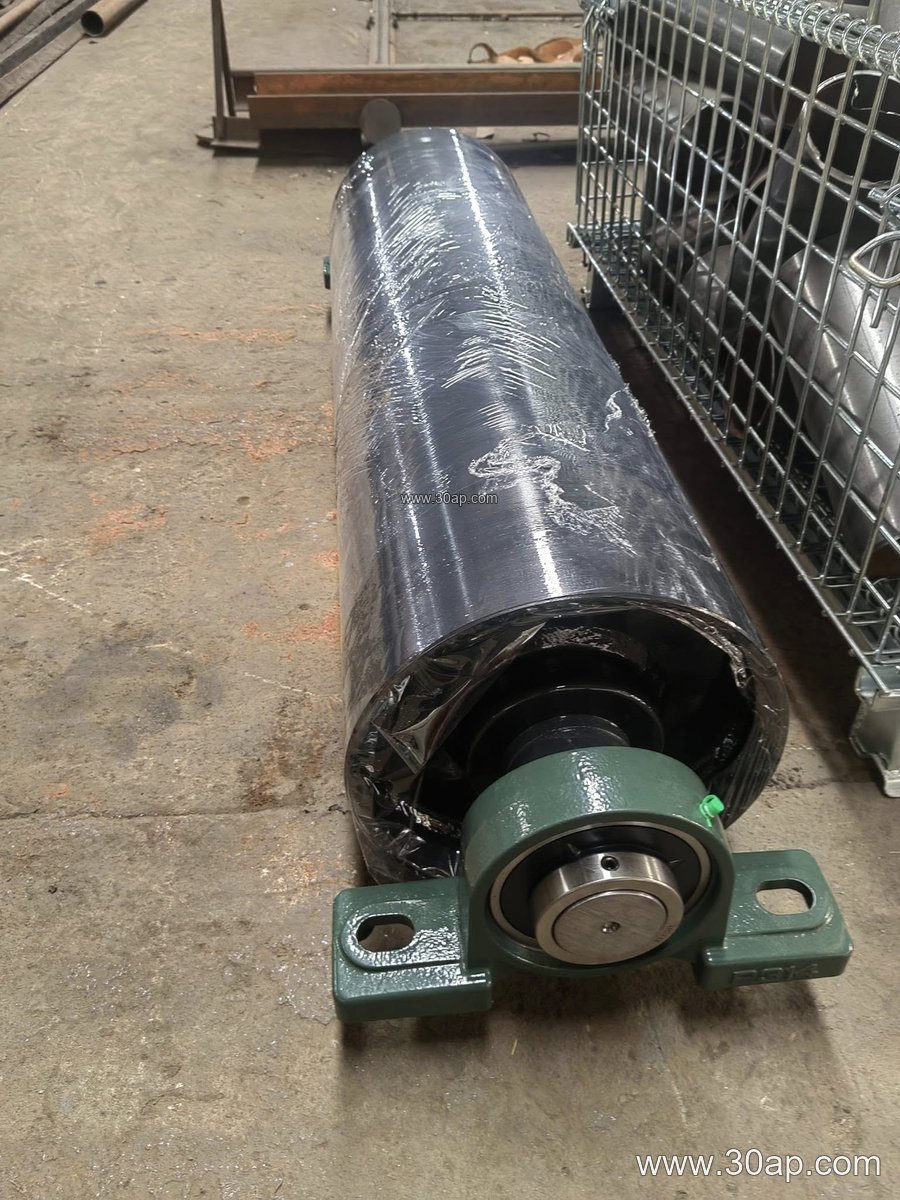
Common cover thicknesses are 8, 10, 12, 15, and 20 mm. Thicker covers last longer in abrasive service but add weight and cost, so the choice follows the material and the belt tension rather than habit.
Common Surface Forms
- Plain rubber lagging for general dry duty
- Diamond lagging for wet or slightly dirty belts
- Herringbone lagging for higher grip on inclined conveyors
- Ceramic lagging for very abrasive or oily conditions
Where It Fits in the Conveyor
On a drive pulley, lagging is usually the deciding factor for torque transmission. A head drive at a stone crushing line may run a B1000 or B1200 belt over a Ø800 or Ø1000 pulley with diamond lagging, while a smaller B650 unit might use a Ø500 shell. The tail pulley benefits from lagging mainly as wear protection, since it sees the return side and often sits in dust. Bend and take-up pulleys use thinner covers because they carry lower wrap angles.
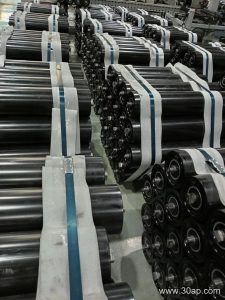
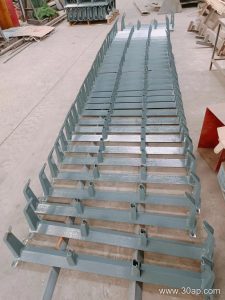
The surrounding hardware matters too. A lagged pulley works with the conveyor belt, the idler roller set that supports the strand, and the conveyor bracket that holds the bearing housings in alignment. Misalignment shortens lagging life faster than load does.
Typical Reference Dimensions
The table below lists common combinations seen in design documents. They are reference points, not fixed rules, and final sizing follows belt tension, torque, and shaft load.
| Belt width | Typical face width | Common pulley diameter | Common shaft diameter |
|---|---|---|---|
| B400 | about 500 mm | Ø200 to Ø400 | Ø50 to Ø80 |
| B500 | about 600 mm | Ø250 to Ø500 | Ø60 to Ø90 |
| B650 | about 750 mm | Ø315 to Ø630 | Ø70 to Ø100 |
| B800 | about 950 mm | Ø400 to Ø800 | Ø80 to Ø120 |
| B1000 | about 1150 mm | Ø500 to Ø1000 | Ø90 to Ø140 |
| B1200 | about 1400 mm | Ø630 to Ø1250 | Ø100 to Ø160 |
| B1400 | about 1600 mm | Ø800 to Ø1400 | Ø120 to Ø180 |
| B1600 | about 1800 mm | Ø1000 to Ø1600 | Ø140 to Ø200 |
Shaft diameter is set by torque and bearing load, not by belt width alone. A wide belt on a lightly loaded bend pulley may carry a smaller shaft than a narrow drive pulley under heavy tension.
What a Buyer Should Check
Start with the pulley’s role. A drive pulley needs a cover that transmits torque without polishing smooth; a tail pulley needs abrasion resistance. Confirm the belt width, the required face width, and the shaft size against the actual conveyor drawing rather than a catalogue shortcut.
Ask how the lagging is bonded, since hot vulcanized and cold bonded covers behave differently in wet service. Check the groove pattern against the material: sticky limestone and wet sand behave differently from dry clinker. Finally, confirm that the bearing housings match the existing conveyor bracket so the pulley drops into place without reworking the frame.