What a Steel Idler Does on a Conveyor
A steel idler is the rotating roller that supports the conveyor belt and the material load along the carrying and return runs. In many plants it is simply called an idler roller, but the steel version remains the default choice for heavy duty service because the tube body resists impact, abrasion, and high temperatures better than softer alternatives. A conveyor belt running through a quarry, a coal preparation plant, or a cement kiln feed line depends on dozens or hundreds of these rollers to keep the belt tracking smoothly and to reduce the power needed from the drive.
Where It Sits in the Machine
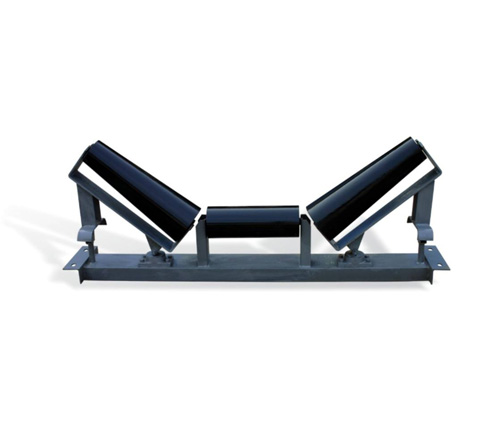
An idler is not a drive, tail, or bend pulley. Those pulleys transmit power or change belt direction at the ends of the conveyor. The idler roller works between them, carrying the belt across the full length of the structure. A typical troughing set uses three rollers to form a cradle that keeps bulk material centered. Return rollers support the empty belt on the way back. A steel idler in a buffer zone may be fitted with rubber rings to absorb the impact of large lumps falling from a crusher or screen.
Construction and Common Surface Forms
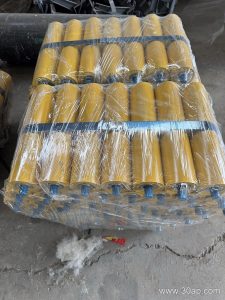
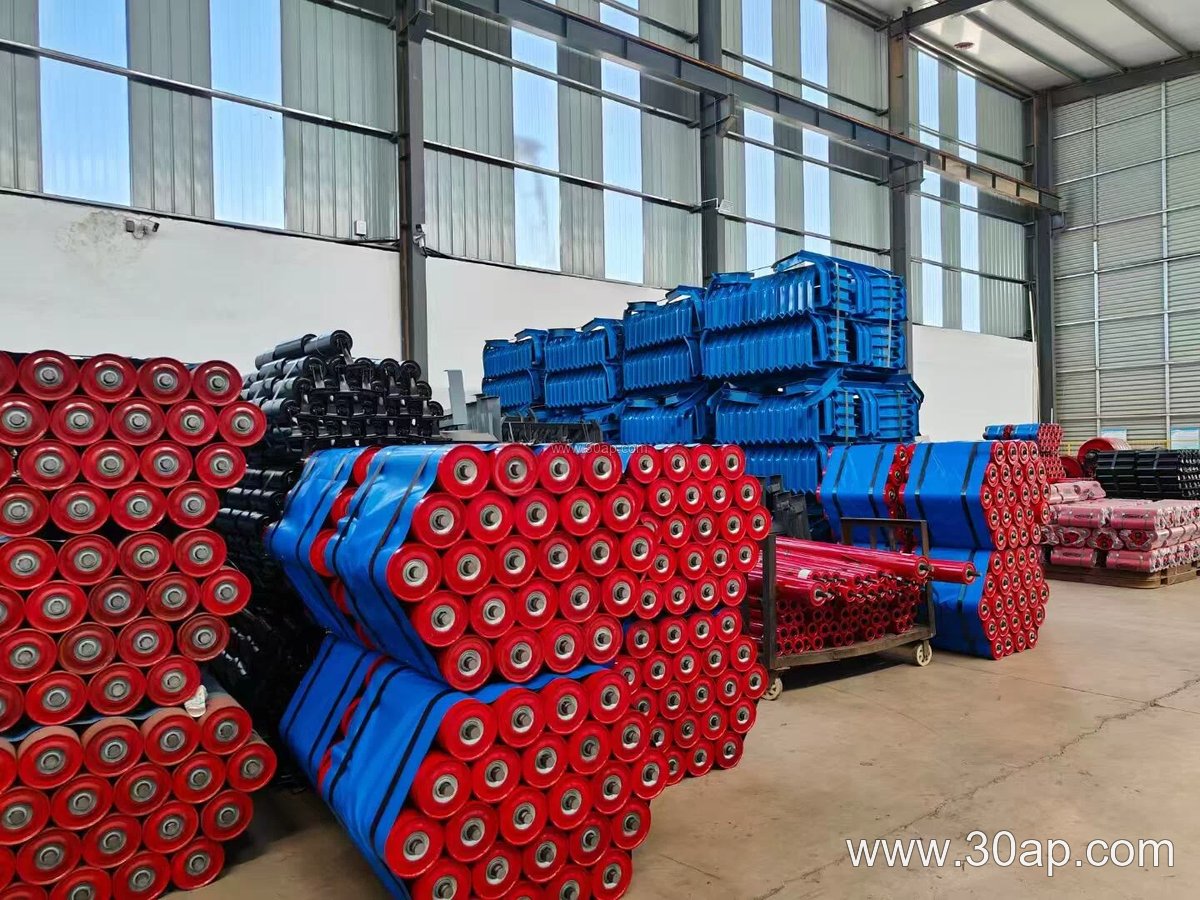
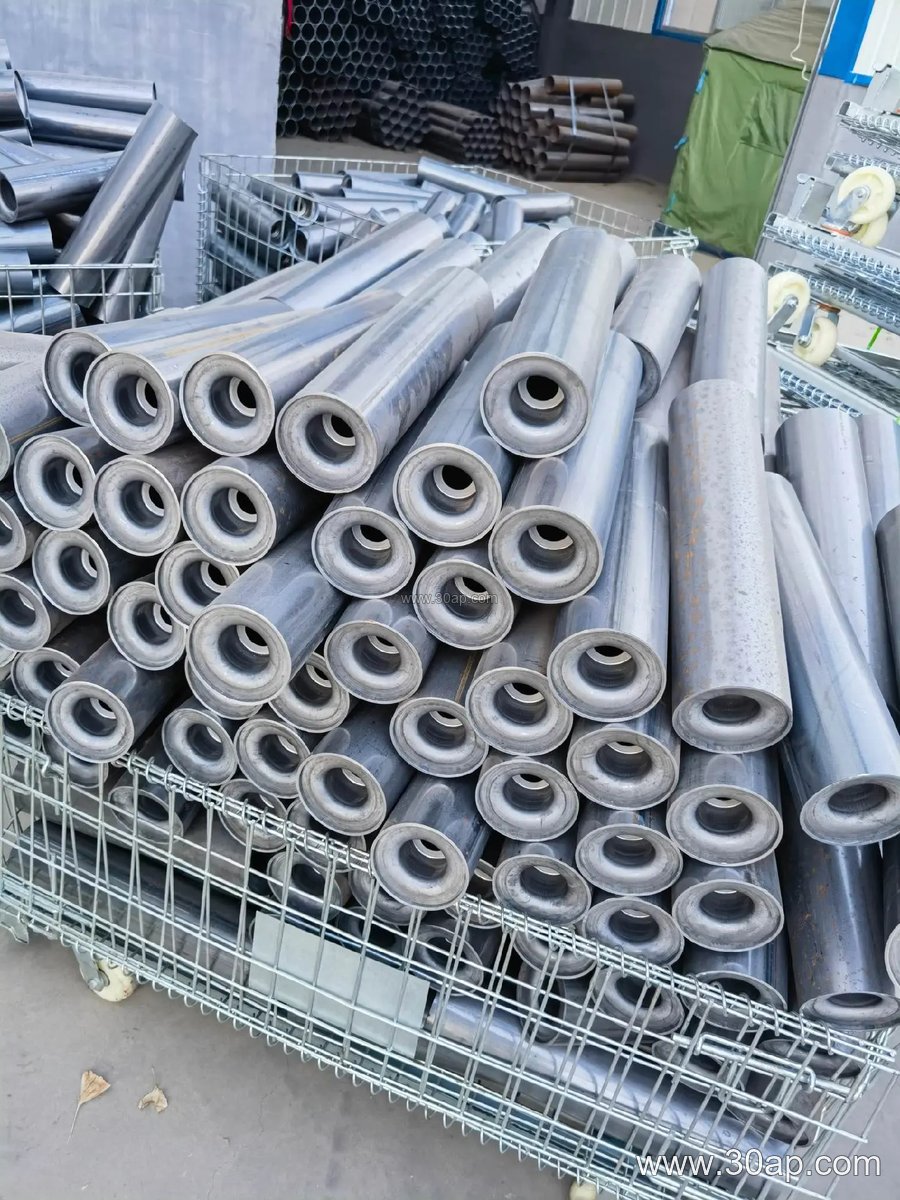
Most steel idlers start with a seamless or welded steel tube, machined at both ends to accept bearing housings. The shaft is usually cold drawn, and the bearings, often 6204, 6205, 6305, 6306, 6308, or 6310, are sealed against dust and water. The roller face can be plain steel, nylon coated, ceramic coated, or fitted with rubber rings. Each surface suits a different job. Plain steel works well for dry, abrasive ore on a limestone or iron ore line. Rubber rings help in a crushing circuit where sharp rock drops onto the belt. Ceramic or nylon surfaces are sometimes chosen where sticking or corrosion is a concern.
Typical Dimensions and How They Pair with Belt Width
Buyers often ask for a roller by belt width, but roller length and diameter are selected together. The table below shows common reference values for troughing idlers. They are examples only and should not be treated as fixed rules for every conveyor.
| Belt Width | Common Roller Diameter | Typical Roller Length | Common Trough Angle |
|---|---|---|---|
| B500 | Ø63, Ø76, Ø89 | 200 mm | 20°, 30°, 35° |
| B650 | Ø76, Ø89, Ø102 | 250 mm | 20°, 30°, 35° |
| B800 | Ø89, Ø102, Ø108 | 315 mm | 30°, 35°, 45° |
| B1000 | Ø108, Ø127, Ø133 | 380 mm | 30°, 35°, 45° |
| B1200 | Ø127, Ø133, Ø159 | 465 mm | 30°, 35°, 45° |
| B1400 | Ø133, Ø159, Ø178 | 530 mm | 35°, 45° |
| B1600 | Ø159, Ø178, Ø194 | 600 mm | 35°, 45° |
Side rollers and center rollers in the same set can differ in length. A three roll troughing station on a B1000 belt may use a shorter center roll and two longer side rolls, depending on the trough angle and frame design. No single belt width locks a conveyor to one roller diameter or one shaft size. The bracket, frame, and load calculation decide the final match.
Choosing the Right Idler for the Application
The working environment should guide the selection. In a sand and gravel pit, a standard troughing idler with a steel tube and sealed bearing is often enough. In a coal handling system, fire resistant and antistatic properties may be required, and the roller surface should resist coal dust buildup. A port conveyor moving iron ore or fertilizer needs corrosion protection and a robust seal. For a tunnel boring operation, the return idler may be a V type or a flat return roller to shed sticky fines. A self aligning idler, also called a training idler, can correct belt wander on long overland conveyors. These are different subtypes, and they should be chosen for their specific task rather than used interchangeably with a standard carrying idler.
Maintenance and Buying Notes
- Check that the roller turns freely by hand before installation. A rough or locked bearing will wear the belt edge and increase power draw.
- Keep the conveyor bracket and frame clean. Material buildup under the idler changes the belt line and shortens roller life.
- Match the roller length to the frame slot, not only to the belt width. A roller that is too short can fall out; one that is too long may rub the structure.
- When replacing a steel idler, record the tube diameter, shaft end shape, bearing number, and surface type. This makes the next order faster and more accurate.
- For abrasive or high impact zones, consider a rubber ring buffer idler or a heavier tube wall. For sticky material, a spiral or comb type roller may reduce buildup.
A steel idler is a simple component, but it carries the belt, the material, and the uptime of the whole conveyor. Getting the roller diameter, length, bearing, and surface form right for the belt width and the site conditions is the practical way to avoid premature failure.