What a Four-Roll Trough Idler Does
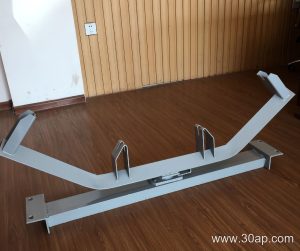
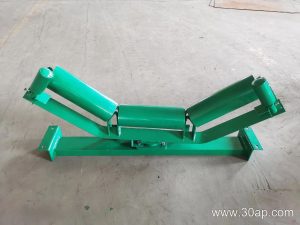
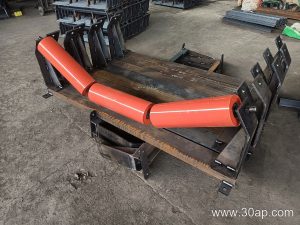
A four-roll trough idler is a carrying idler assembly that supports the loaded strand of a conveyor belt on four rollers rather than the usual three. The extra roll lets the trough form a wider, smoother cradle, so the belt and its bulk material are supported over more contact points. In practice, this means less sag between idlers, gentler transitions at the load point, and better containment of material on high-capacity lines. It is still an idler roller assembly, not a drive or tail pulley, and it sits in the carrying run where the belt is full.
These assemblies are common on wide belts and on lines moving heavy bulk material. You will see them in a limestone quarry, on a coal handling stream at a power plant, and in cement plant raw-material conveying where belt widths climb and lump sizes are not small. They are also an option where a standard three-roll trough does not give the belt enough support across its width.
How the Assembly Is Built
The frame carries four rolls arranged in a shallow trough. The two outer rolls sit at the trough angle, and the two inner rolls form the center of the cradle. Roll diameter, roll length, and trough angle are selected together with the belt width and the idler spacing. Common roll diameters in this family include Ø89, Ø108, Ø127, Ø133, Ø159, and Ø178, though the final choice follows the load and the frame design, not a single rule. Trough angles are usually 20, 30, 35, or 45 degrees.
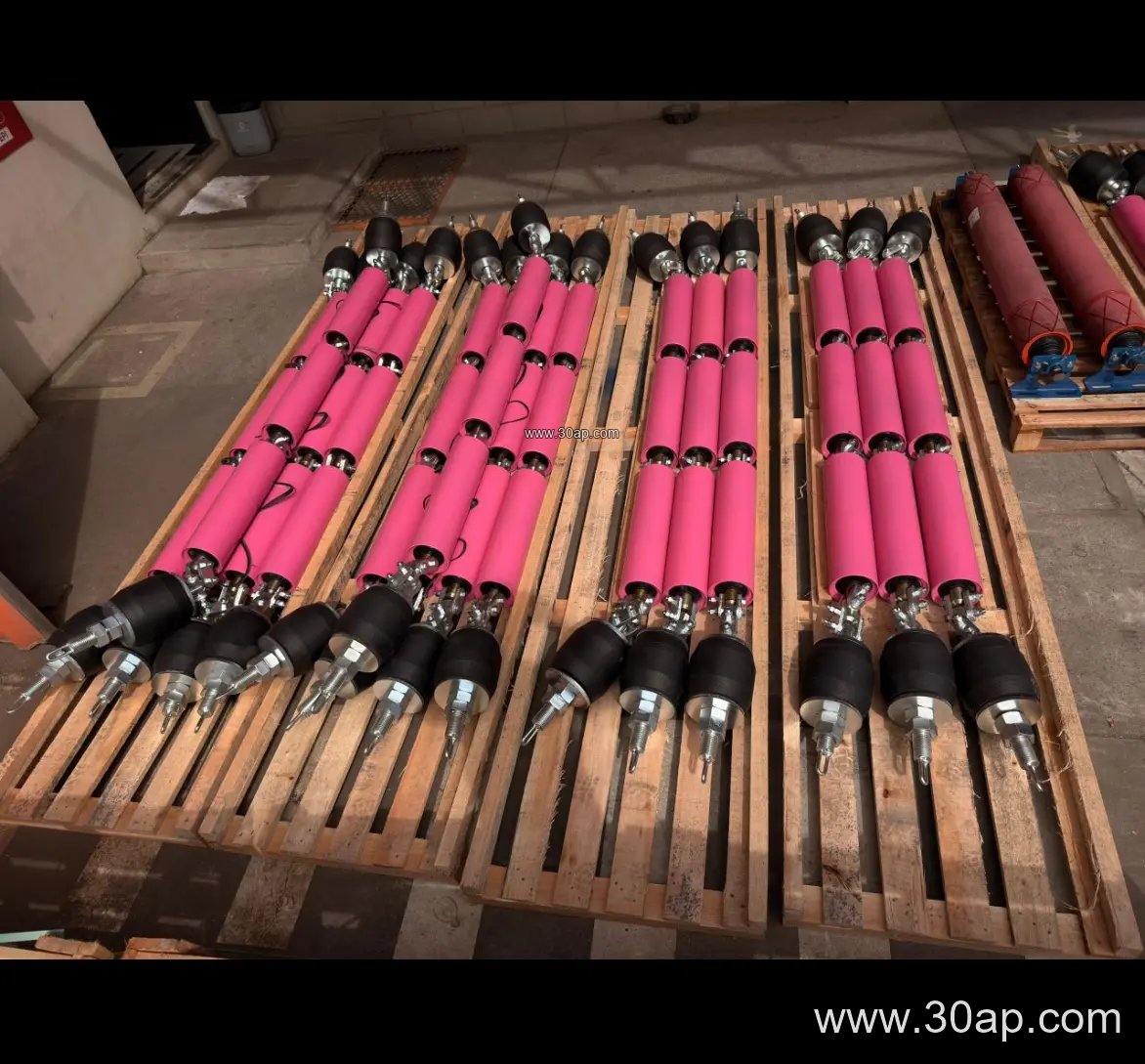
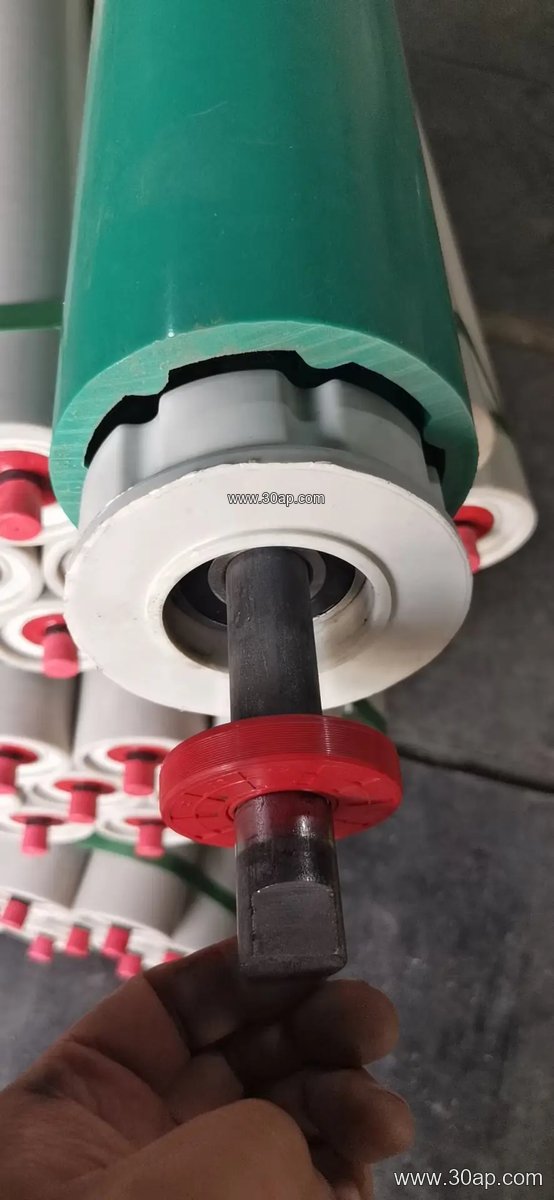
Roll shells are typically steel tube, with nylon, ceramic, or rubber-ring surfaces available where abrasion or build-up is a concern. Bearings are commonly 6204, 6205, 6305, 6306, 6308, or 6310, matched to the roll and the duty rather than to one fixed shaft size. Seals matter as much as the bearing number: a good labyrinth seal keeps dust out in a stone crushing line or a coal yard.
| Parameter | Common reference values |
|---|---|
| Roll diameter | Ø89, Ø108, Ø127, Ø133, Ø159, Ø178 mm |
| Belt width | B800, B1000, B1200, B1400, B1600, B1800 mm |
| Trough angle | 20°, 30°, 35°, 45° |
| Roll surface | Steel tube, nylon, ceramic, rubber ring |
| Bearing | 6204, 6205, 6305, 6306, 6308, 6310 |
Roll length changes with belt width, trough angle, and the roll position. As a rough example only, three-roll trough idlers often use about 200 mm rolls at B500, 315 mm at B800, 465 mm at B1200, and 600 mm at B1600. A four-roll frame divides the same width differently, so the center and side rolls can differ. Treat these as reference points, not fixed pairings.
Where It Fits on the Conveyor
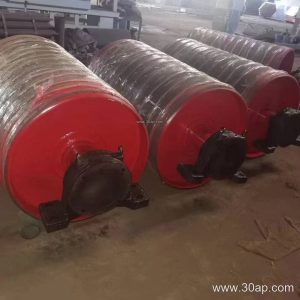
The four-roll trough idler belongs on the carrying side, generally in the main run after the load has settled. It is not a replacement for a bend pulley at a curve or a drive pulley at the head; those are different components with different jobs. Neither is it a substitute for a return idler under the empty strand. Its value is in spreading support across a wide belt and keeping the trough profile stable under a heavy load.
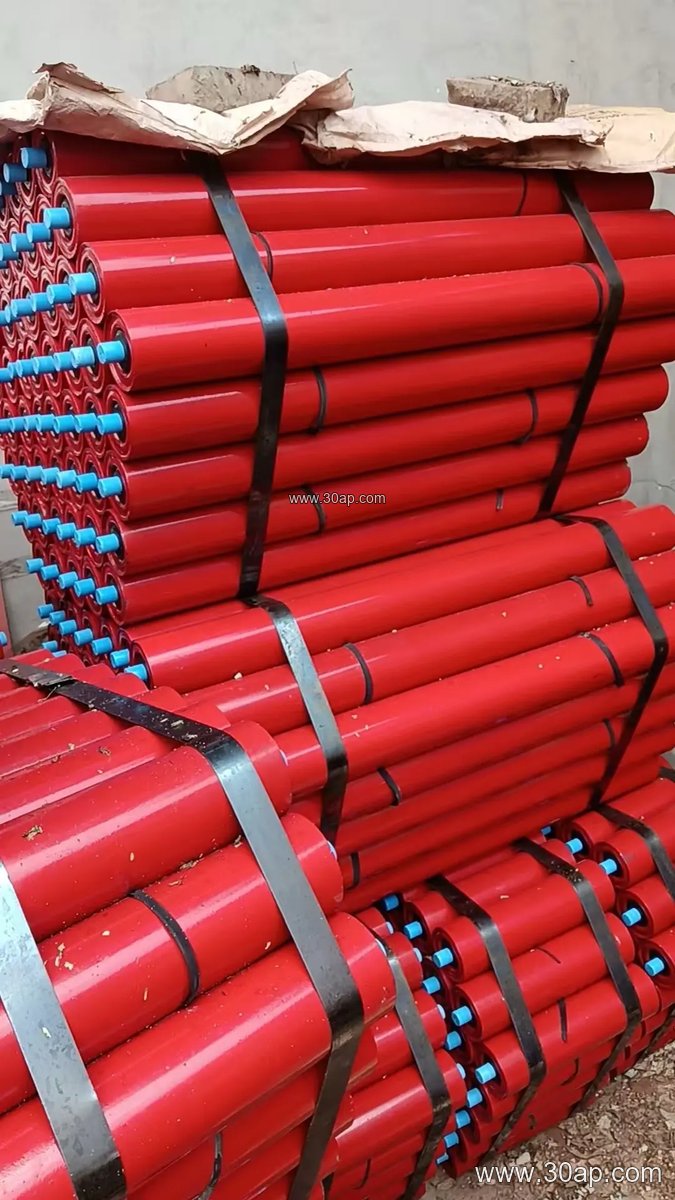
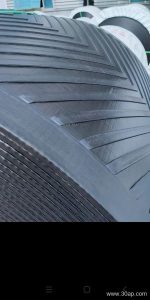
On a high-tonnage overland line carrying iron ore or aggregate, the assembly can reduce the point loads that a three-roll set puts on the belt at each idler station. That is why it shows up where a heavy-duty mining conveyor belt runs at speed with a deep material bed. A steel cord conveyor belt or a thick multi-ply fabric core belt benefits from the broader support, and so does an abrasion resistant conveyor belt working in a quarry.
What Buyers Should Check
- Confirm the belt width and the intended trough angle, then check that the four-roll frame matches both.
- Check the roll diameter against the load and the idler spacing; do not assume one diameter suits every width.
- Ask about the seal design and the bearing number, since dust and water ingress drive most idler failures.
- Match the roll surface to the duty: rubber rings for impact, ceramic or nylon for sticky or abrasive material.
- Confirm frame height and mounting details so the assembly fits the existing conveyor bracket and stringer.
The right four-roll trough idler is selected as part of the whole conveyor layout, alongside the belt specification, the pulley arrangement, and the idler spacing. For a wide line in a port, a sinter plant, or a tunnel spoil run, it is worth getting the roll length and trough angle drawn against the actual belt before ordering.