What a Skirted Conveyor Belt Is
A skirted conveyor belt is a fabric or steel-reinforced belt fitted with raised rubber side walls, often called skirts, that run along both edges. The skirts keep loose bulk material from spilling off the belt, especially on inclined runs and at transfer points. In many plants this product is also called a corrugated sidewall conveyor belt, and the two names describe the same basic construction: a base belt, bonded sidewalls, and usually a set of cross cleats between the walls.
The skirted design is a practical choice where a standard flat belt would shed material on a steep incline or where space for a long, gently sloped conveyor is limited. It is common in mining, coal preparation, cement plants, power stations, and sand and gravel yards, where dusty or granular loads need to stay on the belt.
How the Belt Is Built
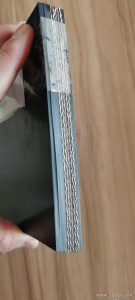
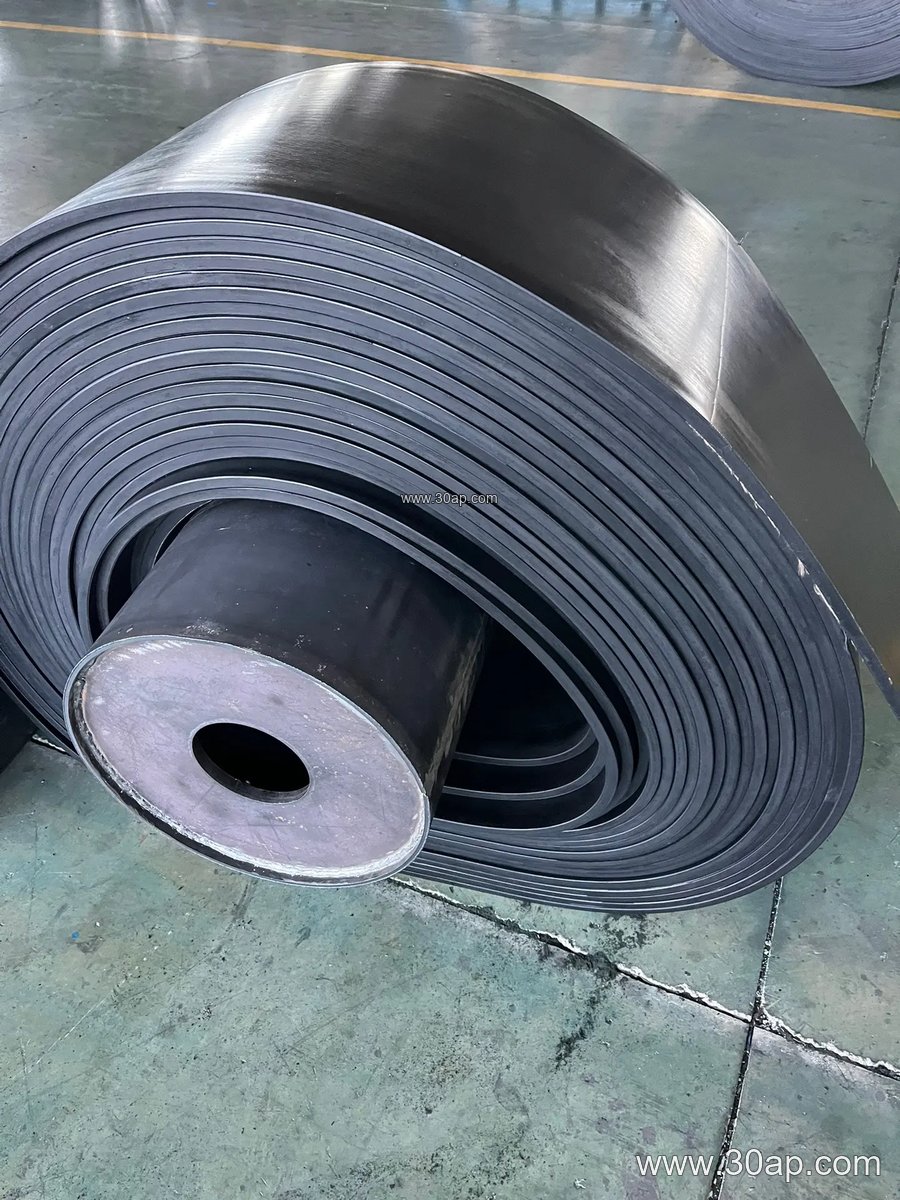
The base belt usually has a fabric core, such as an EP conveyor belt or an NN conveyor belt, or a steel cord carcass for very high tension duty. Sidewalls are made from rubber compounds reinforced with fabric plies, and they are vulcanized to the belt edges. Cross cleats, available in different heights and profiles, divide the belt surface into pockets so material can be carried at steeper angles.
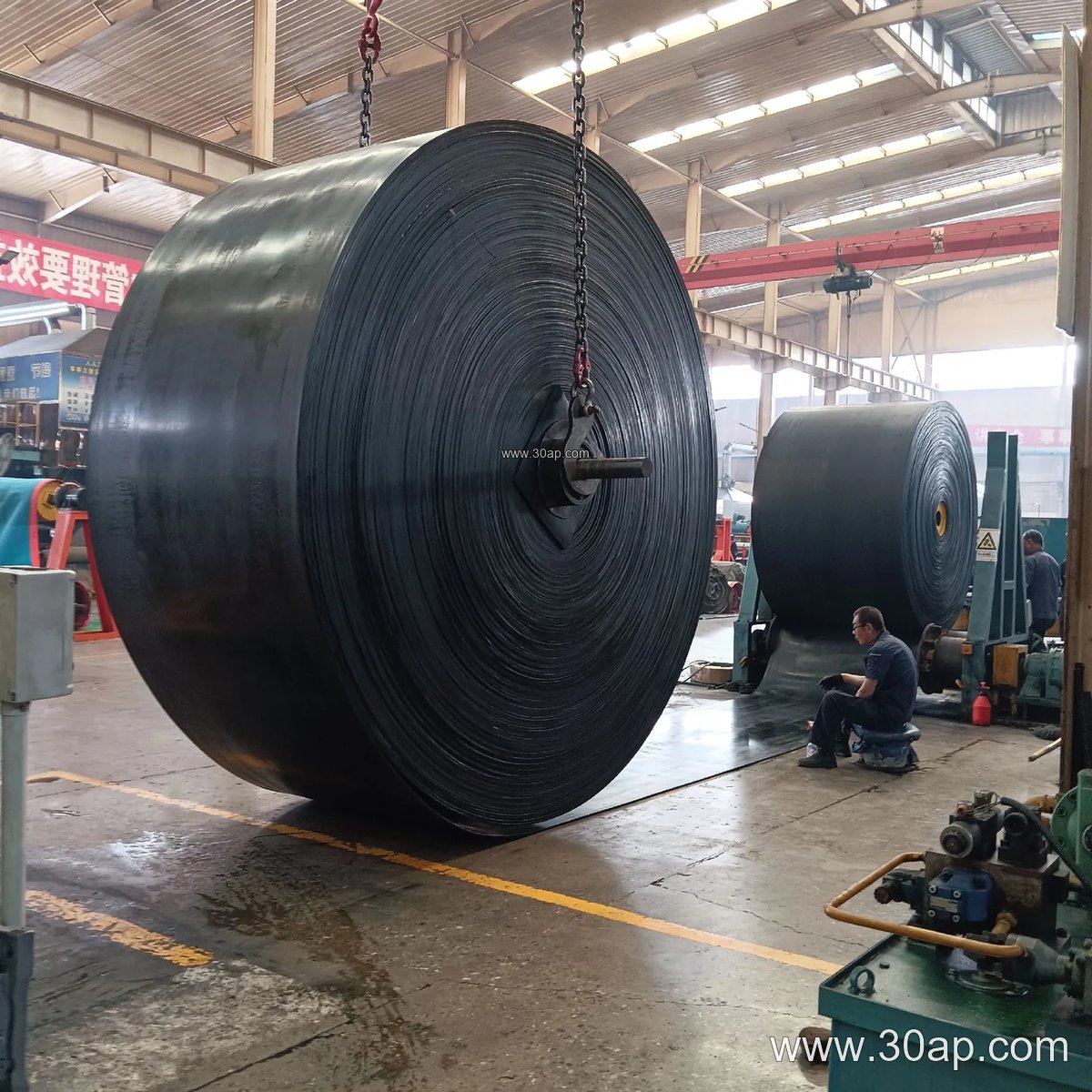
Cover compounds are selected for the duty. A heavy-duty mining conveyor belt may use abrasion resistant rubber, while a cement plant might need heat resistant grades near clinker. Flame retardant and anti-static versions are often specified for underground coal mining conveyors, and oil resistant or acid resistant covers appear in chemical and processing plants.
| Common belt width | Typical skirt height | Typical cleat height |
|---|---|---|
| B500 to B800 | 40 to 80 mm | 40 to 75 mm |
| B1000 to B1200 | 60 to 120 mm | 60 to 100 mm |
| B1400 to B1800 | 80 to 160 mm | 80 to 150 mm |
These values are common references only. Final dimensions are set by the conveyor design, the material being handled, and the incline angle. A 1200mm wide belt and an 1800mm wide belt may use different skirt heights, and no single width dictates one pulley diameter.
Where It Fits in a Conveyor System
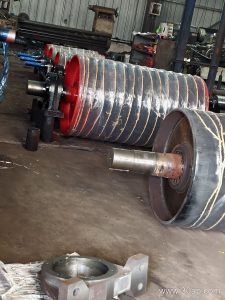
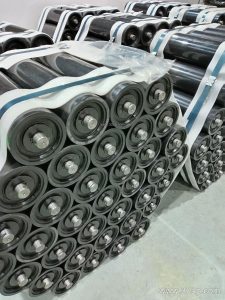
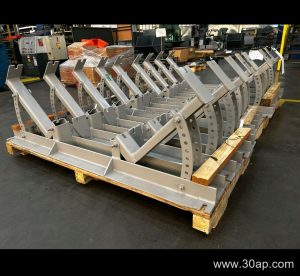
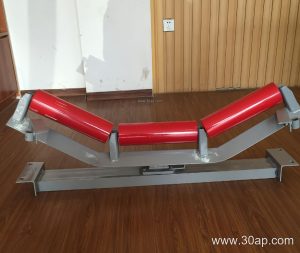
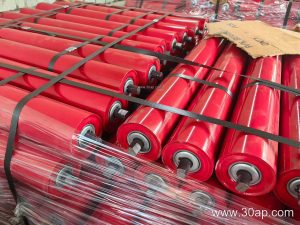
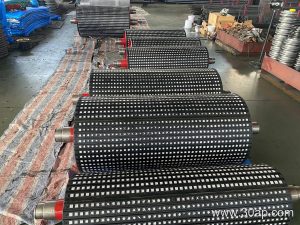
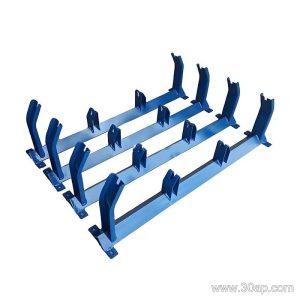
The belt runs over a drive pulley, a tail pulley, and bend pulleys that guide the return path. Idler rollers support the carrying side, while conveyor brackets hold the frame and pulleys in alignment. Because the sidewalls and cleats add height, the pulley and idler layout must leave clearance for them to pass, and the skirted belt is usually supported by special rollers or a flat pan rather than standard troughed idlers.
Typical duties include:
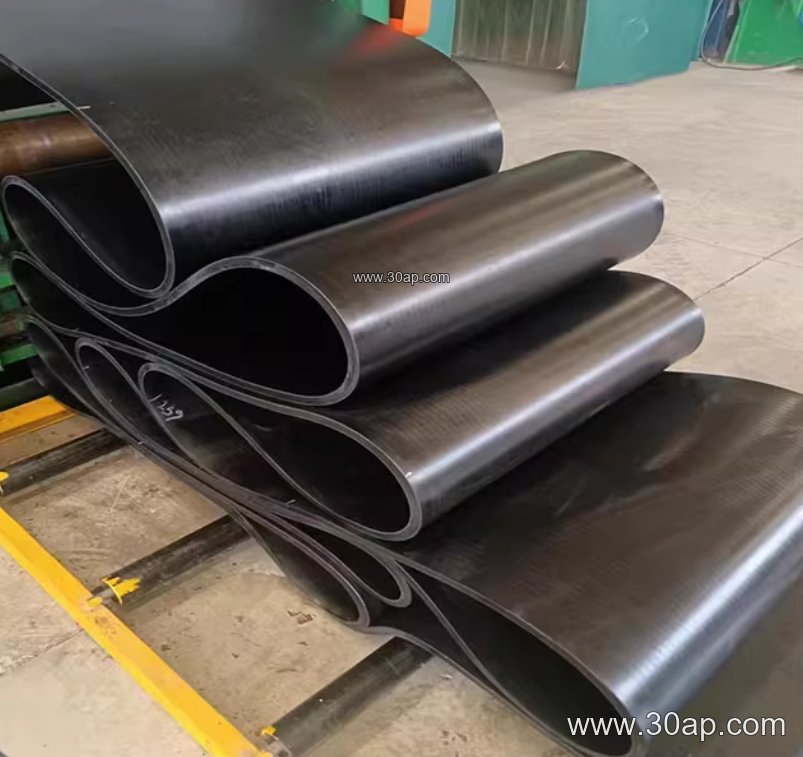
- Inclined transport of coal, ore, and aggregate in mining and quarry operations.
- Feeding crushers and screens in stone crushing and sand making plants.
- Handling cement, clinker, and additives in cement plants.
- Moving ash, limestone, and fuel in power plants and ports.
For very long, high-tension haulage, a steel cord conveyor belt is often chosen over a fabric carcass. For smaller inclines and moderate loads, a multi-ply fabric core belt or an EP conveyor belt with suitable covers is common. In food or clean handling, PVC and food grade belts may be used, but the skirted construction is mainly a bulk material solution.
Buyer Checklist
Before ordering, confirm the material type, lump size, bulk density, and incline angle. State the belt width, skirt height, cleat height and pitch, and the cover grade needed for abrasion, heat, oil, or fire risk. Check the drive pulley, tail pulley, and bend pulley diameters against the belt and cleat height, and make sure the conveyor frame and brackets allow the sidewalls to run freely.
Ask for the carcass type and ply count, for example an EP200 or EP400 fabric core, or the steel cord strength class if relevant. Specify whether the belt should be endless, spliced on site, or supplied in open lengths. For underground coal work, request flame retardant and anti-static properties, and confirm the test documents the supplier can provide.
Finally, plan maintenance. Inspect skirt-to-base bonding, cleat wear, and edge damage regularly, and keep the belt tracking straight on the pulleys. A well-matched skirted conveyor belt keeps bulk material contained and reduces spillage, cleanup, and downtime in demanding industrial settings.