What a Carbon Steel Conveyor Bracket Is
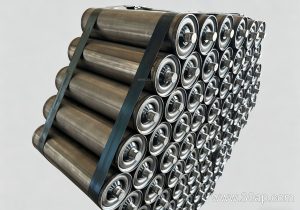
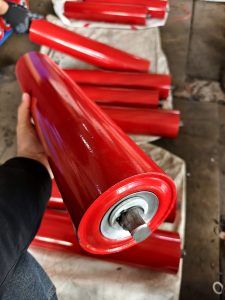
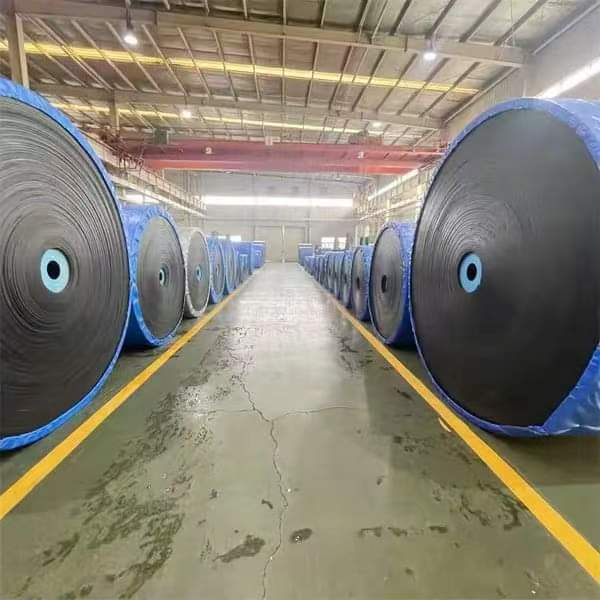
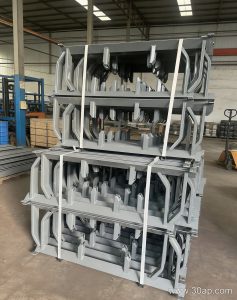
A carbon steel conveyor bracket is the structural support that holds idler rollers in place along a belt conveyor. Often called a carbon steel conveyor support frame, this component is typically fabricated from angle steel, channel steel, or bent steel plate. Its job is straightforward but critical: keep the conveyor belt tracking smoothly while carrying material in mining, quarrying, coal washing, cement production, power plant coal handling, and aggregate processing.
The bracket works together with the conveyor belt and idler rollers. Without a rigid, well-aligned bracket, the belt may mistrack, the rollers may wear unevenly, and spillage may increase. Carbon steel is a common choice because it offers a good balance of strength, weldability, and cost for general industrial duty.
How the Bracket Is Built
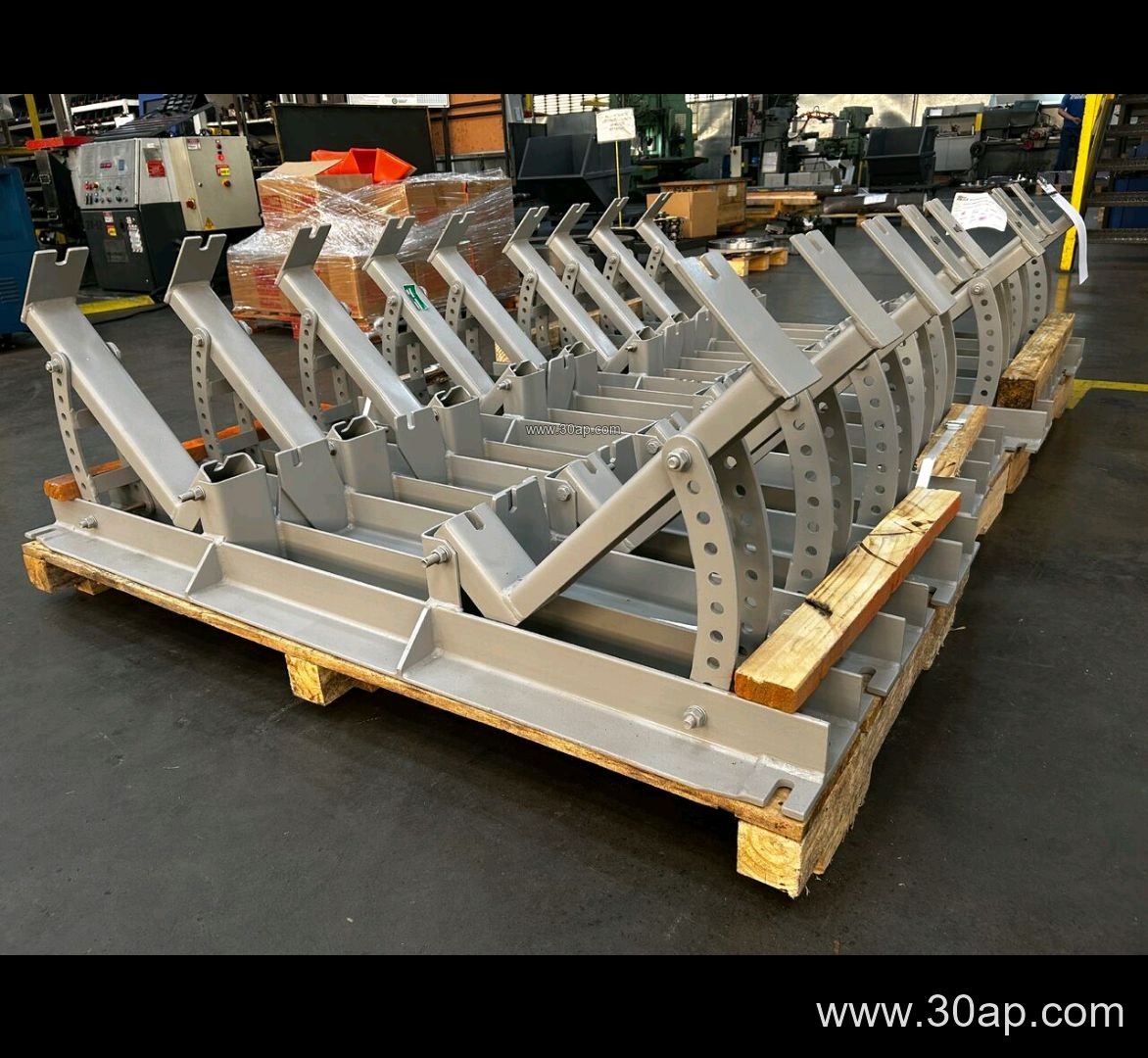
Fabrication usually starts with cutting and forming carbon steel sections. Angle steel and channel steel are common for the main frame, while bent steel plate may be used for mounting plates or reinforcement. Welding, drilling, and surface treatment follow. Bolt holes are positioned to match the idler roller shaft and the conveyor stringer.
The bracket may be fixed or adjustable. A fixed bracket holds a set trough angle, while an adjustable bracket allows the trough angle to be changed between common values such as 20, 30, 35, and 45 degrees. Forward-tilted brackets, often around 1.5 to 2 degrees, are used in some tracking arrangements. Mounting hole spacing and beam length are not universal; they vary with belt width, trough angle, and the specific roller diameter.
Common Types and Where They Sit
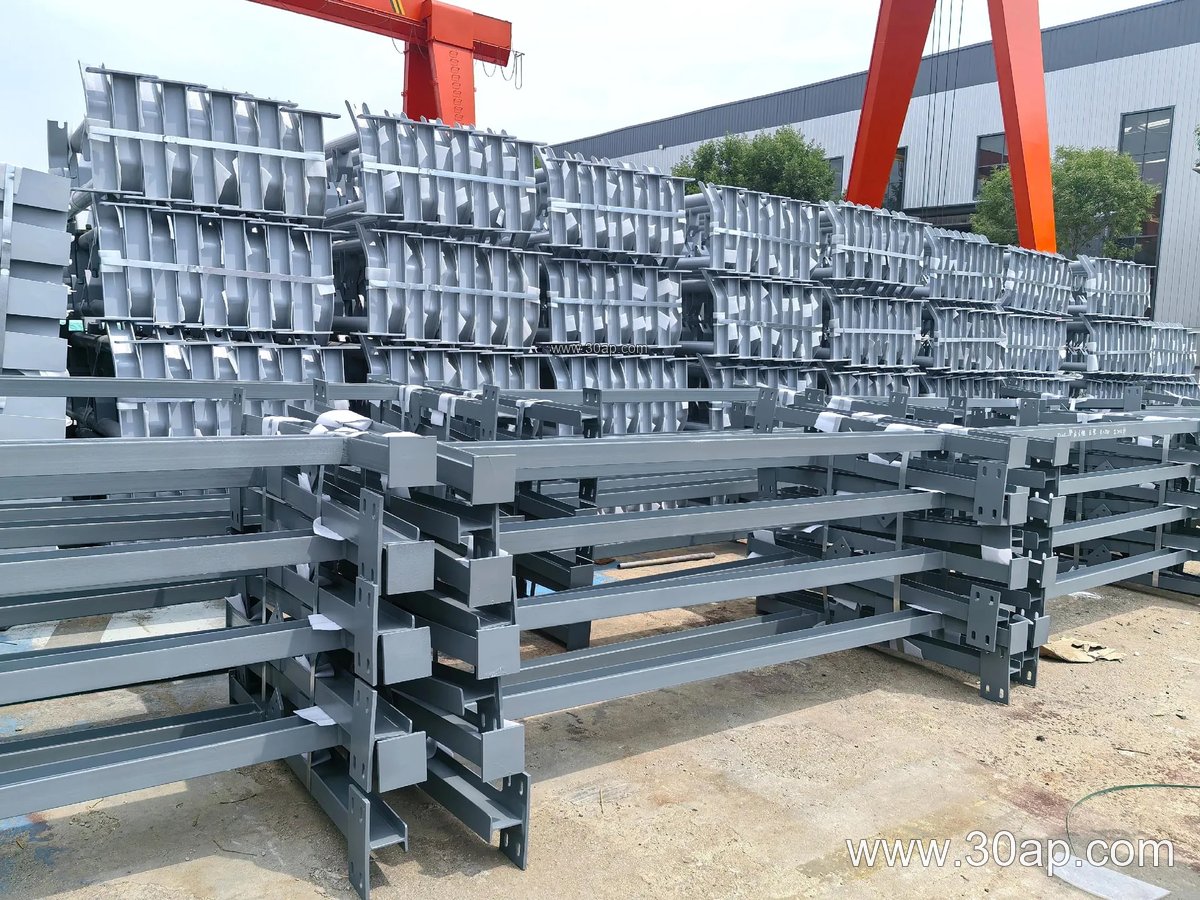
Different bracket types serve different positions along the conveyor. Trough brackets support the carrying side, return brackets support the belt on its way back, and transition brackets help the belt change shape near pulleys. Impact brackets are used where material falls onto the belt. Self-aligning brackets help correct mistracking. The table below lists common support types and typical positions.
| Bracket Type | Typical Position | Notes |
|---|---|---|
| Trough bracket | Carrying side | Holds three or more rollers at a set trough angle |
| Transition bracket | Near head or tail pulley | Guides the belt from flat to troughed shape |
| Return bracket | Return side | Supports the belt after discharge |
| Impact bracket | Loading point | Absorbs impact from falling material |
| Self-aligning bracket | Carrying or return side | Helps correct belt mistracking |
These are not interchangeable with drive pulleys, tail pulleys, or bend pulleys. A pulley is a rotating drum that drives or redirects the belt; a bracket is a stationary support for rollers. The two work together but serve different functions.
Matching Bracket, Belt Width, and Roller Diameter
Belt width and roller diameter are related through the bracket design, but they are not locked into a single combination. A B800 conveyor might use a 35-degree trough bracket with Ø108 rollers, while a B1200 system could use a 45-degree bracket with Ø133 rollers. Common belt widths include B500, B650, B800, B1000, B1200, B1400, B1600, B1800, B2000, and B2200. Common roller diameters include Ø89, Ø108, Ø133, Ø159, and Ø194.
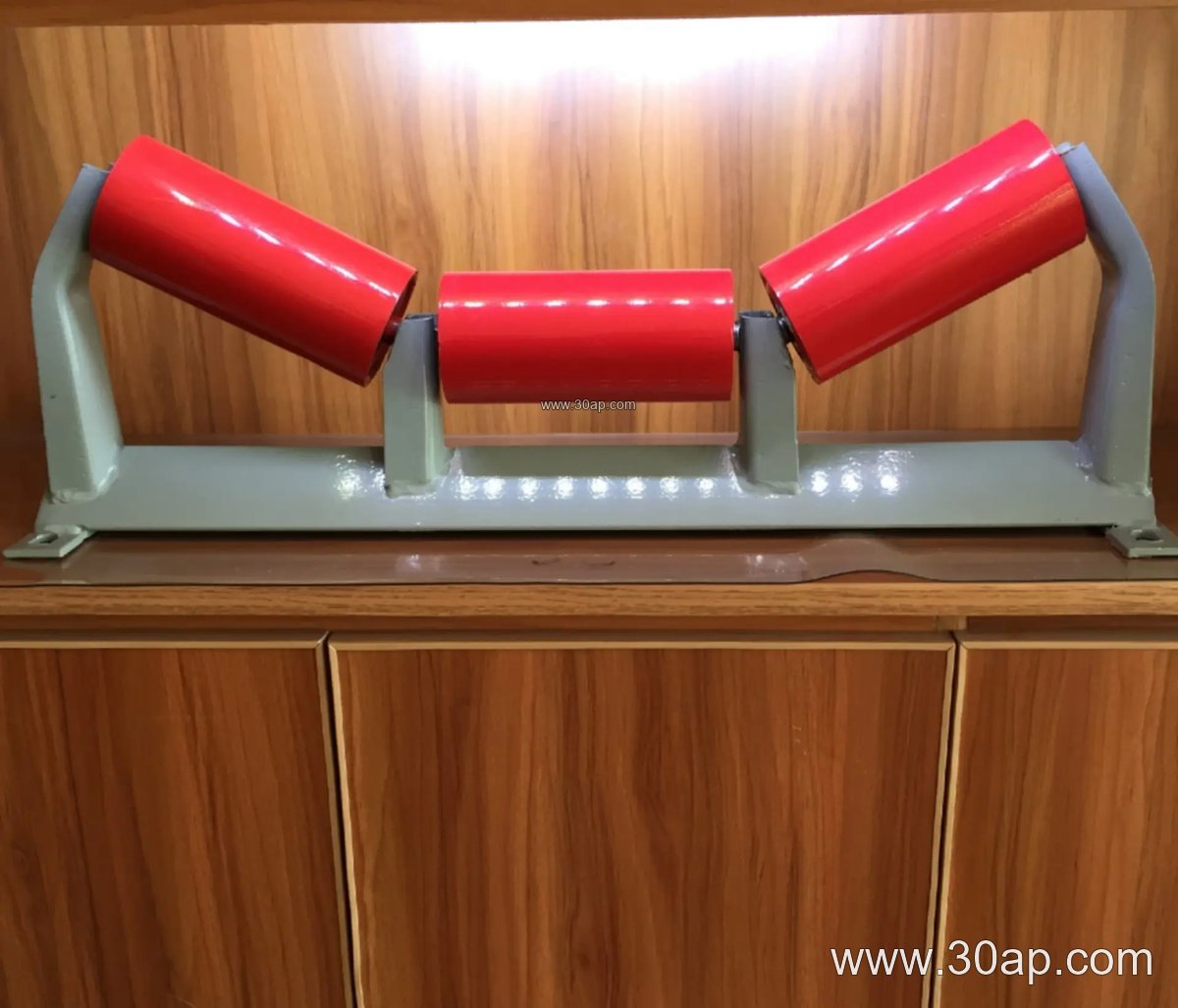
These values are reference points, not fixed rules. The actual bracket dimensions, hole spacing, and beam length are determined by the conveyor design. A wider belt does not automatically require a larger roller diameter, and a given belt width can be paired with more than one trough angle or roller size depending on load, speed, and material characteristics.
Where Carbon Steel Conveyor Brackets Are Used
In a limestone quarry, brackets support the rollers that carry crushed stone from the primary crusher to the stockpile. In a coal washing plant, they hold rollers that keep the belt aligned through wet, abrasive conditions. In a cement plant, they are part of the clinker and raw material handling lines. In a power plant coal yard, they help maintain stable belt tracking on long conveyors. In a sand and gravel line, they support the belt through screening and washing stages.
The bracket must suit the environment. Dust, moisture, and abrasive material affect wear on both the bracket and the idler roller. Surface treatment such as painting or galvanizing is often specified, but the exact coating depends on the site conditions and the buyer’s requirements.
What Buyers Should Check
- Belt width and trough angle: Confirm the bracket matches the conveyor’s belt width and required trough angle.
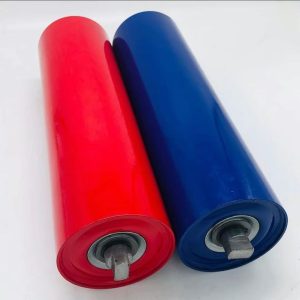
- Roller diameter and shaft size: The bracket mounting holes must fit the idler roller shaft. Do not assume a shaft diameter from belt width alone.
- Mounting dimensions: Hole spacing and beam length vary by design. Request a drawing or dimension sheet.
- Material and finish: Carbon steel grade and surface treatment should suit the environment.
- Adjustability: Decide whether a fixed or adjustable bracket is needed for the application.
A well-matched carbon steel conveyor bracket keeps the belt, rollers, and frame working as a system. Buyers who check dimensions, roller compatibility, and site conditions before ordering are more likely to avoid tracking problems and premature wear.