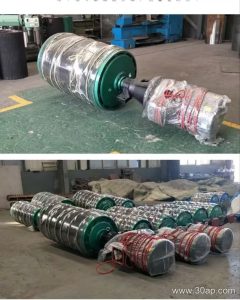
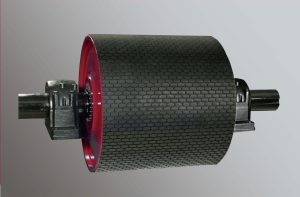
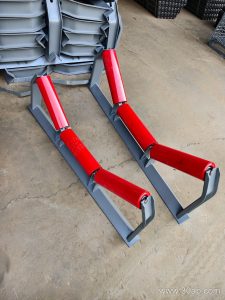
What a Diamond Grooved Lagged Pulley Is
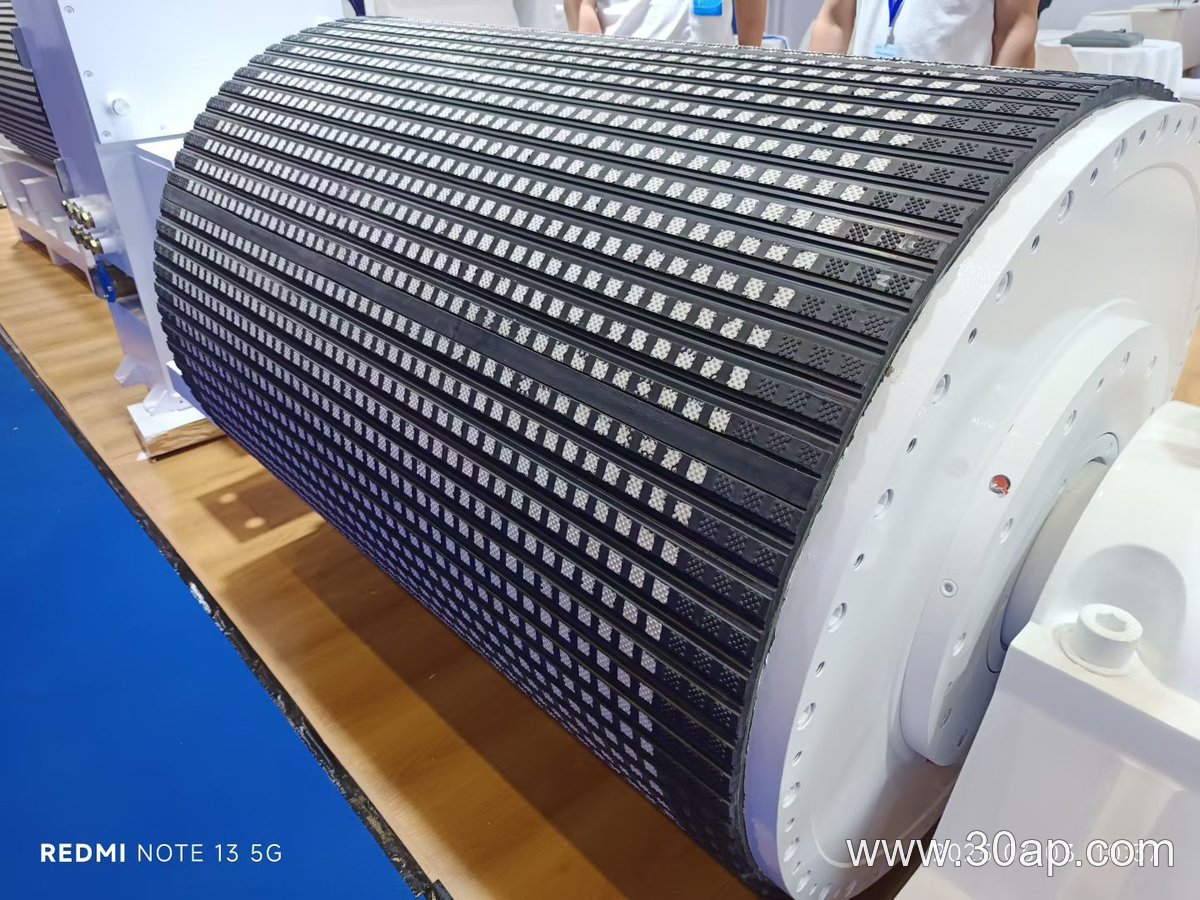
A diamond grooved lagged pulley is a conveyor pulley whose outer surface carries a rubber lagging with a raised diamond pattern. The diamond grooves are cut or molded into the rubber, creating a crisscross texture that looks like a grid of small diamonds. This pattern is not decorative. It channels water, fine dust, and mud away from the contact zone between the belt and the pulley, which helps maintain grip in wet or dirty conditions. In many conveyor systems, this type of pulley is used as a drive pulley, where torque must transfer from the pulley to the conveyor belt without slipping. The same surface may also appear on a tail pulley or a bend pulley, but those positions serve different purposes and should not be treated as interchangeable with the drive position.
An accurate equivalent name for this product is a diamond rubber lagged conveyor pulley. The word “grooved” refers to the recessed channels between the raised diamond shapes, while “lagged” refers to the rubber layer bonded to the pulley shell.
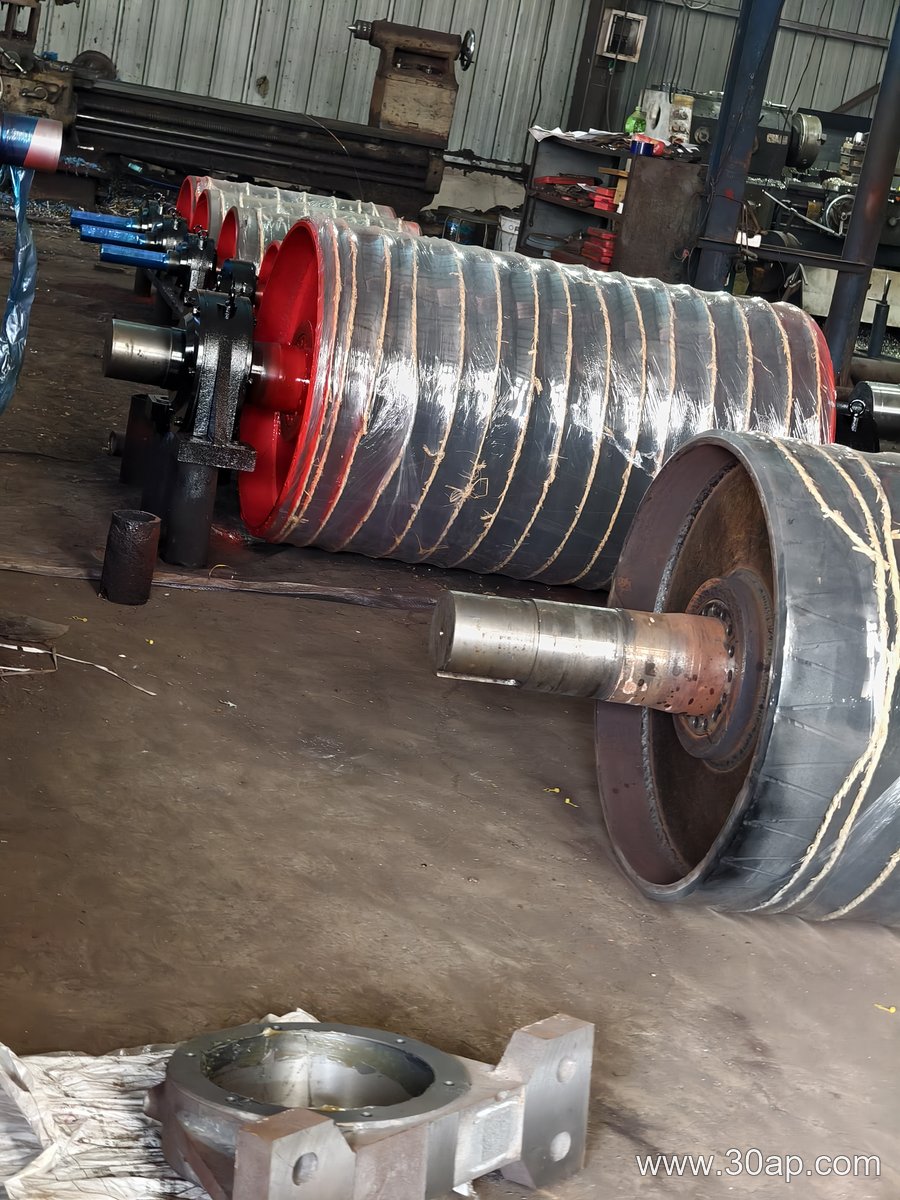
How the Diamond Pattern Is Built
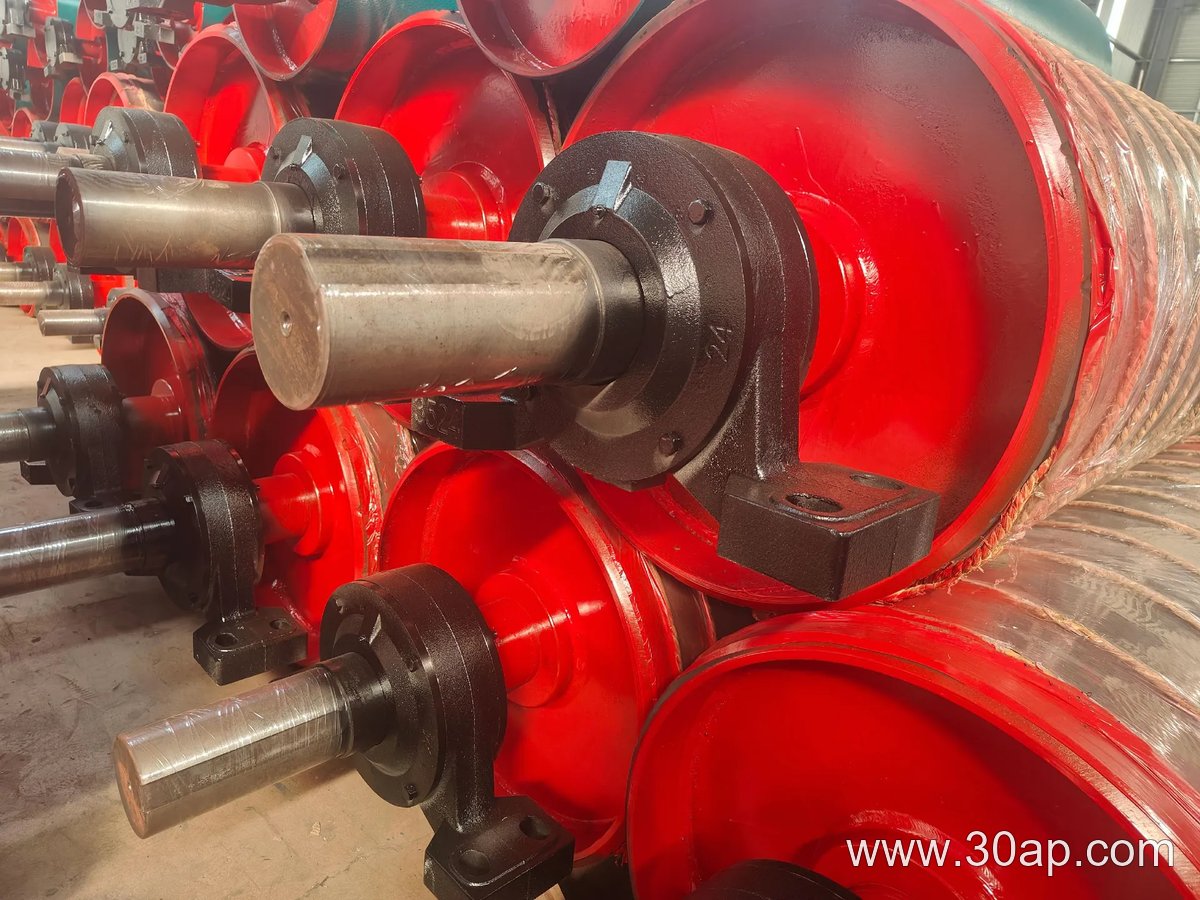
The base of the pulley is a steel cylinder with end discs and a shaft. The shell is machined to a true diameter before lagging. Rubber is then applied in one of several ways: hot vulcanized, cold bonded, or molded directly onto the shell. The diamond pattern is formed during the molding or cutting stage. Common lagging thicknesses include 8 mm, 10 mm, 12 mm, 15 mm, and 20 mm. Thicker rubber lasts longer in abrasive service but adds weight and may affect the pulley diameter. The diamond grooves themselves are usually a few millimeters deep. If the grooves are too shallow, they clog; if they are too deep, the rubber blocks may flex excessively and wear faster.
The shaft diameter is not chosen from belt width alone. It is determined by torque, radial load, bearing life, and the design of the conveyor bracket. Common shaft sizes range from Ø50 to Ø200, but a given belt width can work with more than one shaft diameter depending on the drive power and the loads carried.
Where Diamond Grooved Lagging Helps
This surface is most useful in environments where the belt stays wet or carries sticky material. Examples include a limestone quarry where rain and wash water keep the belt damp, or a coal preparation plant where fine slurry coats the pulley face. In those conditions, a smooth lagged pulley can lose traction, causing the belt to slip and the drive to stall. The diamond grooves act as small drainage channels, so the rubber can still press against the belt and transmit force.
A diamond grooved lagged pulley is also used on a bend pulley or a tail pulley when the belt tends to misalign or when material builds up on the return side. However, the diamond pattern is not always the best choice for every position. A plain rubber lagging may be sufficient on a snub pulley where traction is not critical. A ceramic lagging might be selected for extremely abrasive conditions, but it is a different surface form and should not be confused with diamond grooving.
Matching the Pulley to the Conveyor
When selecting a diamond grooved lagged pulley, the first step is to confirm the pulley’s role. A drive pulley needs enough lagging friction to transmit the required torque. A tail pulley needs to guide the belt and withstand material impact. A bend pulley changes the belt direction without driving it. These are separate functions. Do not substitute one for another in a specification.
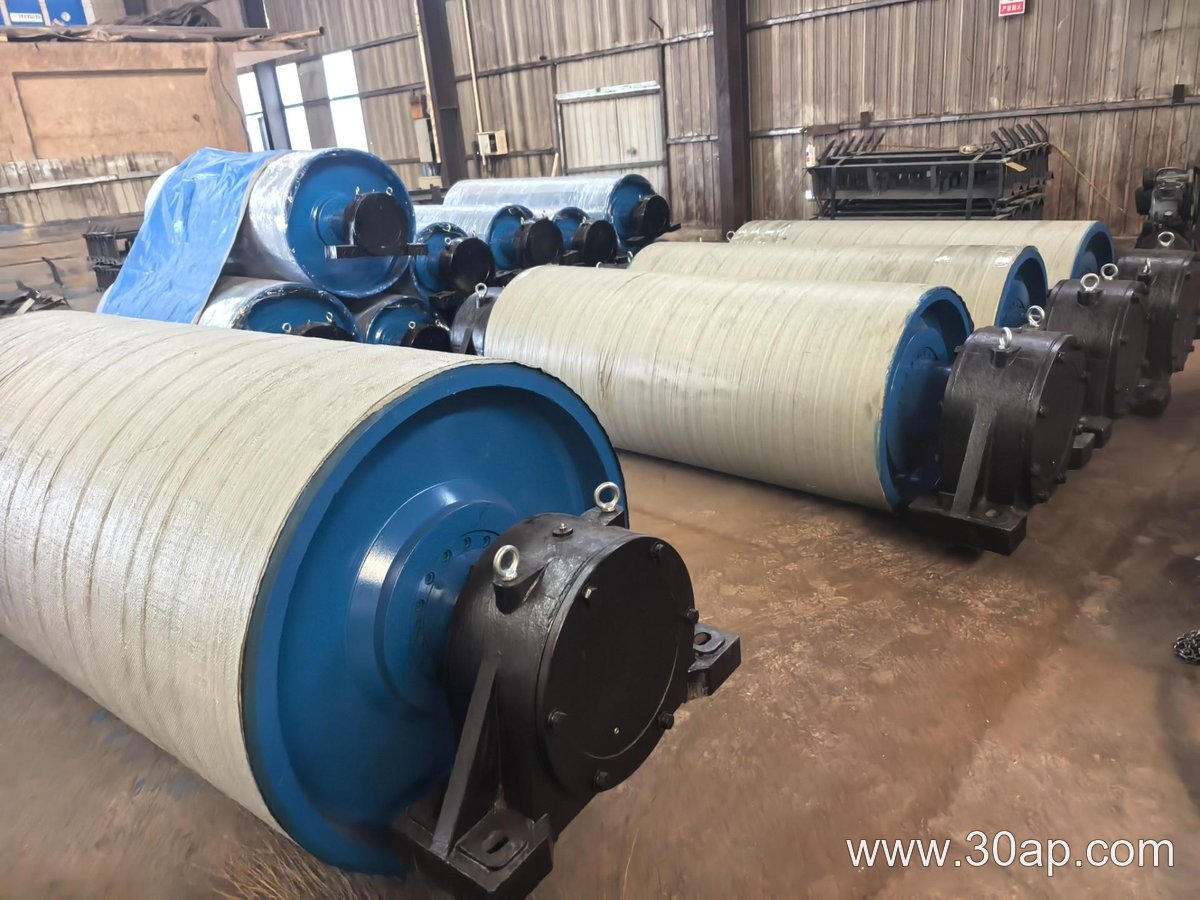
Belt width and pulley diameter are related but not locked together. For example, a B800 conveyor might use a Ø500 pulley in one system and a Ø630 pulley in another, depending on the belt speed, the wrap angle, and the load. A B1200 belt could run on a Ø1000 drive pulley or a smaller diameter if the tension calculation allows it. There is no rule that one belt width must match one pulley diameter. The face width of the pulley is usually wider than the belt. A B650 belt often runs on a pulley face around 750 mm, while a B1400 belt may need a face near 1600 mm. These are common examples, not universal requirements.
The shaft diameter follows the torque and bending moment. A small pulley with a large shaft may be needed for a high-torque drive. A large pulley with a smaller shaft may be fine for a low-power bend position. The conveyor bracket and bearing housing must match the shaft end, so the shaft size is often fixed by the available bearing and frame design.
What a Buyer Should Check
- Confirm the pulley position: drive, tail, bend, or take-up. The diamond grooved lagged pulley is often a drive pulley, but it can appear elsewhere.
- Ask for the lagging thickness and the rubber grade. Thickness alone does not guarantee wear life; the compound matters too.
- Check the diamond pattern depth and pitch. A pattern that is too fine may clog, while one that is too coarse may wear unevenly.
- Verify the pulley diameter, face width, and shaft diameter against the conveyor design. Do not assume a fixed ratio between belt width and pulley diameter.
- Confirm the balancing requirement. A lagged pulley with a thick rubber layer may need dynamic balancing for high-speed conveyors.
- Review the bonding method. Hot vulcanized lagging generally offers stronger adhesion than cold bonding, but the choice depends on the pulley size and the workshop capability.
Maintenance and Wear Signs
Inspect the diamond pattern periodically. If the grooves are filled with hardened material, traction drops and the belt may slip. Clean the pulley face with a scraper or wash system if the material is sticky. Check for worn or missing rubber blocks. Once the lagging wears down to the metal shell, the pulley must be relagged. A worn diamond grooved lagged pulley can also damage the conveyor belt if the exposed steel edges cut into the carcass. Keep an eye on the conveyor belt tracking as well; a worn lagging on one side can cause the belt to drift. Also check the idler roller alignment and the conveyor bracket bolts, because loose brackets can change the pulley angle and accelerate wear.
For replacement, provide the original pulley drawing or measure the shaft diameter, face width, and lagging thickness. If the pulley is a drive pulley, include the motor power and belt speed so the supplier can verify the traction requirement. A diamond grooved lagged pulley is a durable component when it is matched to the duty, but it is not a universal fix for every conveyor problem.