What the Conveyor Idler Bracket Does on a Belt System
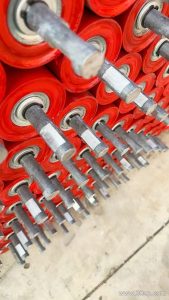
The conveyor idler bracket is the structural component that holds idler rollers in position along a conveyor frame. Also called a roller bracket or idler frame support, it keeps each roller at the correct angle and spacing so the conveyor belt runs smoothly under load. Without a properly aligned bracket, rollers shift, the belt mis-tracks, and maintenance costs climb.
These brackets appear in many industries, from a limestone quarry feeding a crusher to a coal handling system at a power plant. Each bracket type suits a specific position: carrying side, return side, transition zone, or impact area.
How a Conveyor Idler Bracket Is Built
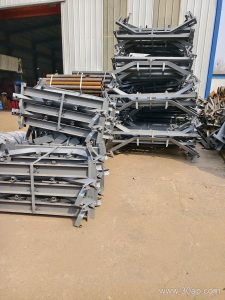
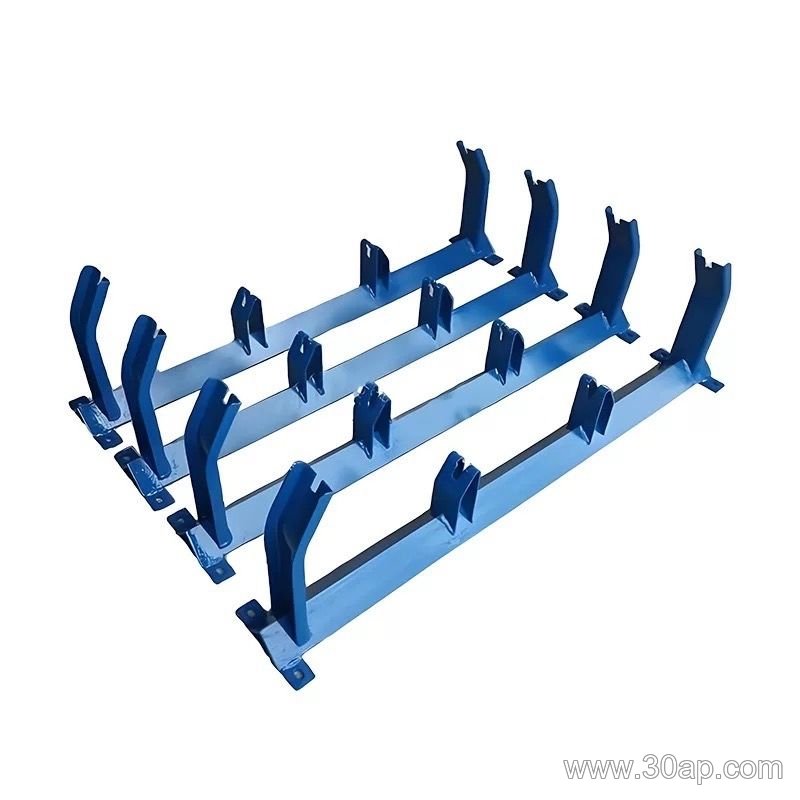
Most brackets are fabricated from angle steel, channel steel, or bent steel plate. The fabrication method affects stiffness and corrosion resistance. A typical troughing bracket has angled slots or drilled holes that set the roller positions at a defined trough angle.
- Material options: angle steel, channel steel, bent steel plate, sometimes with galvanized or painted finish.
- Mounting method: bolted to the conveyor frame stringer, or hooked into a slot for quick removal.
- Adjustability: fixed brackets hold a set trough angle; adjustable brackets allow angle changes on site.
Trough angles commonly range from 20 to 45 degrees. A 35-degree troughing bracket is a frequent choice for bulk materials, while a 45-degree setup may suit free-flowing loads on wider belts. A forward tilt of about 1.5 to 2 degrees appears on some training brackets to help center the belt.
Common Bracket Types and Where They Fit
Different positions call for different bracket designs. The table below lists typical examples; actual selection depends on belt width, roller diameter, and the conveyor profile.
| Bracket Type | Typical Position | Notes |
|---|---|---|
| Troughing bracket | Carrying side | Holds three rollers at a set trough angle |
| Transition bracket | Near pulleys | Gradual change from flat to troughed belt |
| Return bracket (flat or V-type) | Return side | Supports the empty belt |
| Impact bracket | Loading point | Often paired with buffer rollers |
| Self-aligning bracket | Any zone needing tracking correction | May include forward tilt |
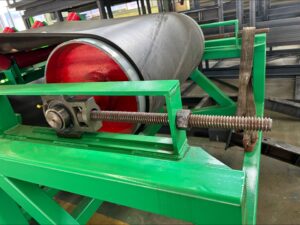
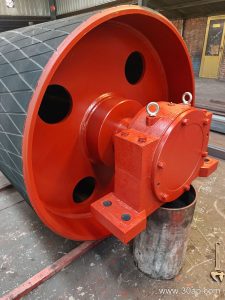
Note that a drive pulley, tail pulley, or bend pulley is not a bracket; those are separate drum components. A bracket supports rollers, not the pulleys themselves.
Matching Bracket to Belt and Roller
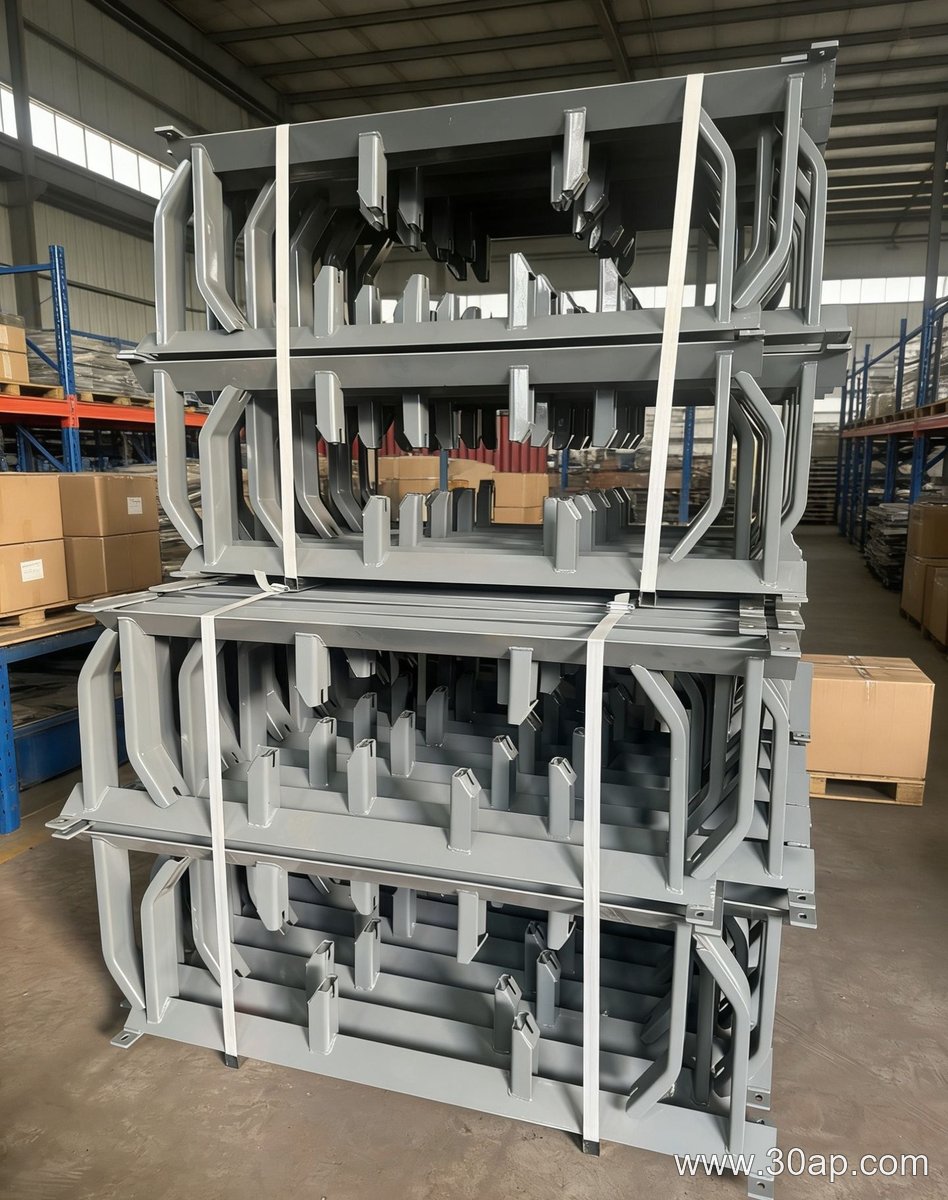
Belt width and roller diameter influence bracket dimensions, but there is no single fixed pairing. A B800 belt might run with Ø89 or Ø108 rollers depending on load and speed. A B1200 conveyor could use Ø133 or Ø159 rollers with a 35-degree or 45-degree trough angle. Installation hole spacing and beam length vary with belt width and trough angle, so these are design details rather than universal constants.
Common belt widths include B500, B650, B800, B1000, B1200, B1400, B1600, B1800, B2000, and B2200. Roller diameters often seen are Ø89, Ø108, Ø133, Ø159, and Ø194. A bracket for a B650 belt with 30-degree trough and Ø89 rollers will differ from one for a B1400 belt with 45-degree trough and Ø159 rollers.
Selection and Maintenance Tips for Buyers
- Confirm the trough angle and roller diameter before ordering; these drive bracket geometry.
- Choose adjustable brackets where future angle changes are likely.
- Check material thickness and finish for the environment, especially in washdown or corrosive areas.
- Verify mounting hole spacing against the existing conveyor frame.
- Inspect brackets for wear, bending, or loose bolts during routine roller replacement.
A worn bracket can cause the idler roller to sit unevenly, which accelerates belt edge damage. Replacing a bent bracket is often simpler than correcting repeated mistracking.
Where Conveyor Idler Brackets Are Used
These components appear in cement plants, coal mines, iron ore handling, sand and gravel lines, and port bulk terminals. In each setting, the bracket works with the conveyor belt and idler rollers to keep material moving. The right bracket choice supports belt life, reduces downtime, and keeps the conveyor pulley system running within its design limits.