What a Conveyor Idler Frame Does on a Belt Line
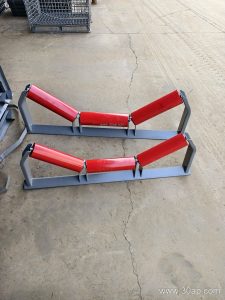
A conveyor idler frame is the steel support that holds the idler rollers in the right position under the conveyor belt. It carries the rollers, sets the trough angle, and keeps spacing consistent along the whole run. In a quarry, a coal handling plant, or a cement kiln feed line, this frame is the quiet part of the structure that decides whether the belt tracks well or wanders. Because it is bolted to the stringer rather than welded to it, a frame can be replaced without cutting the conveyor structure.
The same assembly is often called a conveyor roller bracket or idler support bracket. These are equivalent names for the same product, not different equipment. A conveyor bracket for the carry side and one for the return side are both part of this family, but they are shaped for different duties.
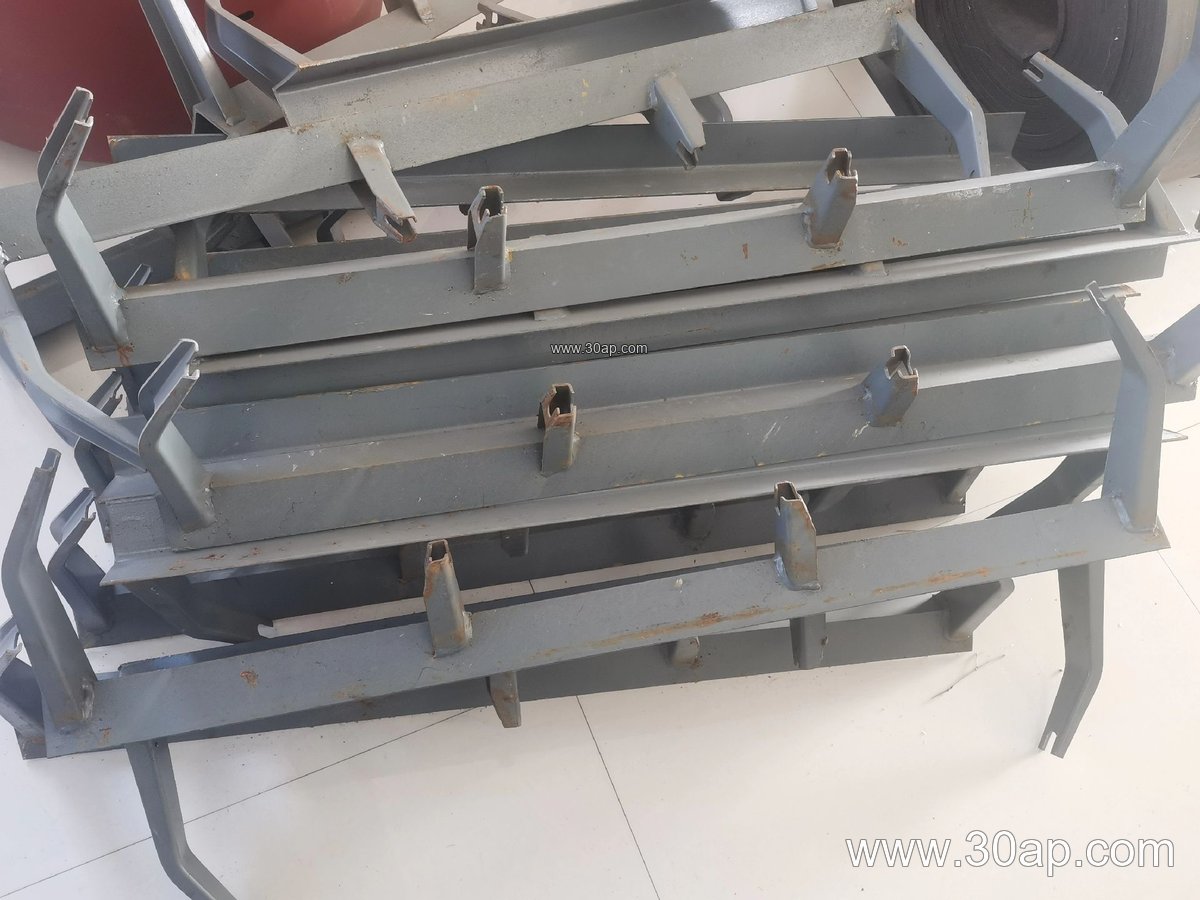
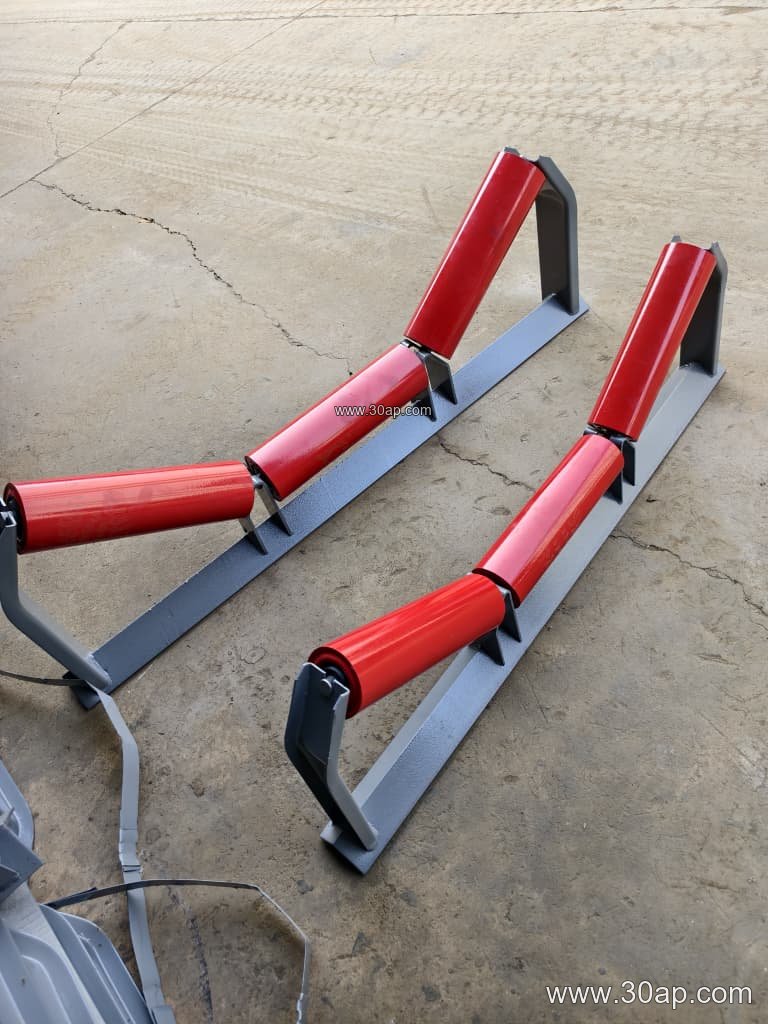
How the Frame Is Built
Most frames are made from angle steel, channel steel, or folded steel plate. The cross beam length, mounting hole spacing, and slot positions change with belt width and trough angle, so they are set by design rather than by a single fixed number. Common belt widths run from B500 and B650 through B800, B1000, B1200, B1400, B1600, B1800, B2000, B2200. Roller diameters usually follow the belt and load, with Ø89, Ø108, Ø133, Ø159 and Ø194 being typical choices.
Surface finish matters in wet or dusty service. Frames are commonly painted, hot dip galvanized, or powder coated, and the choice should follow the site conditions rather than a catalog default.
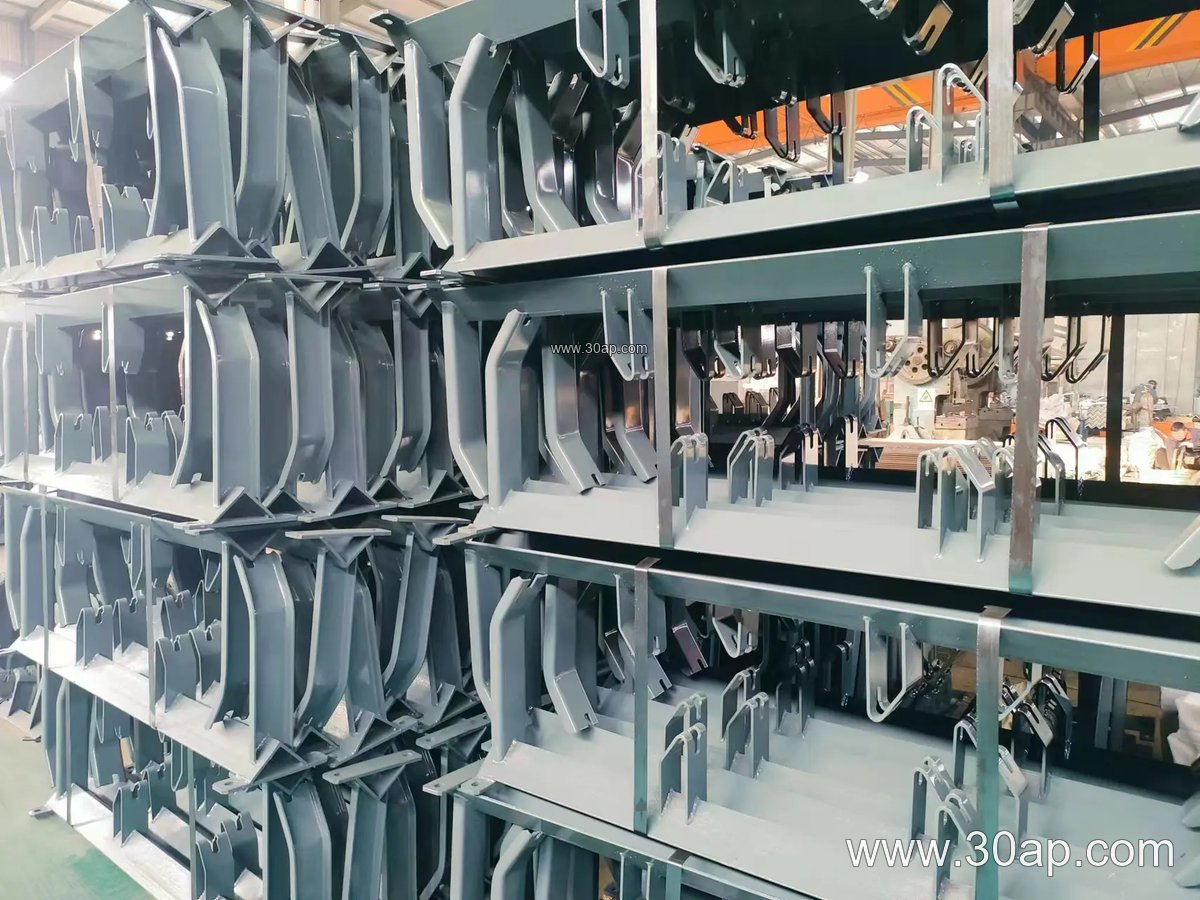
Common Frame Types
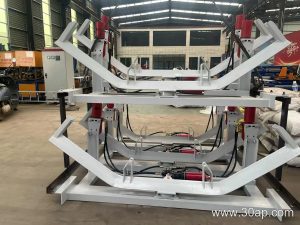
- Troughing frame, also called an upper trough frame, holding three rollers at 20, 30, 35 or 45 degrees
- Transition frame, used where the belt changes from flat to troughed near a conveyor pulley
- Return frame, a flat lower bracket carrying the return rollers
- V return frame, which lifts the return belt into a V shape for better tracking
- Impact frame, built heavier for the load zone under a crusher or transfer chute
- Self-aligning frame, with pivoting action to correct belt drift
- Forward-leaning frame, usually set around 1.5 to 2 degrees to help centering
- Suspended and adjustable frames, for flexible layouts or variable trough angles
Where These Frames Are Used
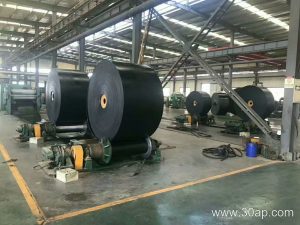
You will find them on almost any bulk handling line. In a limestone quarry or a sand and gravel plant, troughing frames carry a heavy-duty mining conveyor belt loaded with rock. In a coal washing plant or an underground coal mining conveyor, flame retardant conveyor belt and fire resistant conveyor belt grades are common, and the frames must tolerate dust and moisture. Power plant coal yards, steel sinter lines, fertilizer plants, and grain silos all use the same principle, with the frame type matched to the material and the belt.
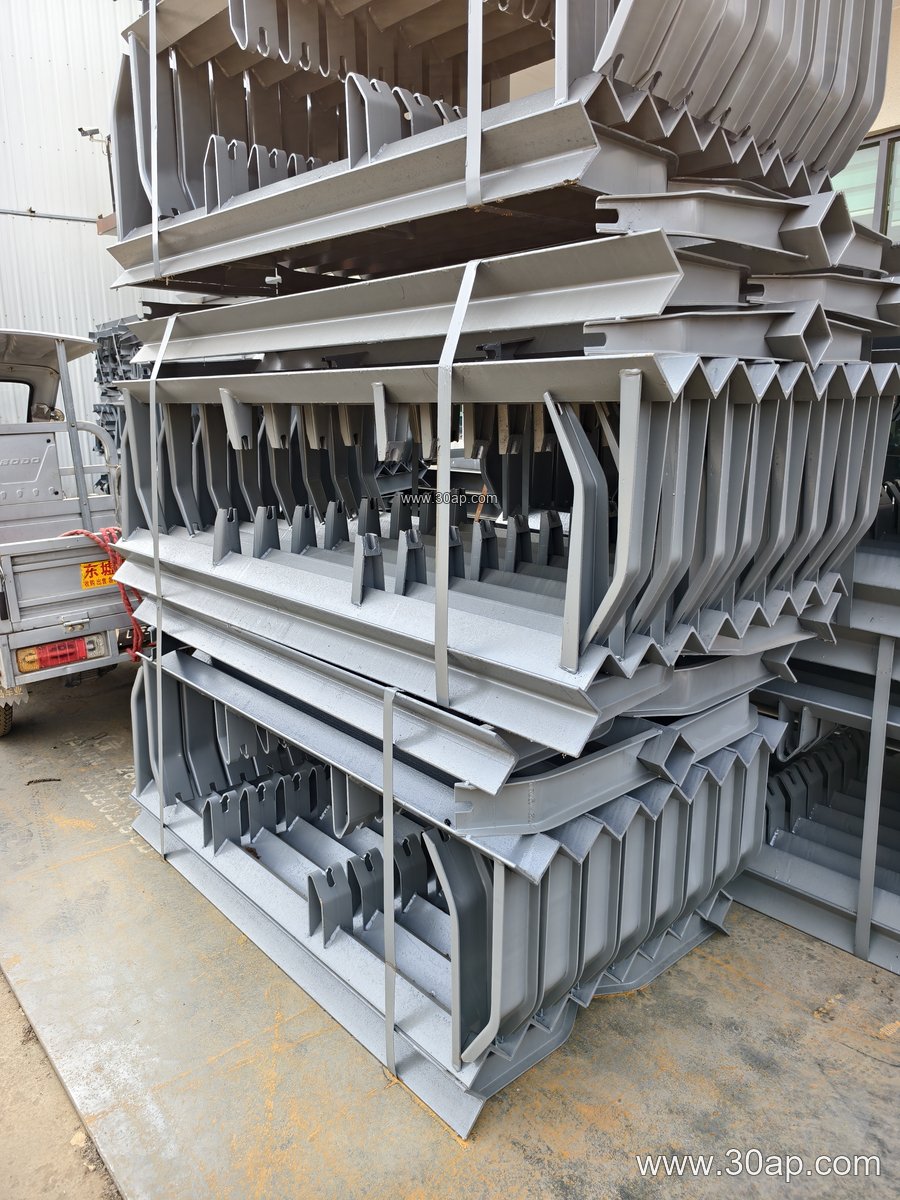
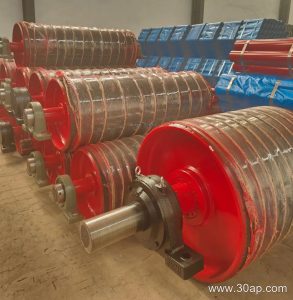
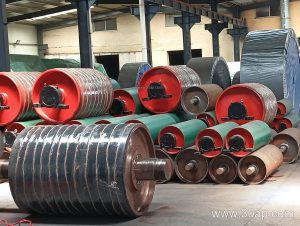
The frame also works together with the rest of the conveyor. A conveyor pulley at the head or tail sets belt tension, while the idler roller set by the frame controls the belt line between them. If you are choosing belt and frame together, a fabric core conveyor belt such as EP conveyor belt or NN conveyor belt behaves differently from a steel cord conveyor belt, and the roller spacing and frame stiffness should reflect that difference.
Selection Points a Buyer Should Check
Start with belt width, trough angle, and roller diameter as a set. A B800 belt at 35 degrees with Ø108 rollers is a common combination, and B1200 at 45 degrees with Ø133 rollers appears on wider, heavier lines. These are examples, not fixed pairings. Do not assume one belt width can only match one pulley diameter or one roller size; the load, speed, and material decide.
| Parameter | Typical Range | Notes |
|---|---|---|
| Belt width | B500 to B2200 | Frame beam length follows width |
| Trough angle | 20, 30, 35, 45 degrees | Adjustable frames can change angle |
| Roller diameter | Ø89, Ø108, Ø133, Ø159, Ø194 | Match to load and belt speed |
| Material | Angle, channel, folded plate | Heavier section for impact zones |
| Finish | Painted, galvanized, powder coated | Match to site conditions |
Ask for the mounting hole spacing and beam length with the drawing, because these vary with belt width and angle. Check that the frame height fits your stringer and that the roller seats match the roller shaft ends. For high-abrasion service, a high abrasion resistant conveyor belt paired with a sturdy impact frame in the load zone will usually last longer than a light frame with a premium belt.
Finally, confirm the frame type zone by zone. A troughing frame near the tail, a transition frame close to the pulley, and a V return frame on the return side each do a different job. Getting that layout right is cheaper than correcting belt misalignment later. For related belt and roller options, see the conveyor belt and idler roller pages at baohui-transmission.com, and review conveyor pulley details before finalizing the frame layout.