What a High-Strength Conveyor Idler Actually Does
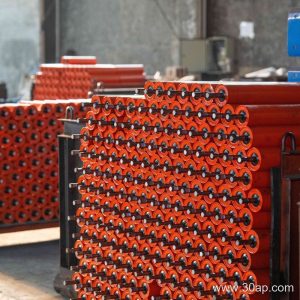
A high-strength conveyor idler is the load-bearing roller that supports the belt on the carrying side of a conveyor. In heavy-duty service, the roller has to hold a loaded belt steady, keep friction low, and survive dust, grit, and moisture without seizing. This idler roller is usually built with a thick-walled steel tube, welded end discs, a pressed bearing housing, and a sealed bearing set. The strength comes from the tube wall, the weld quality, and the shaft and bearing arrangement rather than from a single component.
Buyers often treat idlers as a low-cost accessory, but a weak roller can wear a belt quickly. A high-strength conveyor idler is normally specified where belt tension, lump size, or daily running hours are high, such as a quarry conveyor belt line or a cement plant transfer point.
Construction Details That Matter
The roller body is commonly a steel tube with a machined or rolled surface. For abrasive duties, a rubber disc or ceramic sleeve can be added to protect the shell and improve grip. The shaft is fixed to the end discs, and the bearing sits in a housing with a labyrinth seal and grease retention. Common bearing sizes include 6204, 6205, 6305, 6306, 6308, and 6310, but the bearing is chosen by load and speed, not by belt width alone.
- Tube: steel, sometimes with a rubber or ceramic surface
- Bearing: sealed deep-groove ball bearing in a pressed housing
- Seal: labyrinth or contact seal for dust and water exclusion
- Shaft: plain carbon steel or treated steel for corrosion resistance
Sealing is the most underrated part. In a coal mining conveyor or a power plant coal yard, fine dust enters through a poor seal and destroys the grease. A high-strength idler usually has a multi-stage seal and enough grease space to push contaminants out during rotation.
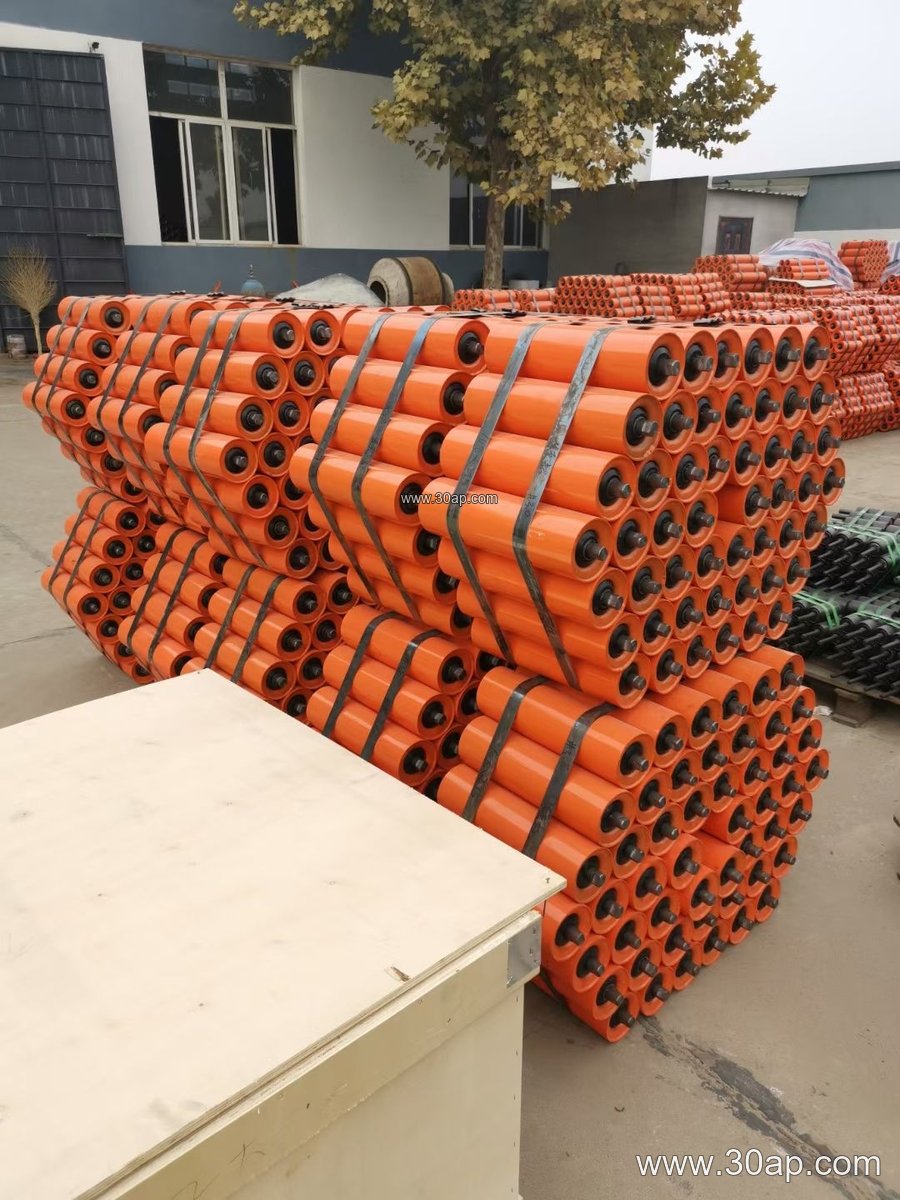
Where These Idlers Fit on the Conveyor
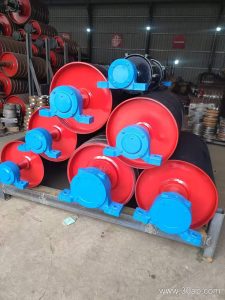
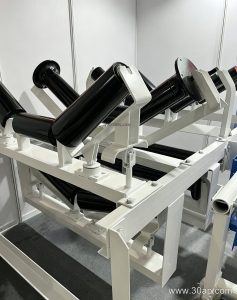
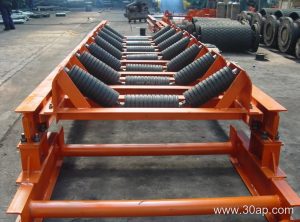
The main subject here is the carrying idler, not the drive, tail, or bend pulley. Those pulleys are separate components and are not interchangeable with idlers. A high-strength conveyor idler is most often used as a three-roll troughing set on the carrying side, with a 20, 30, 35, or 45 degree trough angle. The side rollers and centre roller can differ in length, so the set is matched to the belt width and the trough shape.
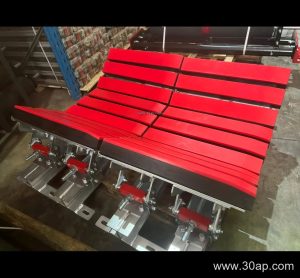
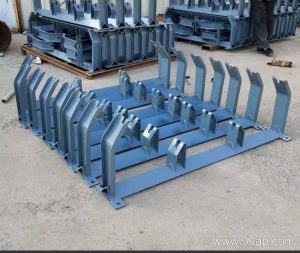
Typical roller lengths for three-roll troughing sets are often around 200 mm for B500, 250 mm for B650, 315 mm for B800, 380 mm for B1000, 465 mm for B1200, 530 mm for B1400, 600 mm for B1600, 670 mm for B1800, and 750 mm for B2000. These are common examples, not fixed rules. A high-strength conveyor idler can also be used as a return roller, a V-return roller, or an impact roller at a loading point, but the troughing and return positions use different frames and brackets.
Common Diameters and Belt Widths
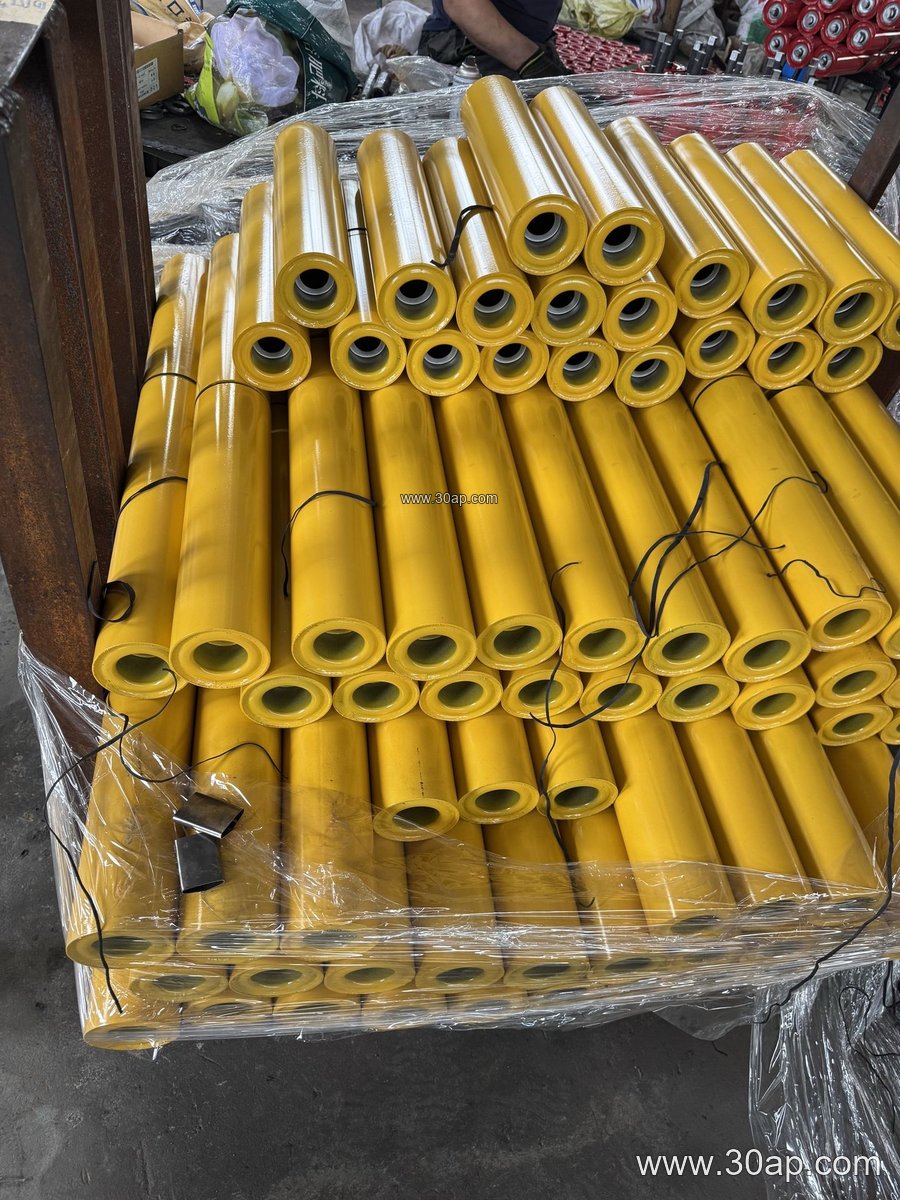
Roller diameter is selected from belt speed, load, and the space available under the belt. Common diameters include Ø63, Ø76, Ø89, Ø102, Ø108, Ø127, Ø133, Ø159, Ø178, Ø194, and Ø219 mm. A larger diameter runs cooler and handles higher load, while a smaller diameter suits light frames. Belt widths commonly range from B400 to B2400, and the idler set is chosen to match the belt and the conveyor bracket.
| Application | Common belt width | Typical idler position |
|---|---|---|
| Aggregate conveyor | B650 to B1000 | Three-roll troughing, impact at feed |
| Cement plant | B800 to B1400 | Troughing and return |
| Coal yard | B1000 to B1600 | Sealed troughing, V-return |
| Iron ore terminal | B1200 to B2000 | Heavy-duty troughing |
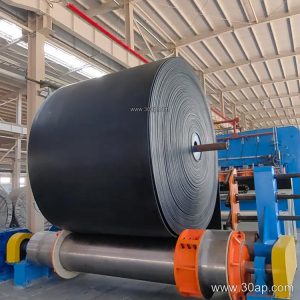
The belt itself also affects the choice. A heavy steel cord conveyor belt or a thick EP conveyor belt needs stable support, and a high-strength idler with a rigid shaft helps keep the belt tracking straight. In a stone crushing line, the crusher conveyor belt often runs at high speed with sharp lumps, so impact idlers and reinforced rollers are used at the transfer point.
Buying Notes for Plant Engineers
Before ordering, confirm the belt width, the trough angle, the roller length, the shaft end type, and the bracket spacing. Ask for the bearing size and the seal design, because two rollers with the same diameter can differ greatly in service life. For a coal mining conveyor or underground coal mining conveyor, flame retardant and anti-static properties are usually required for the belt, and the idler should match the same safety environment.
Check that the idler roller is balanced and that the welds are clean. A high-strength idler should turn freely by hand and show no grease leak at the seal. Spare parts should match the existing conveyor bracket and frame, so measure the shaft flat and the fixing hole before replacing a set. For abrasive ore, a rubber-covered roller can reduce shell wear, while a ceramic surface may suit sticky material.
In short, the high-strength conveyor idler is a small component with a large effect on belt life and downtime. Match it to the belt, the load, and the environment, and it will keep the line running quietly.