What a Conveyor Bracket Does
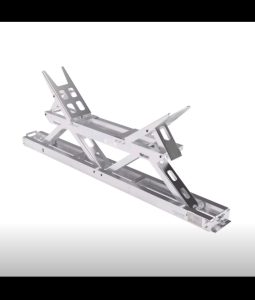
A conveyor bracket is the structural support that holds a conveyor idler roller in position under the belt. In a typical troughing arrangement, the bracket carries the three-roll set that shapes the belt into a trough, while a return bracket supports the flat or V-shaped rollers beneath the carrying run. The bracket does not move the belt; it keeps the rollers aligned so the conveyor belt can track smoothly and the load stays centered.
Buyers often meet this part under several names. The accurate equivalent is a conveyor idler bracket or idler support bracket. It is not a pulley component, so it should not be confused with drive, tail, or bend pulley assemblies, which transmit power and change belt direction.
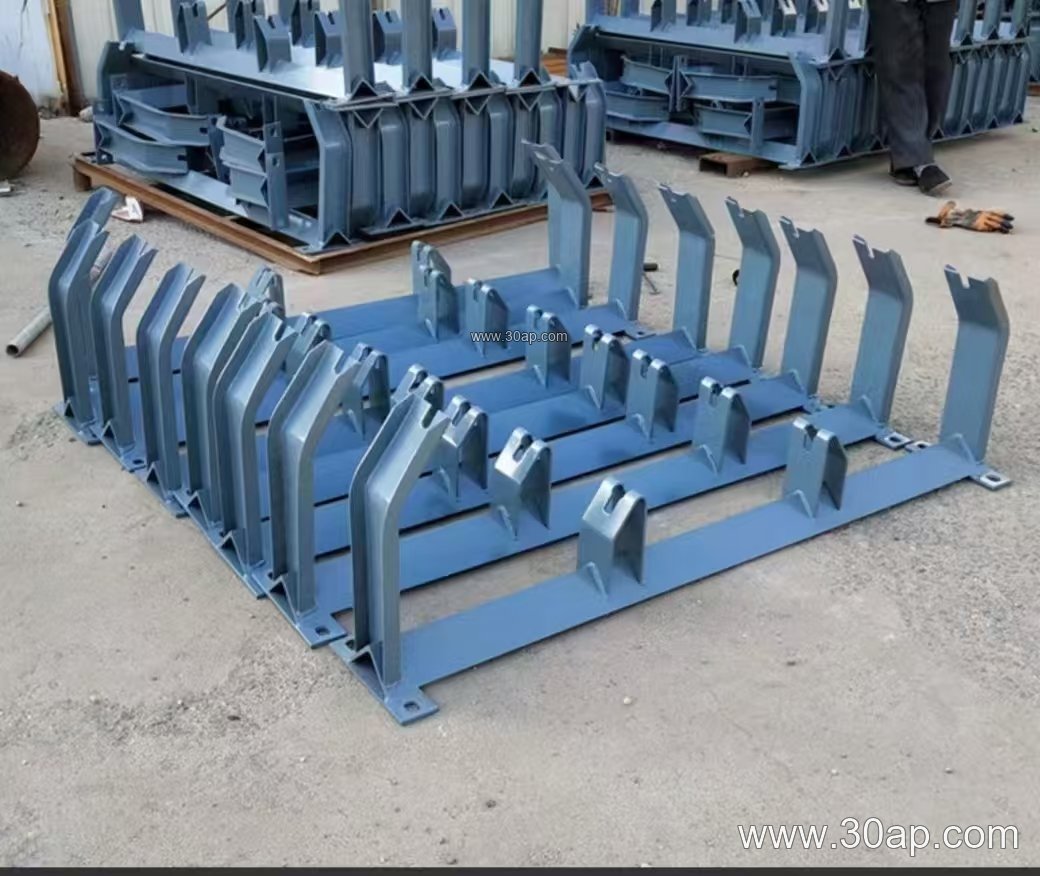
How the Bracket Is Built
Most conveyor brackets are fabricated from angle steel, channel steel, or folded steel plate. The frame is welded or bolted, then drilled so the idler shaft can be seated at the correct angle. Common forms include trough brackets, transition brackets, return brackets, V-return brackets, impact brackets, self-aligning brackets, and adjustable brackets.
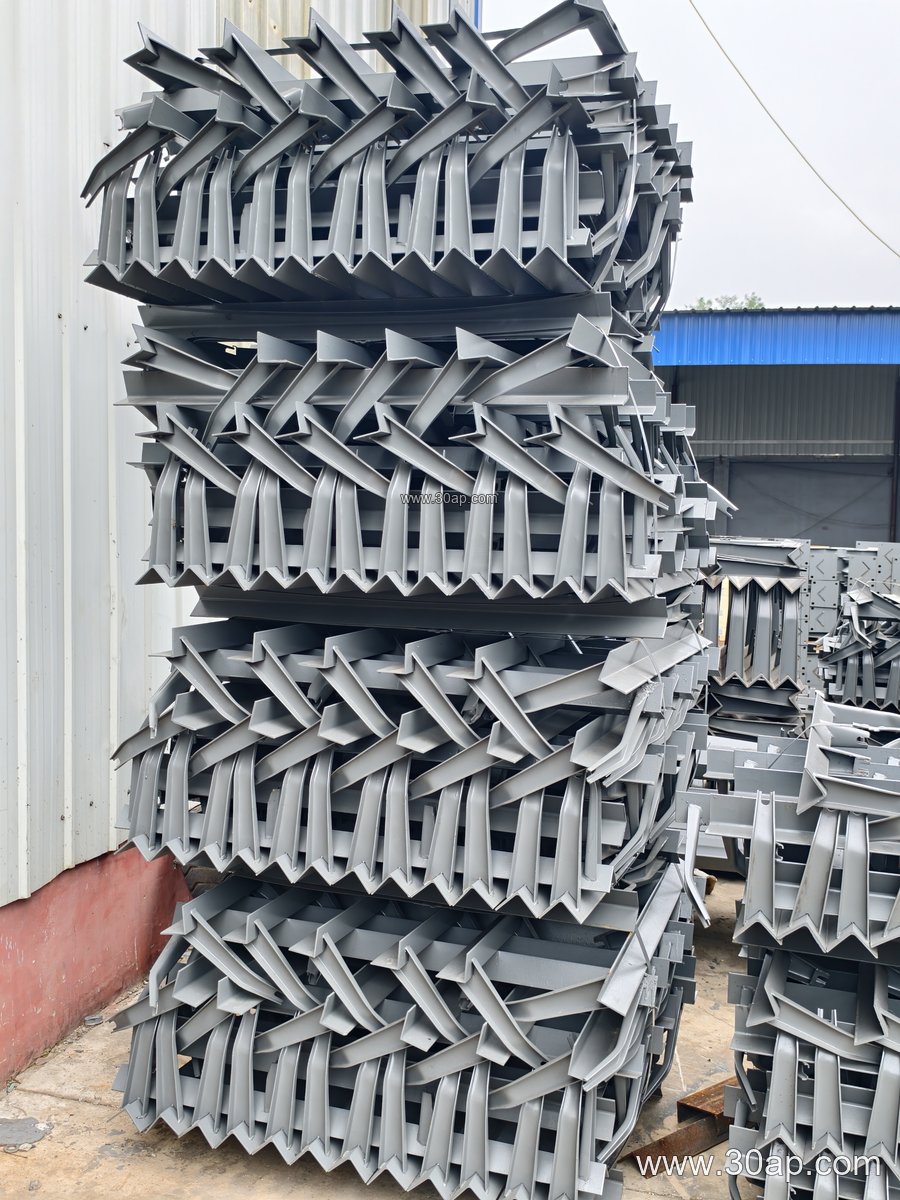
Several details matter during inspection:
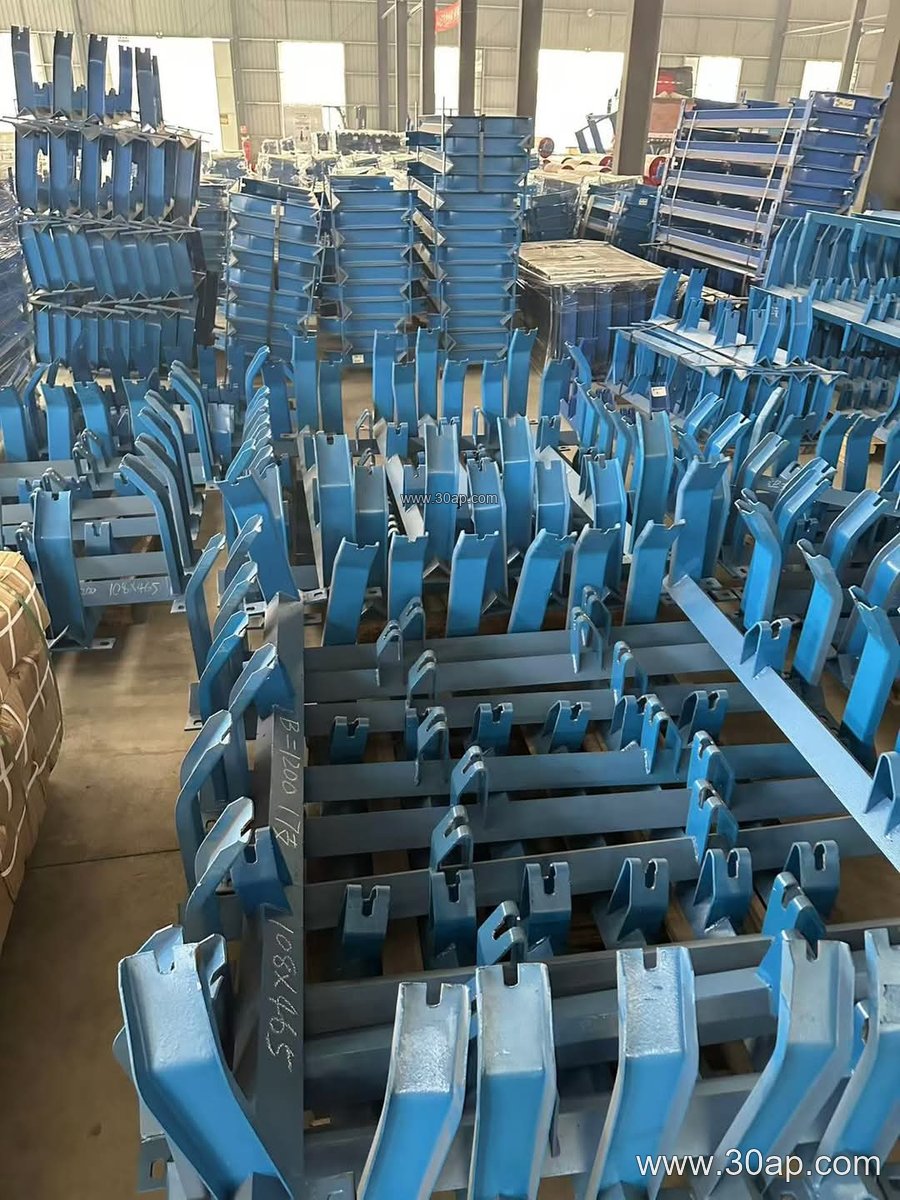
- Slot spacing and hole pattern must match the idler shaft and frame.
- The trough angle should match the belt load and material behavior.
- Welds and coating should suit dusty, wet, or abrasive conditions.
- Adjustable designs allow the trough angle to be changed on site.
Where It Is Used
Belt conveyors in a quarry, limestone mine, or sand and gravel line rely on troughing brackets to keep crushed stone centered. In a coal preparation plant or a power plant coal yard, dust and fine material make stable roller support important. Cement plants, steel sinter lines, fertilizer plants, and grain silos also use these brackets on conveying and loading sections. The bracket is a small part, but a loose or misaligned one can cause belt edge wear and roller damage.
Common Size and Angle References
The values below are reference data, not fixed rules. Actual selection depends on belt width, roller diameter, load, and frame design.
| Item | Common reference values |
|---|---|
| Belt width | B500, B650, B800, B1000, B1200, B1400, B1600, B1800, B2000, B2200 |
| Trough angle | 20°, 30°, 35°, 45° |
| Roller diameter | Ø89, Ø108, Ø133, Ø159, Ø194 |
| Material | Angle steel, channel steel, folded steel plate |
A B800 bracket with a 35° trough and Ø108 rollers is a common combination, and a B1200 frame with 45° and Ø133 rollers also appears in heavy-duty work. These are examples only. One belt width can accept different roller diameters and trough angles, and the mounting hole spacing and beam length change with the design.
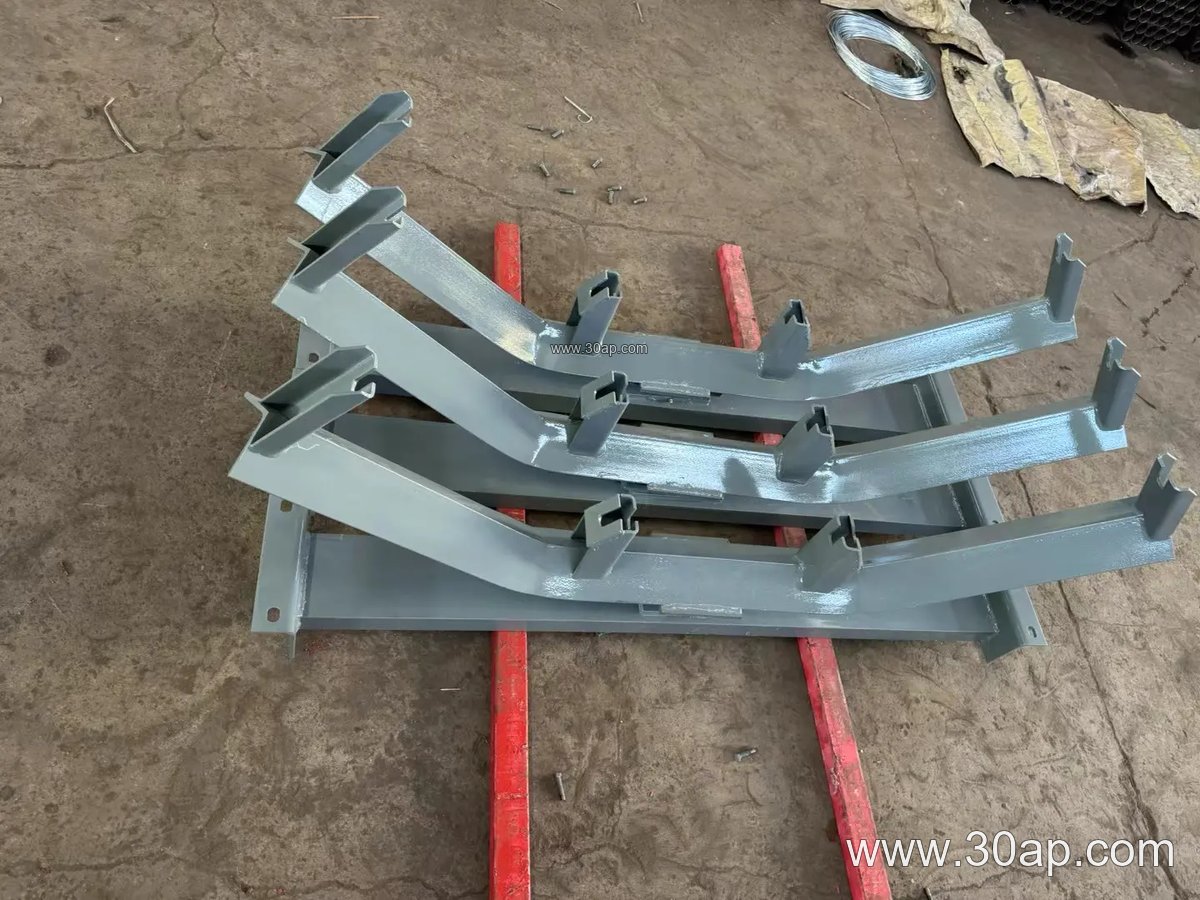
Fixed or Adjustable
A fixed bracket is simple and rigid, and it suits lines where the belt width and material are stable. An adjustable bracket lets maintenance staff change the trough angle between common settings such as 20°, 30°, 35°, and 45°, which helps when a conveyor handles mixed loads or when the belt needs better centering. Forward-leaning brackets, usually around 1.5° to 2°, are used with forward-tilted idlers to improve tracking on some installations.
Buyer Checklist
Before ordering, confirm the belt width, the idler roller diameter, the required trough angle, and the frame hole pattern. Ask how the bracket connects to the stringer and whether the design is fixed or adjustable. Check the steel thickness and surface treatment for the site conditions. On a quarry or coal yard, spare brackets for transition and impact sections are worth keeping. A correctly matched conveyor bracket keeps the idler roller square to the belt, and that simple alignment protects the conveyor belt over thousands of running hours.