What a Q355 Conveyor Bracket Does on the Line
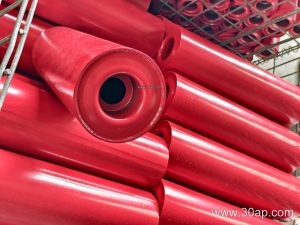
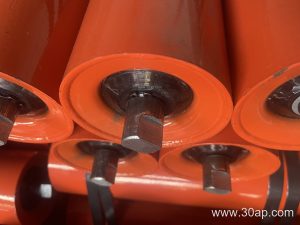
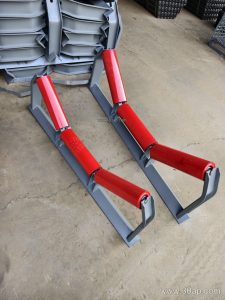
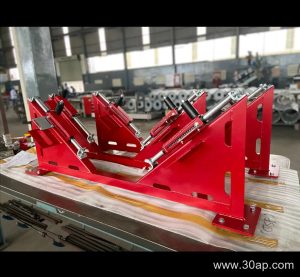
A Q355 Conveyor Bracket is the steel support that holds the idler roller in position under or above the belt, keeping the belt in its intended trough shape along the whole run. The bracket is often called an idler frame or idler support bracket, and it is one of the least glamorous but most heavily loaded parts of a conveyor. In a quarry, a coal washing plant, or a cement kiln feed line, a bent or corroded bracket shows up quickly as belt misalignment, edge wear, and spillage.
Q355 is a low-alloy structural steel with a minimum yield strength of around 355 MPa. Compared with ordinary Q235 angle or channel, it lets a fabricator use a slightly lighter section without losing stiffness, which matters on long overland lines where dozens of brackets sit on every span.
How the Bracket Is Built
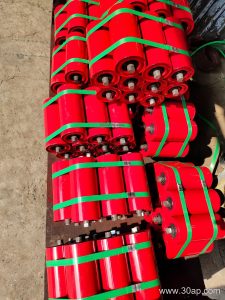
Most brackets are formed from angle steel, channel steel, or folded steel plate, then drilled and welded into a frame. A troughing bracket carries two or three idler rollers set at a fixed trough angle. A return bracket holds a single flat roller or a V-shaped pair. A transition bracket sits near the pulley and gradually changes the belt from flat to troughed. An impact bracket under the loading point uses cushion rollers and a heavier frame.
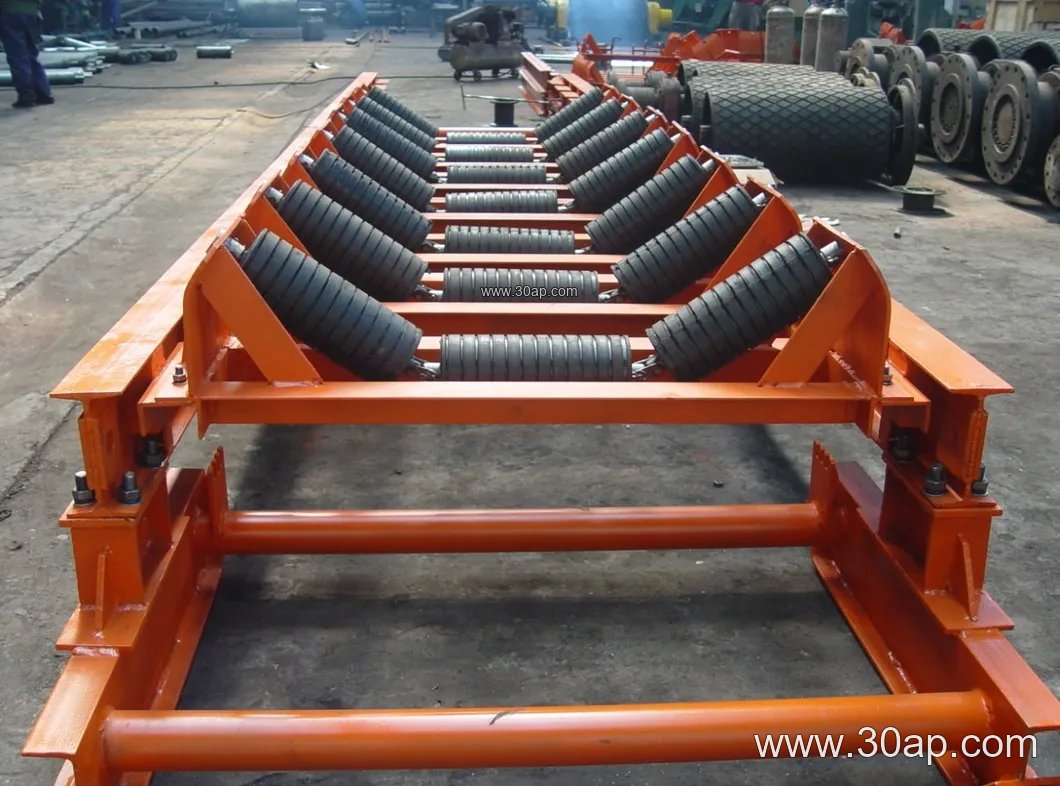
- Cutting and drilling of the steel section
- Welding of the roller seats and the cross beam
- Surface treatment, usually hot-dip galvanizing or painting
- Final check of hole spacing and trough angle
Installation hole spacing and cross beam length are not universal. They follow belt width, trough angle, and roller diameter, so they are always confirmed against the drawing rather than assumed.
Trough Angle and Roller Diameter Go Together
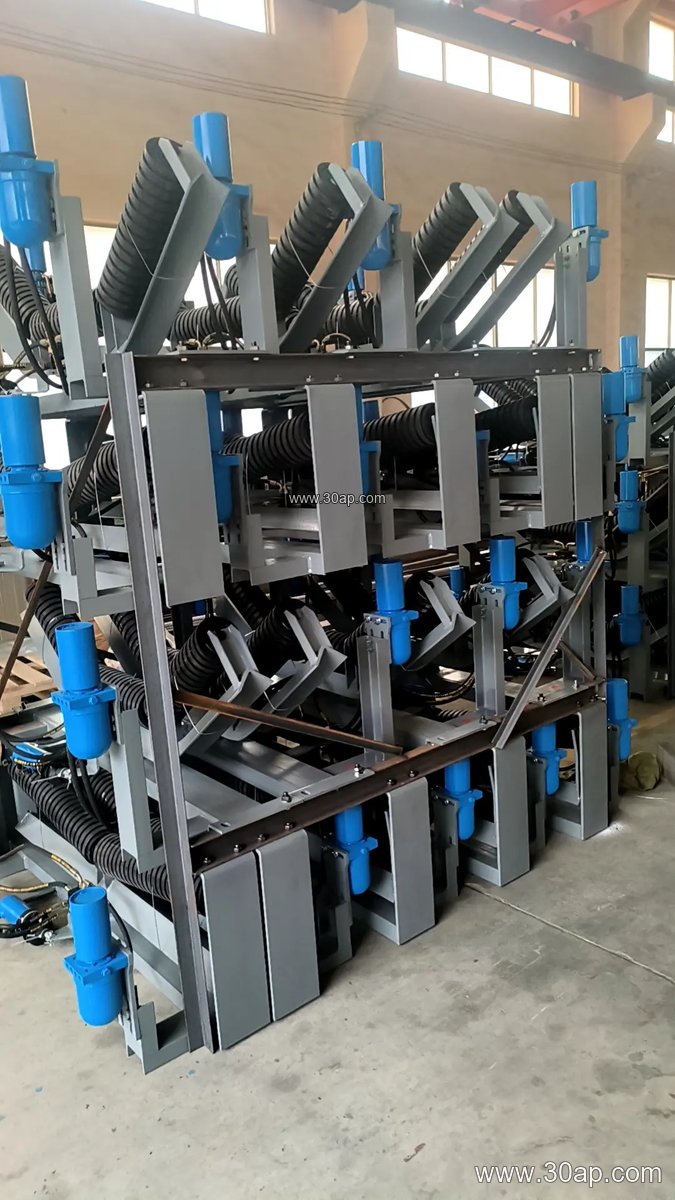
The bracket and the roller are a pair. A 35 degree frame with Ø108 rollers behaves very differently from a 45 degree frame with Ø133 rollers, even on the same 1200mm belt. Typical combinations seen in the field include:
| Belt width | Trough angle | Roller diameter | Typical duty |
|---|---|---|---|
| B650 | 30 degrees | Ø89 | Light aggregate, sand |
| B800 | 35 degrees | Ø108 | General bulk material |
| B1000 | 35 degrees | Ø133 | Cement, coal |
| B1200 | 45 degrees | Ø133 | Heavy ore, high capacity |
| B1400 | 45 degrees | Ø159 | Mining and port loading |
| B1600 | 35 degrees | Ø159/Ø194 | Large tonnage lines |
These are common references, not fixed rules. A wide belt can run a shallower trough angle when material is fine and free-flowing, and a narrow belt can use a deeper angle for sticky material. Adjustable brackets allow the trough angle to be changed between roughly 20 and 45 degrees during commissioning, which is useful when the material behaviour is not fully known.
Matching the Bracket to the Belt and the Duty
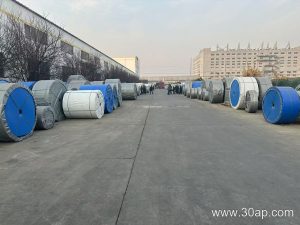
The bracket has to suit the belt it carries. A heavy Steel Cord Conveyor Belt on a long incline puts more downward load on each idler station than a thin EP Conveyor Belt on a short transfer. Where the belt is thick and stiff, a wider roller spacing and a stiffer frame reduce sag between stations. Where the material is wet and sticky, a forward-tilted bracket of about 1.5 to 2 degrees helps keep the belt centred.
In a coal preparation plant, flame retardant and anti-static properties usually belong to the belt, while the bracket simply needs to be robust and, in underground roadways, easy to replace. In a fertilizer or grain silo, corrosion resistance of the galvanized frame matters more than raw strength.
Choosing Between Fixed and Adjustable Designs
A fixed bracket is cheaper and simpler. An adjustable bracket costs more but lets maintenance staff correct trough angle and alignment without cutting steel. Self-aligning brackets, which carry small vertical rollers that steer the belt back to centre, are worth considering on long lines with frequent load changes. On a crusher discharge or a shuttle belt, a self-aligning frame often pays for itself by reducing edge damage.
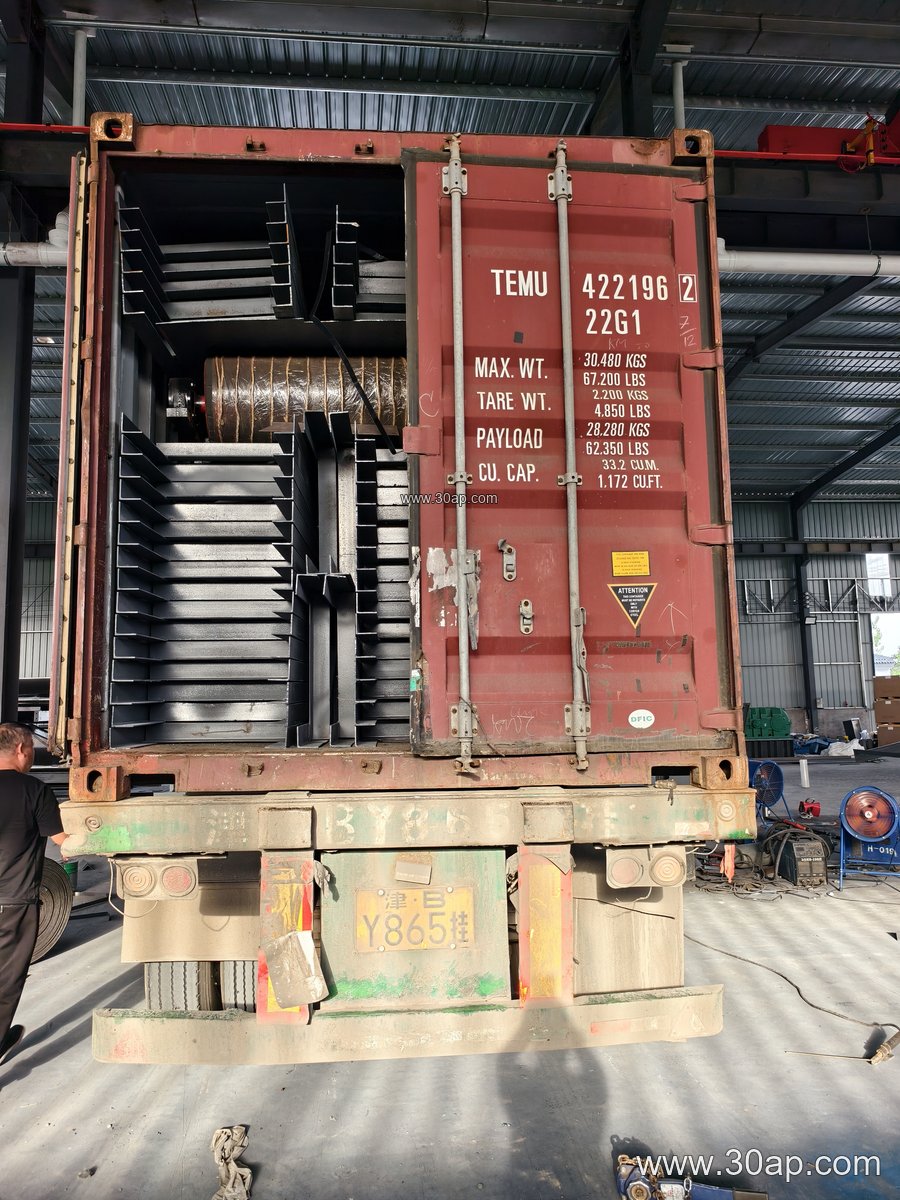
Buyers should confirm the steel grade, the section size, the hole spacing, the trough angle, the roller diameter, and the surface finish before ordering. It also helps to state the belt width, the belt type, the material being carried, and the ambient conditions, since a bracket specified for a dry cement plant may not suit a wet sand and gravel line.
Installation and Maintenance Notes
Bolt the bracket squarely to the stringer and check that adjacent frames sit at the same height. A bracket that is a few millimetres high will lift the belt and cause tracking problems that no amount of roller adjustment can fix. Inspect welds and galvanizing at each shutdown, and replace frames that have cracked seats or elongated holes. Keeping spare brackets on site in the two or three most common sizes avoids long downtime when a loader damages a frame.
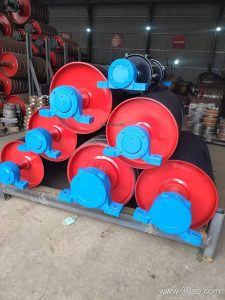
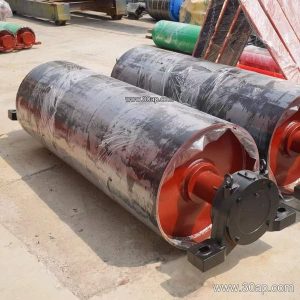
Used together with the right conveyor pulley, idler roller, and conveyor belt, a well-chosen Q355 Conveyor Bracket keeps the whole line running straight and quiet.