What a Conveyor Bracket Does on a Belt Conveyor
A conveyor bracket is the structural support that holds idler rollers in the correct position under the conveyor belt. It keeps the belt profile stable along the carrying and return runs, so material stays on the belt and the belt tracks properly. In a quarry, a coal washing plant, a cement plant, or a power station coal yard, the bracket is a small but critical part of the whole conveyor frame. Unlike a conveyor pulley, which drives or redirects the belt at the ends, the bracket works continuously along the line. That difference matters when you specify or replace components.
Common Types and Where They Sit
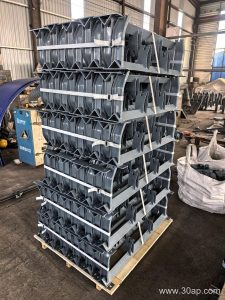
Brackets are usually grouped by their position and function. The main types include troughing brackets for the carrying side, transition brackets near pulleys, return brackets for the lower run, and self-aligning or training brackets for belt tracking. A V-return bracket is a specific subtype for the return side, while a buffer bracket is used at load points to absorb impact. Adjustable brackets allow the trough angle to be changed within a range.
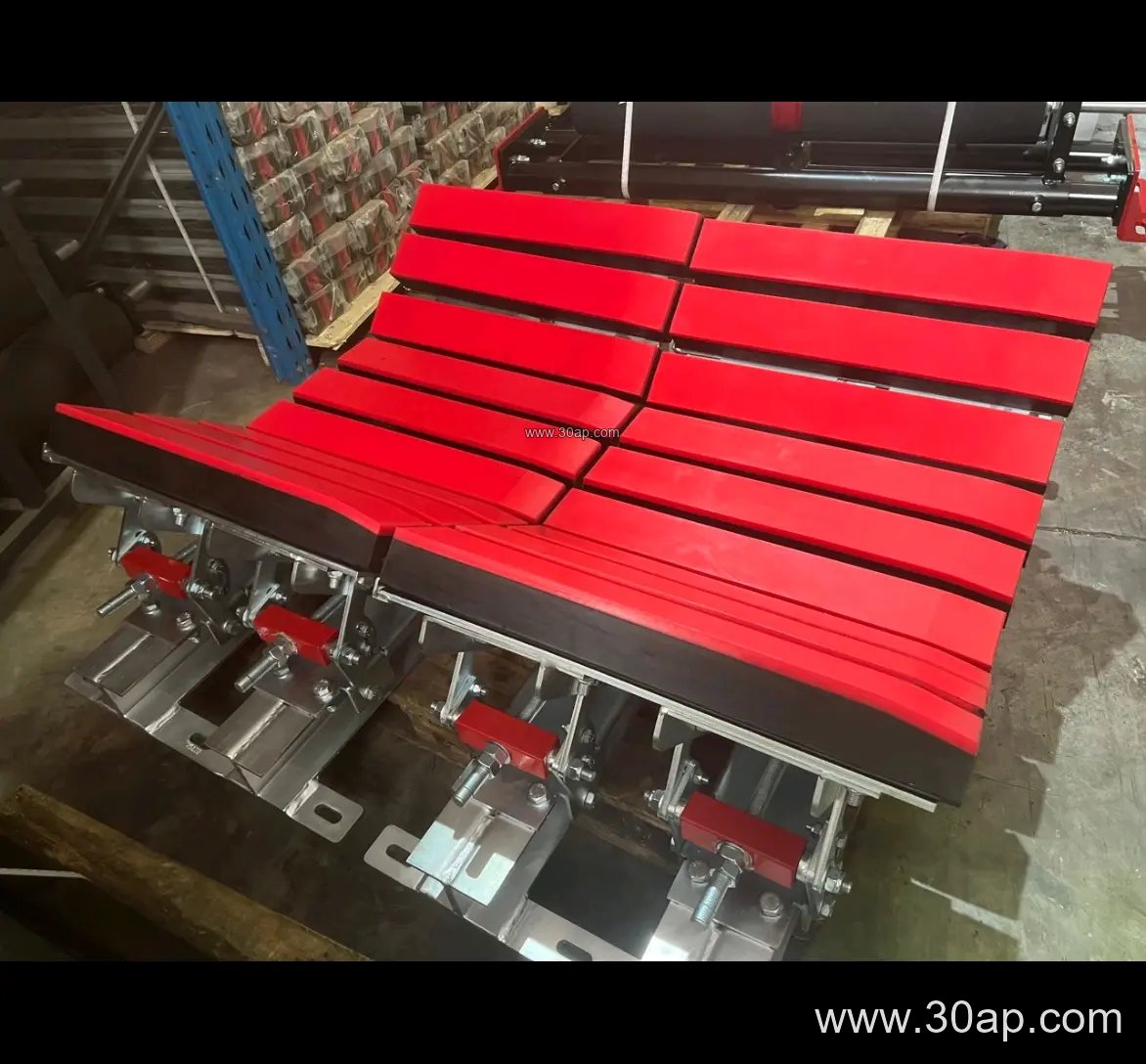
- Troughing bracket — supports three or more idlers to form the belt trough on the carrying side.
- Transition bracket — guides the belt from the flat pulley face into the trough section.
- Return bracket — holds the return idlers; a V-return version helps center the belt.
- Self-aligning bracket — pivots to correct belt misalignment.
- Buffer bracket — reinforced at transfer points for impact resistance.
These are not interchangeable with drive, tail, or bend pulleys. A pulley is a rotating drum at the conveyor ends; a bracket is a stationary frame that carries rollers.
Construction and Materials
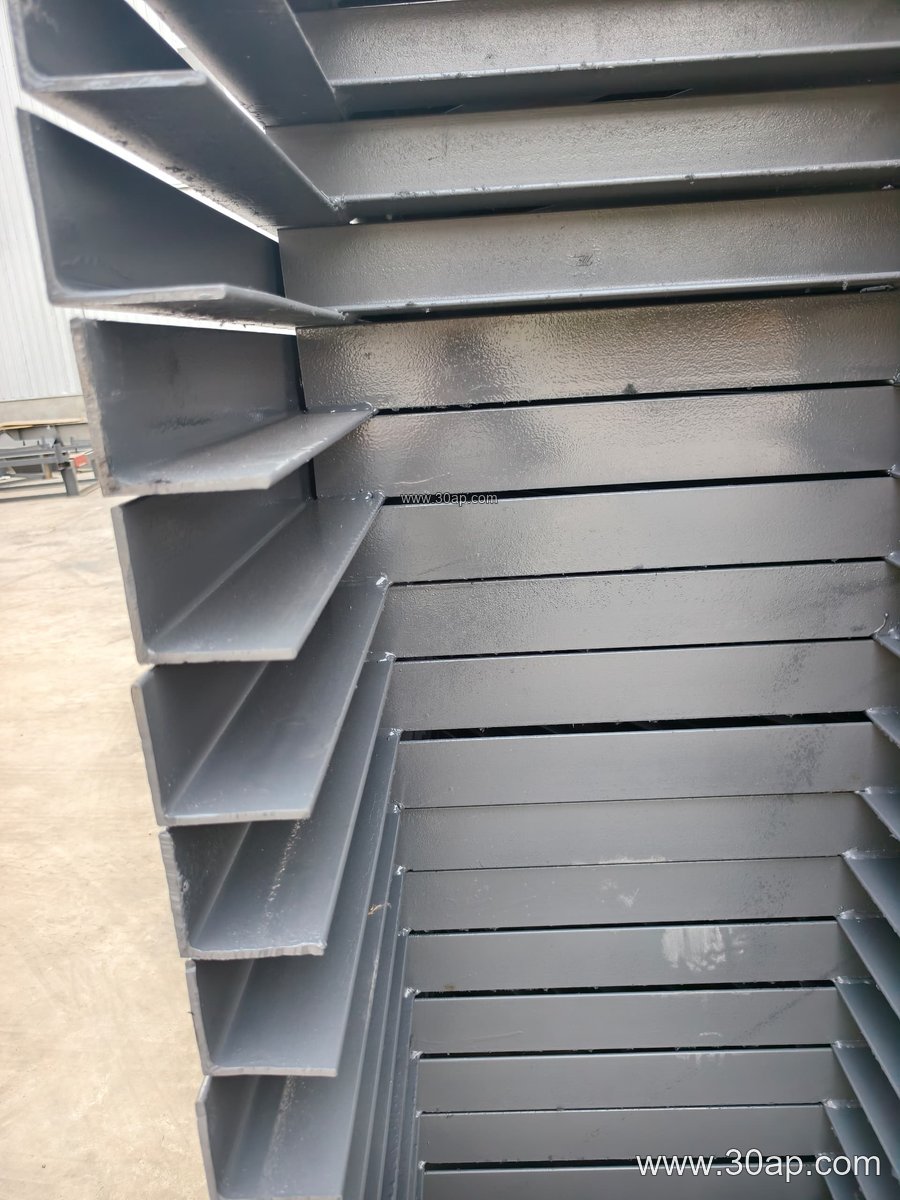
Most conveyor brackets are fabricated from angle steel, channel steel, or folded steel plate. The choice depends on load, belt width, and environment. A typical bracket has mounting slots or holes for the idler shaft, a cross beam, and legs or feet that bolt to the conveyor stringer. For dusty or wet conditions such as a limestone mine or a fertilizer plant, galvanized or painted finishes are common. The bracket must be rigid enough to keep idler spacing accurate, because deflection changes the belt line and can cause spillage or edge wear.
Matching Bracket to Belt Width, Trough Angle, and Roller Diameter
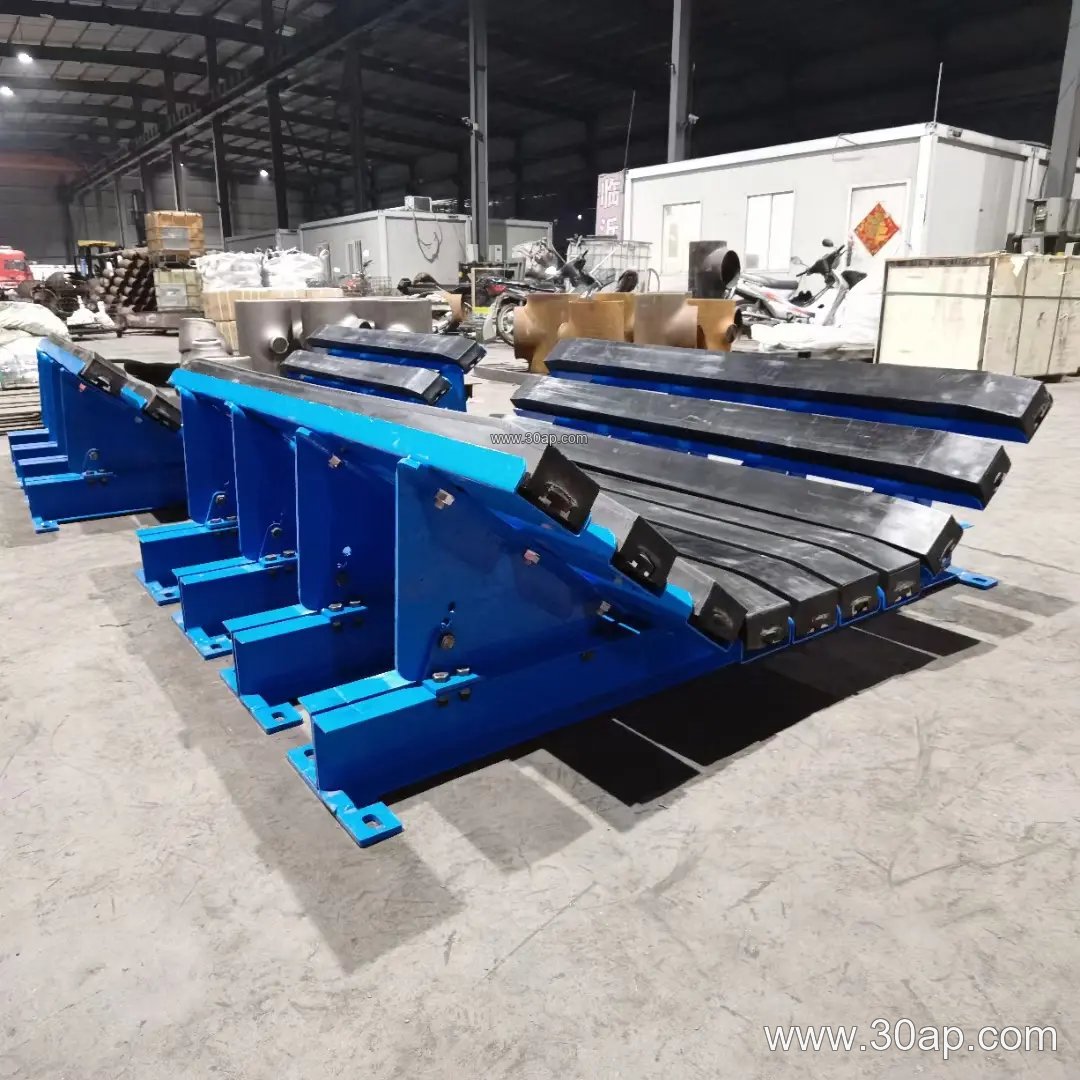
There is no single bracket size for every conveyor. Belt width, trough angle, and roller diameter are selected together with the conveyor design. Common belt widths include B500, B650, B800, B1000, B1200, B1400, B1600, B1800, B2000, B2200. Trough angles are often 20, 30, 35, or 45 degrees. Roller diameters commonly include Ø89, Ø108, Ø133, Ø159, and Ø194. A combination such as B800 with 35 degrees and Ø108 is common in medium-duty aggregate lines, while B1200 with 45 degrees and Ø133 may appear in higher-capacity bulk handling. These are reference examples, not fixed rules. A wider belt does not force one trough angle, and one belt width does not dictate one roller diameter. Installation hole spacing and beam length usually vary with belt width and trough angle, so they should be confirmed from the conveyor drawing rather than assumed.
| Parameter | Common Reference Values | Note |
|---|---|---|
| Belt width | B500, B650, B800, B1000, B1200, B1400, B1600, B1800, B2000, B2200 | Select per conveyor design |
| Trough angle | 20°, 30°, 35°, 45° | Adjustable brackets allow changes within range |
| Roller diameter | Ø89, Ø108, Ø133, Ø159, Ø194 | Match to load and belt speed |
| Material | Angle steel, channel steel, folded plate | Finish depends on environment |
Installation and Adjustment Tips
Install brackets square to the conveyor centerline and at the specified spacing. For transition brackets, keep the change in trough angle gradual over the recommended distance to avoid belt stress. Self-aligning brackets need free movement, so do not over-tighten pivot bolts. On a gravel line or a tunnel mucking conveyor, check brackets after the first few days of operation because settling and vibration can loosen bolts. Adjustable brackets are useful when the trough angle needs fine-tuning after the belt is loaded.
What Buyers Should Check
Ask for the bracket drawing with hole spacing, beam length, and material thickness. Confirm the roller diameter and belt width it is designed for, and state the trough angle if it is fixed. If the conveyor runs in a coal mine or a sinter plant, mention the environment so the finish and steel grade can be discussed. Spare parts should match the original mounting pattern. Finally, remember that the bracket works with the conveyor belt, idler roller, and conveyor pulley as a system; replacing only the bracket without checking roller condition may not solve belt tracking problems.