What a Galvanized Conveyor Bracket Does
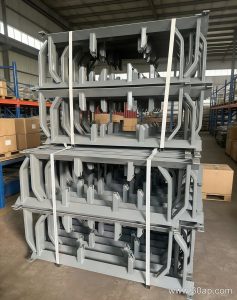
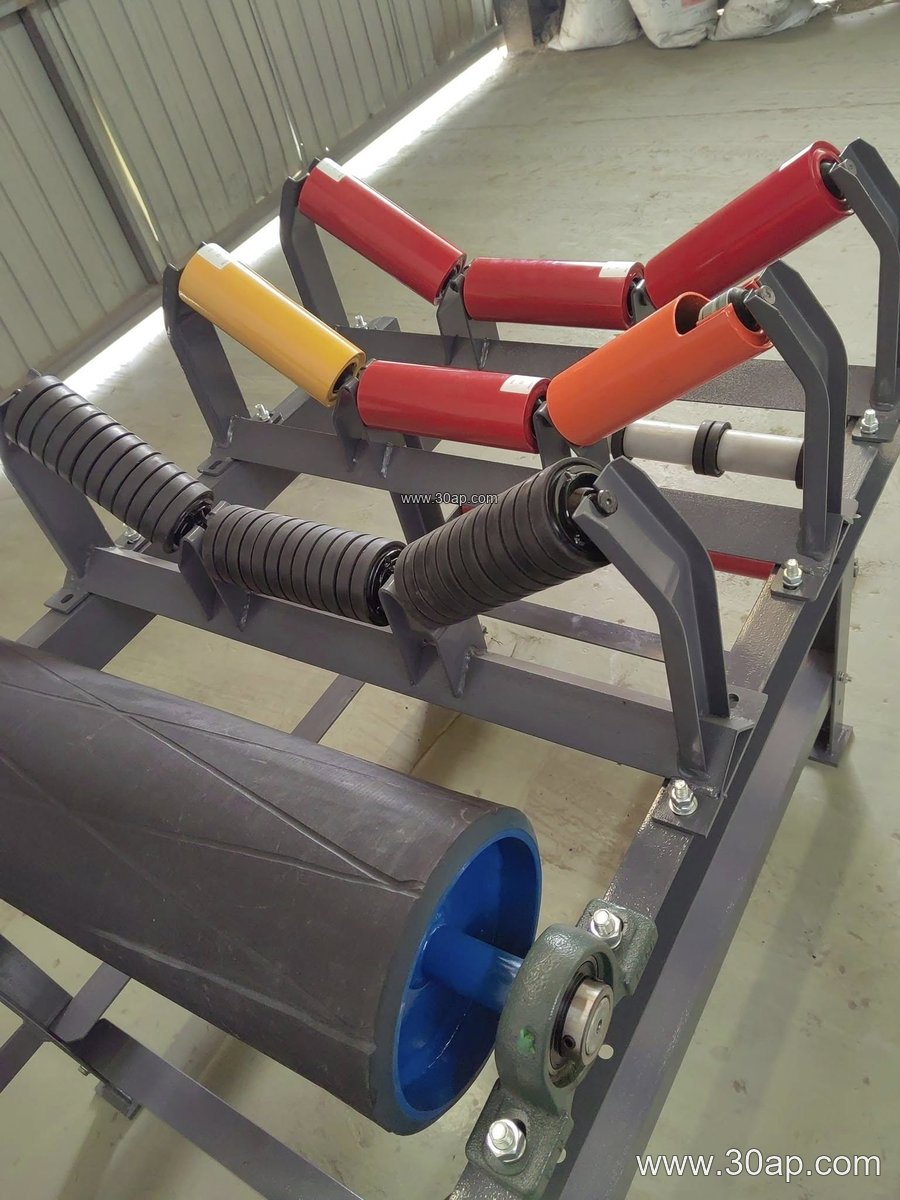
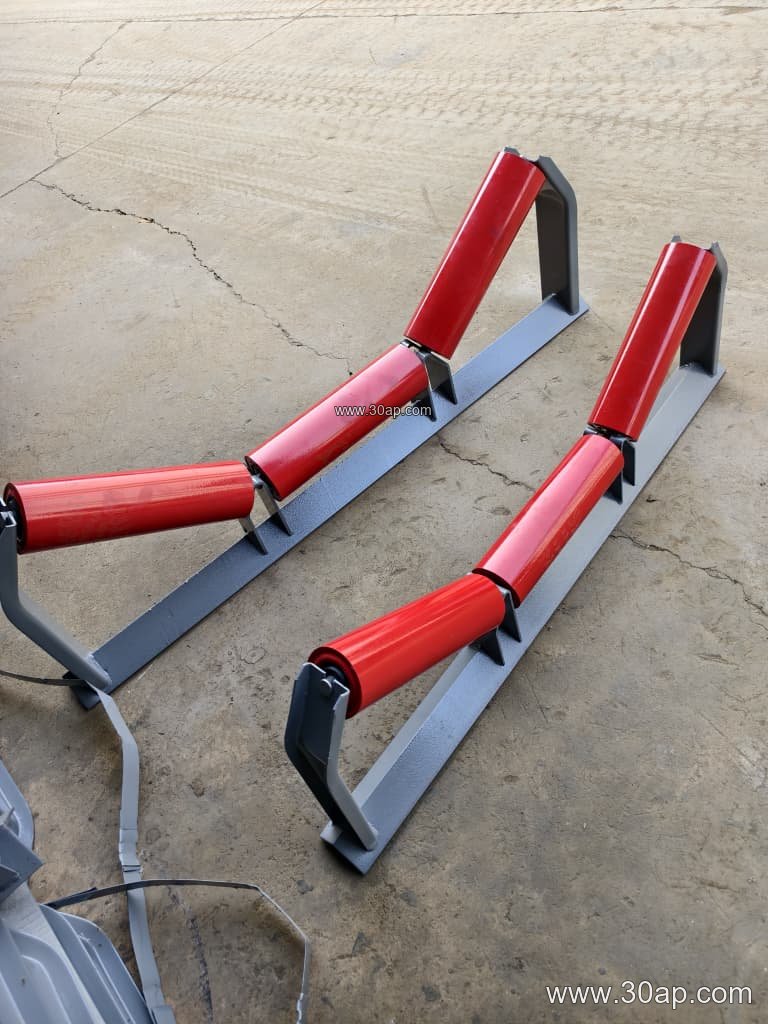
A galvanized conveyor bracket is the support frame that carries idler rollers and holds the belt in its working profile along a conveyor line. In a quarry, a cement plant or a power plant coal yard, these frames sit between the stringers and the rollers, so their geometry decides how the belt tracks and how evenly the load is spread. The galvanized finish is the practical part: it helps the steel resist moisture, dust and the washdown that many bulk handling sites deal with.
The bracket is not a single universal part. It is a family of frames matched to a position on the conveyor, and each position has its own job. For a quick reference, here are common bracket types and the role each one plays.
| Bracket type | Typical position | Main function |
|---|---|---|
| Trough bracket (upper) | Carrying side | Holds three rollers in a trough shape to contain bulk material |
| Transition bracket | Near head and tail | Gradually changes belt from flat to troughed |
| Return bracket | Return side | Supports the empty belt run |
| V-return bracket | Return side | Two rollers in a V to help center the belt |
| Impact bracket | Load point | Carries impact rollers under the feed |
| Self-aligning bracket | Long runs | Corrects minor belt drift |
| Adjustable bracket | Varies | Allows trough angle to be changed on site |
How the Frame Is Built
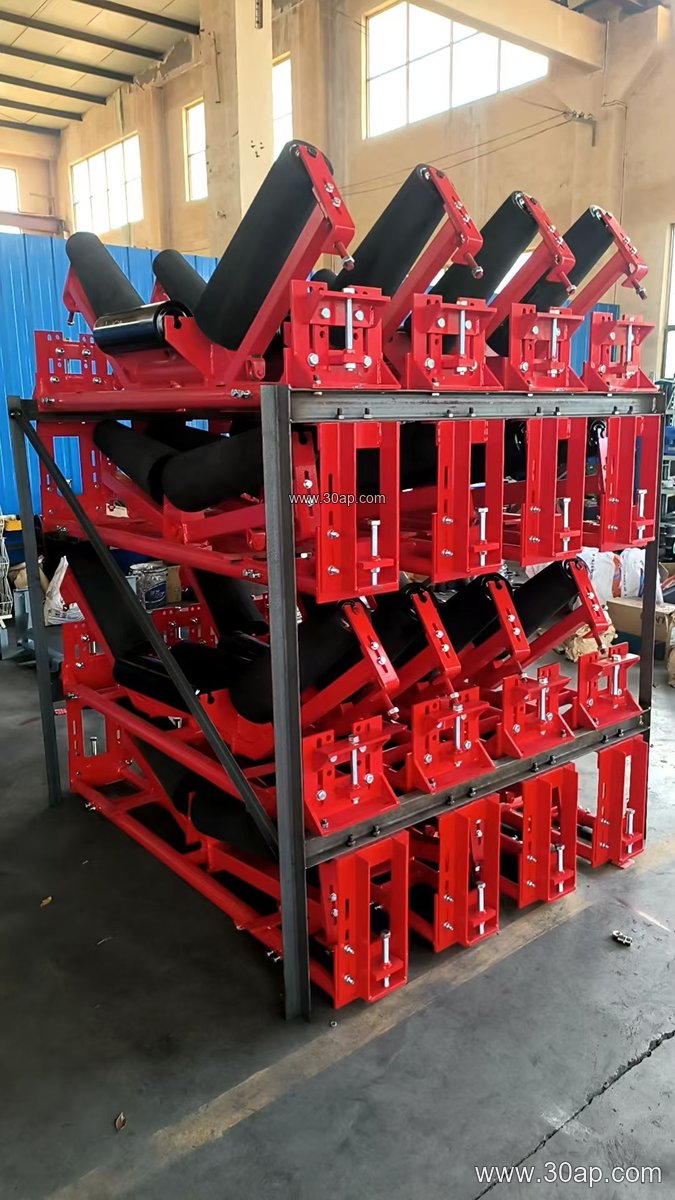
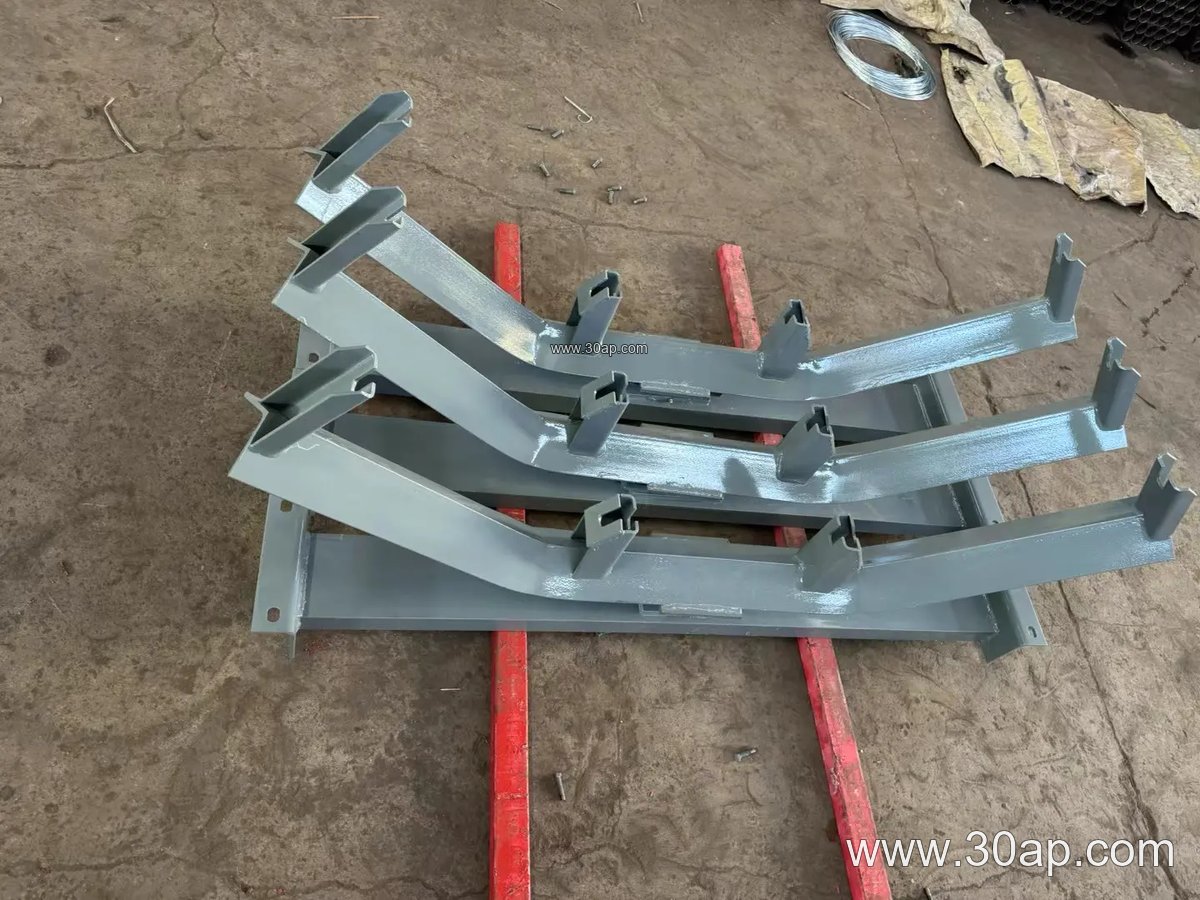
Most frames are fabricated from angle steel, channel steel or folded steel plate, then welded or bolted into a rigid shape. After fabrication, hot-dip galvanizing coats the whole frame, including cut edges and bolt holes, which is why the finish is often preferred over paint in wet or corrosive settings. The roller mounting slots, crossbeam length and hole spacing are set by the belt width and trough angle, so a frame for one line will not simply drop into another.
A typical carrying frame might be described as B800, 35 degrees, with Ø108 rollers; a wider line could use B1200, 45 degrees, Ø133. These are common combinations, not fixed rules. The same belt width can be paired with different trough angles and roller diameters depending on belt speed, material and load. The related conveyor belt, whether an EP conveyor belt, a steel cord conveyor belt or a flame retardant conveyor belt, also influences the choice because belt stiffness affects how smoothly the trough transition works.
Where These Frames Are Used
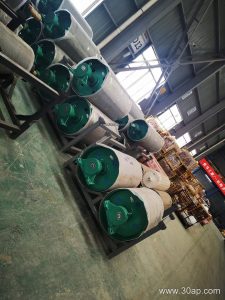
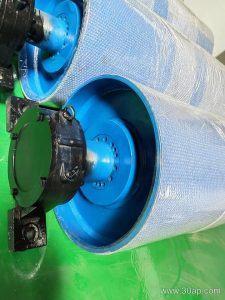
You will find galvanized conveyor brackets in stone crushing and screening lines, in cement plants moving clinker and raw meal, and in power station coal handling. In a sand and gravel yard they sit under the primary belt after the crusher, where dust and rain are constant. In a coal preparation plant, the galvanized frame is often chosen for the return side and for areas that see regular water spray. The frame itself is passive equipment, but it works together with the idler roller, the conveyor pulley at the head and the belt to keep the line running straight.
Matching Brackets to Belt Width and Roller Diameter
Buyers should start from the belt width and the roller diameter already specified for the line, then confirm the trough angle and mounting dimensions. Common belt widths run from B500 through B2000 and beyond, and common roller diameters include Ø89, Ø108, Ø133, Ø159 and Ø194. Trough angles are usually 20, 30, 35 or 45 degrees, while forward-leaning frames often sit around 1.5 to 2 degrees. Adjustable brackets let a maintenance team fine-tune the trough angle rather than replace the whole frame.
- Check hole spacing and crossbeam length against the existing stringer layout.
- Confirm the bracket type matches the position: carrying, return, impact or transition.
- Verify the galvanized coating is specified for the site environment.
- Match roller diameter to the frame seat, not only to the belt width.
Installation and Maintenance Notes
Alignment matters more than most buyers expect. A frame that is twisted or set at the wrong height will cause the belt to drift, and no amount of roller adjustment will fully correct it. During installation, keep frames square to the belt centerline and check that all rollers sit firmly in their seats. On the return side, a V-return bracket helps center the belt and reduce edge wear. Inspect galvanized frames for coating damage after impact or scraping, and touch up exposed steel where practical.
For sites handling abrasive rock, combine a sturdy frame with an abrasion resistant conveyor belt and quality idlers. For hot material such as clinker, a heat resistant conveyor belt paired with a frame that allows thermal movement is the safer route. The galvanized conveyor bracket is a small part of the line, but it sets the geometry that every roller and every meter of belt depends on.