What a Conveyor Impact Idler Does at the Loading Zone
A conveyor impact idler is the shock-absorbing roller set placed directly under the point where material drops onto the belt. In a quarry, a coal preparation plant, or a crushing and screening line, the falling rock or aggregate hits the belt with considerable force. Ordinary carrying idlers would take that punishment directly on a rigid steel shell, so the belt and the roller both wear quickly. The impact idler absorbs the energy instead, protecting the belt carcass and keeping the load zone stable.
This is a specific idler type, not a substitute for a grooved carrying idler, a return roller, or a self-aligning idler. It sits in the same frame position as a normal troughing set but is built for repeated shock loading.
How the Roller Is Built
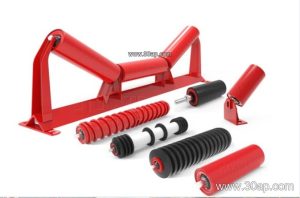
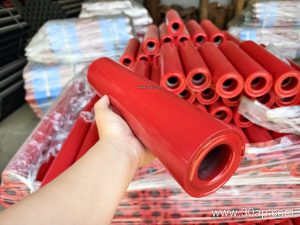
The core of the design is a resilient surface over the roller body. Most impact idlers use rubber rings or rubber discs mounted on a steel tube, which is why they are often called rubber disc impact rollers. The rubber compresses under impact and recovers, spreading the force over a longer contact area. Under the rubber, the shell is usually a heavy-wall steel tube, and the shaft runs through sealed bearing housings at each end.
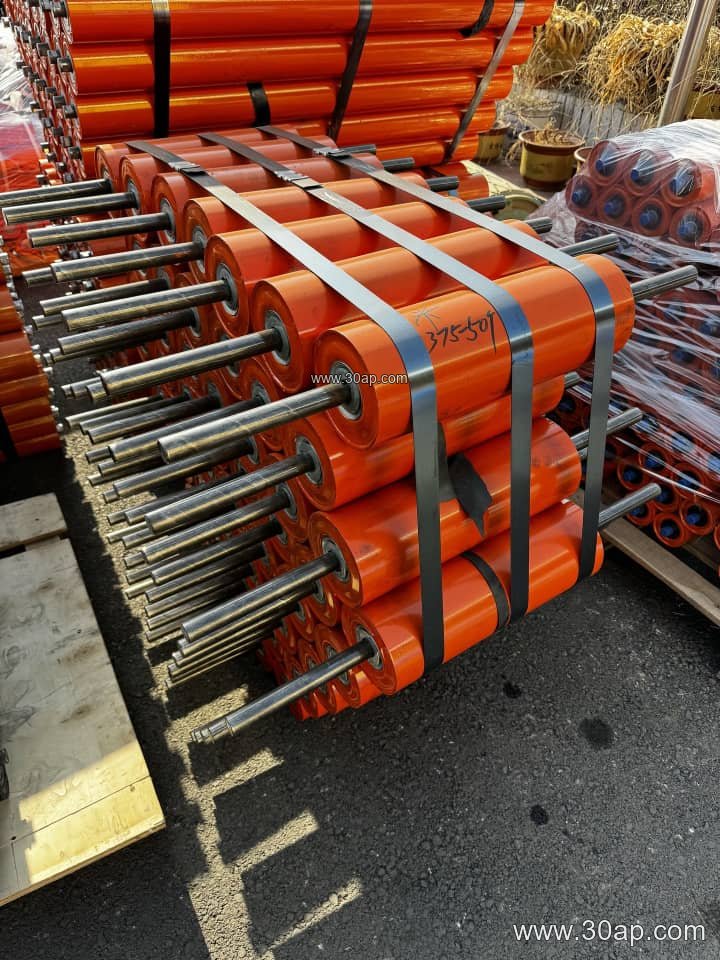
- Rubber ring or rubber disc surface for energy absorption
- Steel tube body with welded or pressed end caps
- Sealed deep-groove ball bearings, commonly 6205, 6305, 6306, or 6308 depending on the load and shaft design
- Labyrinth or contact seals to keep out dust and water
- Mounting ends that fit the conveyor bracket and frame
Bearing selection is matched to the shaft and load, not to belt width alone. A wider belt does not automatically mean a larger bearing or a specific shaft diameter; those values come from the conveyor design.
Where Impact Idlers Fit in a Conveyor
The usual location is the first few idler stations after the chute or hopper, often called the impact cradle or buffer zone. In a limestone mine feeding a primary crusher, or a power plant receiving coal from a transfer tower, this is the highest-wear part of the carrying run. A short run of impact idlers is normally enough; the rest of the line can use standard troughing idlers.
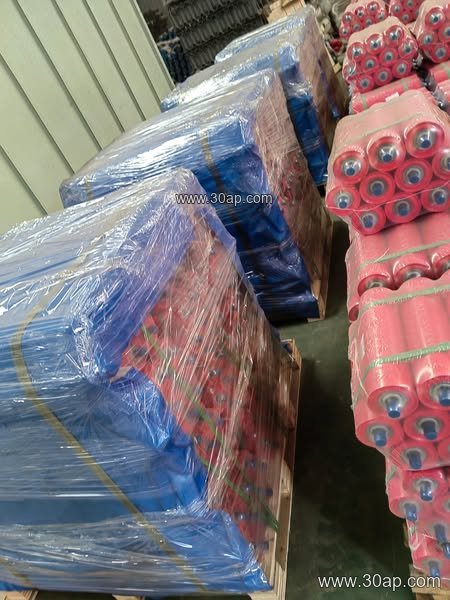
Because the load zone also needs support, impact idlers are frequently combined with a reinforced frame and a skirted conveyor belt or corrugated sidewall conveyor belt to contain material. In heavy-duty mining conveyor belt systems, the impact section is often designed together with an abrasion resistant conveyor belt or a high abrasion resistant conveyor belt so the belt cover and the roller work as a pair.
Common Sizes and Configurations
Impact idlers follow the same general size families as other carrying rollers. The table below shows typical reference values; actual dimensions are set by the conveyor design and the belt width.
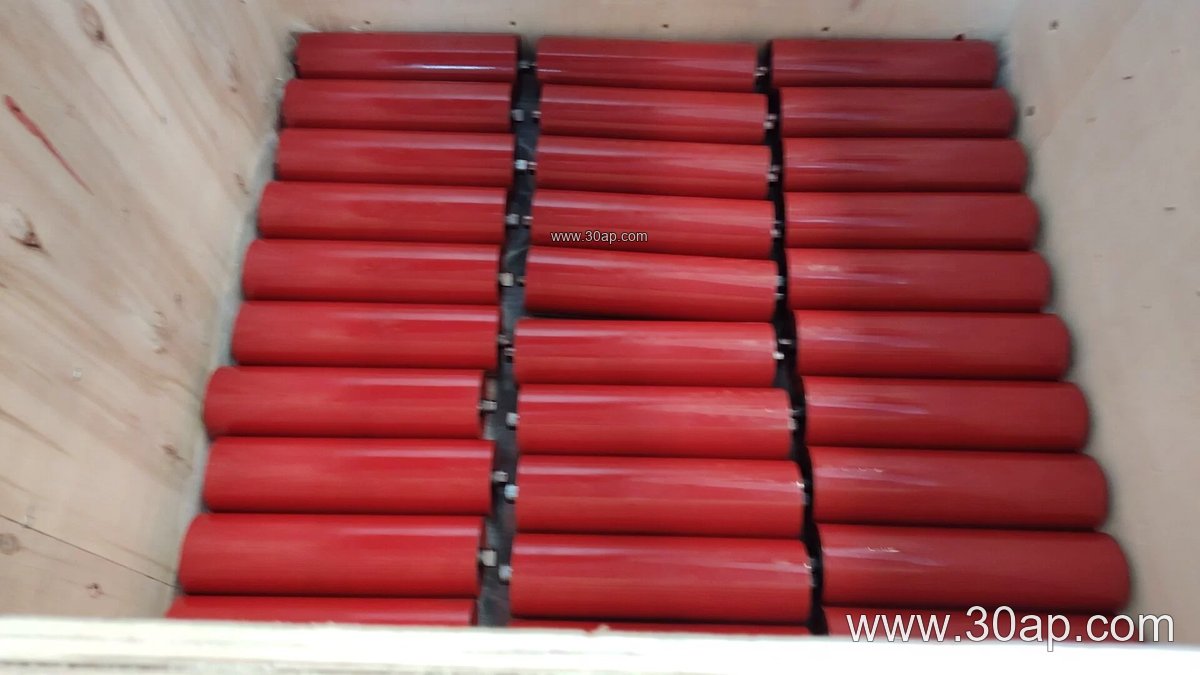
| Parameter | Common Reference Values |
|---|---|
| Roller diameter | Ø89, Ø102, Ø108, Ø127, Ø133, Ø159, Ø178 mm |
| Belt width | B500, B650, B800, B1000, B1200, B1400, B1600, B1800, B2000 mm |
| Trough angle | 20°, 30°, 35°, 45° |
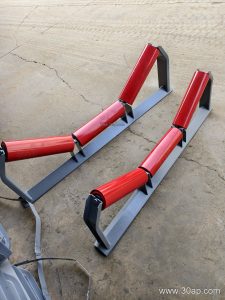
| Roller set | Single roll, two-roll, three-roll troughing |
| Roller length (three-roll example) | About 200 mm at B500, 250 mm at B650, 315 mm at B800, 380 mm at B1000, 465 mm at B1200, 530 mm at B1400, 600 mm at B1600 |
| Surface | Rubber ring, rubber disc, steel tube |
These figures are examples only. Side rollers and the center roller can differ, and a 1200 mm wide conveyor belt may use several roller diameter options depending on load and speed.
What Buyers Should Check
Start with the drop height and the lump size. A transfer point handling large ore needs thicker rubber rings and a heavier shell than one handling fine aggregate. Confirm the roller diameter, shaft size, and bearing type against the existing frame, and check that the mounting ends match the conveyor bracket. Look at the seal design for dusty or wet conditions, and ask how the rubber rings are fixed so they can be replaced if worn.
Impact idlers are often specified together with related belt hardware, so the loading zone is designed as a system. Matching the impact section to a suitable conveyor belt grade, for example an EP conveyor belt or a steel cord conveyor belt for long overland runs, helps the whole line last longer. Learn more about conveyor belt options and idler roller designs for your next project.
Finally, plan for maintenance. Inspect the impact section regularly for loose rings, seized bearings, and material buildup. Replacing worn rubber rings early is cheaper than replacing a damaged belt, and a well-supported loading point keeps the conveyor running smoothly in mines, cement plants, and aggregate operations alike.