What a Carbon Steel Conveyor Bracket Does
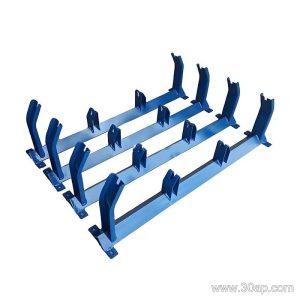
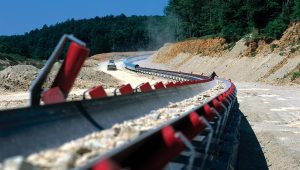
A carbon steel conveyor bracket is the structural support that holds idler rollers in the correct position under or over a conveyor belt. In a quarry, a coal washing plant, or a cement plant, the bracket carries the idler roller load, keeps the belt profile steady, and ties the whole idler station to the conveyor frame. The carbon steel construction gives the part the stiffness and wear resistance needed in dusty, abrasive, and high-load conditions. Engineers also call this component a steel conveyor idler support bracket or a carbon steel roller mounting bracket, and both names describe the same product.
The bracket is not an accessory that can be chosen at random. Its geometry decides the trough angle, the roller spacing, and how evenly the conveyor belt sits on the idlers. A poorly matched bracket causes belt misalignment, edge wear, and premature idler failure.
How the Bracket Is Built
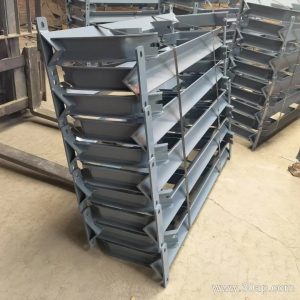
Most carbon steel conveyor brackets are fabricated from angle steel, channel steel, or bent steel plate. The fabrication route usually includes cutting, punching or drilling mounting holes, bending, welding of gussets or stops, and a surface treatment such as painting or galvanizing. Common material forms include:
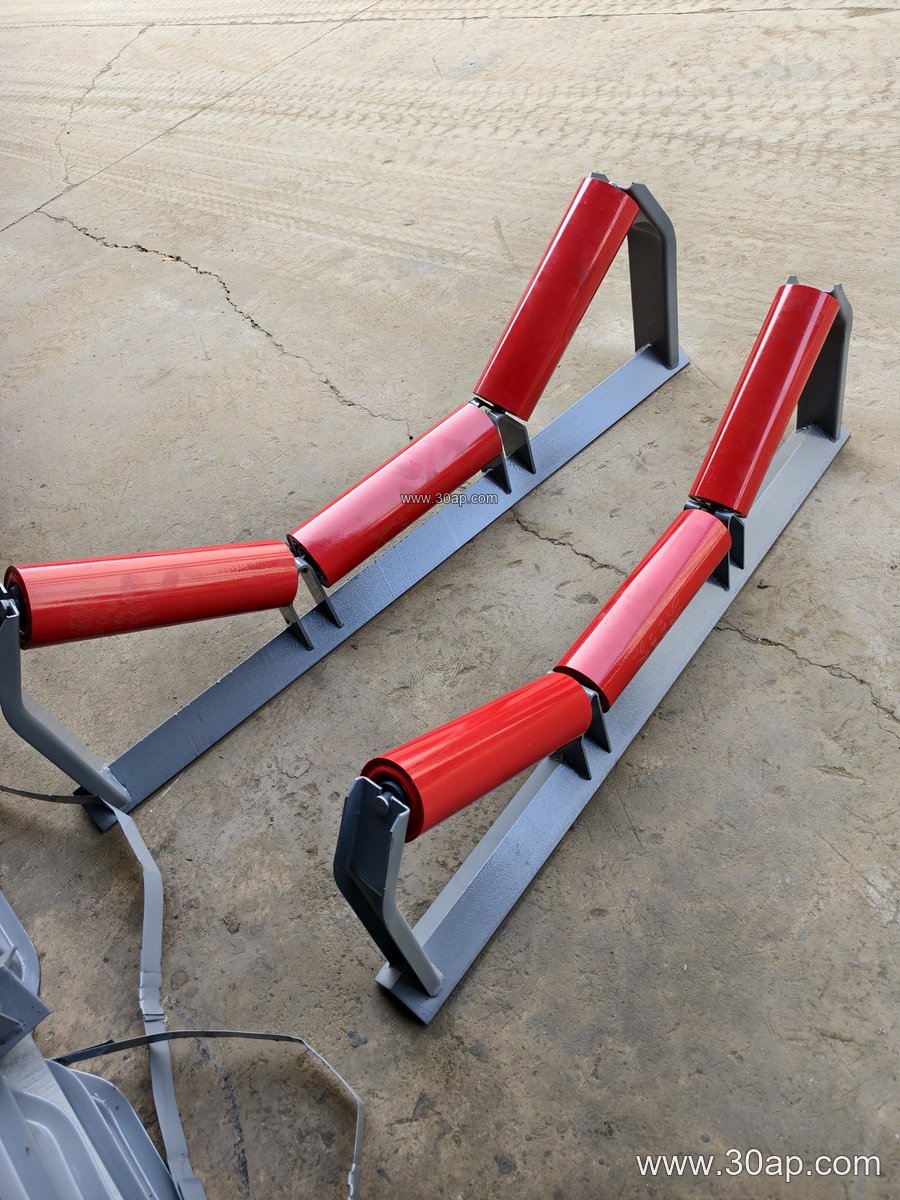
- Angle steel frames for lighter trough stations
- Channel steel beams for wider belts and heavier loads
- Bent steel plate for compact return and transition brackets
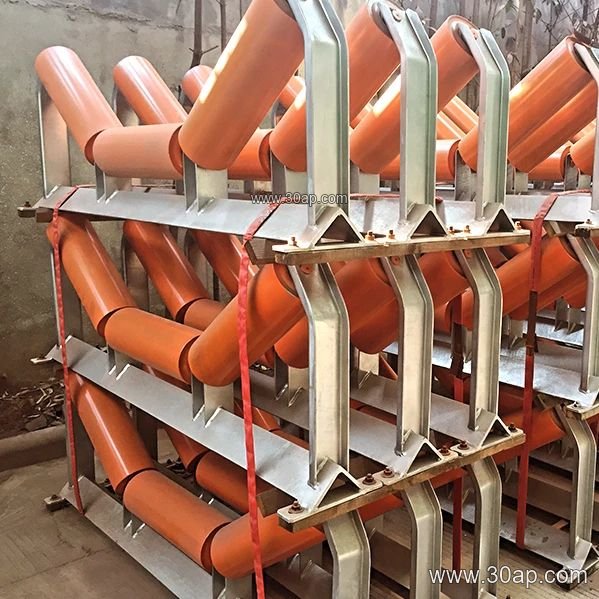
The bracket must match the idler shaft, the frame hole pattern, and the belt width. Installation hole spacing and crossbeam length usually change with belt width and trough angle, so they are determined by design rather than fixed by a single number.
Common Bracket Types and Where They Fit
Different positions on a conveyor call for different bracket forms. A trough bracket supports the carrying side, a return bracket holds the belt on the return run, and a transition bracket guides the belt between the pulley and the first full trough station. A self-aligning bracket and a forward-leaning bracket are used where belt training is a concern. A buffer bracket is placed at loading points to absorb impact.
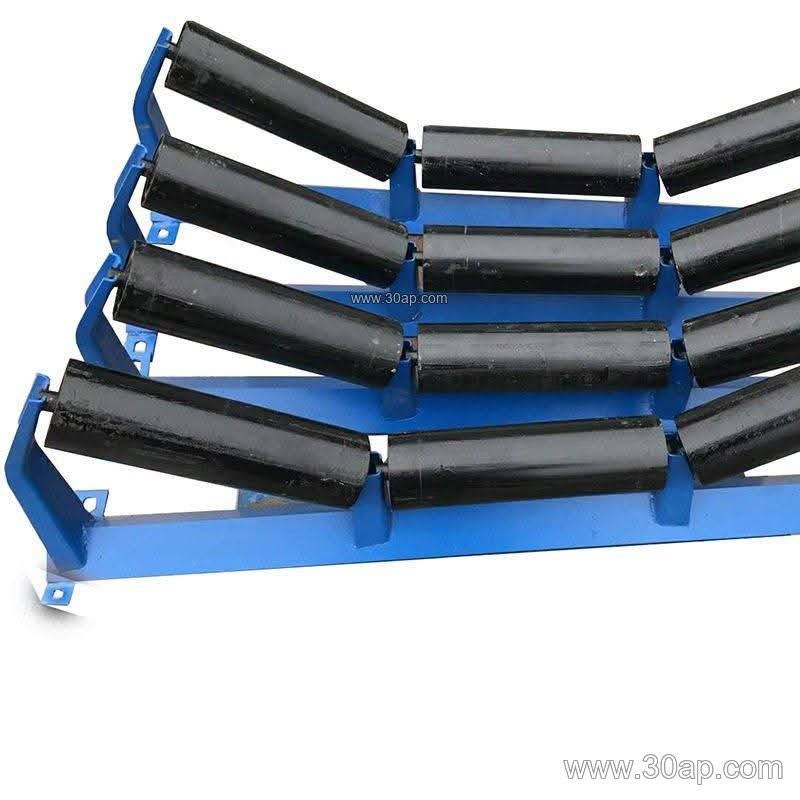
For comparison, a V-return bracket and a flat return bracket both support the return belt but differ in belt profile and roller arrangement. They are separate subtypes and should not be treated as interchangeable with a trough bracket.
Typical Reference Combinations
The values below are common reference points, not fixed supply promises or universal specifications. Final selection depends on belt tension, material density, and frame design.
| Belt width | Trough angle | Idler diameter | Typical bracket form |
|---|---|---|---|
| B500 | 20 degrees | Ø89 | Angle steel trough bracket |
| B650 | 30 degrees | Ø89 | Angle steel trough bracket |
| B800 | 35 degrees | Ø108 | Channel steel trough bracket |
| B1000 | 35 degrees | Ø108 | Channel steel trough bracket |
| B1200 | 45 degrees | Ø133 | Heavy channel trough bracket |
| B1400 | 45 degrees | Ø159 | Heavy channel trough bracket |
| B1600 | 35 degrees | Ø159 | Channel steel trough bracket |
| B1800 | 45 degrees | Ø194 | Heavy-duty fabricated bracket |
Adjustable brackets can be set between 20, 30, 35, and 45 degrees, which helps when a plant handles several material types or wants to tune belt capacity. Forward-leaning stations often use about 1.5 to 2 degrees of tilt.
Where These Brackets Are Used
Carbon steel brackets appear wherever a belt conveyor moves bulk material. In an iron ore crushing and screening line, trough brackets and buffer brackets carry the belt through transfer points. In a power plant coal handling system, return brackets and self-aligning brackets keep the return strand stable. Similar arrangements are found in limestone stockyards, fertilizer plants, grain silos, and tunnel spoil removal lines.
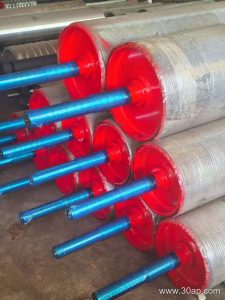
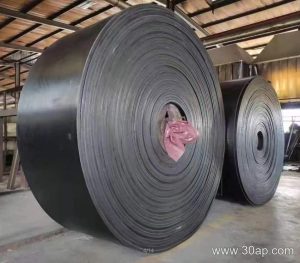
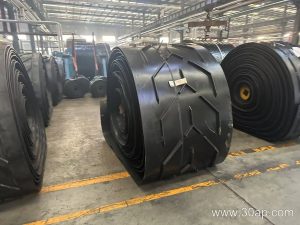
The bracket works together with the conveyor belt, idler roller, and conveyor pulley. A well-aligned bracket set reduces belt tracking problems before they reach the drive or tail pulley.
Buyer Checklist
- Confirm the belt width, trough angle, and idler diameter as a set, not separately.
- Check the mounting hole pattern against the existing conveyor frame.
- Ask about material thickness and surface treatment for the site environment.
- Decide whether fixed or adjustable brackets suit the duty.
- Match bracket type to position, since trough, return, transition, and buffer brackets serve different roles.
A carbon steel conveyor bracket is a small part with a large effect on belt life. Getting the frame fit, angle, and steel quality right at the buying stage is cheaper than correcting belt misalignment later.