What a Steel Plant Conveyor Pulley Does
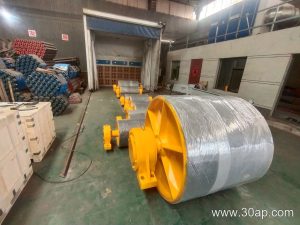
A steel plant conveyor pulley is the rotating drum that drives or redirects the conveyor belt in sinter plants, coke handling, raw material yards, and finished product transport. In a steel mill, belts carry iron ore, pellets, limestone, coke, and hot sinter under harsh conditions, so the pulley must be built for high torque and continuous duty. The same component is also called a conveyor drum, and this article uses both terms for the same product. Drive, tail, and bend pulleys are different positions in the conveyor and are not interchangeable names.
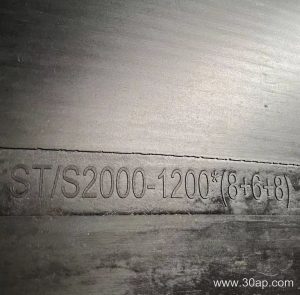
The pulley transfers motion to the conveyor belt through friction on its shell surface. In a steel plant, a typical conveyor pulley works with a heavy-duty belt such as a Steel Cord Conveyor Belt or an EP Conveyor Belt in the main material handling lines.
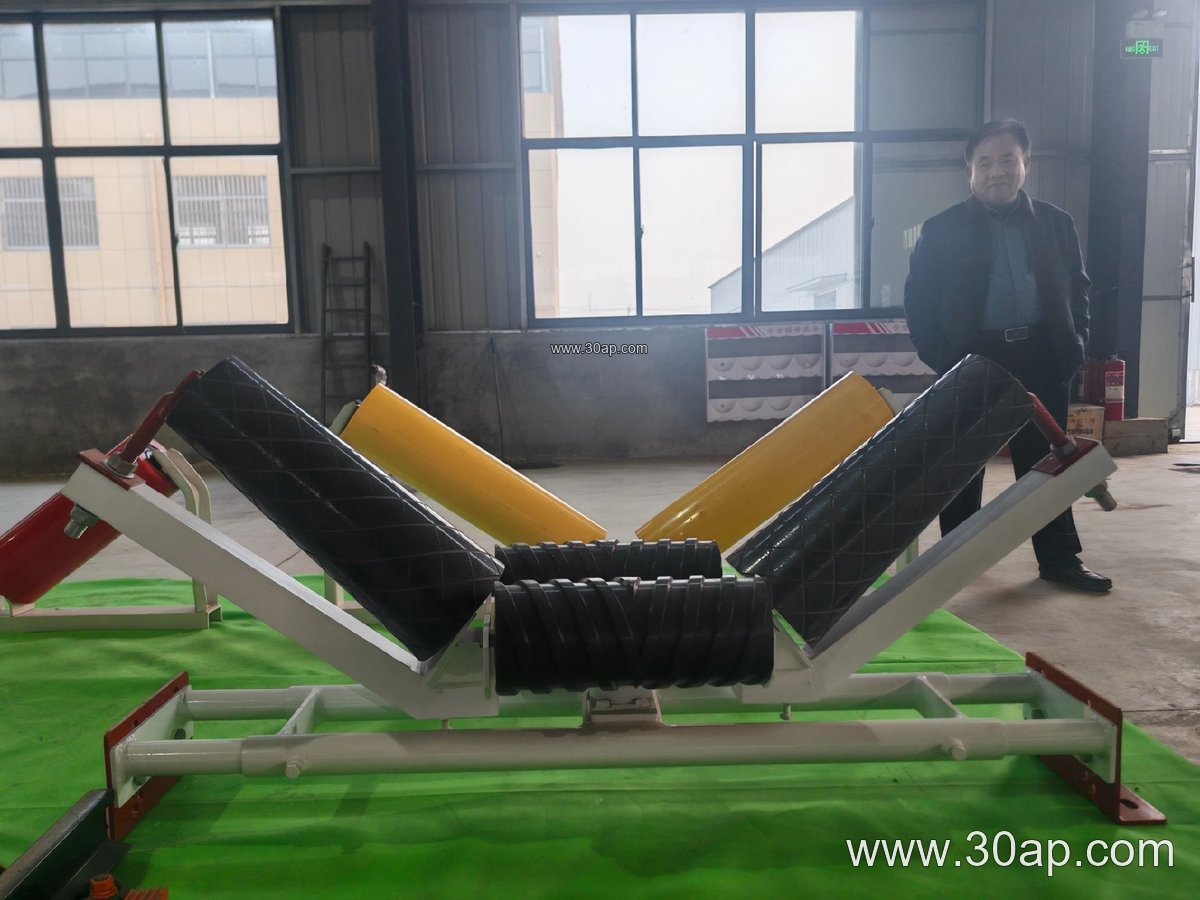
Construction and Surface Options
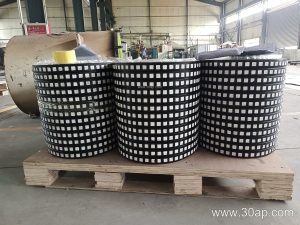
A steel plant conveyor pulley usually consists of a cylindrical shell, two end discs, a shaft, and bearing housings. The shell is welded from rolled steel plate, machined, and then covered with a lagging surface to improve grip and protect the belt. Common surface forms include plain, cast rubber, cold-bonded rubber, hot-vulcanized rubber, diamond lagging, herringbone lagging, ceramic lagging, and flat rubber. Lagging thickness is often 8, 10, 12, 15, or 20 mm depending on the duty.
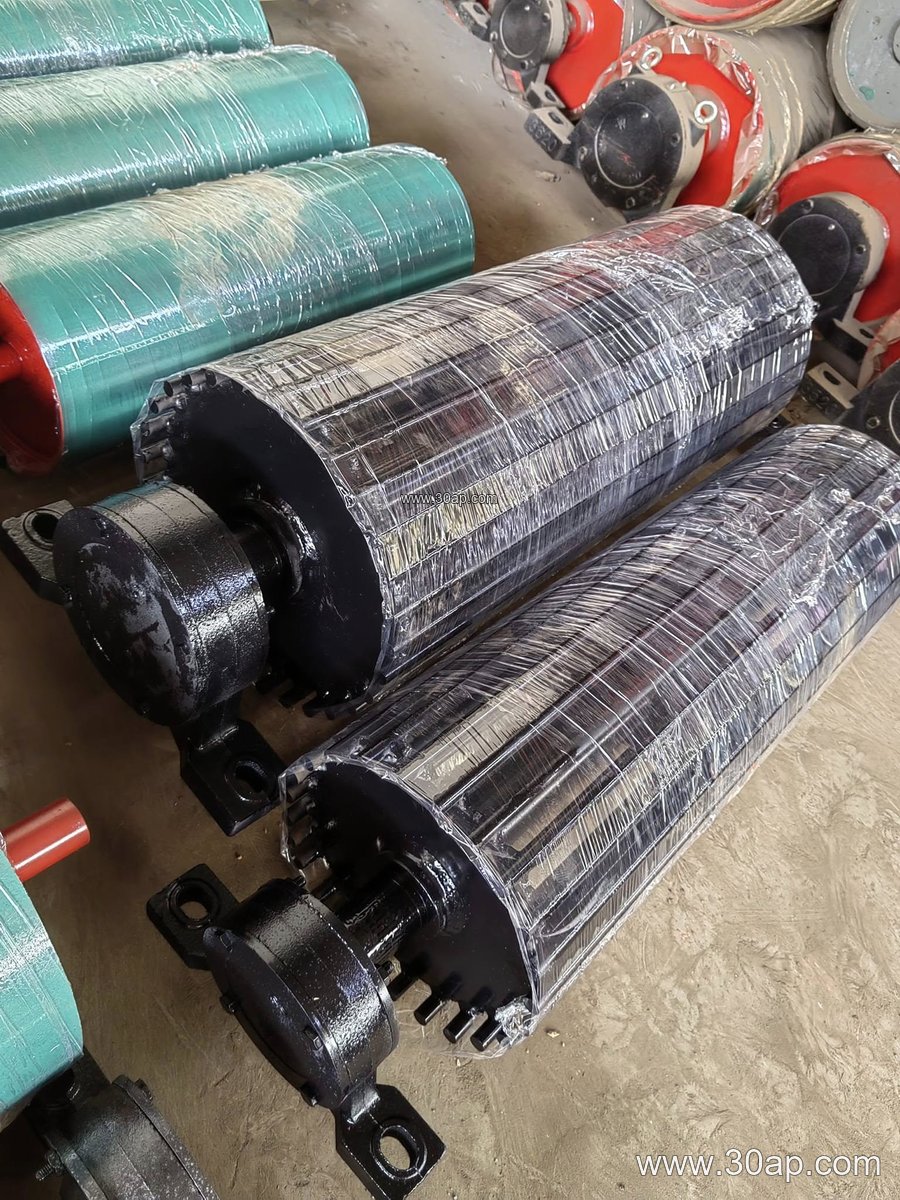
For sinter and coke lines where abrasion is severe, a ceramic or diamond lagging helps extend service life. In coal handling areas, a Flame Retardant Conveyor Belt is often used together with the pulley, and the pulley surface should be selected to match the belt cover.
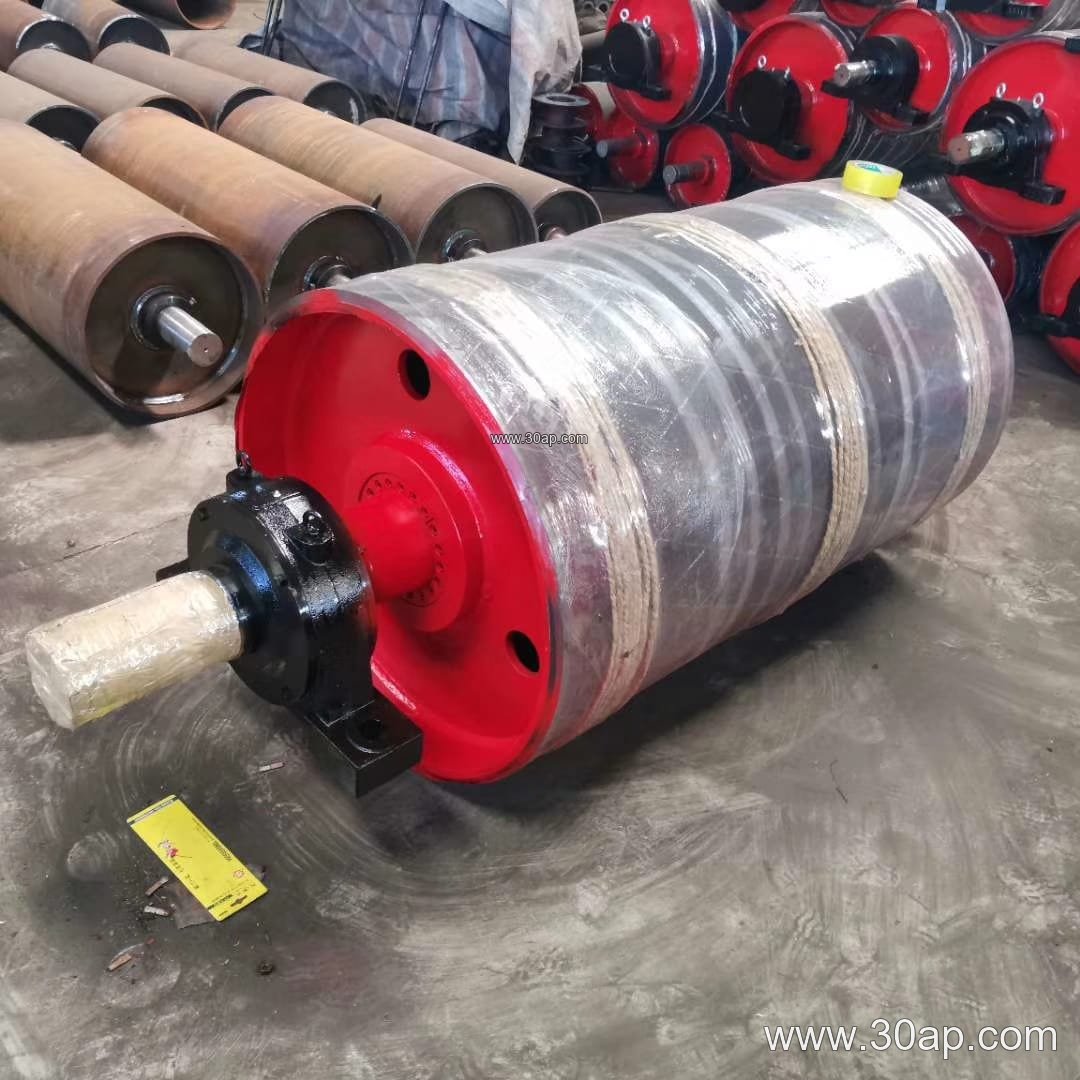
Common Sizes and Configurations
Pulley dimensions are selected by belt width, torque, and shaft load, not by a single fixed rule. A B800 belt does not automatically require one specific diameter, and shaft diameter is determined by the drive design. The table below shows common reference values, not a fixed supply list.
| Parameter | Common Reference Values |
|---|---|
| Belt width | B400, B500, B650, B800, B1000, B1200, B1400, B1600, B1800, B2000, B2200, B2400 |
| Pulley diameter | Ø200, Ø250, Ø315, Ø320, Ø400, Ø500, Ø630, Ø800, Ø1000, Ø1250, Ø1400, Ø1600, Ø1800 |
| Shell face width | Usually wider than the belt, for example B800 about 950 mm, B1000 about 1150 mm, B1200 about 1400 mm |
| Shaft diameter | Ø50, Ø60, Ø70, Ø80, Ø90, Ø100, Ø120, Ø140, Ø160, Ø180, Ø200 |
| Lagging thickness | 8, 10, 12, 15, 20 mm |
For example, a B1200 × Ø1000 drive pulley may be used in a sinter feed line, while a B800 × Ø500 tail pulley may suit a smaller transfer conveyor. These combinations are examples only and must be checked against the actual drive calculation.
Where It Is Used in a Steel Plant
In a steel plant, conveyor pulleys appear in the raw material yard, sintering plant, coke oven battery, blast furnace charging system, and slag handling area. The environment is often dusty, hot, and abrasive. A drive pulley at the head end pulls the belt, a tail pulley at the loading point returns it, and a bend pulley changes belt direction around a curve. A tension pulley maintains belt tension, and a snub pulley increases wrap angle on the drive. These positions have different loads and are not interchangeable.
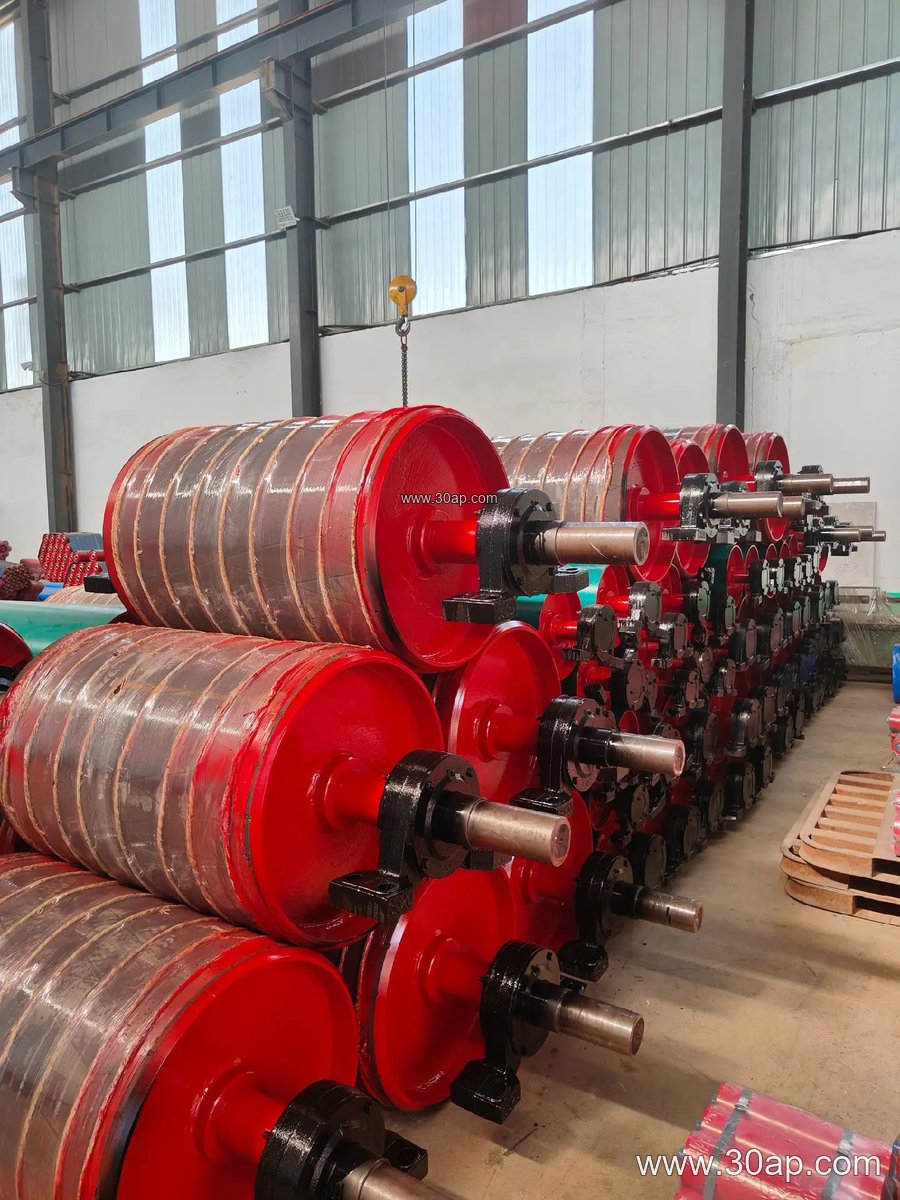
In the coke plant and coal yard, a Mining Conveyor Belt with flame resistance may be used, and the pulley lagging should be chosen for the same fire safety level. In the sinter plant, heat-resistant belts and pulleys with heat-tolerant lagging are common.
Buyer Checklist
- Confirm the pulley position: drive, tail, bend, tension, or snub, and the required function.
- Provide belt width, belt type, and belt tension so the pulley diameter and shaft can be calculated.
- Specify lagging type and thickness for the material and environment.
- Check the bearing type, housing, and conveyor bracket fit with the conveyor frame.
- Match the pulley surface to the belt cover, especially for abrasive ore or hot sinter.
- Ask for the balancing grade and runout requirements if the pulley runs at high speed.
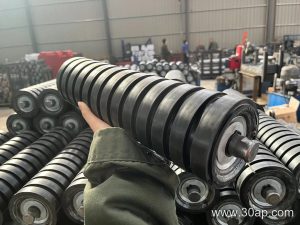
A well-matched steel plant conveyor pulley reduces belt slip, extends belt life, and keeps the material handling line running. The pulley and belt work as a system, so selection should always consider the idler roller layout and the overall conveyor design.