What EP300 Conveyor Belt Means
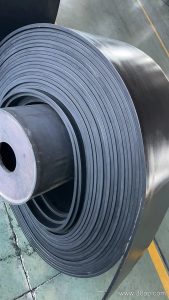
An EP300 conveyor belt is a multi-ply rubber belt built on a polyester-nylon (EP) fabric carcass with a nominal breaking strength of 300 N/mm per ply. The “EP” stands for the warp polyester and weft nylon construction. The number 300 refers to the tensile strength of a single ply, so a three-ply EP300 belt has a much higher total rated strength than a two-ply version of the same fabric. This is the same product often called a polyester-nylon conveyor belt or an EP conveyor belt, and the grade sits in the middle of the common EP range.
EP300 is not a single fixed item. The carcass ply count, cover rubber grade, cover thickness, and belt width all change the finished belt and what it can do. Buyers should treat EP300 as a strength class, not a catalogue number that describes every dimension.
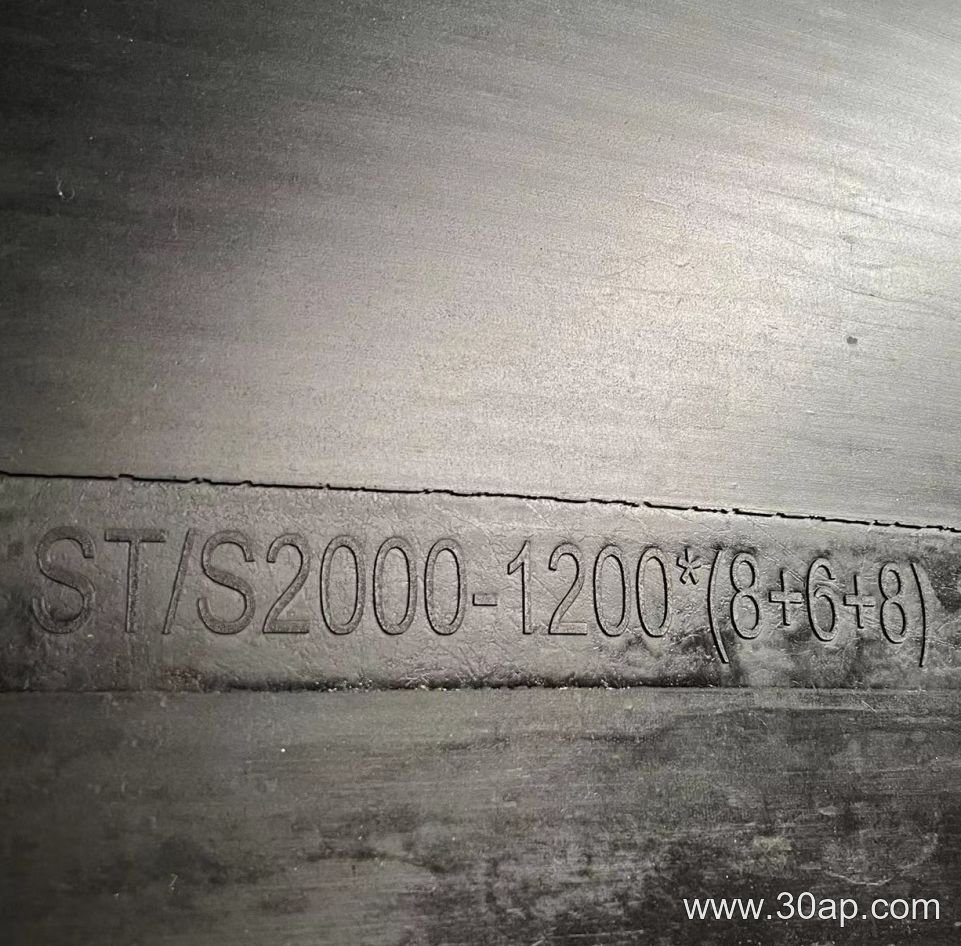
Carcass Construction and Compound Choices
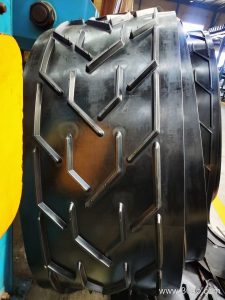
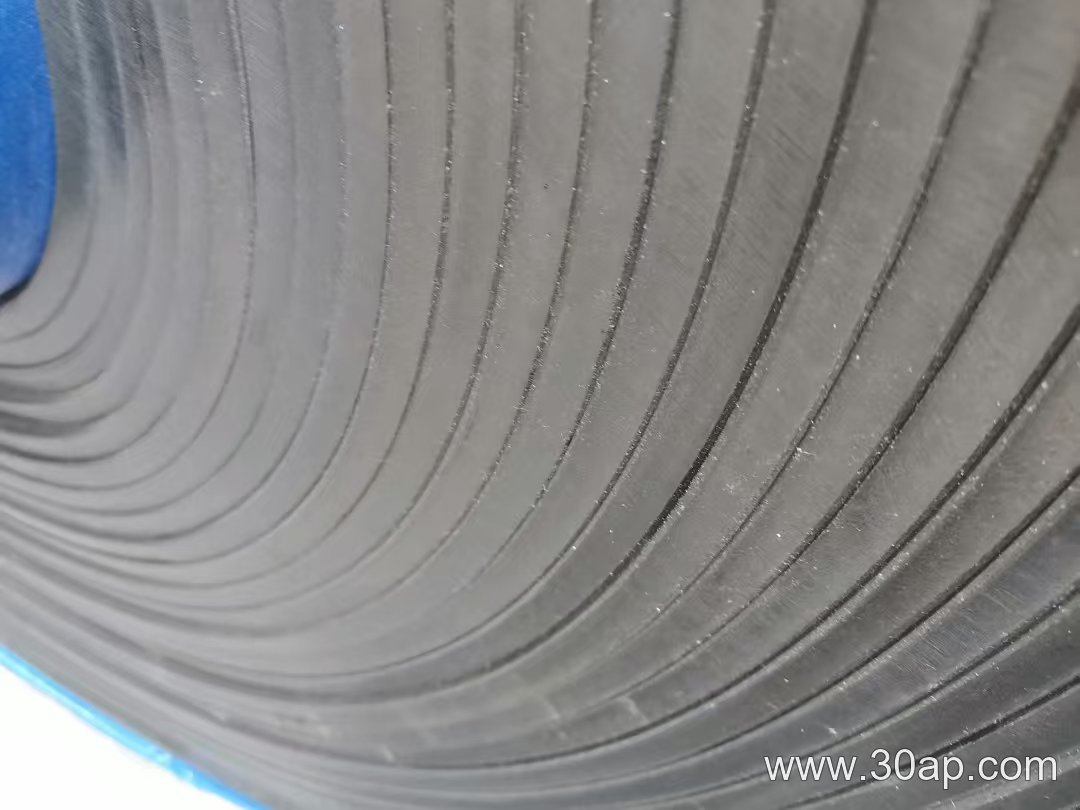
The carcass is the working part of an EP300 belt. Polyester warp gives low stretch under load, while nylon weft gives good resistance to impact and flex fatigue. Layers of EP fabric are bonded with rubber skim and then covered on both sides with a rubber cover. Common constructions run from two plies up to six plies. A typical three-ply EP300 belt is used for medium to heavy duty conveying. Cover rubber is usually selected for the material being carried, not for the belt strength alone. Wear-resistant covers, heat-resistant covers, oil-resistant covers, flame-retardant and antistatic covers, and cold-resistant or acid-alkali-resistant covers are all available in this strength class. Surface forms include smooth, patterned, chevron (herringbone), and corrugated sidewall belts.
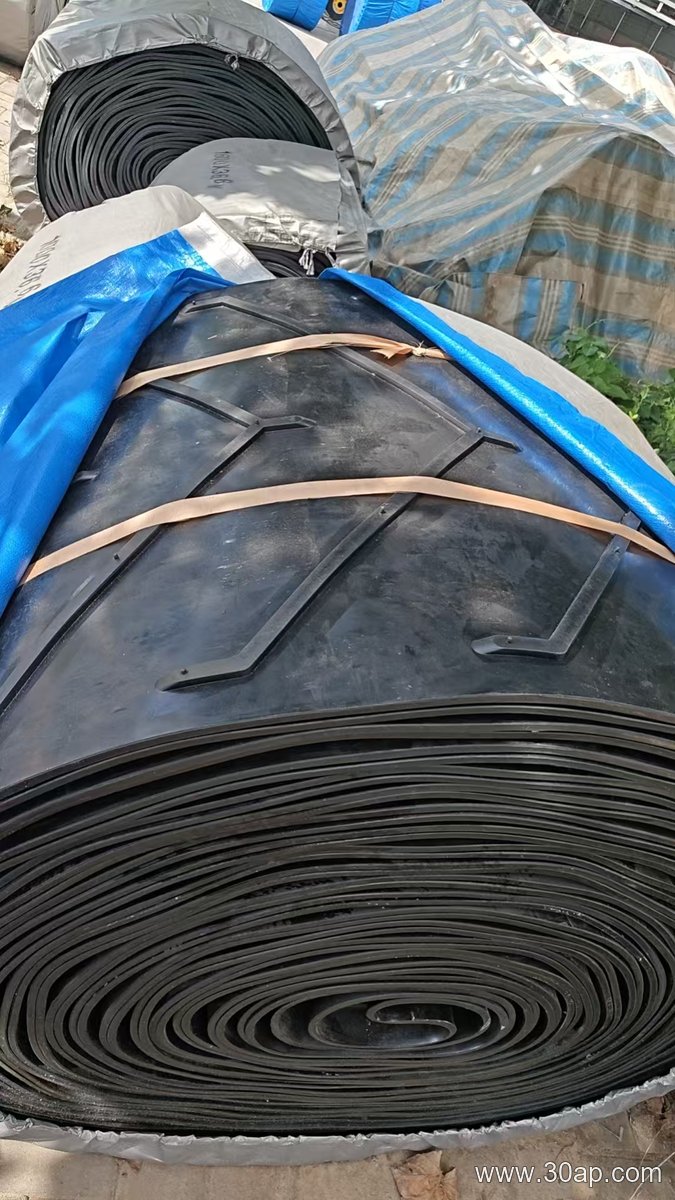
Common Dimensions and Specifications
The table below lists reference values, not a fixed supply commitment. Actual belt construction is set by the conveyor design and the application.
| Parameter | Common range or example |
|---|---|
| Strength grade | EP300 (also written as 300 N/mm per ply) |
| Ply count | 2 to 6 plies |
| Belt width | B500, B650, B800, B1000, B1200, B1400, B1600, B1800, B2000 |
| Top cover thickness | 3 mm, 4 mm, 5 mm, 6 mm, 8 mm |
| Bottom cover thickness | 1.5 mm, 2 mm, 3 mm |
| Cover combinations | 3+1.5, 4+2, 5+2, 6+2, 8+3 mm |
Width and ply count are not tied together in a fixed way. A wider EP300 belt is not automatically required to run on one pulley diameter, and a given belt width does not dictate a single shaft size. Those values come from the conveyor designer, who balances load, speed, troughing, and pulley geometry.
Where an EP300 Belt Fits
Because EP300 offers a good balance of strength, low elongation, and reasonable cost, it appears in many bulk handling lines. Typical uses include aggregate and sand conveyors, cement and clinker transport, coal handling, grain and fertilizer movement, quarry and mining duty, and general factory material flow. It also works in port and stockyard conveyors where moderate impact and long centre distances are involved. It is often chosen instead of a lower grade such as EP200 or EP250 when the belt must carry more load or span a longer distance without excessive stretch. For very high tension or very long overland routes, a steel cord belt may be considered instead, but that is a different carcass type, not a replacement for EP300 in mid-range duties.
Supporting Equipment Around the Belt
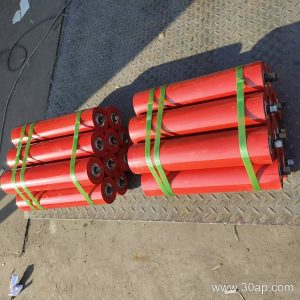
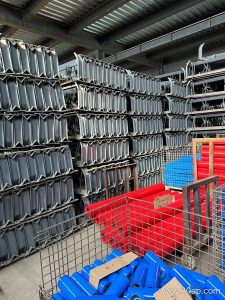
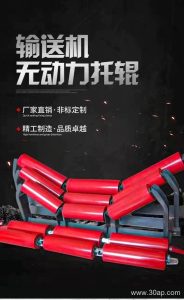
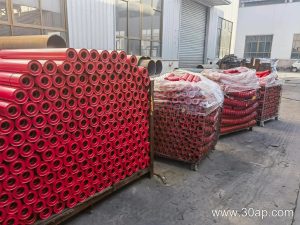
An EP300 belt does not run on its own. It needs a conveyor pulley at the head and tail, idler rollers along the carrying and return runs, and conveyor brackets that hold the idlers and frame together. The drive pulley pulls the belt, the tail pulley returns it, and bend pulleys change direction where needed. These pulley functions are not interchangeable, so the belt layout should be checked against each pulley position. Belt tracking, load support, and skirt rubber all affect how long the EP300 carcass lasts.
What Buyers Should Check Before Ordering
- Required belt width and the actual material lump size.
- Total tension and the recommended ply count for the duty.
- Cover grade and cover thickness for abrasion, heat, oil, or fire risk.
- Whether a smooth, patterned, chevron, or sidewall surface is needed.
- Pulley diameters and idler spacing, confirmed by the conveyor designer.
- Ambient temperature and any antistatic or flame-retardant requirement.
Ask the supplier for the ply count, cover thickness, and fabric type in writing. Two belts sold as EP300 can differ in cover compound, ply count, and width, and those differences change service life and suitability. Keep spare belt, splicing material, and correct pulley and idler alignment as part of the maintenance plan.