What the EP500 Conveyor Belt Is
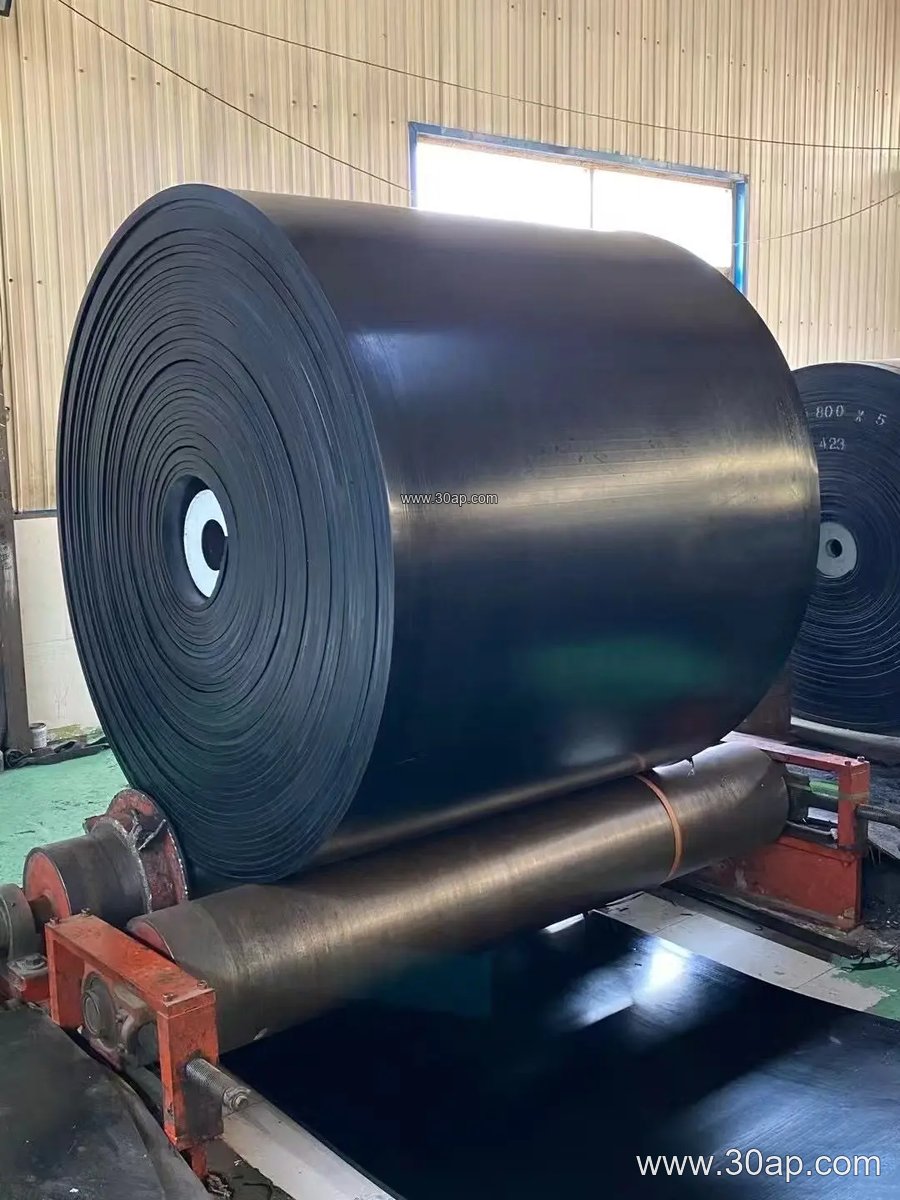
An EP500 Conveyor Belt is a fabric core conveyor belt built around polyester and nylon (EP) warp and weft yarns. The designation places it in the medium-high strength range of synthetic fabric belts: a nominal tensile strength of 500 N/mm per ply is the usual reference point. This strength class sits above general-purpose EP200 and EP400 belts and below very heavy classes such as EP800 and EP1000, which makes it a practical choice for steady, high-tonnage conveying where a steel cord belt would be more than the layout needs.
Because the carcass is a Fabric Core Conveyor Belt rather than a steel cord construction, the belt stays flexible, trains well on smaller pulleys and can be spliced on site with stepped or finger joints. Buyers comparing it with an NN Conveyor Belt should note that EP carcasses typically show lower stretch under load and better resistance to moisture in the carcass, while NN belts can offer very high elongation before break.
Construction and Cover Options
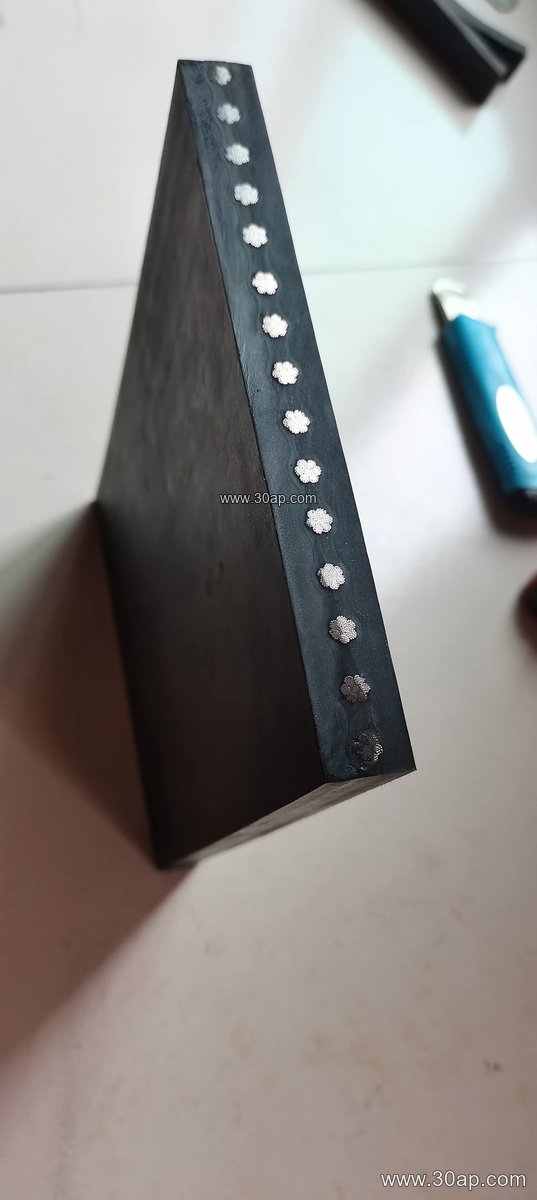
The belt is normally supplied in a multi-ply build. Two to six plies are common, with the ply count chosen to reach the required strength together with the cover grade. Top and bottom covers are specified separately, for example 4+2 mm or 6+2 mm, and heavier covers such as 8+3 mm may be used where impact and abrasion are severe.
Typical reference values
These are common industry reference points, not a fixed supply promise. Final construction is confirmed by the manufacturer for each order.
| Property | Typical reference |
|---|---|
| Strength class | EP500 (500 N/mm per ply nominal) |
| Carcass plies | 2 to 6 |
| Cover thickness | 3+1.5, 4+2, 5+2, 6+2, 8+3 mm |
| Belt width | B500, B650, B800, B1000, B1200, B1400, B1600 |
| Surface forms | plain, chevron, corrugated sidewall |
Cover compound selection matters as much as the carcass. A plain EP500 belt with abrasion resistant covers suits sand, gravel and crushed stone, while heat resistant, oil resistant, flame retardant or anti-static versions are specified for cement kiln feed, coal handling and similar duties. An Abrasion Resistant Conveyor Belt grade is often the default in quarry and aggregate service.
Where It Fits in a Conveying System
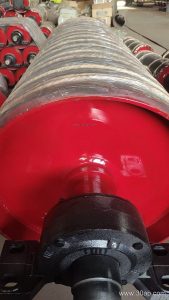
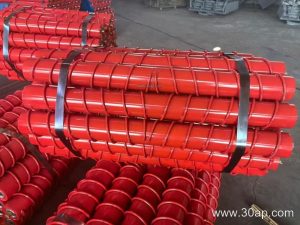
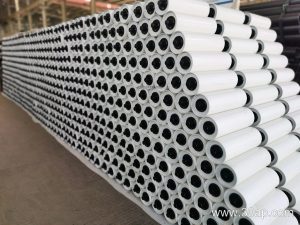
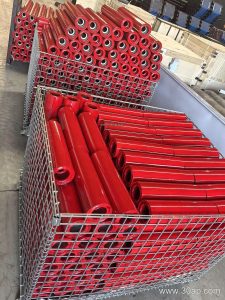
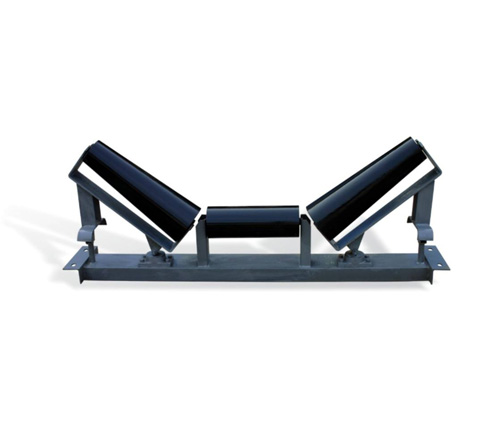
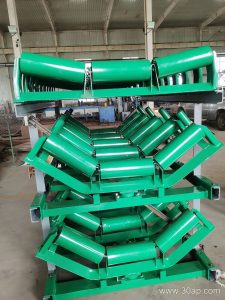
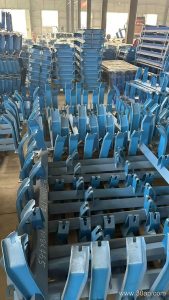
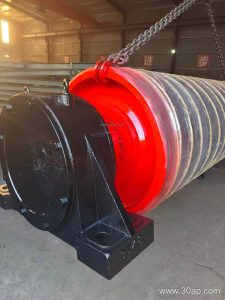
The EP500 belt works with standard conveyor components. A drive pulley pulls the belt, a tail pulley at the loading end returns it, and bend pulleys guide the return run. Idler rollers support the carrying and return strands, and conveyor brackets hold the idlers and pulleys in alignment. None of these parts are interchangeable: a drive pulley is selected for torque and traction, a tail pulley for tension and self-cleaning, and a bend pulley for routing. Matching the belt to these components is a layout decision, not a fixed rule based on width alone.
Typical duty locations include:
- Mining and quarry conveyors moving ore, rock and aggregate
- Coal handling and underground coal mining lines with flame retardant requirements
- Cement plants feeding clinker and raw material
- Power plant coal yards and ash handling
- Sand and gravel plants and crusher discharge belts
- Port and ship loading conveyors handling bulk material
In these settings the belt may run alongside an idler roller set on close spacing at transfer points, and the belt cover grade is usually chosen to match the sharpest and hottest material in the stream.
Selection Points for Buyers
Start with the actual duty, not just the strength number. The load per meter, belt speed, incline angle and pulley diameters together determine whether EP500 is adequate. A belt that is too stiff for the pulley diameter will fatigue at the splice; a belt that is too light for the impact zone will puncture. Where the route climbs steeply, a chevron or corrugated sidewall version of the same carcass can be considered, but these are surface forms of the belt, not replacements for the strength class.
Ask for the full specification sheet covering ply count, cover thickness, cover grade, belt weight and minimum pulley diameter. Confirm the splice method and whether an endless belt is required for a fixed drive. For coal or dusty environments, verify flame retardant and anti-static properties in writing. Finally, plan for maintenance: check cover wear at the loading point, monitor splice condition, and keep idler rollers turning freely so the belt is not dragged over a seized roller.