What an Idler Bracket Does on a Conveyor
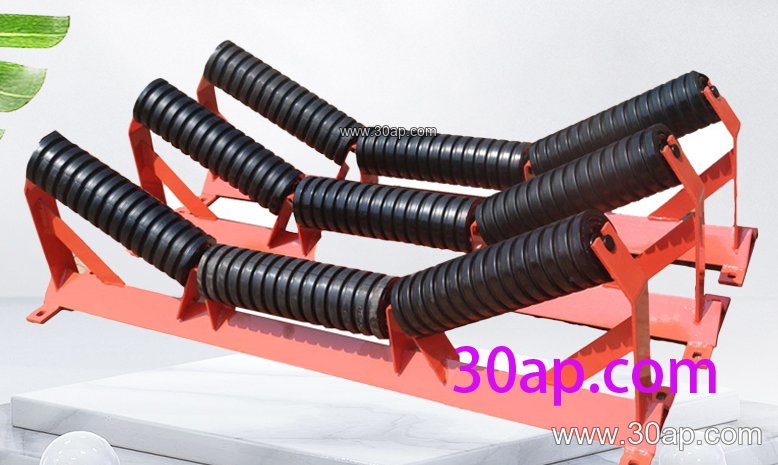
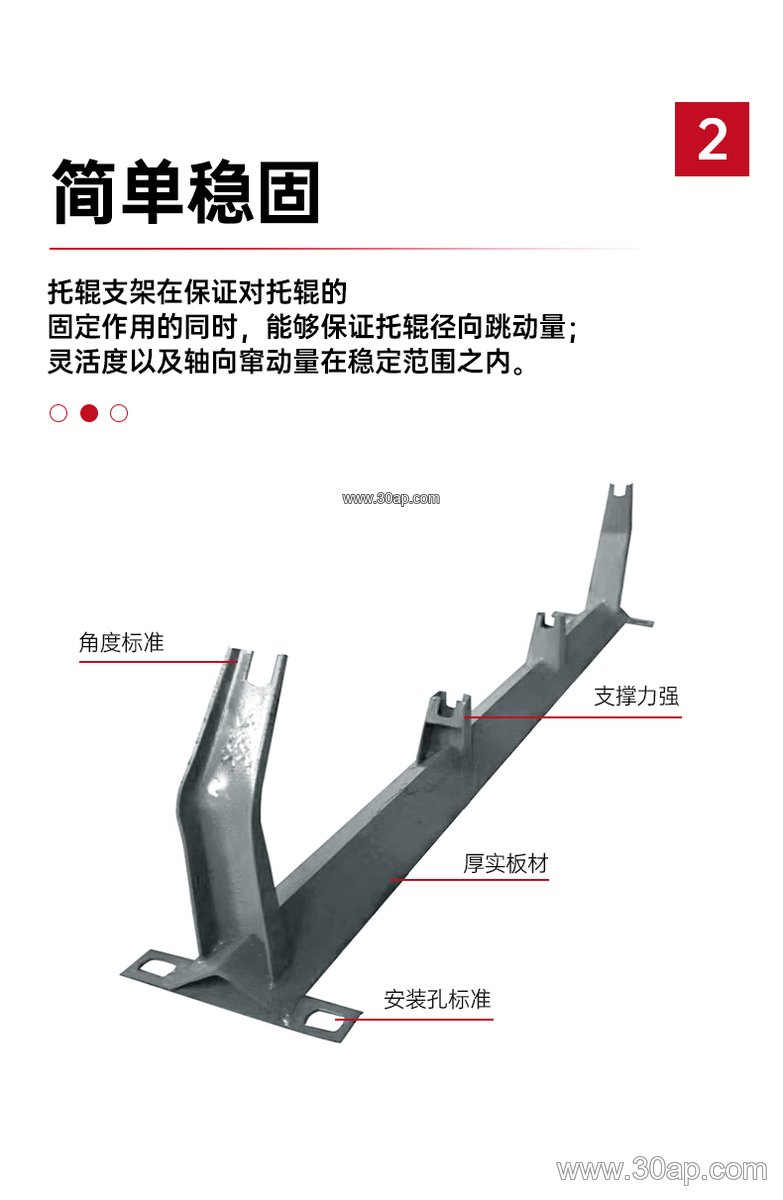
An idler bracket is the mounting component that holds a conveyor idler roller in the correct position relative to the conveyor belt. It is not a pulley and it is not a roller; it is the interface between them. On a troughed carrying run, the bracket fixes the side rollers at a set trough angle so the belt forms a stable channel for bulk material. On the return run, a similar bracket holds the return roller or a V-shaped return set beneath the belt.
In a quarry or a limestone crushing line, a loose or worn bracket shows up quickly as belt misalignment, edge damage, or a roller that no longer sits square to the frame. That is why the bracket deserves the same attention as the belt itself.
Construction and Common Materials
Most idler brackets are fabricated from angle steel, channel steel, or folded steel plate. The bracket usually consists of a base that bolts to the conveyor stringer, one or more inclined mounting faces for the side rollers, and a center position for the middle roller. Slots or multiple hole positions allow the trough angle to be set or adjusted.
Fabricated brackets are typically welded and then drilled or punched for the idler shaft. The finish matters in wet or dusty service: painted, galvanized, or otherwise coated brackets resist corrosion better in coal preparation plants, port terminals, and fertilizer handling areas.
Types and Where They Fit
The bracket family covers several positions along a conveyor. Each has a distinct job, and they are not interchangeable.
- Troughing bracket (carrying side) – supports the three-roller set that shapes the belt into a trough.
- Transition bracket – used near pulleys where the belt changes from flat to troughed, easing the transition and reducing edge stress.
- Return bracket / flat return bracket – carries the return roller under the belt.
- V-return bracket – mounts a V-shaped return set that helps center the belt on the return run.
- Impact bracket – positions impact rollers at the load point, usually under a chute or crusher discharge.
- Self-aligning bracket – allows the roller set to pivot so the belt is guided back to center.
- Forward-leaning bracket – sets the side rollers at a small forward tilt, commonly about 1.5 to 2 degrees, to assist belt tracking.
- Adjustable bracket – lets the trough angle be changed on site within a range.
- Suspended bracket – hangs the idler set from the frame rather than bolting to a stringer.
For comparison, a bend pulley changes belt direction, while an idler bracket only supports the belt. The two are never substitutes.
Matching Bracket, Belt Width, and Roller Diameter
Bracket selection starts with belt width and the roller diameter the frame is designed for. Typical belt widths include B500, B650, B800, B1000, B1200, B1400, B1600, B1800, B2000, B2200, and wider. Common roller diameters are Ø89, Ø108, Ø133, Ø159, and Ø194. Trough angles are usually 20, 30, 35, or 45 degrees.
These values are reference points, not fixed pairs. A B800 belt may run at 30 or 35 degrees depending on the material and capacity, and the roller diameter follows the load and speed rather than the belt width alone. Installation hole spacing and crossbeam length change with belt width and trough angle, so they should be confirmed against the frame drawing.
| Belt width | Common trough angle | Typical roller diameter |
|---|---|---|
| B500 | 20–30 degrees | Ø89 |
| B650 | 30 degrees | Ø89–Ø108 |
| B800 | 30–35 degrees | Ø108 |
| B1000 | 35 degrees | Ø108–Ø133 |
| B1200 | 35–45 degrees | Ø133 |
| B1400 | 35–45 degrees | Ø133–Ø159 |
| B1600 | 35–45 degrees | Ø159 |
| B1800 | 35–45 degrees | Ø159–Ø194 |
The table is a starting reference only. Final sizing depends on belt tension, material density, and the conveyor frame design.
Where These Brackets Are Used
Idler brackets appear wherever a conveyor carries bulk material. In a coal preparation plant, flame retardant and anti-static belts run on troughed sets supported by heavy fabricated brackets. In a cement plant, heat resistant belts near the kiln discharge need brackets that hold alignment under thermal movement. In a port terminal, long overland conveyors use many brackets, so consistent hole patterns and interchangeable parts reduce maintenance time.
Steel cord and fabric core belts, including EP and NN types, all rely on the same bracket function: keeping each idler square, level, and at the correct angle. A poorly seated bracket affects belt tracking regardless of belt construction.
Buyer Checklist
- Confirm belt width and the required trough angle before ordering.
- State the roller diameter and shaft ends the bracket must accept.
- Give the mounting hole spacing and stringer type, or send a frame drawing.
- Specify the position: carrying, return, transition, impact, or self-aligning.
- Choose material and finish for the environment, such as wet, dusty, or corrosive service.
- Ask whether the bracket is fixed or adjustable if the trough angle may change later.
A bracket that fits properly protects the belt, the rollers, and the frame. For related conveyor components, see conveyor belt, idler roller, and conveyor pulley options on our site.