What EP1000 Conveyor Belt Means
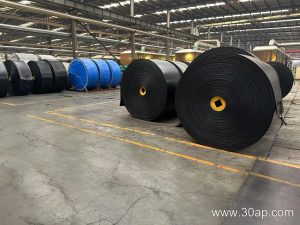
An EP1000 conveyor belt is a multi-ply rubber belt built on a polyester (E) and polyamide (P) fabric carcass with a nominal tensile strength of 1000 N/mm. It sits in the middle-to-heavy duty range of textile-reinforced belts, above EP800 but below EP1250 and EP1600. The “EP” designation comes from the warp and weft yarns used in the fabric: polyester in the warp for low elongation, polyamide in the weft for impact resistance and troughability. Because of that combination, the belt stretches less than a comparable NN nylon belt and tracks more predictably on long, loaded conveyors.
How the Belt Is Built
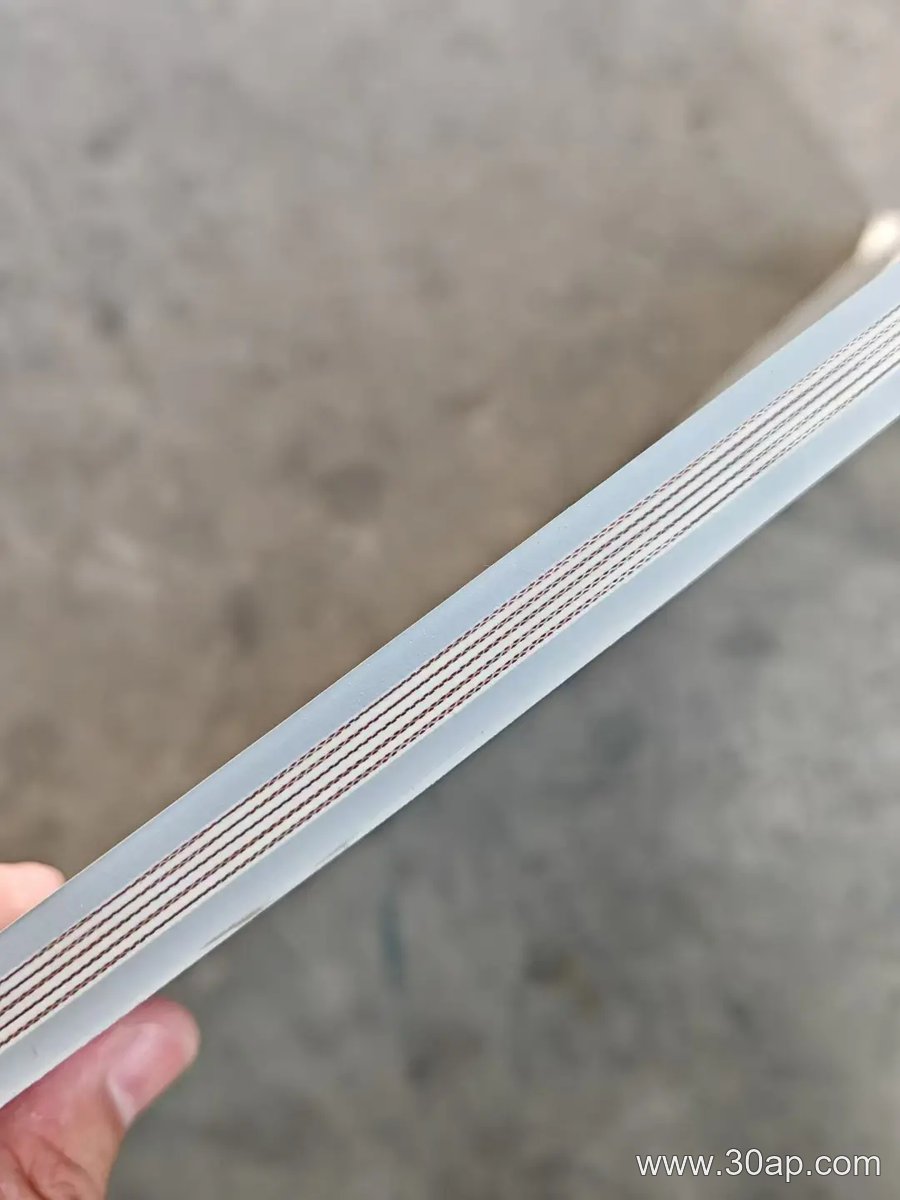
The carcass is the load-bearing element. A typical EP1000 belt uses two to six fabric plies, with three or four plies being the most common for this strength class. Each ply is bonded with rubber skim compound, and the assembly is covered top and bottom with abrasion-resistant rubber. Buyers often specify cover thickness as a pair of numbers. For EP1000 belts on bulk material handling, common combinations include 4+2 mm, 5+2 mm, 6+2 mm, and 8+3 mm, where the first number is the top cover and the second is the bottom cover. Thicker top covers suit sharp, abrasive loads such as crushed stone or clinker.
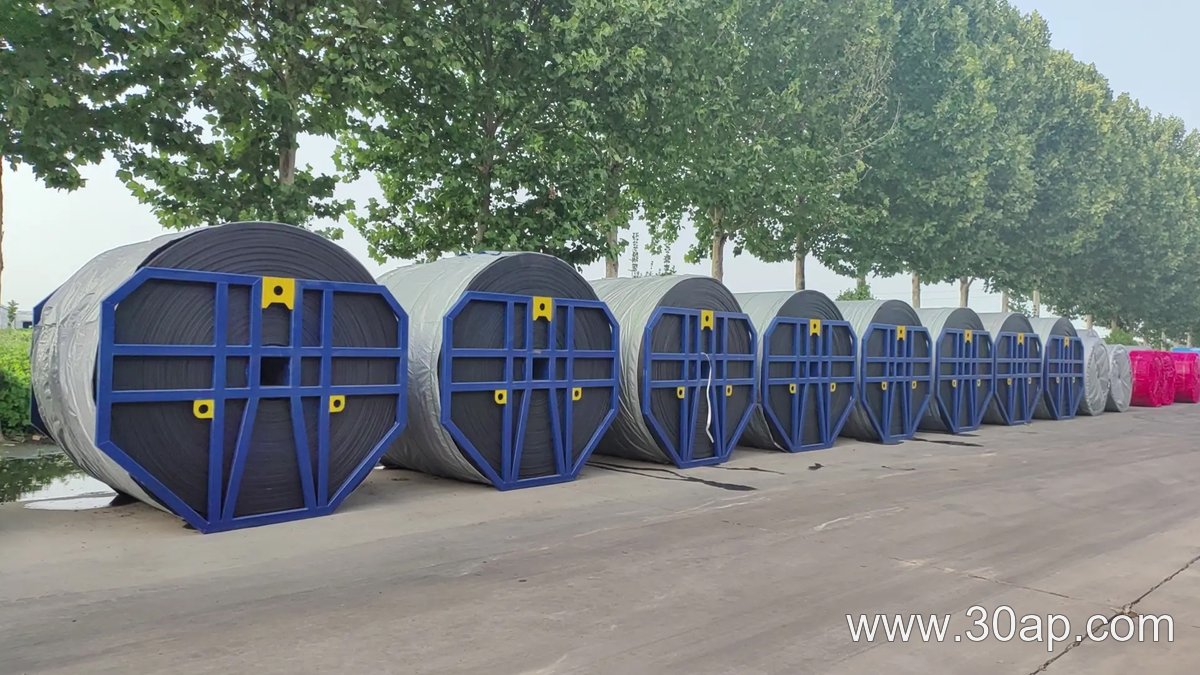
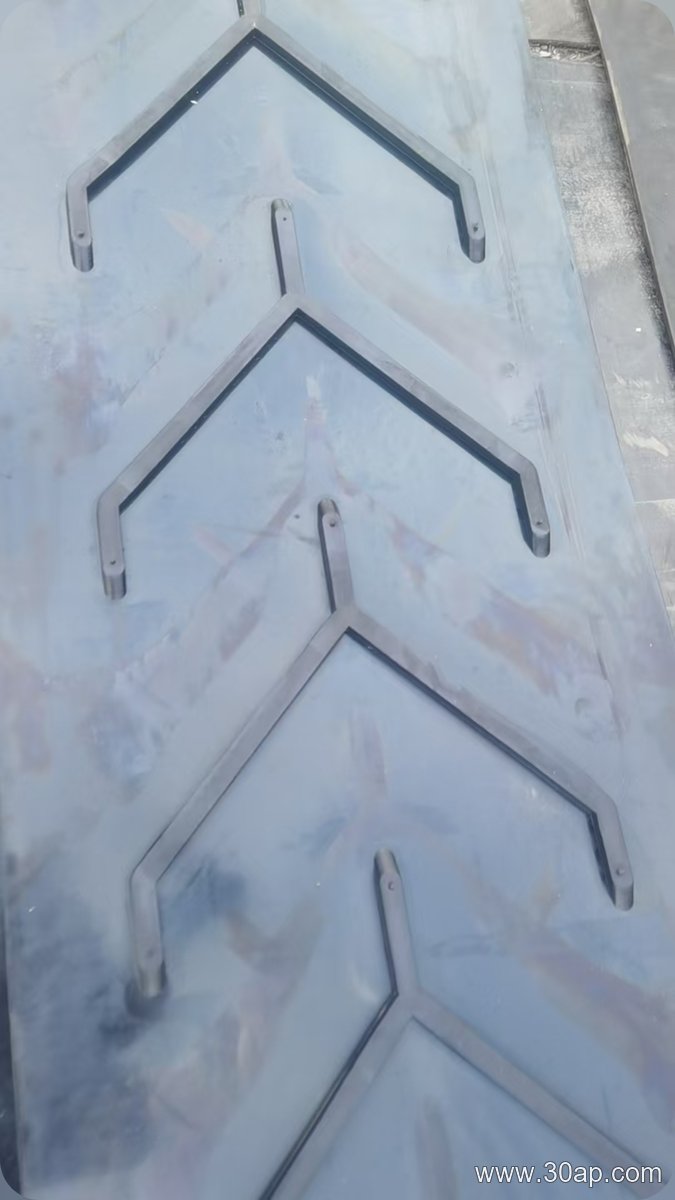
Edge construction matters too. Cut edges are standard for general use, while moulded edges give better protection where the belt is heavily loaded near the edges or runs on a misaligned system. The belt can be supplied with different surface forms depending on the application. A smooth cover is normal for general conveying; a patterned or chevron top helps on inclines where material would otherwise slide back.
Where It Fits in the Conveyor System
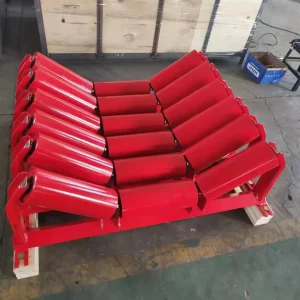
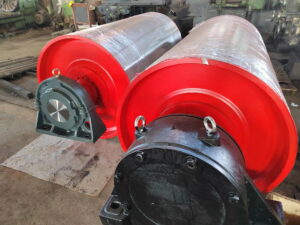
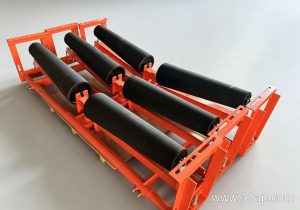
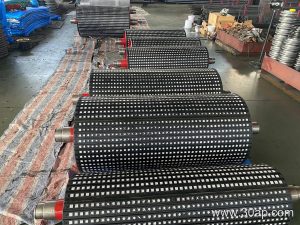
The belt is only one part of the machine. It wraps around a head or drive pulley, returns over a tail pulley, and is supported along the carrying side by idler rollers. Bend pulleys and take-up arrangements maintain tension. A conveyor pulley, whether it is a drive, tail, or bend unit, is a separate component and should not be confused with the belt itself. The belt width is chosen to suit the material size and the required capacity, while the pulley face width and the bracket positions are matched to the belt during system design. A wider belt does not automatically mean a larger pulley diameter; that relationship depends on the number of plies, the required wrap angle, and the tension the belt must transmit.
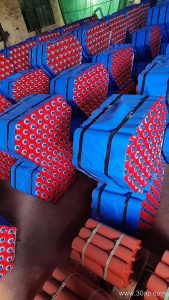
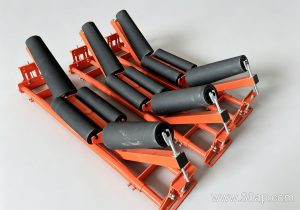
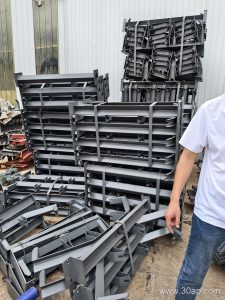
Supporting equipment should be selected together with the belt. Impact idlers are often used under loading points, and a conveyor bracket holds the idlers or pulleys in position. If the belt is exposed to oil, heat, or open flame, the cover compound is usually changed rather than the carcass strength. This is why two belts with the same EP1000 rating can behave very differently in service.
Common Specifications at a Glance
Manufacturers publish their own tables, and values vary between suppliers. The following ranges are typical references, not a fixed supply commitment. Confirm the exact figures with your chosen belt maker before ordering.
- Strength grades in the EP family: EP200, EP315, EP400, EP500, EP630, EP800, EP1000, EP1250, EP1600, EP2000
- Common belt widths: B500, B650, B800, B1000, B1200, B1400, B1600, B1800, B2000
- Cover thickness pairs: 3+1.5, 4+2, 5+2, 6+2, 8+3 mm
- Carcass plies: usually two to six layers
Selection and Use Notes
Choose an EP1000 belt when the duty needs more strength than EP630 or EP800 but does not justify a steel cord belt or a higher EP grade. Check the maximum lump size, the belt speed, the incline angle, and the ambient temperature. For hot materials, a heat-resistant cover is needed; for oily loads, an oil-resistant compound; for underground or enclosed areas, a flame-retardant and antistatic version is often requested. Cold climates may call for a low-temperature compound to prevent cracking.
During installation, keep the belt clean and avoid dragging it over sharp edges. Check that the idler rollers turn freely and that the conveyor pulley is aligned, because a misaligned pulley will wear the belt edge quickly even if the belt itself is correctly specified. Store spare belts flat, out of direct sunlight, and away from ozone sources such as electric motors.
Finally, remember that EP1000 refers to the belt’s tensile class, not to a single universal product. The same nominal rating can be produced with different ply counts, cover grades, and surface forms to suit different conveyors. Match those details to the actual working conditions, and the belt will give reliable service.