What a Belt Conveyor Guide Idler Does
A belt conveyor guide idler is a small but decisive component in the alignment system of a conveyor. Also described as a self-aligning idler or training idler, it keeps the conveyor belt centered on the structure instead of letting it drift toward the frame and rub against it. In a quarry, a coal washing plant, or a power plant coal yard, a wandering belt can spill material, damage edges, and force unplanned stoppages. The guide idler addresses that problem at the point where misalignment begins.
The working principle is simple. The roller is mounted so that it can pivot slightly about a vertical axis, and when the belt touches the roller, friction turns the assembly and steers the belt back toward the centerline. Some designs add a slight forward tilt of about 1.5 to 2 degrees to create a corrective effect during normal running.
Construction and Mounting
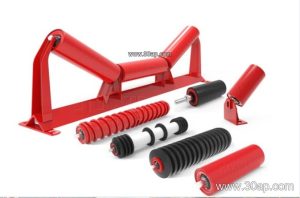
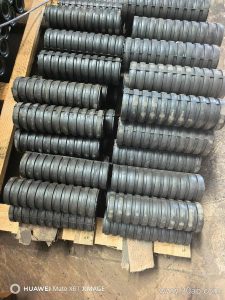
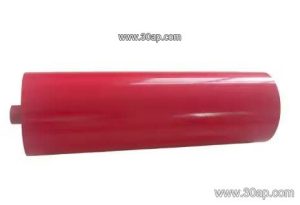
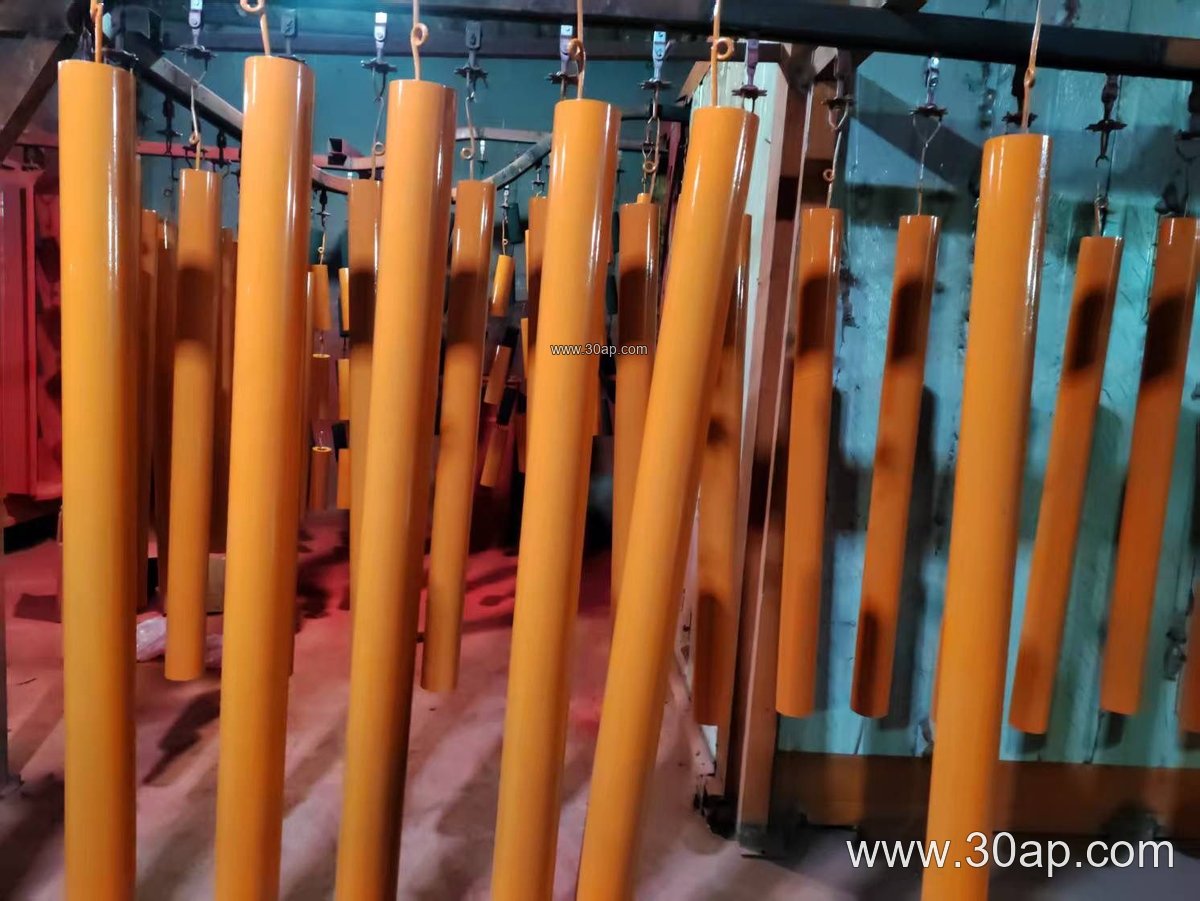
The body usually combines a steel tube shell, sealed bearings, a shaft, and a pivoting frame. The frame is fixed to the conveyor bracket or stringer, and the whole group can rotate to follow belt movement. Common surface forms include plain steel, nylon, ceramic, and rubber rings, with rubber rings favored where impact and wear are heavy.
Typical roller diameters for this duty sit in the range of Ø89, Ø108, Ø127, and Ø133 mm, while larger installations may use Ø159 or Ø178 mm. Bearing sizes such as 6204, 6205, 6305, and 6308 are widely used, though the correct bearing is always a matter of design load and sealing rather than a fixed match to one roller diameter.
Where Guide Idlers Fit on the Conveyor
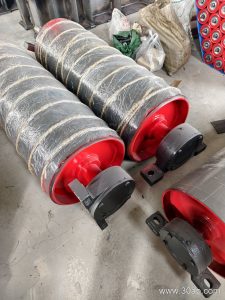
Placement matters more than quantity. A guide idler is normally installed on the carrying side after the loading point has stabilized the belt, and on the return side near the tail or before the bend pulley, where tracking problems often appear. It is not a substitute for a drive pulley, tail pulley, or bend pulley; those are separate components with different functions. Nor should a guide idler be confused with a troughing idler, impact idler, or return idler, although it may borrow the same shell and bearing construction.
On a long overland or underground mining conveyor, a few well-placed self-aligning idlers often do more than a large number of fixed units. In aggregate plants and cement kiln feed lines, they help keep the belt on track through transitions and curves.
Matching the Idler to Belt Width and Load
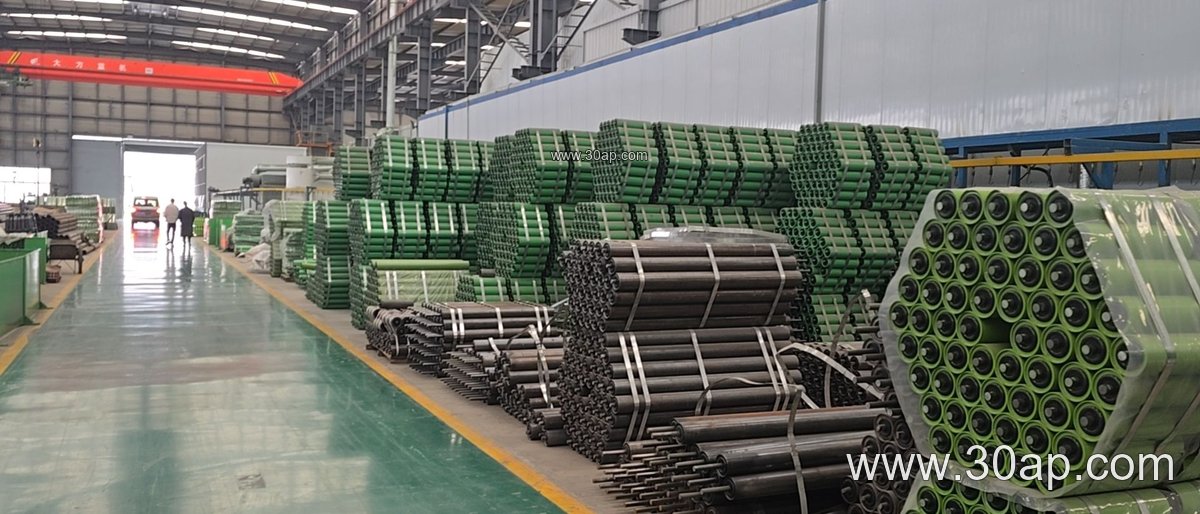
Guide idlers are sized according to belt width, trough angle, and the mass of material carried. The following values are common examples rather than fixed rules, and side rollers or center rollers can differ from group to group.
- B500 belt: around 200 mm roller length
- B650 belt: around 250 mm
- B800 belt: around 315 mm
- B1000 belt: around 380 mm
- B1200 belt: around 465 mm
- B1400 belt: around 530 mm
- B1600 belt: around 600 mm
- B1800 belt: around 670 mm
- B2000 belt: around 750 mm
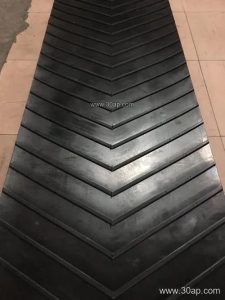
Trough angles of 20, 30, 35, and 45 degrees appear across these groups. A wider belt does not dictate one pulley diameter, and a given belt width can be served by more than one roller size depending on load, speed, and idler spacing.
Buyer Checklist
Before ordering, confirm the belt width, the trough angle, the mounting bracket pattern, and whether the unit is for the carrying or return side. Ask about sealing and bearing protection, since dust in a stone crushing line or fines in a coal handling system shorten idler life quickly. Check that the roller shell material suits the environment, particularly where an abrasive or heat resistant conveyor belt carries hot or sharp material. Finally, verify that the guide idler is compatible with the existing conveyor bracket and frame spacing, and keep a small stock of spares for critical tracking positions.
Maintenance Notes
Inspect guide idlers for free rotation, seal condition, and frame play during routine walks. A seized roller can itself cause misalignment, so a guide idler that no longer turns should be replaced rather than adjusted indefinitely. Keep the belt surface clean and check loading symmetry, because an off-center feed will defeat even a correctly installed training idler.