What an Automatic Belt Tracking Idler Does
An automatic belt tracking idler is a self-aligning roller assembly that keeps a conveyor belt centered on its path. Instead of relying on fixed rollers and periodic manual adjustment, this idler senses a drifting belt and pivots to steer it back. In a quarry, a coal washing plant, or a power plant coal yard, a belt that wanders off center can rub the frame, spill material, and shorten belt life. The automatic belt tracking idler addresses that problem at the point where misalignment starts.
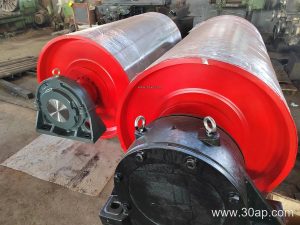
It is a distinct component from the drive pulley, tail pulley, or bend pulley. Those pulleys transmit power and change belt direction; the tracking idler corrects lateral position. A conveyor pulley and a tracking idler may sit on the same conveyor, but they are not interchangeable.
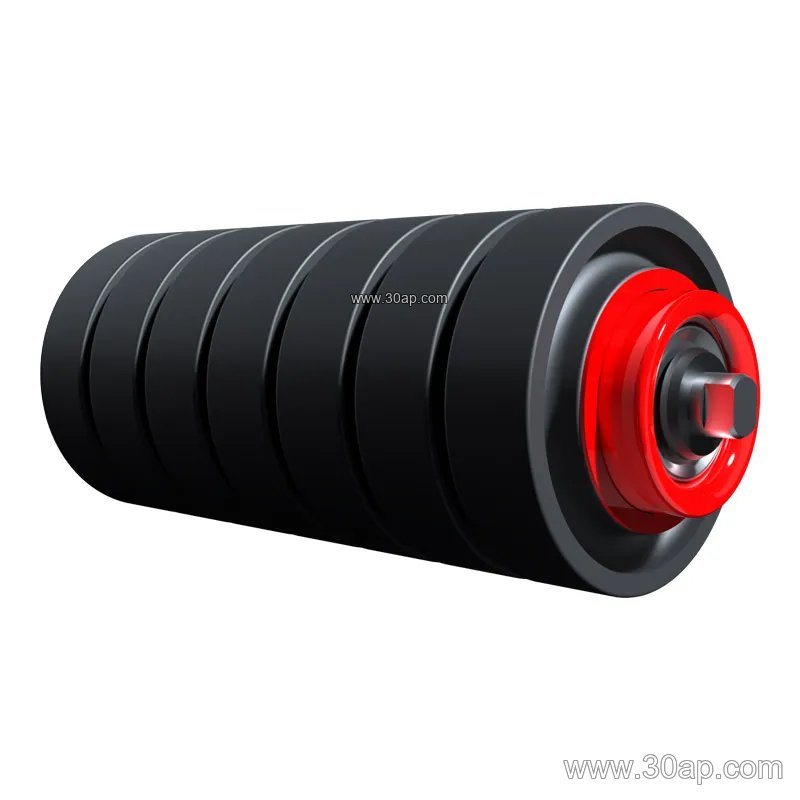
How the Self-Aligning Roller Works
The assembly usually consists of two or three rollers mounted on a pivoting frame. When the belt edge contacts a guide roller or when friction shifts, the frame rotates slightly around a vertical or inclined axis. That rotation produces a small steering angle, and the belt moves back toward the centerline. Many designs use a slight forward tilt of about 1.5 to 2 degrees on the rollers to encourage self-centering, though the exact geometry is set by the conveyor designer.
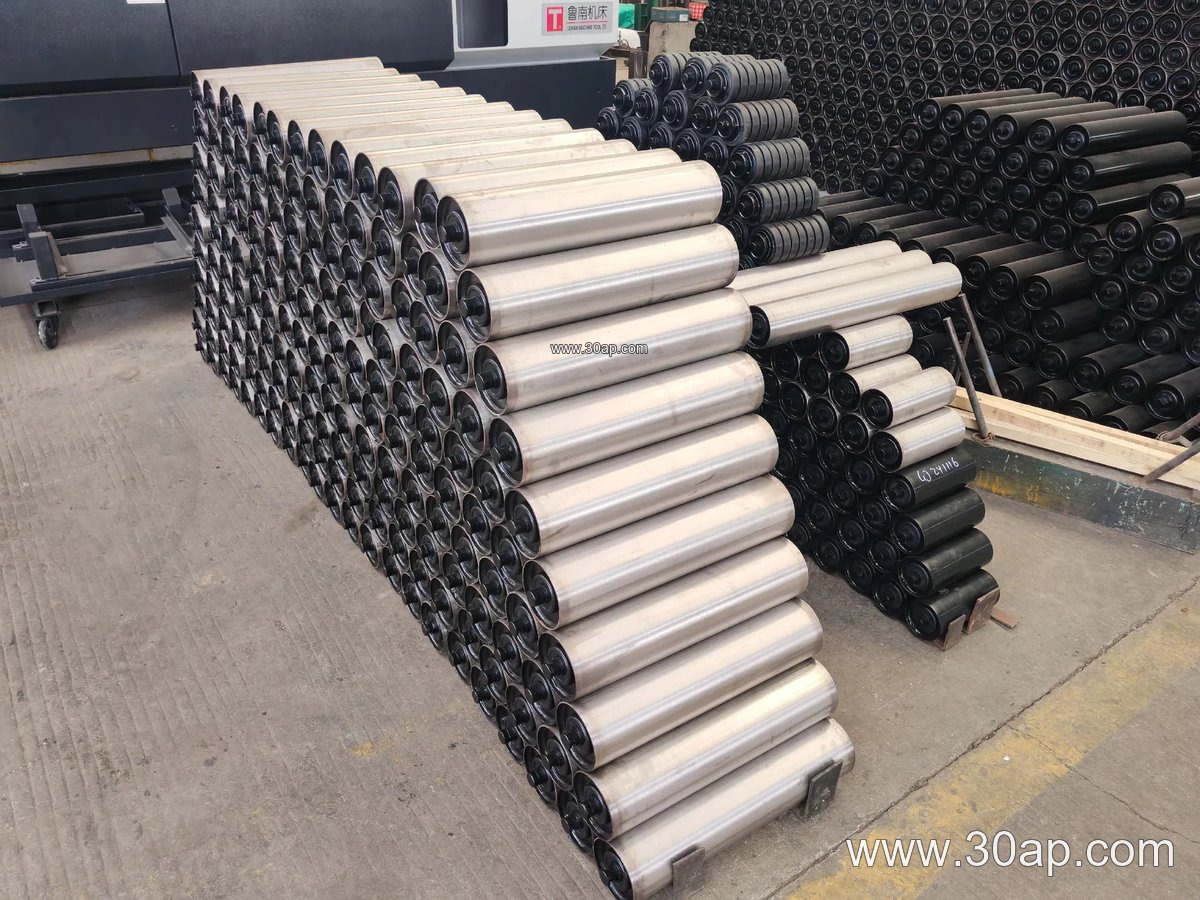
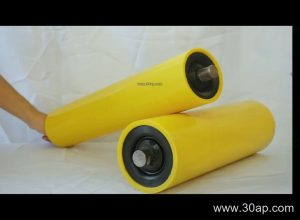
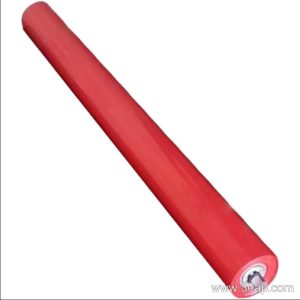
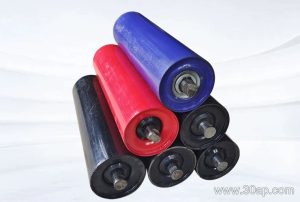
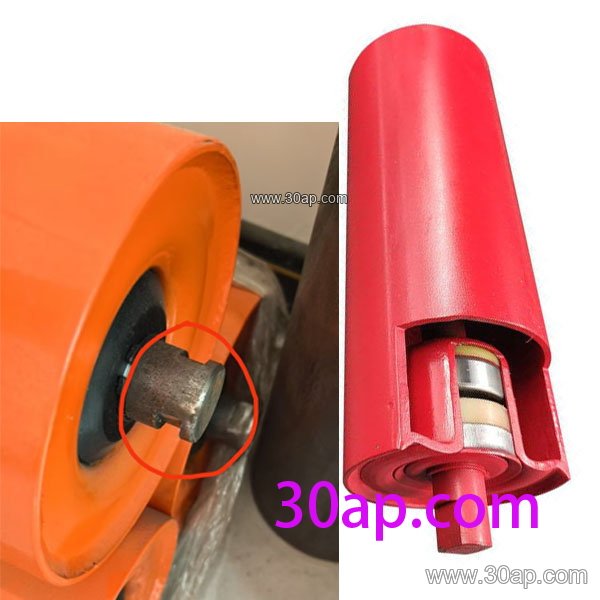
Common constructions include friction tracking idlers, conical tracking idlers, and tapered roller arrangements. The roller surface may be steel tube, nylon, ceramic, or rubber ring, depending on whether the priority is abrasion resistance, material buildup control, or grip. Bearings such as 6204, 6205, 6305, 6306, 6308, or 6310 appear in these assemblies, but no single bearing is tied to one roller diameter.
Where It Fits on the Conveyor
Tracking idlers are often placed on the carrying side at intervals along the belt run, especially after loading points where material impact can push the belt off line. They may also appear on the return side. In a crusher discharge or a belt feeding a screen deck, a self-aligning idler helps hold the belt steady through fluctuating loads. On a long overland run at a port or a cement plant, several tracking stations may be spaced according to belt length and alignment history.
They work alongside standard carrying idlers, impact idlers, and return rollers. A rubber disc impact idler absorbs shock at the load zone, while a tracking idler handles lateral drift downstream. The two roles are different, and one does not replace the other.
Typical Dimensions and Arrangements
Roller diameter and belt width are selected together with the conveyor frame and belt type. The table below shows common reference values, not a fixed matching rule.
| Item | Common Reference Values |
|---|---|
| Roller diameter | Ø63, Ø76, Ø89, Ø102, Ø108, Ø127, Ø133, Ø159, Ø178, Ø194, Ø219 mm |
| Belt width | B400, B500, B650, B800, B1000, B1200, B1400, B1600, B1800, B2000, B2200, B2400 |
| Trough angle | 20°, 30°, 35°, 45° |
| Roller surface | Steel tube, nylon, ceramic, rubber ring |
| Bearing | 6204, 6205, 6305, 6306, 6308, 6310 |
For a three-roll troughing set, typical roller lengths are roughly 200 mm at B500, 250 mm at B650, 315 mm at B800, 380 mm at B1000, 465 mm at B1200, 530 mm at B1400, 600 mm at B1600, 670 mm at B1800, and 750 mm at B2000. Side rollers and center rollers can differ, and final dimensions follow the actual frame design.
Buyer Checklist Before Ordering
- Confirm belt width and trough angle so the tracking idler matches the existing idler set.
- State the roller diameter and bearing type used elsewhere on the conveyor for consistency.
- Describe the material and environment, such as wet coal, abrasive aggregate, or high-temperature clinker, so the roller surface and seal suit the duty.
- Check mounting dimensions and the conveyor bracket pattern before purchase.
- Ask how the self-aligning action is achieved, whether by friction, conical rollers, or a pivoting frame.
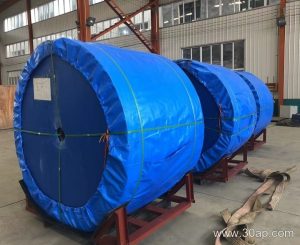
For conveyors carrying abrasive ore or heavy stone, a wear-resistant roller surface and good sealing matter as much as the tracking mechanism. On a belt handling a steel cord conveyor belt or a heavy-duty rubber conveyor belt, the tracking idler should be sized to the belt load and speed rather than chosen by width alone. Matching the idler to the belt and frame, rather than assuming one size fits every conveyor, is the safest approach.