What a Carrying Idler Does on a Conveyor
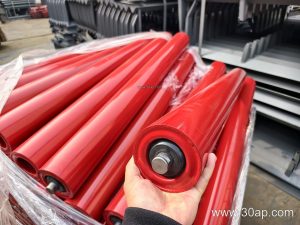
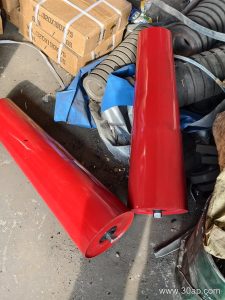
A carrying idler is the roller set that supports the loaded side of a conveyor belt. It sits under the trough formed by the belt, holds the material in place, and lets the belt run with low friction. In a quarry, a coal washing plant, or a cement kiln line, the carrying idlers are usually the most numerous rotating parts on the machine, so their quality affects both belt life and downtime.
People often call this part an upper roller or troughing roller. The name changes with the plant, but the duty is the same: carry the belt and the load between the tail pulley and the drive pulley.
How the Roller Is Built
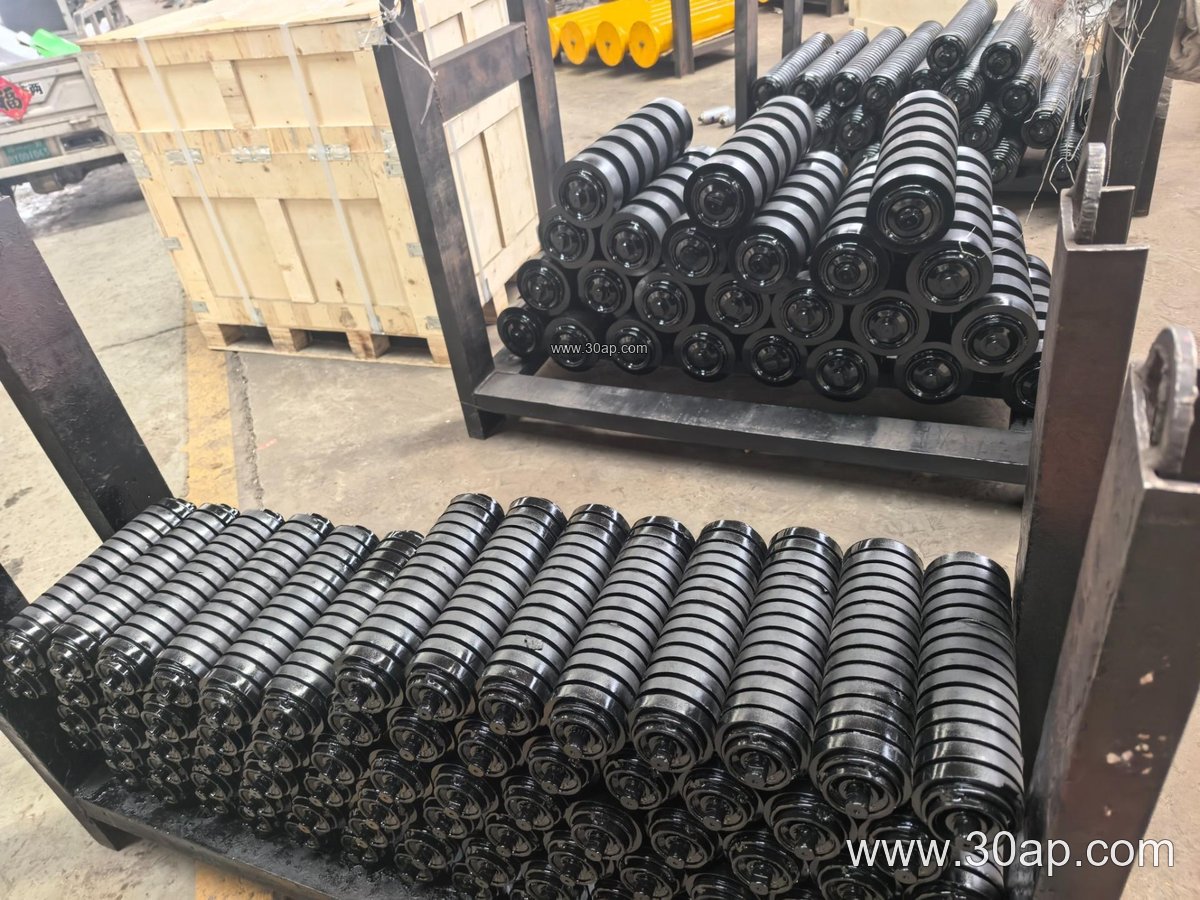
A typical carrying idler has a steel tube shell, a shaft, bearing housings, and a sealing system. The shell is often a welded steel pipe; for abrasive duties, a nylon, ceramic, or rubber-covered surface may be chosen. Bearings such as 6204, 6205, 6305, 6306, 6308, or 6310 appear in common designs, and the correct bearing is matched to load and speed rather than to belt width alone.
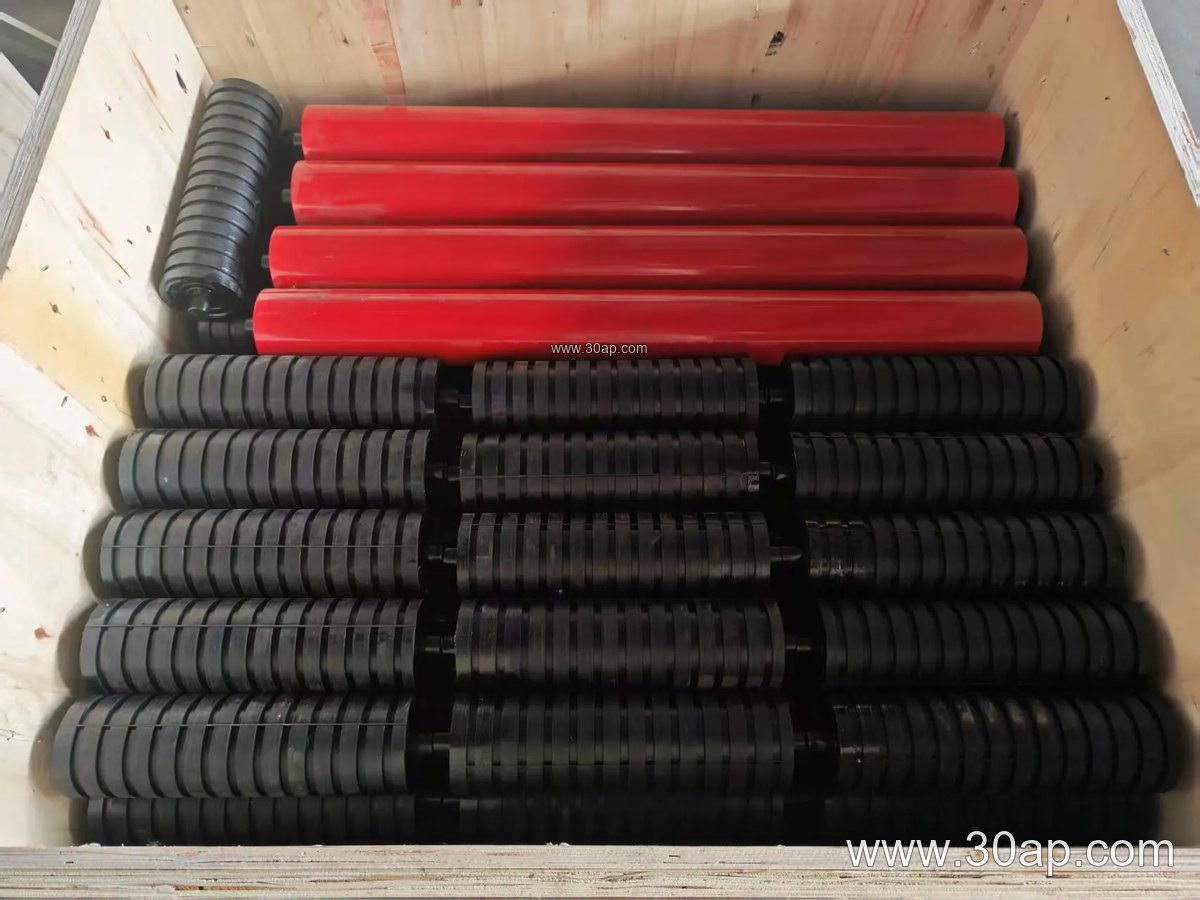
The seal matters as much as the bearing. Dust, water, and fine grit are the usual causes of seizure, especially in crushing and screening circuits. A good labyrinth seal and proper grease retention are worth more than a slightly thicker shell.
Common Arrangements and Dimensions
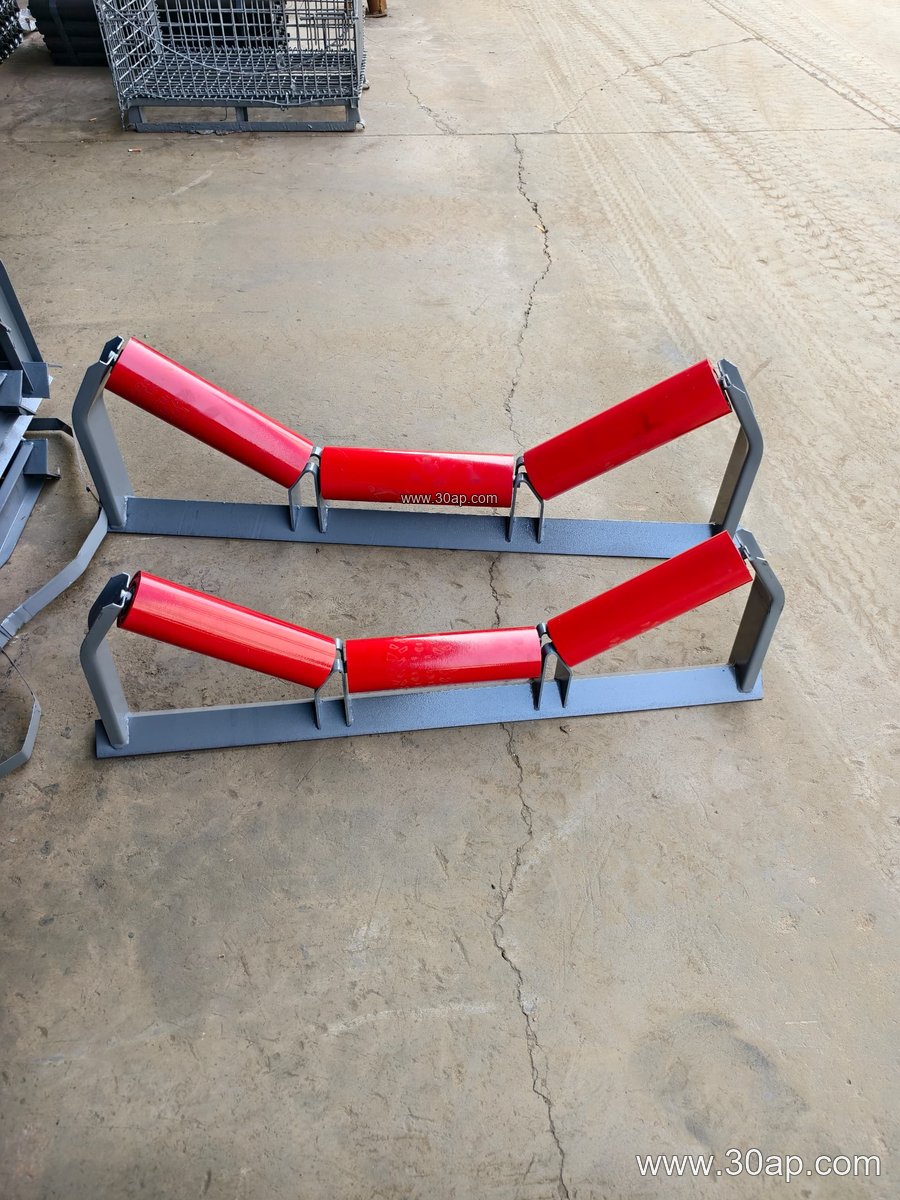
Carrying idlers are usually supplied as single-roll, two-roll, or three-roll troughing sets. Three-roll sets are common on bulk lines because they form a stable trough. The trough angle is usually 20, 30, 35, or 45 degrees; a small forward tilt of about 1.5 to 2 degrees is sometimes used for training the belt.
Roller diameter and length should follow the belt width and the load. The table below gives common reference values; final selection is by design.
| Belt width | Typical carrying idler diameter | Typical roll length for a three-roll set |
|---|---|---|
| B500 | Ø63 to Ø89 mm | about 200 mm |
| B650 | Ø76 to Ø108 mm | about 250 mm |
| B800 | Ø89 to Ø127 mm | about 315 mm |
| B1000 | Ø102 to Ø133 mm | about 380 mm |
| B1200 | Ø108 to Ø159 mm | about 465 mm |
| B1400 | Ø127 to Ø159 mm | about 530 mm |
| B1600 | Ø133 to Ø178 mm | about 600 mm |
| B1800 | Ø159 to Ø194 mm | about 670 mm |
| B2000 | Ø159 to Ø219 mm | about 750 mm |
Side rolls and center rolls can differ in length. A wide belt does not automatically require one fixed shaft size, and a given belt width does not lock the plant into one pulley diameter.
Where Carrying Idlers Are Used
These rollers appear wherever bulk material moves: a limestone quarry feeding a primary crusher, a coal washing plant, a power station coal yard, a cement plant clinker line, and a port shiploader. In a crushing and screening circuit, the carrying idlers under the crusher discharge need impact resistance, so rubber-disc impact idlers may replace standard troughing rolls at the load point. That is a comparison, not a substitute: the standard carrying idler still does the main support work along the run.
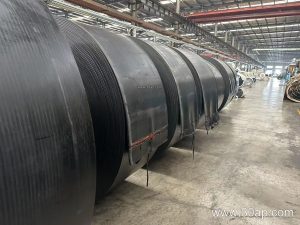
The belt itself is chosen to match the duty. A heavy-duty mining conveyor belt may run alongside abrasion resistant, flame retardant, or heat resistant grades, and a steel cord or EP conveyor belt can be used depending on tension and distance. The idler must suit the belt and the material, not the other way around.
What Buyers Should Check
- Load and spacing: idler spacing follows belt sag limits and material weight; too wide a gap shortens belt life.
- Sealing and bearing: ask how the seal excludes dust and water, and how the bearing is lubricated.
- Roller runout: a wobbling roller vibrates the belt and loosens the conveyor bracket.
- Surface choice: steel for general duty, rubber rings for impact zones, ceramic or nylon where sticking and wear are issues.
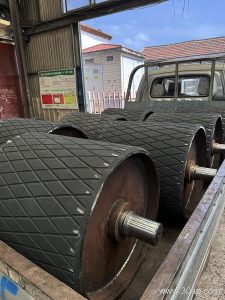
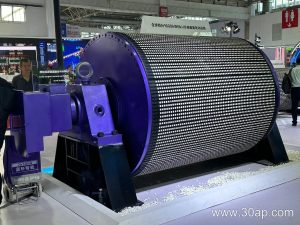
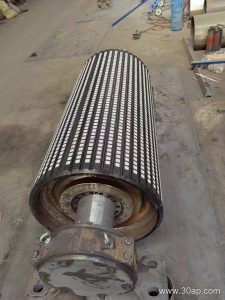
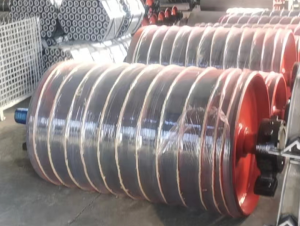
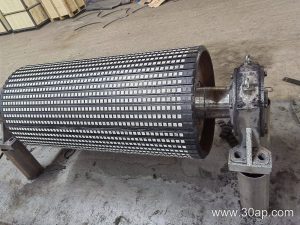
- Interchangeability: drive, tail, and bend pulleys are separate items; do not order a carrying idler as a replacement for any of them.
For a smooth line, pair the carrying idlers with a properly aligned conveyor pulley and a belt that matches the material. Small details in the roller set decide how long the whole conveyor stays in service.