What a Belt Conveyor Trough Idler Does on the Line
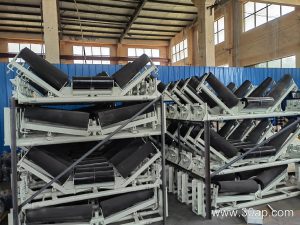
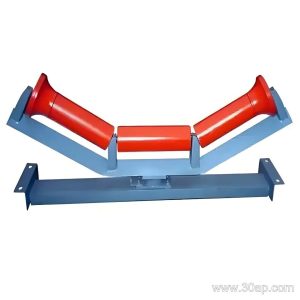
A belt conveyor trough idler is the set of rollers that supports the loaded side of the conveyor belt and shapes it into a trough. In a limestone quarry, a cement plant, or a coal-fired power station, this seemingly simple component determines how well the belt tracks, how much material spills, and how long the belt itself lasts. The trough idler is not a single roller but usually a group of two or three rolls mounted on a common frame, with the outer rolls angled upward to cup the belt.
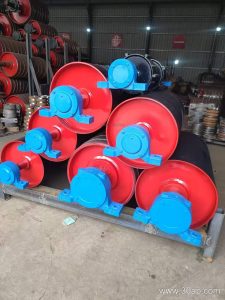
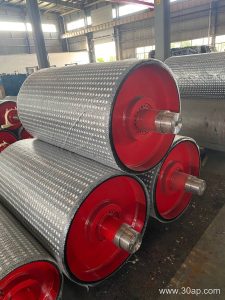
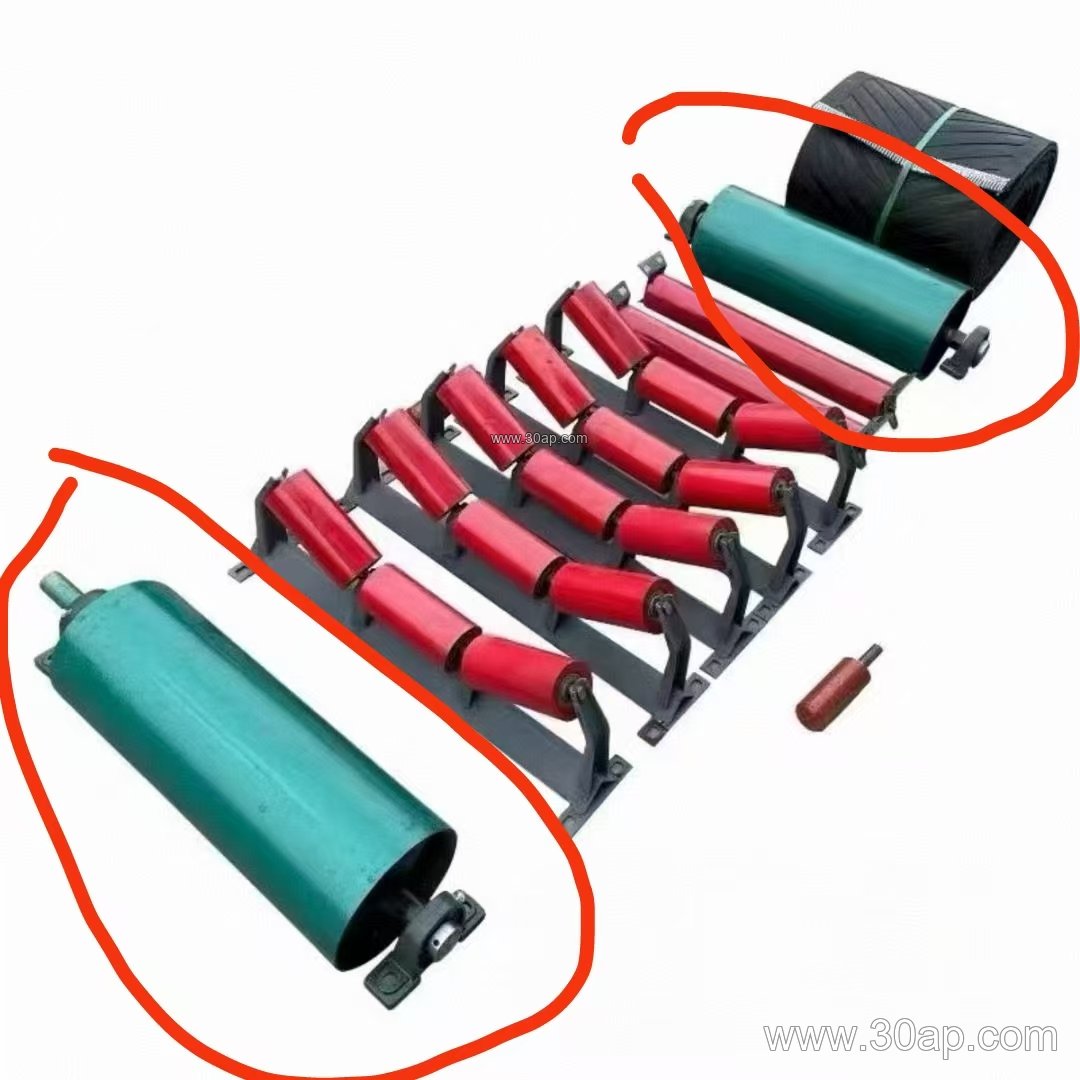
Because the belt carries the material, the trough idler must handle continuous load, abrasive dust, and occasional impact. It works together with the conveyor belt, the conveyor pulley at the head and tail, and the conveyor bracket that fixes the idler frame to the stringer. Get the trough idler specification right, and the whole conveyor runs quieter and cleaner.
How the Trough Idler Is Built
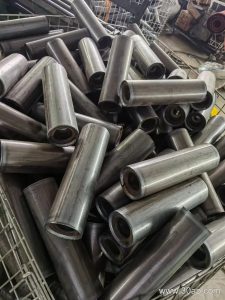
Most trough idlers share a common construction: a steel tube shell, a shaft, sealed bearings, and a housing that keeps dust out. The roll surface may be plain steel, nylon, ceramic, or rubber-covered, depending on whether the priority is abrasion resistance, belt grip, or material build-up control. Bearing sizes such as 6204, 6205, 6305, 6306, 6308, and 6310 are common, but the bearing must be matched to the load and speed of the specific conveyor, not chosen by belt width alone.
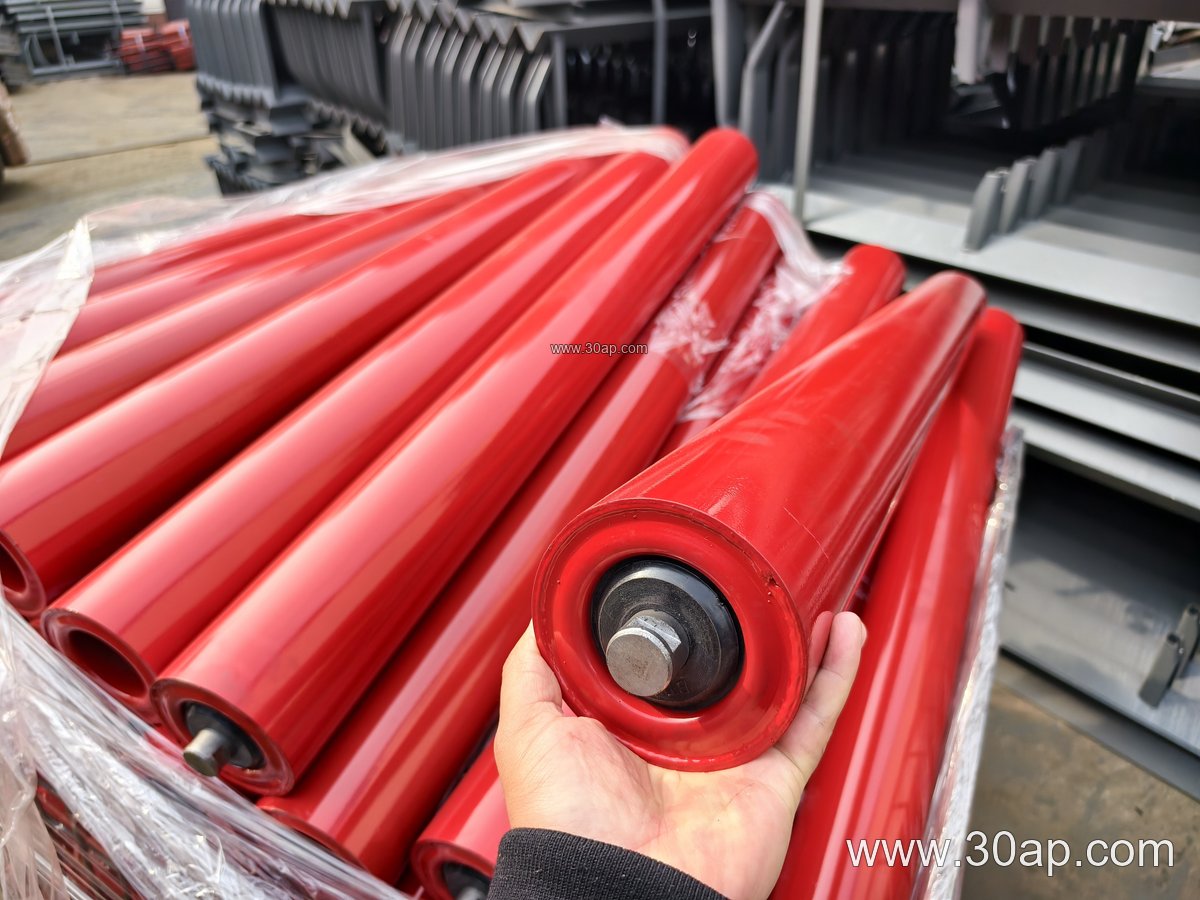
The trough angle is a key design choice. Common trough angles are 20, 30, 35, and 45 degrees. A deeper trough carries more material and reduces spillage on a fully loaded belt, while a shallower trough suits wider belts or materials that tend to interlock. The idler group can be single-roll, two-roll, or three-roll; the three-roll trough idler is the most familiar in heavy-duty bulk handling.
Roll length changes with belt width, trough angle, and group type. For a three-roll trough idler, common roll lengths are roughly 200 mm for B500, 250 mm for B650, 315 mm for B800, 380 mm for B1000, 465 mm for B1200, 530 mm for B1400, 600 mm for B1600, 670 mm for B1800, and 750 mm for B2000. These are examples only; side rolls and center rolls can differ, and the final length is set by the conveyor design.
Where Trough Idlers Are Used
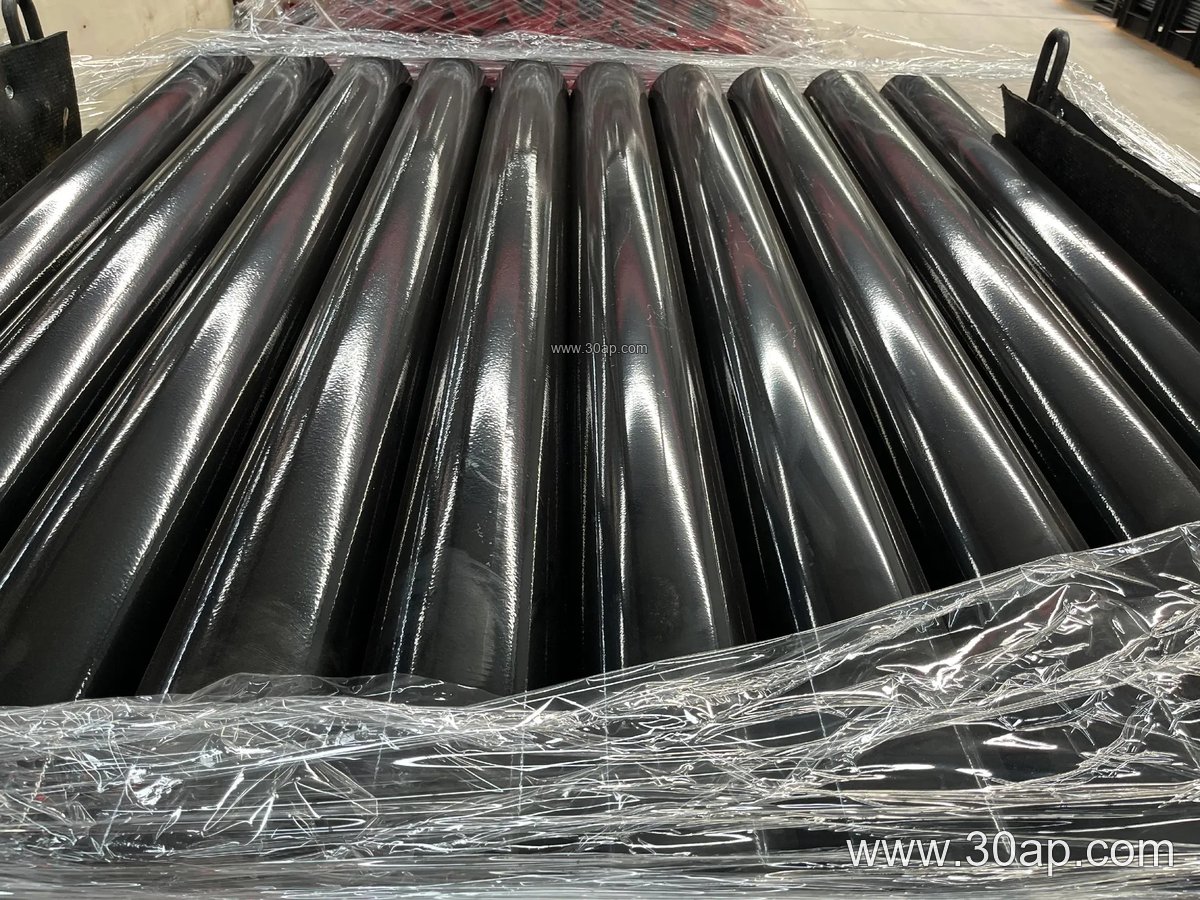
You will find belt conveyor trough idlers in almost any plant that moves bulk solids. In a sand and gravel line, they support the belt after the crusher and before the screen. In a coal washing plant or a power station coal yard, they carry damp, abrasive material that punishes ordinary rollers. In a cement plant, they handle clinker, limestone, and additives on belts that often run at high tonnage. The same component appears in fertilizer plants, grain terminals, and tunnel spoil handling, though the surface and sealing details may change with the duty.
On a typical conveyor, the trough idlers sit on the carrying side, while return idlers support the empty belt underneath. A transition idler may be used near the head or tail pulley to ease the belt from flat to troughed. Self-aligning types, such as friction or conical aligning idlers, are sometimes added where belt tracking is difficult, but they do not replace the standard trough idler set for normal carrying duty.
Specifications a Buyer Should Confirm
When specifying a belt conveyor trough idler, the buyer should confirm the belt width, the trough angle, the roll diameter, the roll length, the bearing size, and the mounting dimensions. Roll diameters commonly include Ø63, Ø76, Ø89, Ø102, Ø108, Ø127, Ø133, Ø159, Ø178, Ø194, and Ø219 mm, but the correct diameter depends on belt speed, load, and the existing frame. Do not assume that one belt width locks you into one pulley diameter or one shaft size; those are separate design decisions.
The table below lists common reference values. Treat them as starting points for discussion, not as fixed combinations or a supply promise.
| Parameter | Common reference values |
|---|---|
| Belt width | B400, B500, B650, B800, B1000, B1200, B1400, B1600, B1800, B2000, B2200, B2400 |
| Trough angle | 20°, 30°, 35°, 45° |
| Roll diameter | Ø63, Ø76, Ø89, Ø102, Ø108, Ø127, Ø133, Ø159, Ø178, Ø194, Ø219 mm |
| Roll surface | Steel tube, nylon, ceramic, rubber ring |
| Bearing | 6204, 6205, 6305, 6306, 6308, 6310 |
| Idler group | Single-roll, two-roll, three-roll trough |
Also check the sealing arrangement. Dust and water ingress are the main enemies of idler bearings, especially in coal, cement, and quarry conditions. A good labyrinth seal and a properly greased bearing will outlast a cheaper roll with a loose cover. Finally, confirm that the idler frame fits the existing conveyor bracket and stringer spacing, so the new trough idler set drops into place without field modification.
Maintenance Notes That Save Belt Life
Inspect trough idlers for seized rolls, worn shells, and missing end caps. A seized roll will rub the conveyor belt and can cause tracking problems or edge damage. Replace worn rolls in complete sets where possible so the belt is supported evenly. Keep the area around the idler frame clear of spilled material, because build-up can lift the belt off the rolls and change the trough profile. In dusty plants, a planned wash-down or dry cleaning routine helps the seals do their job.
Used with the right conveyor pulley alignment and a properly tensioned belt, a well-chosen belt conveyor trough idler is a low-maintenance part that keeps bulk material moving from the stockpile to the plant and back out again.